
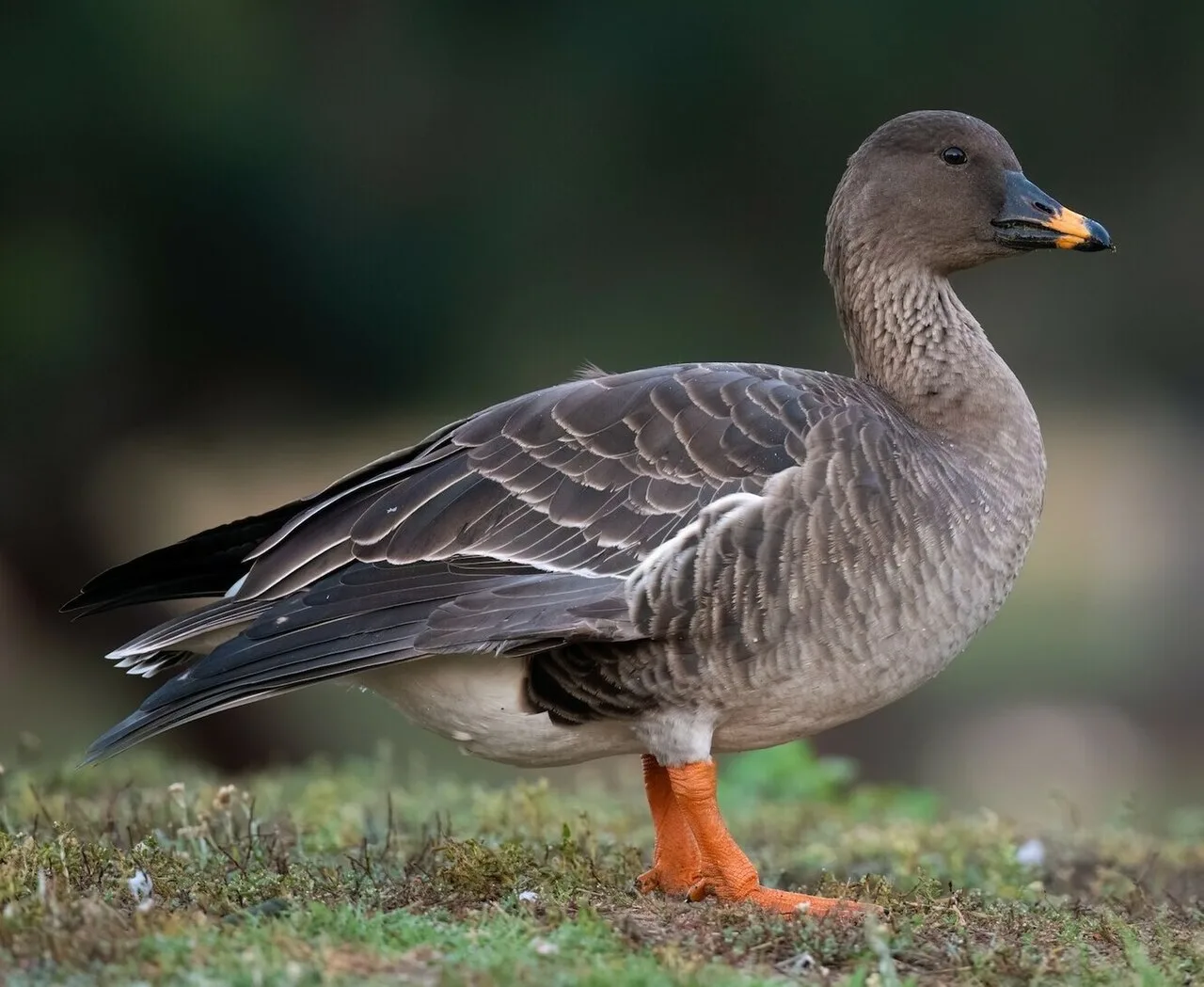
In a year already overflowing with "mega-rarities," the birding community recently turned its eyes toward the rugged landscapes of the Mountain West. While colorful songbirds like the Red-flanked Bluetail often steal the headlines, waterfowl enthusiasts had their own reason to celebrate this April: the confirmed sighting of a Tundra Bean-Goose (Anser serrirostris) in Montana.
For most Americans, a "wild goose" is synonymous with the ubiquitous Canada Goose. But for those who know their waterfowl, the Bean-Goose is a legendary visitor. Nesting in the high Arctic tundra of northern Russia and Siberia and typically wintering in Europe or East Asia, this bird’s appearance in the interior of the United States is a geographical head-scratcher that has sent "life-listers" scrambling for their binoculars.
1. Anatomy of a "Beaner": How to Spot the Difference
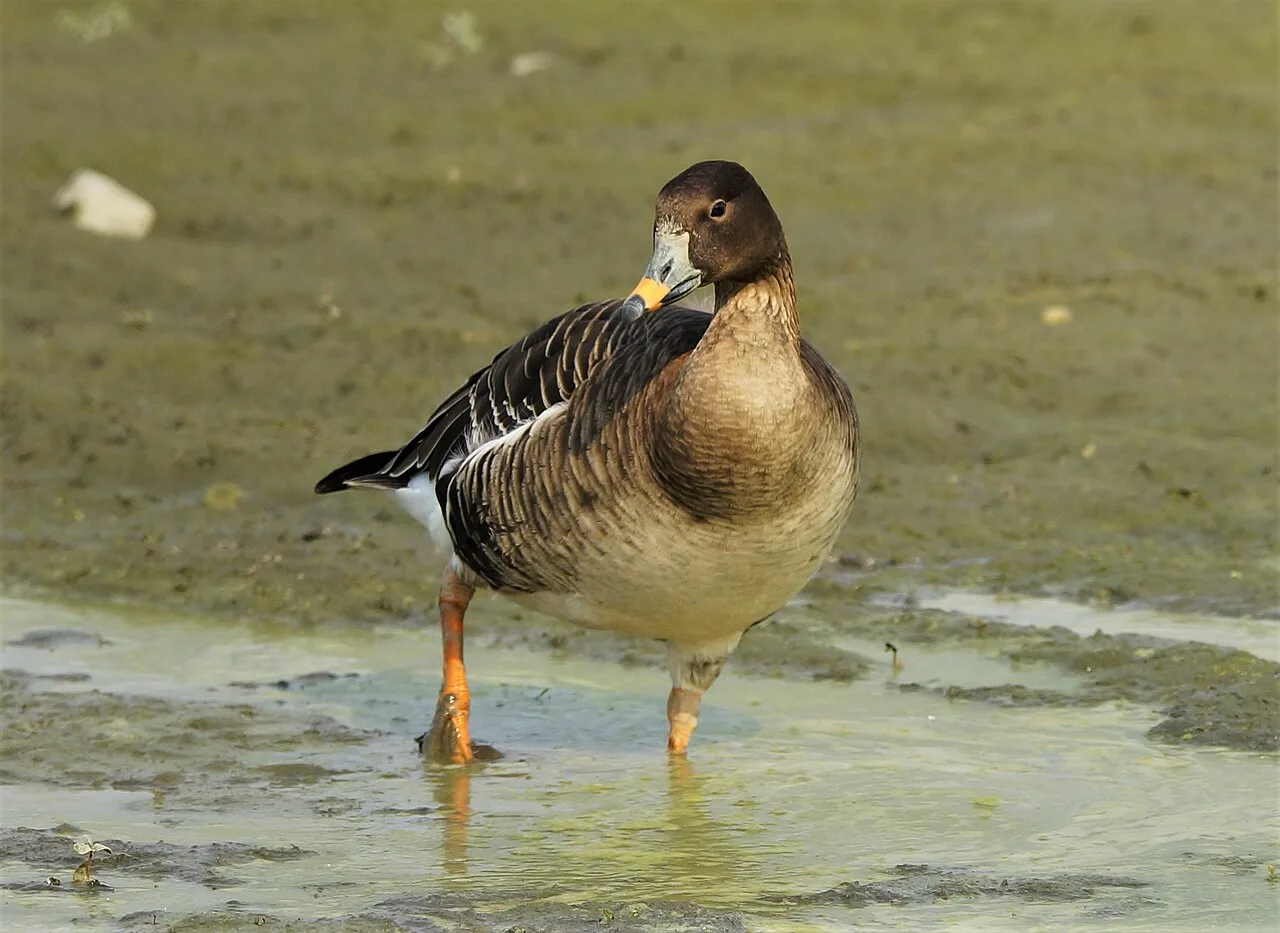
At a distance, the Tundra Bean-Goose looks like a large, brown goose, but a closer look reveals a bird of immense character. It is part of the "gray goose" group, making it a closer relative to the Greater White-fronted Goose than our local Canada Geese.
The Bill: This is the most critical field mark. The bill is mostly black but features a distinctive bright orange band near the tip. The size and shape of this orange patch can actually help birders distinguish between the Tundra Bean-Goose and its cousin, the Taiga Bean-Goose.
The Legs: Unlike the dark legs of many common geese, the Tundra Bean-Goose sports vibrant, bright orange legs that match its bill.
The Silhouette: It is a stocky, powerful bird with a thick neck and a more rounded head than the sleeker White-fronted Goose.
2. Why "Bean-Goose"?
The name isn't just a quirky label; it’s a nod to the bird's historical foraging habits. In Europe, these geese were often seen feeding in harvested fields of beans and other legumes during the winter months. In the modern U.S. context, however, you’re more likely to find them among a "communal" flock of Snow Geese or Greater White-fronted Geese in flooded agricultural fields or wetlands.
3. The Montana Mystery: How Did It Get Here?
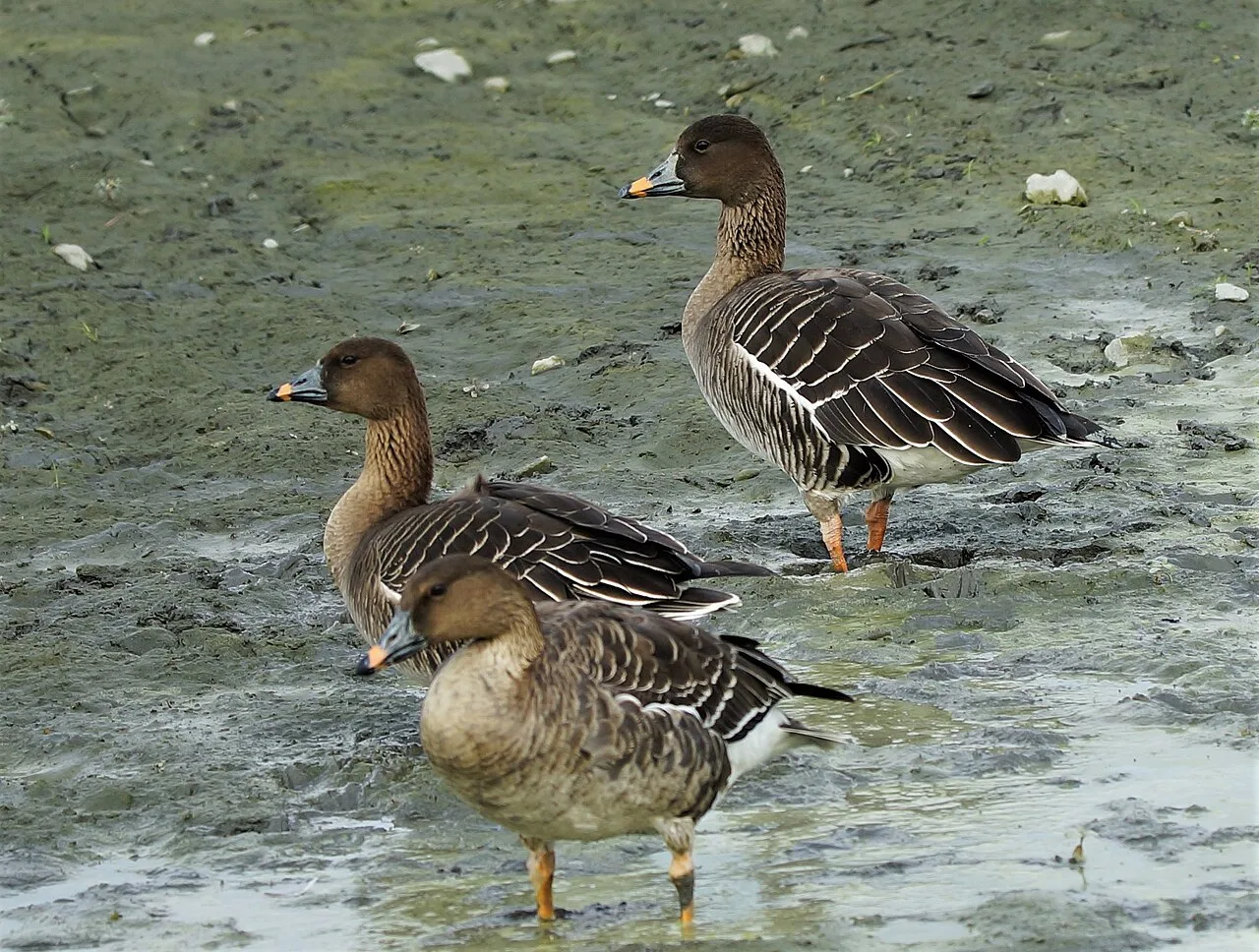
The Tundra Bean-Goose is a regular but rare visitor to the westernmost Aleutian Islands of Alaska. However, seeing one in the "Lower 48"—and specifically in a landlocked state like Montana—is an incredibly rare occurrence.
Ornithologists believe this bird likely got caught up in a massive flock of migratory geese in Alaska or Western Canada. When the "V" formations began their spring move south or east, this lone Bean-Goose simply tagged along for the ride. This phenomenon, known as "association," often results in rare Arctic geese showing up in unexpected places like the Great Plains or the Rocky Mountain front.
4. Bean-Goose vs. Greater White-fronted Goose
For birders in Montana, the challenge was picking one rare goose out of a flock of thousands. Here is the side-by-side comparison used to verify the sighting:
| Feature | Tundra Bean-Goose | Greater White-fronted Goose |
| Bill | Black with an orange band. | Pinkish or orange with a white base. |
| Face | All dark (no white patch). | Distinctive white "front" around the bill. |
| Belly | Mostly solid brown/gray. | Heavy black "bars" or splotches. |
| Feet | Bright Orange. | Orange. |
5. The "Big Year" Impact
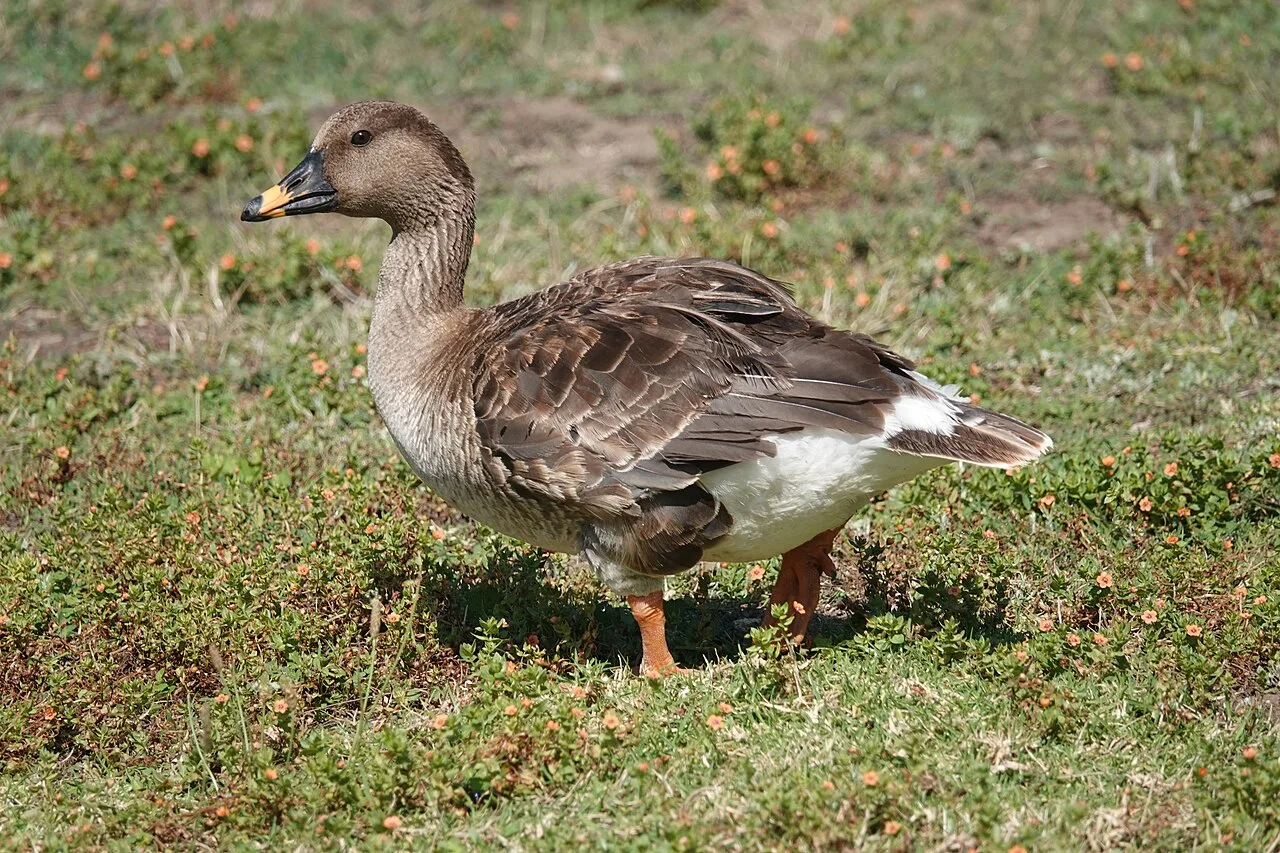
The Montana Bean-Goose has become a major target for birders participating in a "Big Year"—a personal challenge to see as many species as possible in a single calendar year. Because 2026 has already delivered the European Robin and the Red-flanked Bluetail, the addition of a Tundra Bean-Goose has many birders wondering if this could be a record-breaking year for the total number of species recorded in the United States.
Where to Look
The Montana bird was spotted in the Freezout Lake Wildlife Management Area, a legendary stopover for hundreds of thousands of Snow Geese. If you are in the area:
Scan the Edges: Rare geese often hang out on the periphery of the main flock.
Look for the Bill: Use a high-power spotting scope to check the bill color of every "brown" goose you see.
Be Patient: Geese move frequently between water and feeding fields. A bird seen in the morning may be miles away by afternoon.
A Reminder of the Wild North
The Tundra Bean-Goose is a visitor from one of the most remote places on Earth—the Siberian tundra. Its presence in the heart of the American West is a reminder of the sheer scale of avian migration. It bridges the gap between the Russian wilderness and the American prairie, proving once again that for a bird with strong wings and a bit of luck, the entire world is a single, connected habitat.
