
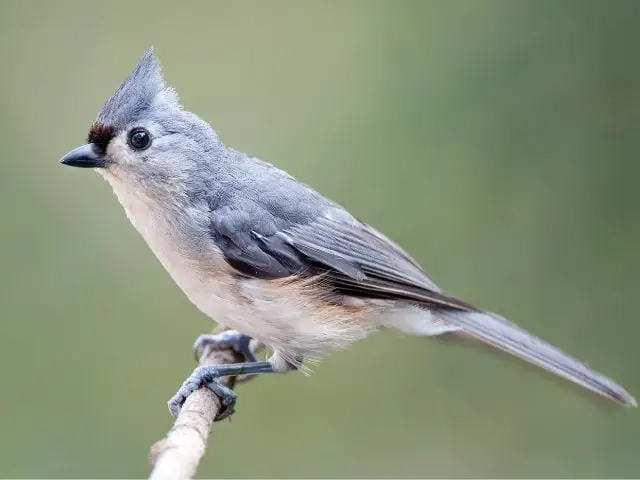
Among the dense canopies of North America's eastern deciduous forests, a lively, crested songbird announces its presence with an emphatic, whistled refrain: "peter-peter-peter." This is the Tufted Titmouse (Baeolophus bicolor), a small but spirited resident whose curiosity, vocal prowess, and acrobatic antics make it one of the most beloved and recognizable birds of the woodlands and backyards across its range.
Identification and Appearance
The Tufted Titmouse is a quintessential example of its family, the Paridae, which also includes the familiar chickadees. Measuring between 5.5 to 6.3 inches in length—larger than a chickadee but still petite—it possesses a distinctive and perpetually perky gray crest atop its head, lending it an air of alertness and constant inquiry.
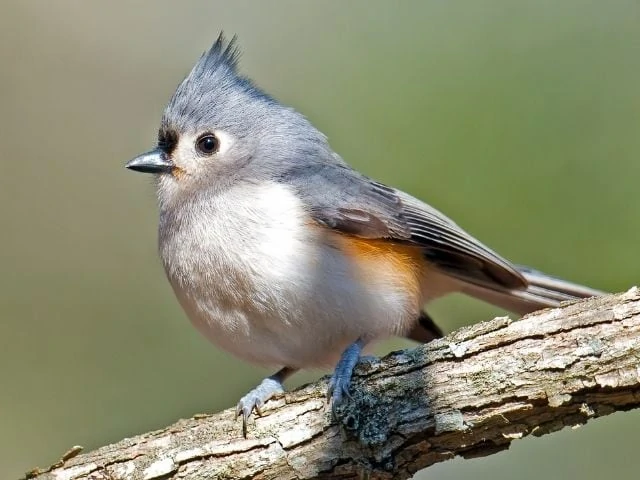
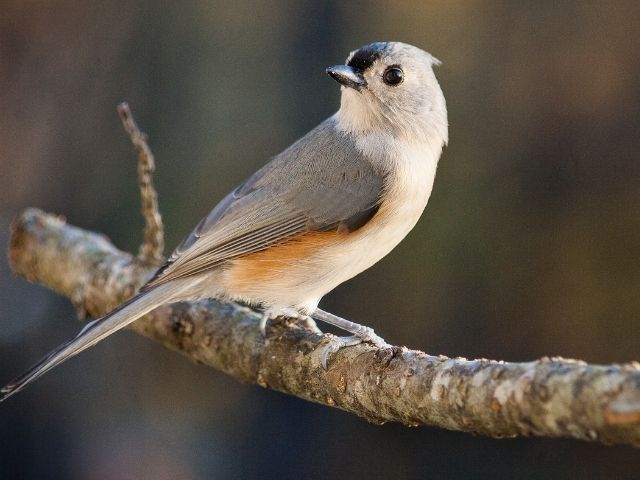
Its plumage is a model of subtle elegance: soft, silvery-gray on the upperparts, contrasting with clean, white underparts. A striking detail is the splash of rusty or peach-colored wash visible along its flanks. The most distinguishing facial feature, aside from the crest, is a noticeable black patch on the forehead just above the bill, which highlights its large, expressive dark eyes.
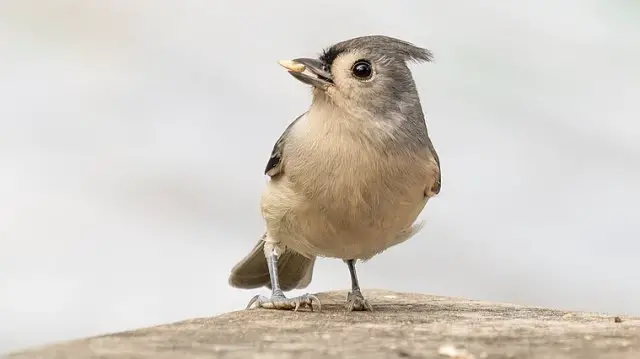
Interestingly, unlike many bird species where the male is more brightly colored, the male and female titmice are virtually identical in appearance. This shared plumage reflects their mutual investment in raising young and maintaining a strong pair bond. They are non-migratory birds, remaining on their established territories year-round, which allows backyard enthusiasts to enjoy their company even through the depths of winter.
Habitat and Distribution: A Range on the Move
Historically, the Tufted Titmouse was primarily a bird of the Ohio and Mississippi River basins. However, over the last half-century, the species has undergone a significant northward range expansion. Today, its habitat stretches across the eastern and southeastern United States, reaching as far north as southern Ontario and Quebec in Canada.
This expansion is attributed to several key factors:
- Warming Climate: Milder winters allow the year-round resident to survive in previously inhospitable northern areas.
- Maturing Forests: The reversion of old farmlands into mature woodlands provides ideal nesting and foraging habitat.
- Bird Feeders: The widespread popularity of backyard bird feeders, providing a reliable source of high-energy seeds (especially sunflower seeds), has proven crucial for winter survival in the northern limits of its range.
The titmouse thrives in deciduous or mixed evergreen-deciduous forests with a dense canopy. They are highly adaptable and are equally common in human-altered landscapes like parks, orchards, and suburban areas, provided there are mature trees for cover and nesting cavities.
Diet and Acrobatic Behavior

The titmouse is an omnivorous forager, with its diet shifting between seasons. Over the course of a year, approximately two-thirds of its diet consists of animal matter, which includes a wide variety of insects, such as caterpillars (a favorite during summer breeding), beetles, wasps, ants, and spiders. This makes them valuable natural pest controllers in the forest ecosystem.
During the colder months, its diet leans heavily on plant matter, including seeds, nuts (especially acorns and beech nuts), and small fruits. They are expert, acrobatic foragers, often seen hanging upside down or sideways as they meticulously investigate the undersides of branches, bark crevices, and curled leaves for hidden food.
The Art of Caching
One of the titmouse's most endearing winter behaviors is food caching or hoarding. When visiting a bird feeder, it rarely eats a seed immediately. Instead, it will snatch a single seed (favoring the largest one it can find), fly to a nearby perch, hold the seed with its feet, and hammer it open with its stout bill. It will often then remove the shell and stow the kernel in a bark crevice or wedge it under a lichen patch, often within about 130 feet of the feeder. This diligent behavior ensures survival during periods of scarcity, and they are believed to have a remarkable memory for locating these hidden stores.

Vocalizations and Social Life
For such a small bird, the Tufted Titmouse possesses a surprisingly loud and echoing voice. They are one of the most vocal birds in the eastern woods, constantly using a large repertoire of calls and songs to communicate.
The song is the clear, whistled "peter-peter-peter" phrase, which is often repeated rapidly and can be heard even on the coldest winter days, long before the spring breeding season begins.
Their primary call is a nasal, scolding tsee-day-day-day or a similar scratchy, buzzy sound. This call is crucial for maintaining contact within the family group and, more importantly, for warning other birds of danger. They are often the "sentry" of mixed-species foraging flocks in the winter—groups that may include chickadees, nuthatches, and woodpeckers. By listening to the titmouse's chatter and alarm calls, other species can gauge the immediate threat level of a predator, with the call’s composition changing depending on how imminent the threat is.
Family and Breeding
Tufted Titmice are typically monogamous, with mated pairs often staying together on their territory throughout the year.
- Nesting: They are cavity nesters but, unlike their chickadee cousins, they do not excavate their own holes. They rely on natural tree cavities, knotholes, or old nesting sites created by woodpeckers. They will also readily use human-provided nest boxes.
- Nest Construction: The female builds a soft, cup-shaped nest at the bottom of the cavity, often lined with grass, moss, bark strips, and—notoriously—animal hair. The titmouse is known to pluck hair from live mammals, including squirrels, dogs, and even humans, to create the soft, insulating lining.
- Parenting: The female incubates the clutch of 5 to 8 speckled eggs for about two weeks, during which the male frequently brings her food. Once the young hatch, both parents share the duty of feeding the nestlings until they fledge (leave the nest) about two weeks later.
- Helpers: Uniquely among many related species, the young from a first brood may occasionally remain with their parents to help raise a subsequent brood in the same season, a behavior known as cooperative breeding.

Tufted Titmouse
Conservation Status
The Tufted Titmouse is a conservation success story. According to the IUCN Red List, the species is classified as Least Concern (LC), with populations being stable or increasing across much of their range. Their adaptability to suburban environments and their willingness to use bird feeders have contributed significantly to their current robust status. As long as humans continue to provide them with mature trees and reliable food sources, the clear, bright peter-peter-peter will remain a signature sound of the eastern North American landscape.
