
Peru, a land of ancient civilizations and breathtaking landscapes, is also a birder's paradise. With over 1,800 species, including 120 endemics, it boasts the second-highest bird diversity in the world. From the coastal deserts to the Andean highlands and the Amazon rainforest, Peru offers an unparalleled birdwatching experience for enthusiasts of all levels.
Ready to embark on an unforgettable avian adventure? Here's how you can plan your next birdwatching trip to Peru:
1. Choose Your Region(s) and Target Species:
Peru's diverse geography means different regions offer unique birdwatching opportunities. Research which areas align with your interests and desired bird species.
Amazon Rainforest (e.g., Manu National Park, Tambopata National Reserve): This is the heart of Peru's bird diversity, home to macaws, toucans, hummingbirds, and countless other species. Expect lush vegetation, incredible wildlife, and a truly immersive jungle experience.
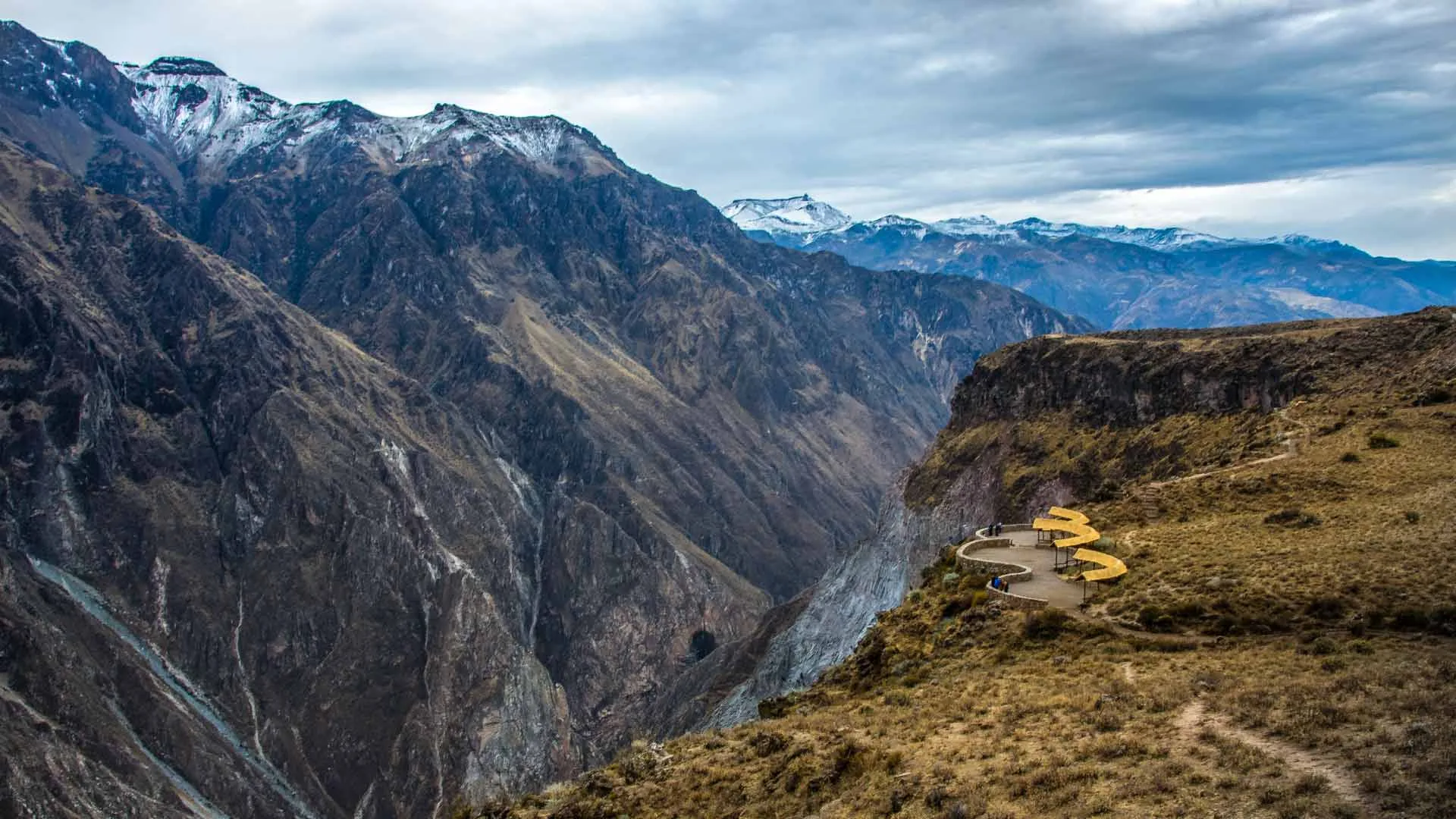
Andean Highlands (e.g., Abra Malaga, Colca Canyon): If you're after high-altitude specialists like the Andean Condor, Royal Cinclodes, or various tanagers, the Andes are your calling. The dramatic scenery and unique cloud forest habitats are a major draw.
Northern Peru (e.g., Chaparri Ecological Reserve, Maranon Valley): This region is famous for its high concentration of endemic species, particularly in the dry forests and inter-Andean valleys. Birders seeking rarities and unique habitats will find this area rewarding.
Coastal Deserts (e.g., Paracas National Reserve): While less diverse than other regions, the coast offers opportunities to spot seabirds like Humboldt Penguins, various cormorants, and pelicans.
2. Best Time to Visit:
While birdwatching is possible year-round in Peru, the dry season (May to October) is generally considered the best time to visit, especially for the Amazon. During this period, river levels are lower, making trails more accessible and insect activity potentially less intense. However, some highland areas might experience clearer skies outside of the rainy season.
3. Determine Your Trip Duration and Style:
Duration: A typical birdwatching trip to Peru can range from 7 to 14 days, though longer trips allow for more in-depth exploration of multiple regions.
Style:
Independent Travel: For experienced birders comfortable with navigating independently, this offers flexibility. You'll need to arrange transportation, accommodations, and potentially local guides yourself.
Guided Tours: Many specialized birdwatching tour operators offer comprehensive packages, often led by expert local guides. These tours handle logistics, provide transportation, and significantly increase your chances of spotting specific species. This is highly recommended for first-time visitors or those seeking a hassle-free experience.
Lodge-Based Stays: In the Amazon, staying at eco-lodges provides access to well-maintained trails and local guides, allowing for focused birdwatching in a comfortable setting.
4. Budget Accordingly:
Peru is generally an affordable country, but specialized birdwatching tours and lodge stays in remote areas can be significant investments. Factor in:
International Flights: From the U.S. to Lima (LIM) or Cusco (CUZ).
Domestic Flights: For travel between regions (e.g., Lima to Puerto Maldonado for the Amazon).
Accommodation: From budget hostels to luxury eco-lodges.
Tours and Guides: Especially important for reaching remote birding hotspots.
Food and Drink: Local markets offer delicious and inexpensive options.
Park Entrance Fees: Essential for protected areas.
Gear: Binoculars, spotting scope, camera, field guides, appropriate clothing.
5. Essential Gear and Packing List:
Optics: High-quality binoculars are a must. A spotting scope is highly recommended for distant birds.
Camera: A good camera with a telephoto lens if you want to capture your sightings.
Field Guides: A comprehensive bird guide to Peru (e.g., "Birds of Peru" by Schulenberg et al.) is invaluable.
Clothing: Lightweight, quick-drying, neutral-colored clothing for the jungle; layers for the Andes. Rain gear is essential regardless of the season.
Footwear: Comfortable, waterproof hiking boots are crucial.
Insect Repellent: Especially for jungle areas.
Sun Protection: Hat, sunglasses, sunscreen.
Medical Kit: Basic first-aid supplies, any personal medications.
Water Bottle/Hydration Pack: Stay hydrated!
Headlamp/Flashlight: For early morning or night walks.
6. Health and Safety Considerations:
Vaccinations: Consult your doctor regarding recommended vaccinations, including Yellow Fever (especially if visiting the Amazon) and routine immunizations.
Malaria Prophylaxis: Discuss with your doctor if anti-malarial medication is necessary for your chosen regions.
Altitude Sickness (Soroche): If you plan to visit the Andes, be aware of altitude sickness. Acclimatize gradually, stay hydrated, and consider coca tea (a traditional remedy) to help.
Travel Insurance: Always a good idea for international travel, covering medical emergencies and trip cancellations.
Local Guides: In remote areas, hiring experienced local guides not only enhances your birding success but also ensures your safety and supports local communities.
7. Book in Advance:
Especially for popular tours, lodges in national parks, and domestic flights, it's wise to book several months in advance to secure your preferred dates and accommodations.
Top 10 Peruvian Birds
To help you narrow down your search in a country with nearly 2,000 species, here is a list of the top 10 iconic birds to see in Peru. This list covers endemics, national symbols, and bizarre prehistoric specialists that represent the best of Peru’s three major regions: the Coast, the Andes, and the Amazon.
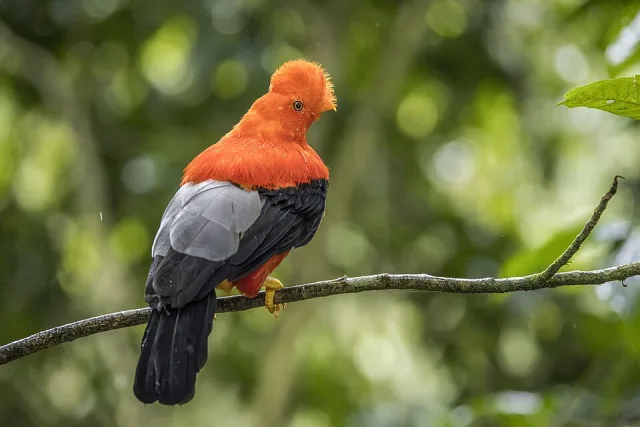
1. Andean Cock-of-the-Rock (Rupicola peruvianus)
Why see it: This is the National Bird of Peru. The males are famous for their brilliant orange plumage and large disk-like crests.
Where to find: Cloud forests on the eastern slopes of the Andes, notably in the Manu Road or Abra Patricia.
Best sighting: Visit a "lek" (courtship display site) at dawn to see males dancing and squawking to attract females.
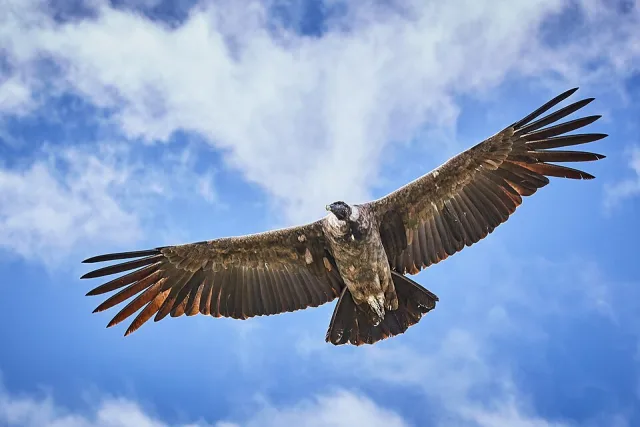
2. Andean Condor (Vultur gryphus)
Why see it: With a wingspan of up to 10.5 feet, it is one of the world's largest flying birds and a sacred symbol of the Inca.
Where to find: Colca Canyon near Arequipa is the global gold standard for viewing them at eye level as they ride thermals.
3. Marvelous Spatuletail (Loddigesia mirabilis)
Why see it: Often called the "world's most beautiful hummingbird," the male has only four tail feathers, two of which end in large, iridescent blue "spatules" that he waves like paddles during flight.
Where to find: This bird is endemic to the Utcubamba Valley in Northern Peru. Visit the Huembo Reserve for guaranteed sightings at feeders.
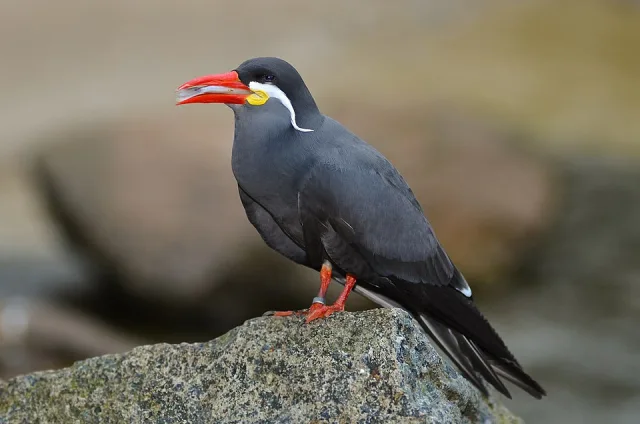
4. Inca Tern (Larosterna inca)
Why see it: Unique to the Humboldt Current, this dark grey seabird looks like it’s wearing a dapper white wax mustache.
Where to find: Rocky cliffs along the Pacific coast. The Paracas National Reserve and the Ballestas Islands are the best spots.
5. Hoatzin (Opisthocomus hoazin)
Why see it: A "living fossil," the Hoatzin has a prehistoric look with a spiky crest and blue facial skin. It is the only bird in the world that digests leaves through fermentation (earning it the nickname "Stinkbird").
Where to find: Oxbow lakes in the Amazon, such as those in Tambopata or Manu National Park.
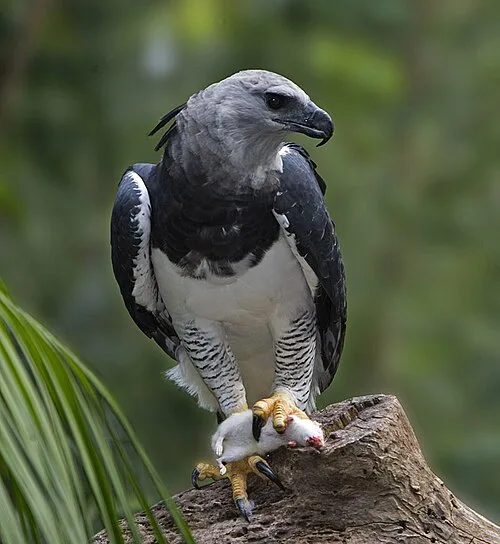
6. Harpy Eagle (Harpia harpyja)
Why see it: The holy grail for raptor enthusiasts, this is the most powerful eagle in the world. Seeing one is rare and requires deep-jungle tracking.
Where to find: Lowland Amazon rainforest. Lodges like Refugio Amazonas in Tambopata often have active nests monitored by researchers.
7. Humboldt Penguin (Spheniscus humboldti)
Why see it: Many travelers are surprised to find penguins in Peru! These flightless birds thrive in the cold, nutrient-rich Humboldt Current.
Where to find: Ballestas Islands (accessible via a boat tour from Paracas).
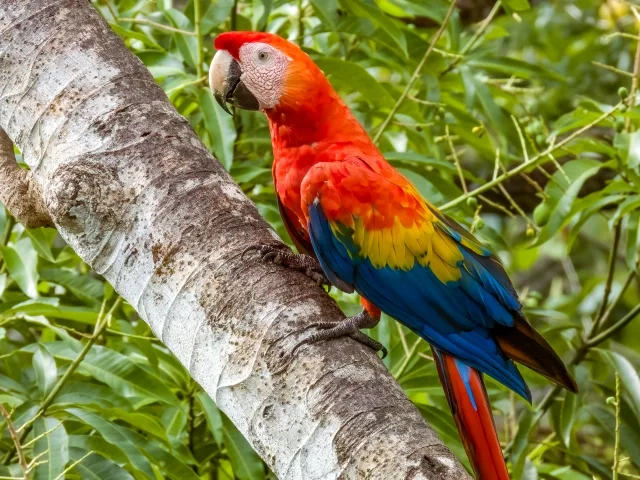
8. Scarlet Macaw (Ara macao)
Why see it: Nothing says "Amazon Rainforest" quite like the sight and sound of these giant, multi-colored parrots screaming over the canopy.
Where to find: Lowland jungle. The Tambopata clay licks (colpas) are world-famous, where hundreds of macaws gather at sunrise to eat mineral-rich clay.
9. Bearded Mountaineer (Oreonympha nobilis)
Why see it: A spectacular, large hummingbird with a multi-colored throat beard. It is highly sought after because it is endemic to high-altitude Andean valleys.
Where to find: Around Cusco and the Sacred Valley, typically feeding on the flowers of the Tobacco tree.
10. Long-whiskered Owlet (Xenoglaux loweryi)
Why see it: One of the smallest and rarest owls in the world. It was unknown to science until the late 1970s and is so elusive that it remained "unseeable" by tourists for decades.
Where to find: Restricted to a tiny patch of elfin forest in Northern Peru (Abra Patricia). Specialized night tours are now available to find them.
Wrapping Up
Imagine waking to the calls of diverse birds in the Amazon, spotting a majestic Andean Condor soaring above ancient Inca ruins, or discovering a rare endemic in a cloud forest. Peru offers an unparalleled opportunity to connect with nature and witness an astonishing array of avian life.
Planning your birdwatching trip to Peru is an exciting journey in itself. With careful preparation and an open heart for adventure, you're guaranteed an unforgettable experience among some of the world's most spectacular birds.
