
The Curious Case of Flightless Birds: An Evolutionary Paradox
At first glance, a bird that cannot fly seems like a paradox of nature. Flight is the defining characteristic of the class Aves, enabling birds to conquer the skies, migrate across continents, and escape predators with a beat of their wings. Yet, scattered across the globe are dozens of bird species that have, through the remarkable process of evolution, abandoned this fundamental ability.
Far from being a biological failure, flightlessness is a highly successful and elegant adaptation, a testament to the power of natural selection to sculpt organisms to fit their specific environments. This article will explore the evolutionary journey to flightlessness, examining the "why" and "how" of this unique adaptation with examples of some of the world's most famous grounded birds.
The Cost-Benefit Analysis of Flight
To understand why a bird would give up flight, one must first consider its immense cost. Flight is one of the most energy-intensive forms of locomotion in the animal kingdom. A bird's body is a finely tuned machine, with a powerful, rigid skeleton and massive pectoral muscles to power the wings. This requires a significant metabolic investment in both muscle development and daily energy expenditure.
In environments where the benefits of flight—such as escaping predators or migrating long distances for food—are outweighed by these costs, natural selection can favor birds that invest their energy elsewhere.
The primary factor driving this trade-off is the absence of predators. On isolated islands, free from terrestrial mammals like weasels, cats, or foxes, the need for a quick aerial escape diminishes. The energy once dedicated to maintaining powerful flight muscles can be repurposed for other uses: growing larger, producing more offspring, or simply surviving on a more limited diet.
This "use it or lose it" principle leads to a gradual reduction of the flight apparatus over countless generations.
Anatomical Transformation: Losing the Tools of Flight
The journey to flightlessness involves profound changes to a bird's anatomy. The most significant is the reduction or complete loss of the keel, a prominent ridge on the sternum (breastbone) of flying birds. This keel serves as the anchor point for the powerful pectoral muscles that pull the wings downward, a crucial motion for flight. In flightless birds, this bone becomes flattened or vestigial, as the large flight muscles are no longer needed.
Other anatomical changes include:
- Reduced Wing Bones: The bones in the wings become smaller and lighter, losing their aerodynamic shape and structural integrity.
- Denser Skeleton: Unlike the lightweight, hollow bones of flying birds, flightless birds often have denser, heavier bones, providing a more stable and robust body for life on the ground.
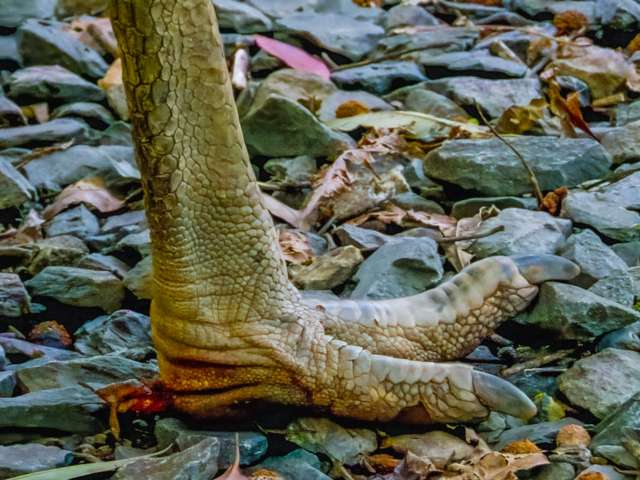
- Sturdier Legs: As the primary mode of locomotion shifts from air to land, the legs and feet often become stronger, larger, and better adapted for running or swimming.
These changes are not a single, abrupt event but a slow, continuous process guided by natural selection. As the need for flight lessens, the birds' bodies gradually reallocate resources, leading to the distinctive forms we see today.
Ratites: The Ancient Giants
The most famous group of flightless birds are the ratites, a diverse order that includes the Ostrich, Emu, Rhea, Cassowary, and Kiwi. These birds are remarkable not only for their inability to fly but also for their ancient evolutionary history. While initially believed to have descended from a single flightless ancestor on the supercontinent Gondwana, modern genetic studies now suggest a more complex story. The ancestors of ratites were likely flying birds that spread across continents and then lost the ability to fly multiple times in different lineages. This demonstrates the powerful and predictable nature of the evolutionary path to flightlessness when the right ecological conditions are met.
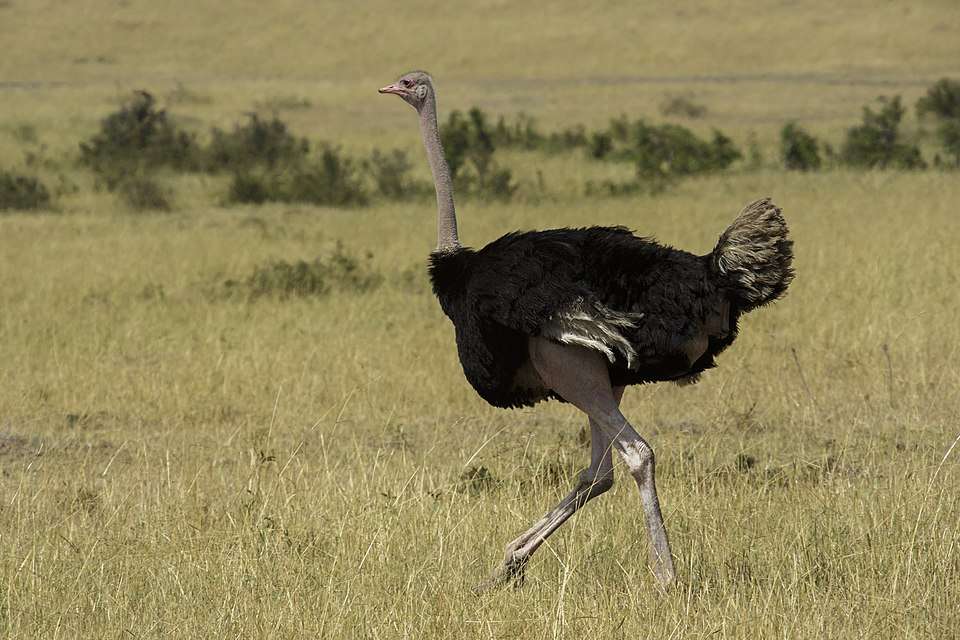
- The Ostrich : The largest and heaviest living bird, the Ostrich is a symbol of adaptation. Native to the arid plains and savannas of Africa, its powerful legs allow it to reach speeds of up to 45 mph ( km/h), making it faster than many predators. Its small, vestigial wings are used for balance during high-speed running and for display during courtship, but they are utterly useless for flight.
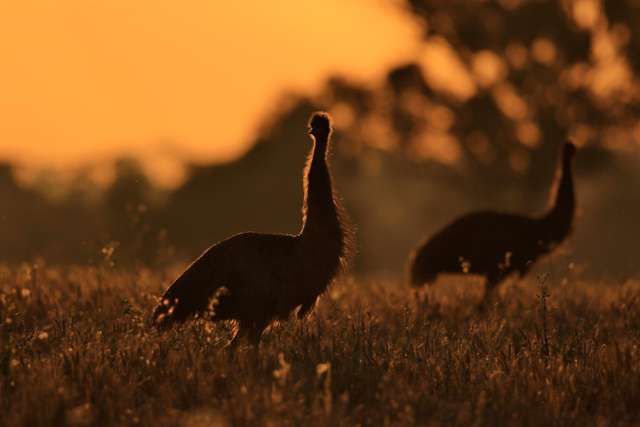
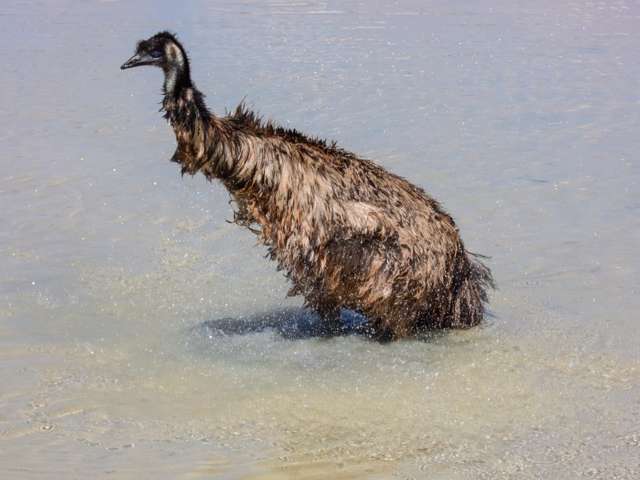
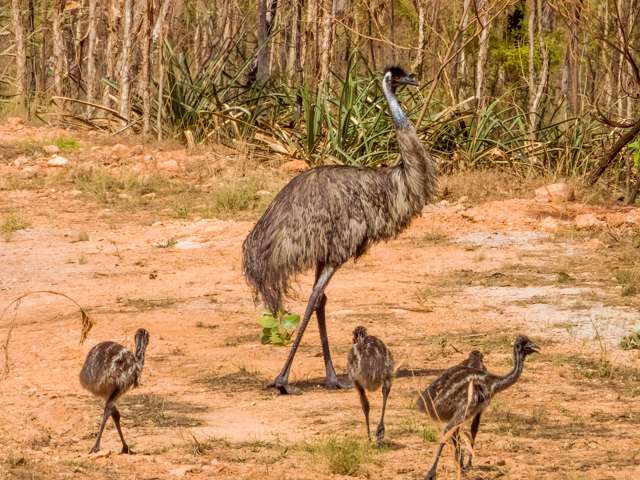
- The Emu: The second-largest living bird, the Emu is an iconic resident of Australia. It shares many characteristics with the Ostrich, including a reliance on speed to escape danger. Emus can sprint at speeds of over 30 mph ( km/h) and use their large, three-toed feet to cover vast distances across the continent's open plains.
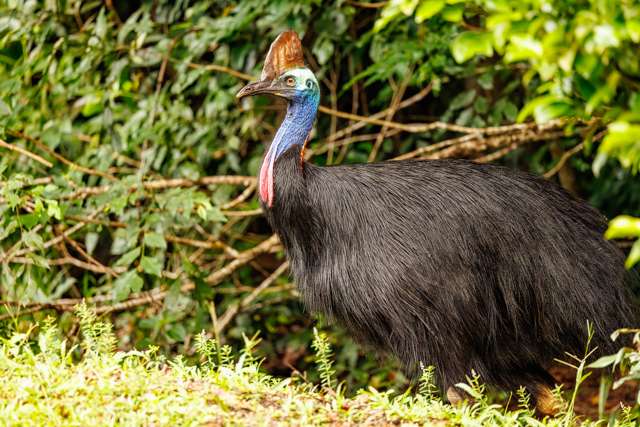
- The Cassowary: Found in the dense rainforests of New Guinea and Australia, the Cassowary is often called the world's most dangerous bird. Its powerful legs are equipped with a sharp, dagger-like claw that it can use to deliver a devastating kick. Unlike its savanna-dwelling relatives, the Cassowary's environment doesn't demand high speed, but its ability to navigate the underbrush is unparalleled. Its wings are reduced to a few stiff quills.
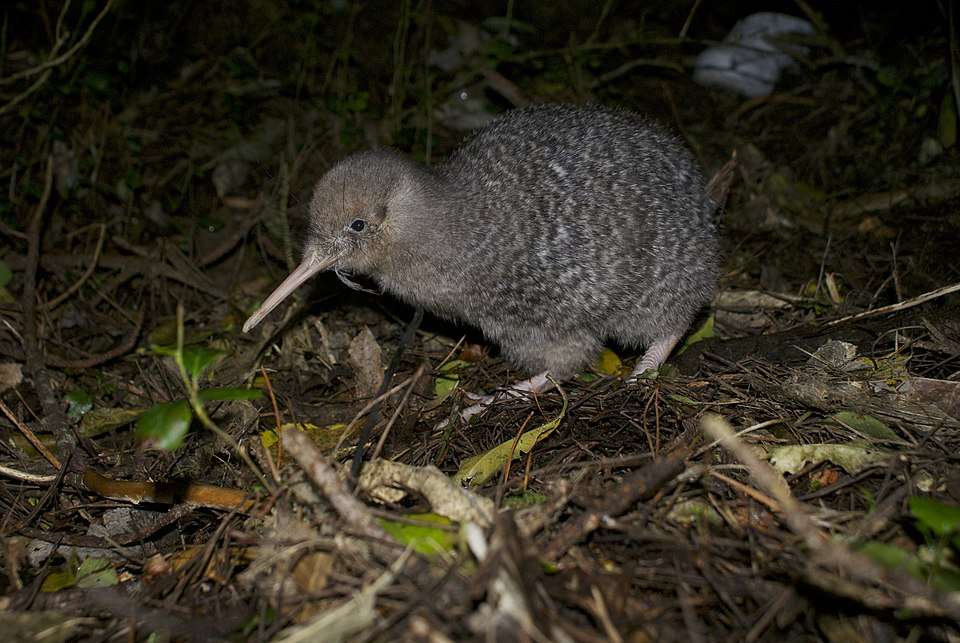
- The Kiwi: A national symbol of New Zealand, the Kiwi is an anomaly among ratites. It is a small, nocturnal bird with a long, sensitive bill that it uses to forage for invertebrates in the forest floor. Its feathers are shaggy and hair-like, and its wings are so small they are barely visible. The Kiwi's ancestors evolved in an environment completely free of mammalian predators, allowing them to thrive as a ground-dwelling species.
Penguins: The Aquatic Flyers
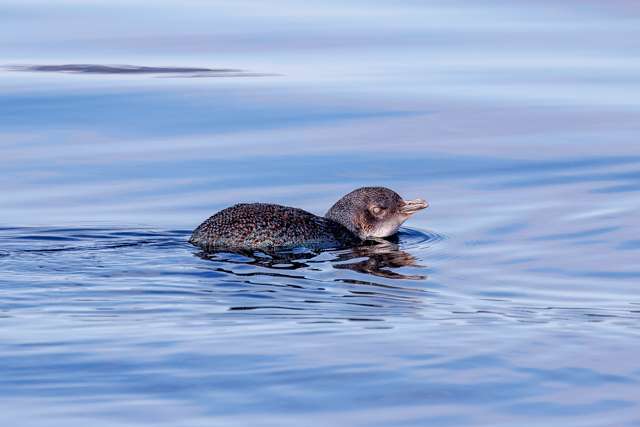
Penguins are a unique case. While they are famously flightless in the air, they are masters of "flight" in the water. Their wings have evolved into stiff, powerful flippers, and their bodies are torpedo-shaped for hydrodynamic efficiency. This adaptation allows them to "fly" through the water with incredible speed and agility, chasing fish and krill. The penguin's keel bone is still well-developed, but it anchors muscles for a different purpose—propelling its flippers through the dense medium of water rather than pushing against the air. Living in environments with few terrestrial predators, but surrounded by a bounty of food in the sea, penguins evolved a lifestyle that made aerial flight redundant.
Island Sanctuaries and Tragic Endings
Islands, with their isolated ecosystems and lack of predators, have been the cradle of flightlessness. This is where we find some of the most specialized and unique examples of grounded birds, as well as some of the most heartbreaking stories of extinction.
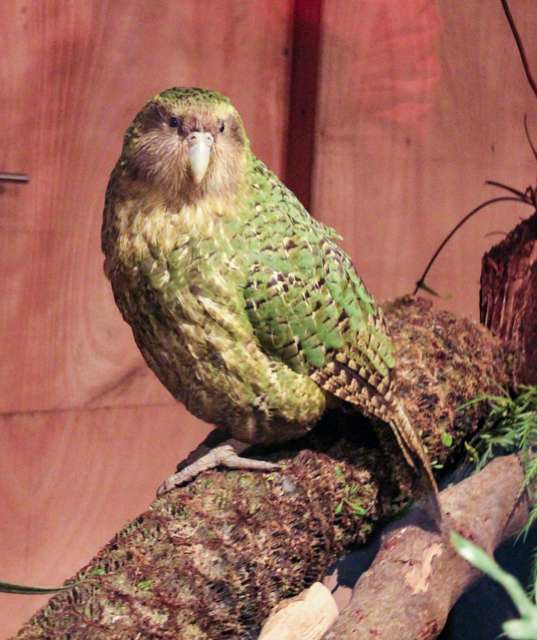
- The Kakapo: This extraordinary parrot from New Zealand is the world's only flightless parrot. It is a large, nocturnal bird that feeds on the forest floor. Like the Kiwi, it evolved in an environment without mammalian predators. However, its ground-dwelling nature and lack of fear of humans made it incredibly vulnerable to introduced predators like stoats and cats. Today, the Kakapo is critically endangered, and its survival is dependent on intensive conservation efforts on predator-free islands.
- The Great Auk: This species was a large, flightless seabird that once thrived on rocky islands in the North Atlantic. Similar to penguins in appearance, the Great Auk was a powerful swimmer that used its wings for underwater propulsion. Unfortunately, it was an easy target for human hunters seeking its meat and feathers. With no ability to escape on land, the last Great Auk was killed in 1844.
- The Dodo: The Dodo is perhaps the most famous example of a flightless bird's vulnerability. Native to the island of Mauritius, it lived in an ecosystem where it had no natural predators. Its plump body and lack of fear made it an easy target for sailors who arrived on the island in the 17th century. The introduction of pigs and other mammals, which ate its eggs and young, sealed its fate. The Dodo went extinct within a century of human arrival, serving as a cautionary tale about the fragility of island ecosystems.
Wrapping Up
The phenomenon of flightlessness in birds is a powerful illustration of evolutionary principles at work. It shows that evolution is not a one-way street toward greater complexity or "advancement" but a process of constant adaptation to a given ecological niche. For these birds, flight was a valuable trait for their ancestors, but when the environment changed, it became an unnecessary and costly burden.
From the thunderous strides of the Ostrich across the African savanna to the quiet, nocturnal shuffle of the Kiwi in a New Zealand forest, these birds are not a biological mistake. They are living proof that evolution is always at work, shaping and reshaping life in a continuous dance between organism and environment. The stories of their unique adaptations, and in some cases, their tragic demise, serve as a constant reminder of the intricate and delicate balance of life on Earth.
Find out here about why birds are often seen on one leg.
