
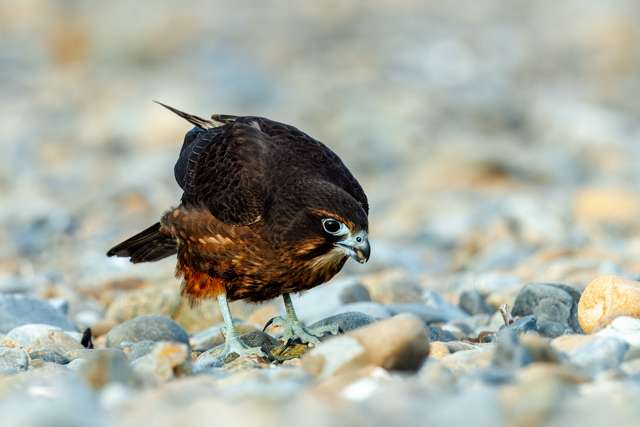
I was bird watching on a New Zealand beach when I saw something remarkable and it change how I viewed birds.
A falcon was standing on the rocks. This was unusual in itself but further to that, it looked like it was swallowing small stones. I had to investigate and was amazed to find out this is a common practice and done for very important reasons.
The gizzard, or ventriculus, is arguably one of the most fascinating organs in the avian world. Found in the digestive system of birds, as well as some dinosaurs, alligators, and crocodiles, the gizzard is a highly muscular, tough-walled second stomach that acts as a powerful grinder. In a world where most creatures rely on teeth to break down food, birds have evolved this remarkable organ to do the same job, often with the help of swallowed grit or stones.
The gizzard's efficiency is a testament to the incredible adaptability of avian species, allowing them to thrive on diets ranging from hard seeds and nuts to tough insects and even bones. Understanding the gizzard is key to appreciating the complex biology that allows birds to occupy nearly every ecological niche on the planet.
Anatomy and Function: The Bird's Internal Mill
To fully grasp the gizzard's function, it's essential to understand its place in the bird's digestive tract. When a bird eats, food first travels down the esophagus and into the proventriculus, the first chamber of the stomach. This glandular stomach secretes digestive acids and enzymes, beginning the chemical breakdown of the food. From here, the partially digested food moves into the gizzard. The gizzard itself is a marvel of biological engineering. Its interior is lined with a tough, protective layer called the koilin, a hardened secretion that shields the muscle walls from abrasion. The organ's powerful muscles contract and relax in a rhythmic, churning motion, working the food against itself and against any grit or stones the bird has ingested.
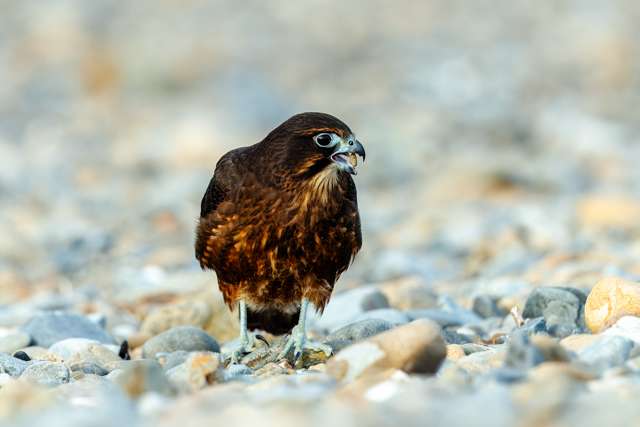
The process of swallowing stones, known as gastroliths, is a common and crucial behavior for many birds. Chickens, turkeys, and pigeons, for example, instinctively peck up small pebbles, sand, and other gritty materials. These gastroliths are stored in the gizzard and act as an internal millstone, significantly enhancing the grinding efficiency. The constant churning and grinding break down tough materials like seed hulls, insect exoskeletons, and bone fragments into a fine pulp. This mechanically processed food then passes into the intestines for nutrient absorption. The size and thickness of a gizzard's walls are directly proportional to the hardness of the bird's diet; a seed-eating finch will have a much more robust gizzard than a fruit-eating tanager.
Avian Diets and Gizzard Specialization in U.S. Birds
The gizzard's structure is a perfect reflection of a bird's diet, and the diversity of American bird species provides an excellent case study.
Seed and Grain Eaters
Birds that rely on a diet of hard seeds, grains, and nuts have some of the most powerful gizzards in the avian world.
- Northern Cardinal: These iconic backyard birds are known for their thick, conical beaks, perfect for cracking seeds. Their gizzards are equally robust, efficiently pulverizing sunflower seeds, safflower, and cracked corn.
- Mourning Dove: A common sight across the U.S., these birds are often seen foraging on the ground for seeds. They are prolific grit swallowers, and their powerful gizzards are essential for digesting the large quantity of small, hard seeds they consume.

Mourning Dove - Wild Turkey: The Wild Turkey's gizzard is a true powerhouse. As a ground forager, its diet includes a wide range of hard materials, from acorns and nuts to small stones and insects. The gizzard is so strong that it can even grind up hard corn kernels and small pebbles, a necessary adaptation for its varied and often tough diet.

Insect and Small Animal Eaters
Birds that primarily eat insects and other small animals still have functional gizzards, but they are generally less muscular than those of seed-eaters.
- American Robin: This familiar songbird eats a diet of earthworms, insects, and berries. While it doesn't need to pulverize tough seeds, its gizzard is still vital for grinding up the hard exoskeletons of beetles and other arthropods.
- Barn Owl: Known for swallowing their prey whole, including mice and voles, Barn Owls use their gizzard to separate the indigestible parts of their meal, such as bones and fur. These undigested materials are then compacted into a pellet, which the owl regurgitates. The gizzard plays a crucial role in forming these pellets, a process that is a hallmark of many predatory birds.

Barn Owl

Fish and Aquatic Eaters
For birds that hunt fish and other aquatic prey, the gizzard's role changes again.
- Bald Eagle: While these majestic birds have powerful beaks for tearing flesh, their gizzards are still essential for processing bone fragments and other tough parts of their fish and carrion diet.
- Mallard Duck: As a dabbling duck, the Mallard eats a mix of aquatic plants, insects, and small mollusks. Their gizzards are well-suited for grinding up this varied diet, including the shells of snails and crustaceans, which provides them with a rich source of calcium.

The Gizzard and Human Culture: From Food to Science
The bird gizzard is not just a biological curiosity; it has a significant place in human culture, particularly in cuisine. In many parts of the world, including the Southern United States, chicken and turkey gizzards are considered a delicacy. Fried gizzards, often served battered and crispy, are a staple in soul food and country cooking, valued for their unique, chewy texture and rich flavor. This culinary use highlights the gizzard's tough, muscular nature, which gives it a distinct mouthfeel.
In scientific research, the gizzard continues to be a subject of study. By examining the contents of a gizzard, scientists can learn about a bird's diet and foraging habits. This is particularly useful in studying the diets of extinct birds and dinosaurs, where fossilized gizzard stones (gastroliths) provide clues about their feeding behavior. The gizzard's mechanical efficiency has also inspired engineering concepts, with its grinding action serving as a model for industrial pulverizing and milling processes.
Wrapping Up
It turns out that the gizzard is far more than a simple stomach; it is a masterfully evolved organ that has enabled birds to become one of the most successful and widespread animal groups on Earth. Its adaptability—from the rock-crushing gizzard of a Wild Turkey to the pellet-forming gizzard of an owl—is a testament to the ingenuity of natural selection. By appreciating this remarkable organ, we gain a deeper understanding of the incredible biology that allows birds to take flight and thrive.
From one end to the other. Read all about bird poop.
