
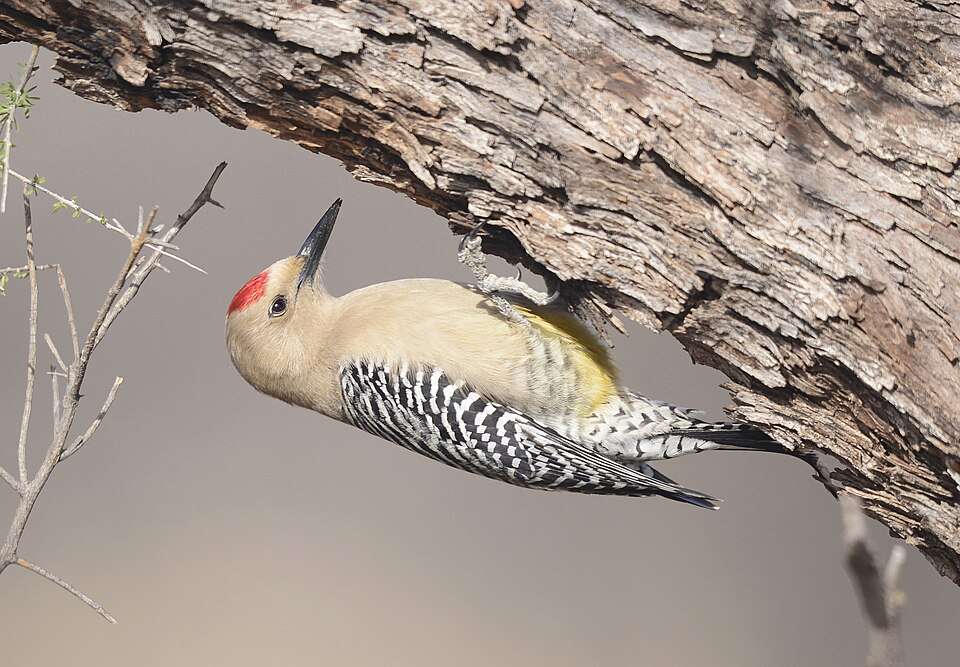
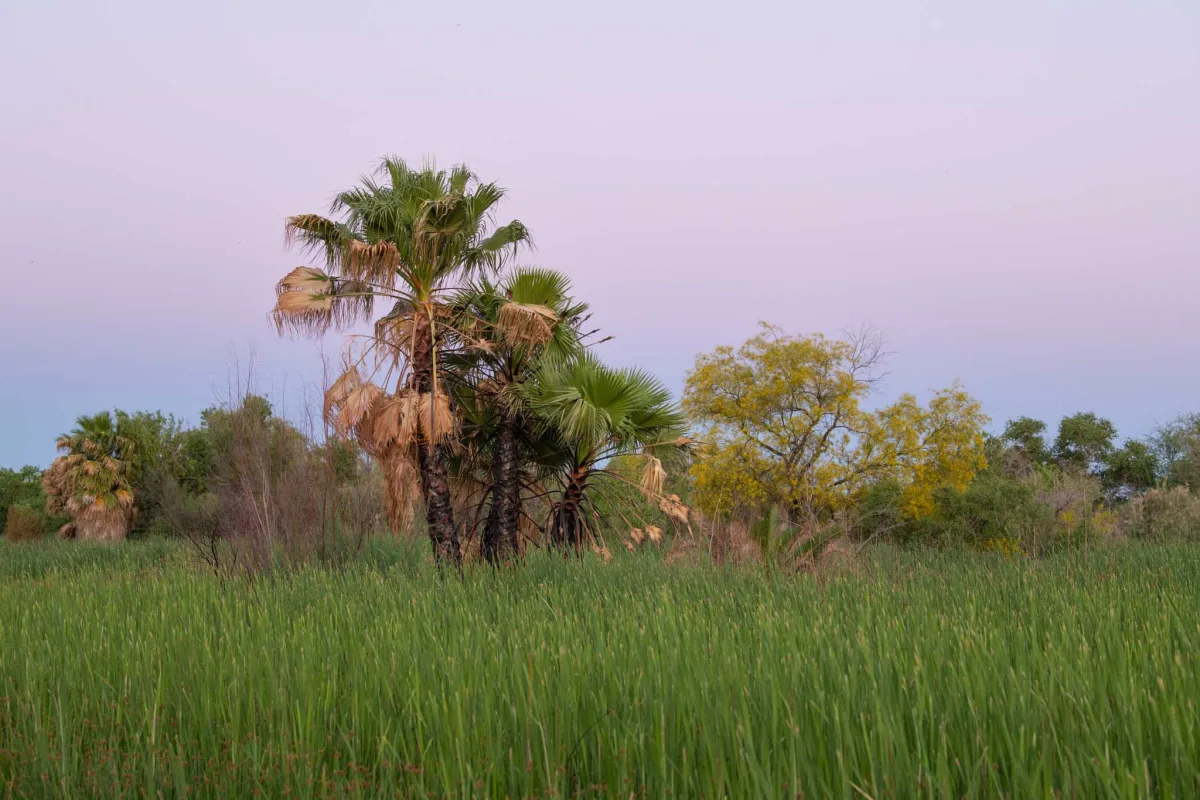
Nestled in the Sonoran Desert on the west side of Tucson, Sweetwater Wetlands is an urban wildlife sanctuary and water reclamation facility that serves as a vital oasis for birds in southern Arizona. Covering roughly 60 acres, the wetlands combine open water basins, dense cattail marshes, willow groves, and desert scrub. Positioned along the Pacific Flyway, this constructed wetland attracts over 300 bird species annually. Sweetwater Wetlands stands out as one of Arizona’s most accessible birding hotspots, offering smooth, flat terrain and excellent viewing infrastructure for mobility-impaired birders.
Accessible Infrastructure & Sanctuary Features
Sweetwater Wetlands was constructed with public recreation and accessibility in mind, ensuring that birders using manual or motorized wheelchairs, rollators, or mobility scooters can navigate the entire site comfortably.
Smooth, Flat Surface Paths: The main trail loop spans roughly 1.2 miles around the wetland basins. The path consists of wide, smoothly paved concrete walkways near the entrance and visitor shelters, transitioning into broad, well-maintained, hard-packed crushed gravel paths that easily support mobility equipment without soft spots.
Level Topography: The entire facility features virtually zero elevation change. There are no steep ramps, stairs, or sharp inclines, allowing for an effortless roll through diverse desert and wetland habitats.
Elevated Boardwalks & Overlooks: Broad wooden boardwalks extend out over the open water ponds and cattail marshes. These boardwalks feature low-profile edge guards that keep sightlines open for seated observers while providing safety barriers.
Shade Ramadas & Rest Stations: The Sonoran sun can be intense, but the wetlands feature covered shade structures (ramadas) with accessible seating cutouts and benches positioned at regular intervals along the trails.
Dedicated Parking & Trailhead Amenities: The paved parking area right off Sweetwater Drive includes clearly marked, van-accessible parking spaces with curb ramps leading directly to the trailhead and accessible restroom facilities.

Target Birds at Sweetwater Wetlands
The mix of open water, riparian cover, and surrounding desert scrub creates a unique environment where wetland species and desert specialists forage side-by-side.
Desert & Southwestern Specialties: Vermilion Flycatcher (resident year-round and extremely cooperative), Harris’s Hawk, Curve-billed Thrasher, Abert’s Towhee, Phainopepla, Gila Woodpecker, and Costas’s Hummingbird.
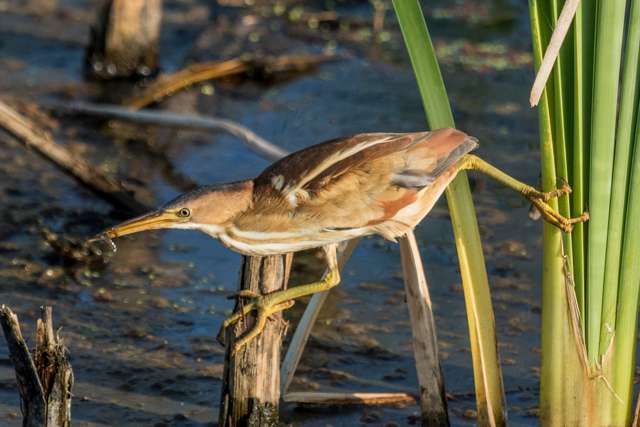
Secretive Marsh Birds: Sora, Virginia Rail, Least Bittern, Green Heron, and Black-crowned Night-Heron (frequently seen roosting in the low willow trees at eye level from the boardwalks).
Waterfowl & Waders: Cinnamon Teal, Green-winged Teal, Ring-necked Duck, Ruddy Duck, Northern Pintail, Black-necked Stilt, and American Coot.
Wintering Sparrows & Migrants: Lincoln’s Sparrow, White-crowned Sparrow, Song Sparrow, Orange-crowned Warbler, Yellow-rumped Warbler, and Marsh Wren.
Visiting Tips for Accessible Birding
Beat the Sonoran Heat: Visit early in the morning, especially during late spring and summer. Early hours offer active birding, cooler temperatures, and ample shade under the trees and ramadas.
Close-Range Photography: Because the birds at Sweetwater are accustomed to human presence along the paths, species like the Vermilion Flycatcher and Black-crowned Night-Heron often perch very close to the trail, making it an ideal spot for seated photography without needing massive telephoto lenses.
Stay on the Packed Paths: While the main trails are firm, stay on the designated crushed gravel and concrete paths to avoid loose sand along the very edge of the dry basin margins.
