

The skies above the U.S. Southeast are graced each spring with the return of a raptor of unparalleled elegance: the Swallow-tailed Kite (Elanoides forficatus). Often called "the coolest bird on the planet" by admirers, this striking bird of prey is a master of aerial maneuver, its presence a vibrant herald of summer and a keen indicator of a healthy, functioning wetland ecosystem. Unmistakable in both form and flight, the kite cuts a sleek, black-and-white silhouette against the blue, its conservation story intricately tied to the fate of the nation's precious Southern forests.
A Bird of Breathtaking Beauty and Unrivaled Grace

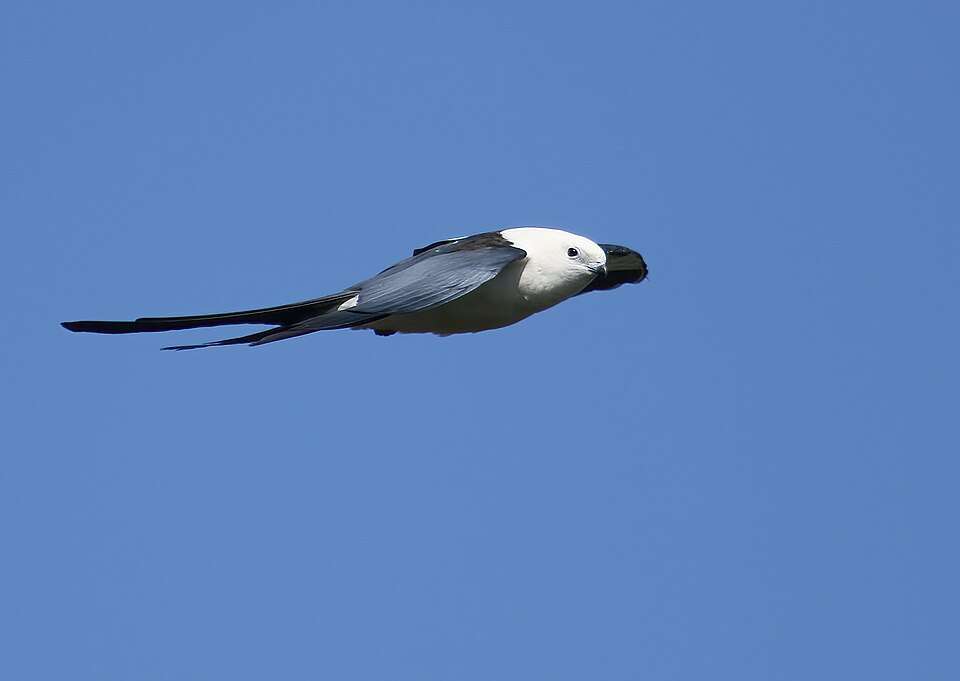
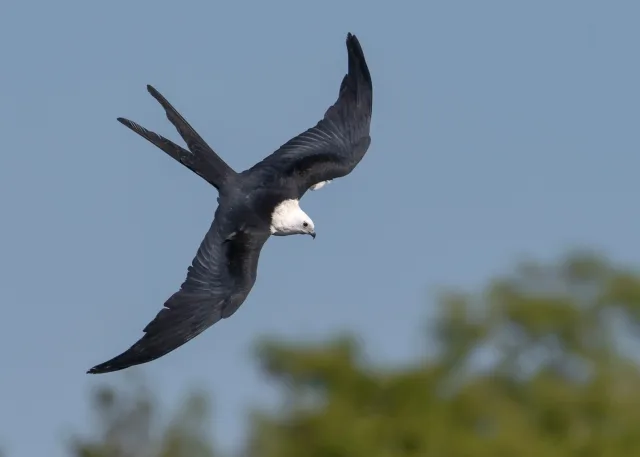
The Swallow-tailed Kite is a medium-sized raptor, instantly recognizable by its dazzling plumage and extraordinary tail. Measuring nearly two feet from bill to tail-tip, with a wingspan of over four feet, it is the largest of the American kites. Its coloration is a sharp, theatrical contrast: a pure white head, neck, and underparts meet brilliant, deep black on its back, wings, and deeply forked tail. This long, scissor-like tail, which gives the bird its name, is not merely ornamental; it acts as a precise rudder, allowing the kite to execute phenomenal, high-speed twists, turns, and dives with scarcely a flap of its wings.
The Aerial Acrobat
Watching a Swallow-tailed Kite hunt is to witness a spectacle of natural engineering. They spend the vast majority of their day aloft, using thermals—rising columns of warm air—to effortlessly gain altitude and then glide for miles. This buoyant, weightless flight allows them to forage with minimal energy expenditure. They rarely perch during the day, snatching and consuming most of their prey while airborne.
Their diet primarily consists of flying insects, such as dragonflies, wasps, and cicadas, which they pluck out of the air. However, especially during the breeding season when they need protein for their young, they exhibit remarkable precision in snatching small vertebrates—tree frogs, lizards, snakes, and even nestling birds—directly from the foliage and branches of trees without breaking their glide. They even drink on the wing, skimming the surface of water bodies to collect a mouthful.
Range, Habitat, and the Long Journey South
The Swallow-tailed Kite is a neotropical migrant, meaning the U.S. population breeds in North America and winters in Central and South America. They are one of the earliest migrants to arrive in the U.S. in the spring (late February to early March) and among the first to depart in late summer (August to early September).
A Reduced U.S. Breeding Range
Historically, the kite's breeding range was extensive, reaching as far north as Minnesota and across at least 21 states in the central and eastern U.S. However, decades of persecution and widespread forest clearance, particularly the loss of the humid bottomland and riparian forests along major river systems, caused a dramatic range contraction.
Today, the U.S. breeding population is largely confined to only seven southeastern states, spanning the coastal plains from South Carolina down through Florida and west to Louisiana and eastern Texas. The vast majority of the U.S. population—estimated at over 60%—nests in Florida.
Their preferred habitat for nesting is characterized by large tracts of wetland forest, such as cypress swamps and pine woodlands, featuring tall, emergent trees for their nests and nearby open areas like marshes or fields for efficient foraging. Nests are shallow cups of twigs, often lined with Spanish moss or other soft material, and are typically placed high—often 60 to 100 feet—in the crown of a tall tree like a pine or bald cypress.
The Great Migration and Communal Roosts
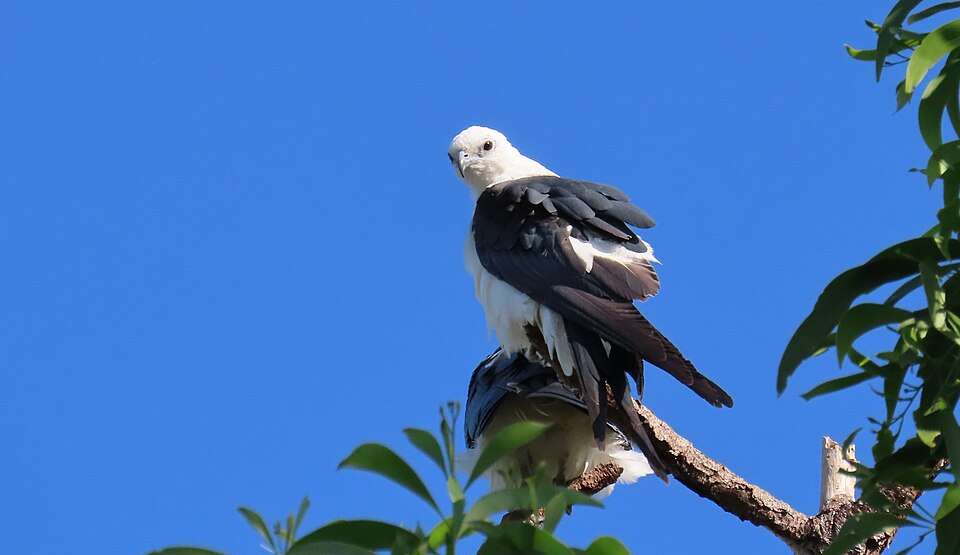
The journey south is one of the most demanding aspects of the kite's life cycle, a monumental trek of over 5,000 miles to wintering grounds primarily in Brazil and Bolivia. This migration is facilitated by a unique social behavior: the formation of massive pre-migratory communal roosts.
In late summer, kites—sometimes numbering in the thousands—will gather at these critical "staging areas," often in dense stands of cypress or pine, predominantly in peninsular Florida. These roosts serve as essential refueling stations where the birds gorge on abundant insects to build the fat reserves needed for the grueling flight, which can take them across the Gulf of Mexico and the Caribbean. Research using GPS trackers has been vital in identifying and protecting these key roost sites, which are used year after year.
5 Warblers That Will Change Your Life (and Where to See Them)
Conservation: Threats and Triumphs
While the global population of the Swallow-tailed Kite is considered stable, the U.S. breeding population remains a species of concern across its limited range.
Primary Threats
The single greatest threat to the kite's U.S. recovery is habitat loss. The destruction, fragmentation, and alteration of their essential forested wetlands through:
- Unsustainable logging: Short-rotation, clear-cut forestry practices destroy the tall, mature nesting trees.
- Agricultural and Urban Development: Conversion of bottomland forests into farmland or housing developments.
- Altered Wetland Hydrology: Changes to water flow and levels from flood control or development.
A newer peril is salinity intrusion due to rising sea levels associated with climate change. As saltwater creeps upriver, it kills freshwater-dependent nesting trees like bald cypress, eliminating valuable habitat.
Furthermore, disturbance at nest sites or communal roosts, particularly from low-flying aircraft or human activities like logging during the breeding season, can cause birds to abandon an area. Predation, especially by the Great Horned Owl, also takes a toll, sometimes being exacerbated by forest fragmentation that creates more favorable hunting perches for the owl near kite nests.
A Turnaround Through Action
Despite these challenges, the U.S. population trend appears to be stable or even increasing in some areas, a testament to coordinated conservation efforts. While not federally listed as threatened or endangered, the kite is protected by the Migratory Bird Treaty Act and is listed as endangered or a species of greatest conservation need by several states in its range (e.g., endangered in South Carolina, threatened in Texas).
Conservation strategies focus on:
- Protecting and restoring large, contiguous tracts of bottomland forest, especially along river corridors.
- Working with private landowners and the timber industry to implement bird-friendly forest management practices, such as maintaining tall nesting trees and using buffers around waterways.
- Identifying and protecting key pre-migratory roost sites, especially those on private land, through conservation easements and cooperative agreements.
- Minimizing disturbance at all known nest and roost sites during the breeding and pre-migration seasons.
The Swallow-tailed Kite is more than just a magnificent bird; it's a charismatic flagship species. Its health is a reflection of the health of the sprawling, yet vulnerable, southern wetland ecosystems upon which it depends, making its continued flight a critical measure of the success of U.S. conservation efforts.
