
When we think of bird sounds, our minds naturally drift to the melodic trills of a song sparrow or the morning chorus of robins. But step into the woods, marshes, or deserts of North America, and you will quickly realize that the avian world has a highly bizarre acoustic catalog.
From deep, mechanical booms to wing-snapping percussion that rivals instruments, birds use an array of strange noises to communicate. Understanding how and why they produce these alien sounds can completely change how you birdwatch.
Bizarre Vocalizations: Sounds from the Mouth (But Not as You Know Them)
While birds technically produce vocal sounds through their syrinx (the avian vocal organ equivalent to our larynx), some species manipulate their throat anatomy, air sacs, or posture to create sounds that seem entirely non-avian.
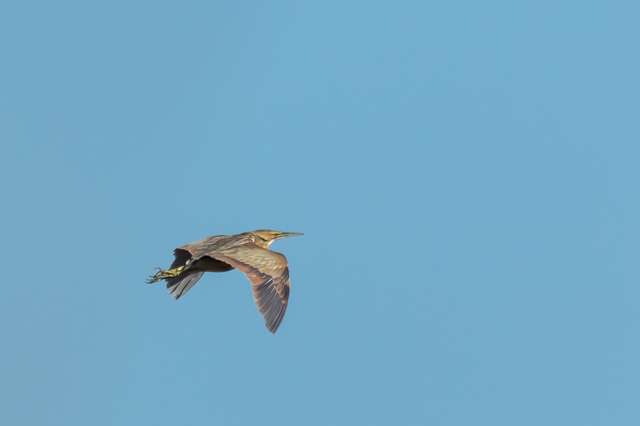
The Gulping Pump: American Bittern (Botaurus lentiginosus)
If you ever find yourself in a dense freshwater marsh hearing what sounds like an old-fashioned clogged suction pump or a deep "plunk-a-lunk," you are listening to an American Bittern.

How they do it: The bittern contorts its neck, stretches its bill upward, and literally gulps air to inflate its esophagus. This inflated tissue acts as a powerful resonance chamber, turning a standard vocalization into a low-frequency booming sound that can carry for up to half a mile through thick reeds.
Why they do it: Because they inhabit incredibly dense vegetation where they are visually invisible, these low-frequency booms are essential for males to claim territory and attract females across long distances without giving away their hidden positions to predators.
The Electronic Sub-Woofer: Greater Sage-Grouse (Centrocercus urophasianus)
The western sagebrush plains host one of the most visually and acoustically bizarre mating rituals in North America. The male Greater Sage-Grouse produces a series of sharp pops followed by a deep, resonant bubbling sound that closely mimics spilling water or a synthesizer.

How they do it: Males have large, olive-green cutaneous air sacs embedded in their breasts. During their display, they abruptly expand and collapse these sacs. The sudden movement forces air through the syrinx while the skin vibrates, creating a distinctive plopping noise.
Why they do it: This is a classic example of sexual selection playing out on a lek (a communal mating display ground). Females judge the stamina, health, and dominance of a male based on the frequency and volume of these acoustic pops.
Non-Vocal Mechanical Sounds: Instruments Built Into Bodies
Not all bird "calls" come from the mouth. Many species have evolved sonation—the act of creating intentional, non-vocal communicative sounds using modified feathers, bills, or specialized muscles.
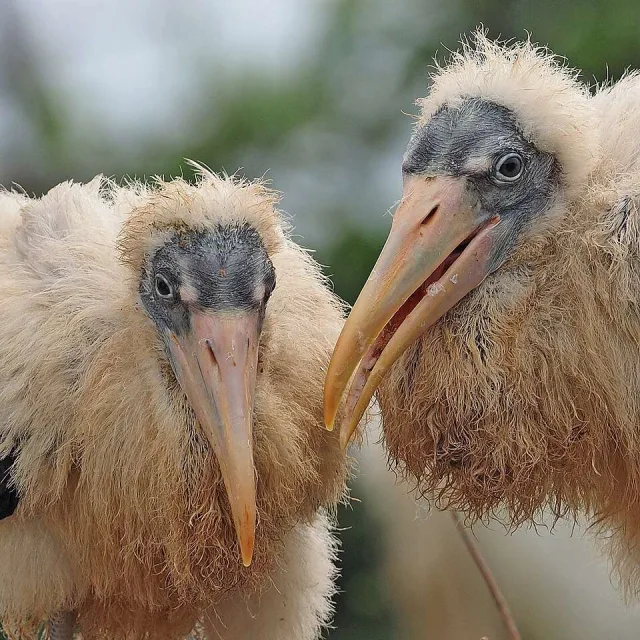
Bill Clapping and Rattling: Owls and Storks
When threatened, several bird species ditch vocal warnings entirely in favor of rapid, rhythmic bill clicking.
Violin Wings: The Club-winged Manakin (Machaeropterus deliciosus)
While native to the cloud forests of the Andes rather than the U.S., no article on avian sound is complete without mentioning the manakin family, which possesses the most sophisticated mechanical instrument in the animal kingdom. The male Club-winged Manakin produces a clear, high-pitched ringing note that sounds exactly like a digital beep or a tiny violin.
How they do it: They utilize an extraordinary structural adaptation called stridulation—the same mechanism crickets use. The manakin's seventh secondary wing feather has an ultra-dense, ridged surface, while the eighth secondary feather features a curved, stiff tip. By raking his wings over his back at an incredible 107 times per second (faster than a hummingbird's standard flight beat), the stiff feather rubs against the ridged one.
Why they do it: The bones supporting these feathers are solid, lacking the normal hollow structure of bird bones, to withstand the immense mechanical stress. This acoustic violin solo is performed entirely to impress visiting females during competitive courtships.
The Tail-Feather Scream: Wilson’s Snipe (Gallinago delicata)
Walk near a wet northern pasture at dusk in the spring, and you might hear a hollow, eerie, winnowing whistle overhead that sounds like a ghostly wail.
How they do it: This sound is produced entirely by the tail. During a steep aerial dive, the snipe spreads its tail feathers wide. The outermost tail feathers are structurally stiffened and modified. As air rushes past the bird at speeds greater than 25 mph, these feathers begin to flutter violently, vibrating like a reed in a woodwind instrument.
Why they do it: Known as "winnowing," this high-speed dive serves as a dramatic territorial display to warn off rival males and court watching females from high in the sky.
Quick Reference: Strange Avian Acoustics
Tips for Birders: How to Track Down Acoustic Anomalies
Because many of these strange sounds rely on low frequencies or sudden mechanical snaps, they can be difficult to pinpoint with precision using traditional directional hearing.
Leverage the Crepuscular Window: Species like the Wilson's Snipe and American Bittern are most acoustically active during twilight—just before sunrise and just after sunset.
Watch for Posture Changes: Mechanical sounds almost always require immense physical exertion. Look for unnatural body contortions, sudden head tilts, or erratic wing flivvers to visually connect the strange sound to its source.
Use a Spectrogram App: If you hear an unidentifiable sound, open an audio recording app that generates a real-time visual graph of sound frequencies. Mechanical clicks appear as distinct vertical spikes, while booming sounds show up as deep, heavy bands at the very bottom of the graph.
