

The word stork often conjures images of large, graceful birds with long legs and bills, soaring over European landscapes or nesting on rooftops. We picture them as the harbingers of new life, delivering babies in folklore and fairy tales. But what about the storks of the United States? Do they exist? And if so, what are their stories?
The truth is, while we may not have the ubiquitous White Storks of Europe, the U.S. is home to a magnificent and unique stork species: the Wood Stork (Mycteria americana). This solitary species, a fascinating blend of the prehistoric and the modern, holds a unique place in the country’s ecological tapestry.
The Wood Stork

The Wood Stork is an imposing bird, standing nearly four feet tall with a wingspan that can reach up to six feet. Its appearance is a striking contrast of features. The body is covered in brilliant white feathers, a stark and beautiful sight against the lush green of its wetland habitat. However, the head and neck are bald and gray, giving it a somewhat somber and ancient look.
This featherless skin helps the bird regulate its body temperature. The long, thick, and downward-curving bill, a defining feature, is perfectly adapted for its unique method of feeding. Its legs and feet are a dark gray to black, providing a visual anchor as it wades through shallow waters.
The Wood Stork's range within the United States is primarily concentrated in the southeastern states, particularly Florida, Georgia, and the coastal Carolinas. It thrives in wetland environments, including cypress swamps, mangroves, and freshwater marshes. These habitats provide the perfect conditions for the stork to hunt and nest. Its presence is a strong indicator of a healthy and functioning wetland ecosystem.
A Unique Hunting Strategy
One of the most remarkable aspects of the Wood Stork is its feeding behavior. Unlike many wading birds that hunt by sight, the Wood Stork employs a tactile strategy. It wades through shallow water with its bill partially submerged and its mandibles slightly open. When a fish, amphibian, or large invertebrate touches the inside of its bill, the stork snaps it shut with an incredibly fast reflex.
This "groping" or "snapping" method is one of the quickest reflexes in the animal kingdom, taking a mere 25 milliseconds. This unique hunting technique allows the Wood Stork to be highly efficient in murky waters where visibility is poor.

This feeding strategy, however, makes the bird particularly vulnerable to changes in water levels. The storks rely on a drying-down cycle in wetlands, where water recedes and concentrates prey in smaller, shallower pools. This makes the fish easier to catch. When these natural cycles are disrupted by drought or human intervention, such as altered water flow, the storks struggle to find enough food to support themselves and their young.
A History of Conservation Challenges
For a long time, the Wood Stork faced a precarious existence. Its population declined dramatically throughout the 20th century, leading to its listing as an endangered species in 1984 under the Endangered Species Act. The primary threats were habitat loss and degradation. The draining of wetlands for agriculture and development, particularly in the Florida Everglades, was a major blow to the stork's breeding grounds and food sources. Changes in water management practices also interfered with the crucial drying-down cycle needed for successful feeding.
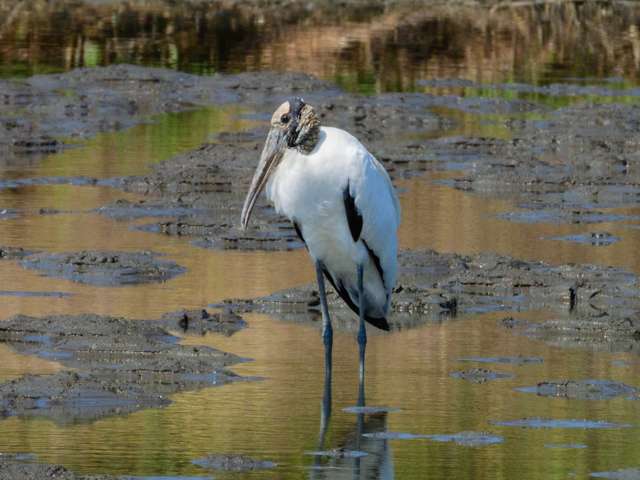
The road to recovery has been long and arduous, but it's a story of conservation success. Efforts to restore and protect wetlands, combined with new water management strategies, have been critical. The establishment of protected areas like national parks and wildlife refuges has provided safe havens for the birds to nest and feed.
In 2014, due to a significant rebound in population numbers and an expansion of its nesting range, the Wood Stork was reclassified from endangered to threatened. This was a monumental victory for conservationists and a testament to the resilience of the species. The population has not only stabilized but has also shown signs of expanding its breeding territory northward into new states like South Carolina and North Carolina.
Social Behavior and Nesting
Wood Storks are highly social birds, especially during the nesting season. They form large, noisy colonies, often in trees over standing water. These colonies, or rookeries, can be a spectacle of activity, with hundreds of storks building nests, incubating eggs, and feeding their young. The nests themselves are large, bulky platforms of sticks, often built high up in cypress or mangrove trees. Both parents share the responsibilities of incubation and feeding.

The young storks, or fledglings, are a demanding bunch. They require a massive amount of food, and the parents must work tirelessly to provide for them. The chicks have a unique way of eating: they reach their heads deep into the parent's throat to retrieve regurgitated food. This process, while seemingly a bit gross, is a highly efficient way to transfer nourishment. It's during this time that the integrity of the wetland ecosystem becomes most critical. A lack of food can lead to nest abandonment and starvation of the young, making the health of their habitat a matter of life and death.
The Future of the Wood Stork
The story of the Wood Stork is a powerful example of how conservation efforts can bring a species back from the brink. However, its future is not without challenges. Climate change poses a new set of threats, with rising sea levels and altered rainfall patterns potentially disrupting the delicate balance of wetland ecosystems. Continued monitoring, habitat protection, and public awareness remain essential to ensure the Wood Stork continues to thrive.
The Jabiru
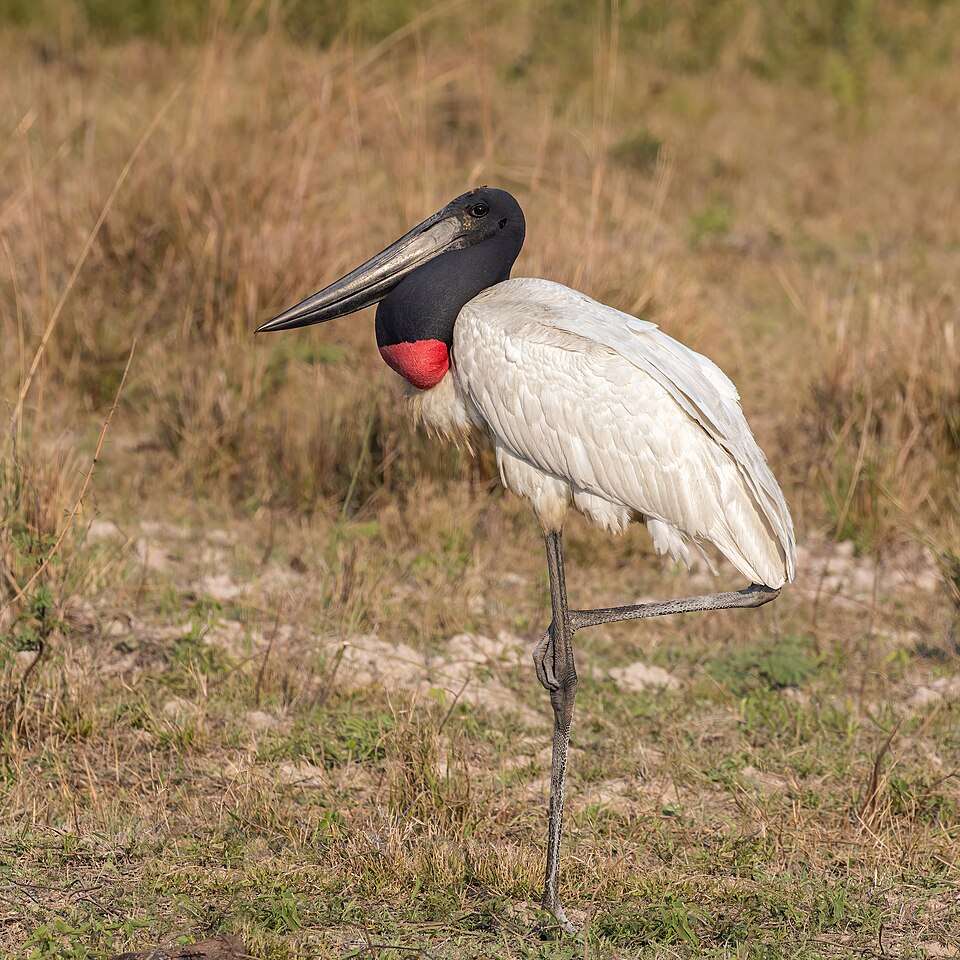
The Jabiru (Jabiru mycteria) is a magnificent bird in its own right, and it is a stork of the Americas. However, its primary range is in Central and South America, extending from southern Mexico down to Argentina. It's a huge bird, even larger than the Wood Stork, with a striking white body, a featherless black head and neck, and a distinctive red band at the base of its neck.
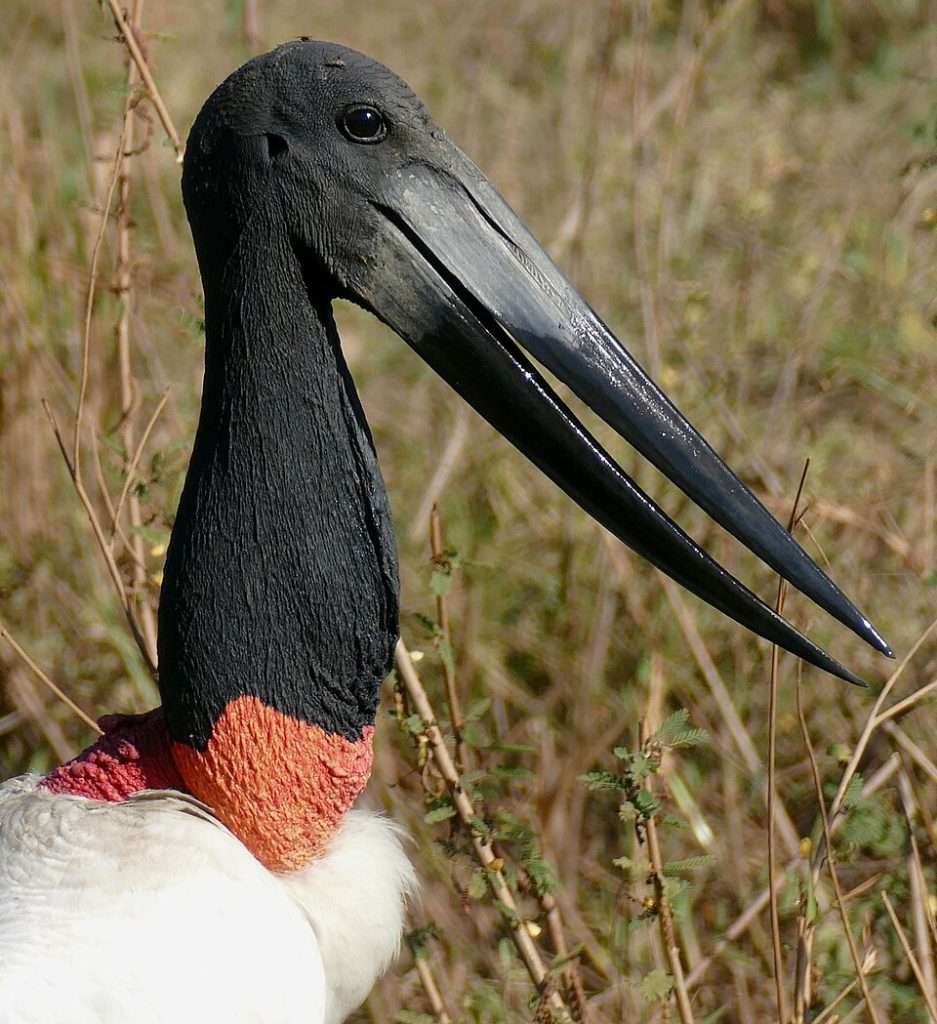
While the Jabiru is a common and even iconic bird in places like the Brazilian Pantanal, it is only a rare visitor, or "vagrant," to the United States. Sightings are infrequent and have been recorded in a few southern states, most notably Texas, but also in Louisiana, Mississippi, and Oklahoma. These sightings are highly prized by birdwatchers, as they represent a unique and unexpected opportunity to see a species far outside its normal range.
So, while the Jabiru is technically a stork that has been seen in the U.S., it's not a resident species. It does not breed in the country, and its presence is a testament to its wide-ranging nature and the occasional straying of individuals from their established habitats. The Wood Stork's story is one of conservation and recovery within the U.S. ecosystem, while the Jabiru's story in the U.S. is one of rare and exciting chance encounters.

Wrapping Up
The Wood Stork may not be the mythological baby-bringing bird of European lore, but its presence in the United States is just as significant. It is a symbol of wildness, a testament to the power of conservation, and a vital part of the rich and diverse biodiversity of the American South. The next time you hear the word “stork,” remember this magnificent bird, a silent sentry of our nation’s wetlands, with its ancient gaze and powerful wings, soaring gracefully over the swamps and marshes it calls home. Its story is a vital chapter in the ongoing narrative of American wildlife, a reminder of what we have, what we've almost lost, and what we must continue to protect.
And the Jabiru?
Well, that is the exotic cousin of the Wood Stork, seen on occasion away from its normal home. It may be larger and more colorful but the Wood Stork is our very own bird.
Read more about cranes and herons.
