

Situated just south of Sacramento in California’s Central Valley, Stone Lakes National Wildlife Refuge protects over 18,000 acres of open water, seasonal wetlands, agricultural lands, and riparian oak woodlands. Positioned along the Pacific Flyway, the refuge provides vital wintering and breeding grounds for hundreds of thousands of migratory waterfowl, shorebirds, and waterbirds. What makes Stone Lakes particularly outstanding for disabled birders is that its main public access area—the Blue Heron Trails—was built from the ground up using universal design principles, making it one of the most accessible wildlife viewing locations in North America.
Accessible Infrastructure & Refuge Features
Rather than retrofitting older structures, Stone Lakes engineered its public footprint specifically to eliminate physical barriers for visitors using manual or power wheelchairs, rollators, mobility scooters, or strollers.
Blue Heron Trails Loop: The central feature of the refuge’s public access is a flat, 1-mile continuous loop constructed entirely of wide, smoothly paved concrete. The path is completely step-free with zero steep inclines, providing a effortless roll through managed wetland impoundments, grasslands, and oak savannas.
Low-Profile Safety Walls & Sightlines: Along the trail, viewing cutouts and edge protections feature low-profile walls and recessed safety rails. This design ensures that seated birders have completely unobstructed, eye-level lines of sight across the water without visual barriers blocking optics or cameras.
Shade Pavilions & Seating Bays: Covered shade ramadas and widened viewing turnarounds are spaced at frequent intervals along the trail. Each pavilion features dedicated wheelchair spaces alongside rest benches, offering shelter from the sun while allowing birders to observe feeding flocks comfortably out of the path of passing traffic.
Fully Accessible Visitor Facilities: The administrative office and visitor contact station feature step-free paved approaches, automatic doors, low-profile information counters, and fully ADA-compliant public restrooms.
Dedicated Parking: Paved, van-accessible parking spaces are situated directly at the trailhead, offering immediate, step-free access onto the main concrete loop.

Target Birds at Stone Lakes NWR
The sanctuary hosts diverse avian populations throughout the year, with peak numbers arriving during the fall and winter migration (October through March).
Wintering Waterfowl & Cranes: Greater Sandhill Crane, Tundra Swan, Ross’s Goose, Snow Goose, Greater White-fronted Goose, Northern Pintail, Cinnamon Teal, Wood Duck, and Canvasback.
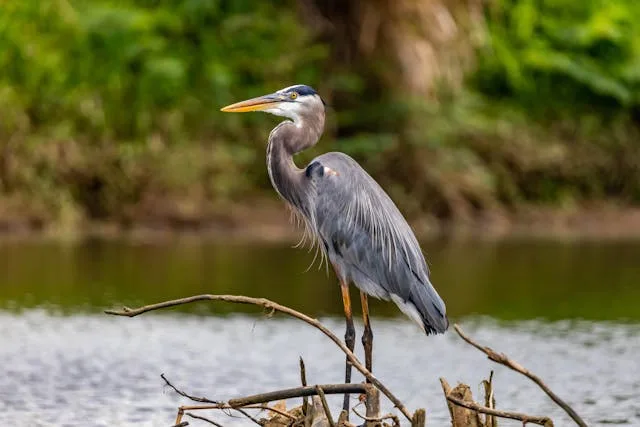
Wading Birds & Marsh Dwellers: Great Blue Heron, Great Egret, Snowy Egret, White-faced Ibis, Black-crowned Night-Heron, American Bittern, Sora, and Virginia Rail.
Raptors & Birds of Prey: White-tailed Kite, Northern Harrier (frequently quartering low over the grasslands along the trail edge), Burrowing Owl (often spotted near burrows along open field margins), Swainson’s Hawk (spring/summer), Bald Eagle, and Peregrine Falcon.
Grassland & Riparian Songbirds: Marsh Wren, Bushtit, Yellow-billed Magpie (California endemic), Bewick’s Wren, Tree Swallow, Western Meadowlark, and various wintering sparrows.
Visiting Tips for Accessible Birding
Winter Fly-In Spectacles: Plan your visit for late afternoon in late fall or winter. Positioning your wheelchair or scooter at one of the western-facing boardwalk overlooks provides a front-row seat to watch thousands of waterfowl and cranes descend into the wetlands against the setting sun.
All-Weather Surface Reliability: Because the Blue Heron Trails loop is built entirely of high-grade concrete, the trail remains clean, firm, and completely free of mud even during heavy winter rain events in the Central Valley.
Summer Sun & Breeze Management: Central Valley summer days can be warm and bright. Early morning visits yield the highest bird activity, cooler temperatures, and the best lighting for photography across the open water.
