
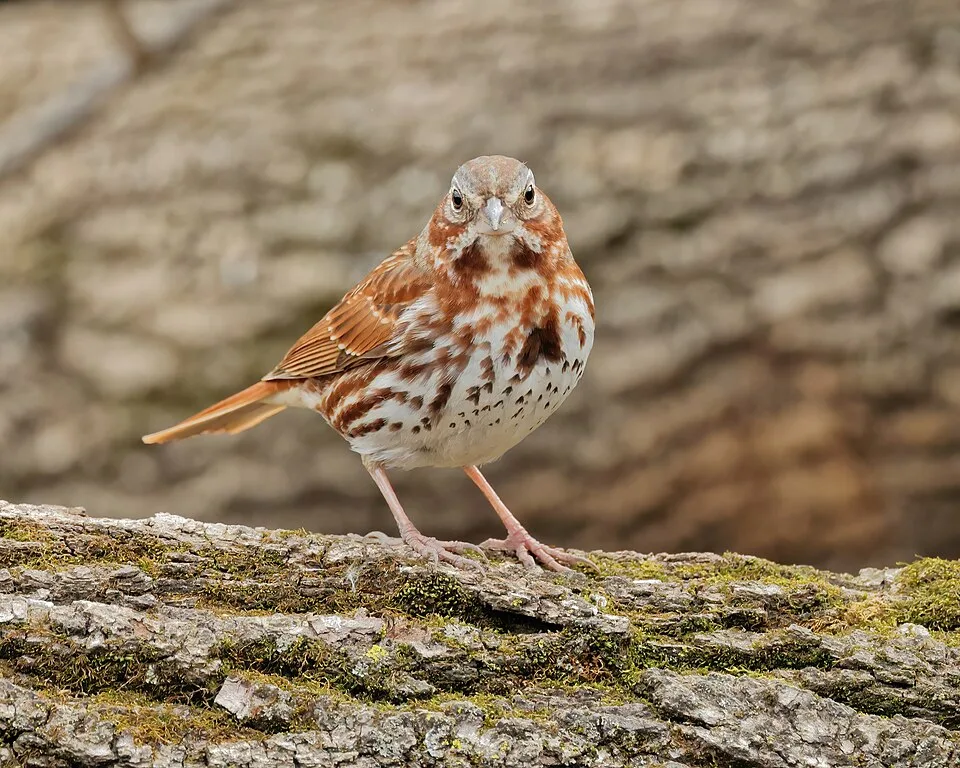
The Sparrows of America: A Closer Look at Common Native U.S. Species
Small, modest, and often overlooked, sparrows are some of the most widespread and ecologically important birds in the United States. While they may lack the flamboyant colors of cardinals or the majestic size of hawks, native U.S. sparrows exhibit a quiet beauty, rich behaviors, and fascinating adaptability to a wide range of environments.
This article explores some of the most common native sparrow species in the U.S., highlighting their distinguishing features, habitats, and roles in local ecosystems.
What Is a Sparrow?
In the U.S., the term “sparrow” generally refers to small, seed-eating songbirds with short, stout bills. Most native sparrows belong to the family Passerellidae, often called New World sparrows, which are distinct from the Old World sparrows (such as the non-native House Sparrow, Passer domesticus).
Native sparrows are typically brown or gray with streaked plumage—perfect camouflage for life on or near the ground. Though many species look similar, each has unique habits, songs, and ecological niches.
1. Song Sparrow (Melospiza melodia)
Range:
Nationwide
Habitat:
Marshes, fields, forest edges, backyards, and city parks
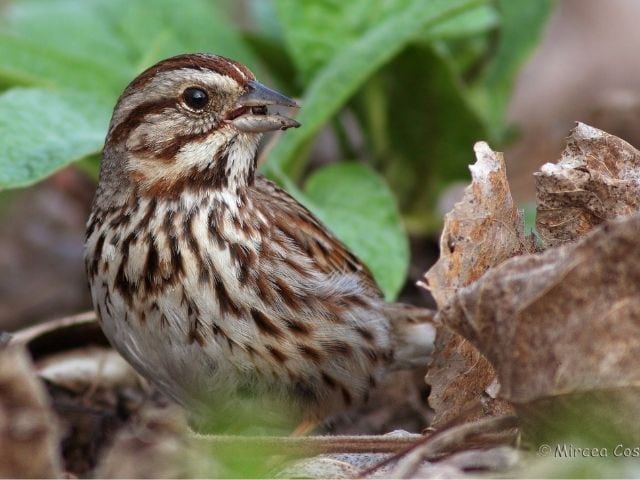
The Song Sparrow is perhaps the most widespread and variable of all U.S. sparrows. Found from coast to coast and deep into Canada and Mexico, this adaptable bird can live in deserts, wetlands, and urban environments.
Song Sparrows are medium-sized sparrows with heavy streaking on a buff or gray breast and a central dark spot. Their long, rounded tails and reddish-brown wings help distinguish them from similar species.
As their name suggests, Song Sparrows are prolific vocalists. Their varied, musical songs—often a few bright notes followed by a trill—play an essential role in territory defense and courtship.
2. White-throated Sparrow (Zonotrichia albicollis)
Range:
Eastern U.S. in winter; northern forests for breeding
Habitat:
Woodlands, brushy edges, suburban areas
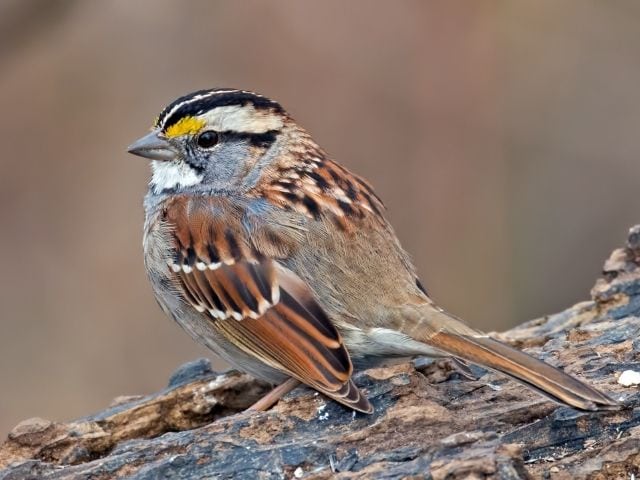
Recognizable by its crisp black-and-white head stripes and bright white throat patch, the White-throated Sparrow is a favorite among winter birdwatchers in the eastern United States.
This species displays two color morphs: white-striped and tan-striped. Interestingly, these morphs exhibit different behaviors and often pair with the opposite type during breeding.
Its distinctive song, often transliterated as “Oh-sweet-Canada-Canada” or “Poor Sam Peabody”, is a familiar sound in northern forests during spring and summer.
3. Chipping Sparrow (Spizella passerina)
Range:
Across the U.S.; migrates between Canada and Central America
Habitat:
Open woods, lawns, parks, forest edges
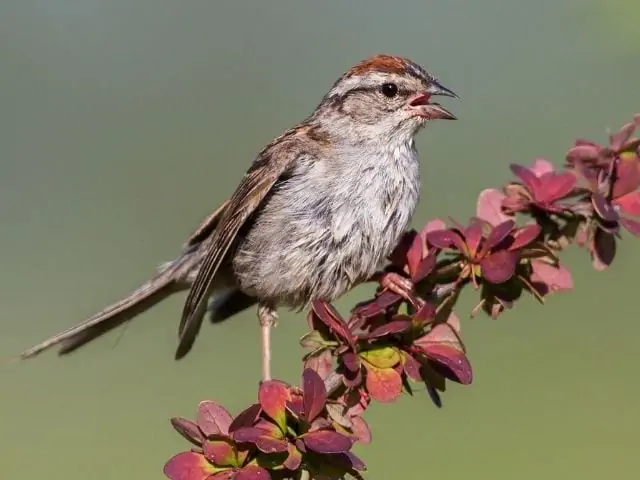
Chipping Sparrows are sleek, small sparrows with a clean gray chest, black eye-line, and rusty-red cap—especially vivid during breeding season.
These birds are common in suburban and park-like areas, often seen foraging on the ground for seeds or insects. They’re social and frequently form flocks outside the breeding season.
Their song is a simple, dry trill, often compared to the sound of a sewing machine or insect buzz.
4. Savannah Sparrow (Passerculus sandwichensis)
Range:
Nationwide during migration; breeds in northern U.S. and Canada
Habitat:
Grasslands, coastal marshes, fields
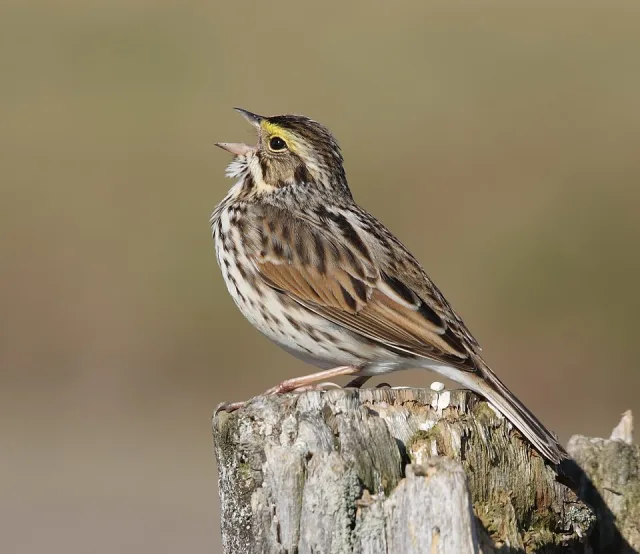
Named for its preference for open spaces, the Savannah Sparrow is a small, streaky bird with yellowish highlights near the eye and a short, notched tail.
Though they resemble Song Sparrows at a glance, Savannah Sparrows are smaller, and their subtle yellow “eyebrow” sets them apart. They often sing from low perches with a buzzy, insect-like trill.
Their presence in farmlands and prairies makes them vital to grassland ecosystems, controlling insect populations and spreading native seeds.
5. Field Sparrow (Spizella pusilla)

Range:
Eastern and central U.S.
Habitat:
Old fields, meadows, forest edges
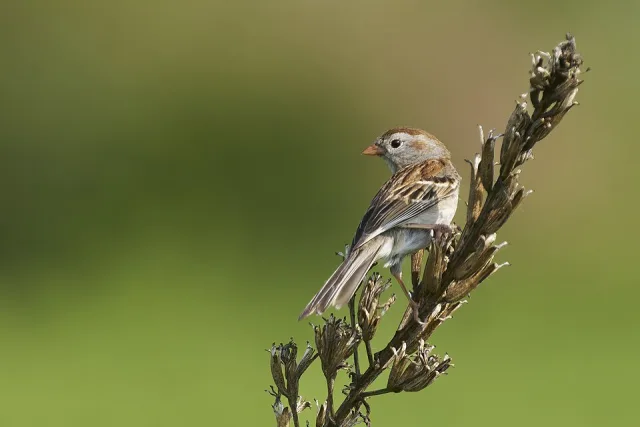
Field Sparrows are gentle-looking birds with soft, pale coloring, a pink bill, and a round head. They lack strong facial markings, which can help distinguish them from other sparrows.
These birds thrive in weedy fields and regenerating forests, where they sing a memorable accelerating series of whistles—often described as the sound of a bouncing ball coming to rest.
Populations have declined in areas where open land has reverted to dense forest or has been developed, but conservation of early-successional habitats benefits this species.
6. Fox Sparrow (Passerella iliaca)
Range:
Western U.S. and Appalachians (some eastern populations migrate)
Habitat:
Dense underbrush, thickets, forest floors
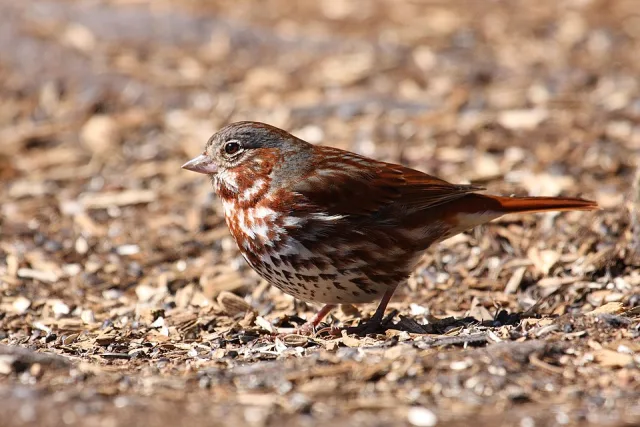
Fox Sparrows are among the largest and most robust native sparrows. They vary in appearance by region but are typically reddish-brown (“foxy”) with heavy breast streaks that often form a central spot.
These shy birds are ground-foragers, often kicking up leaves with both feet to find insects or seeds. Their rich, whistling song is complex and melodious.
Though more secretive than some sparrows, their song and heavy size make them stand out during migration or in dense woodland habitats.
7. Dark-eyed Junco (Junco hyemalis)
Range:
Widespread across North America; a winter regular in much of the U.S.
Habitat:
Forests, fields, suburban gardens
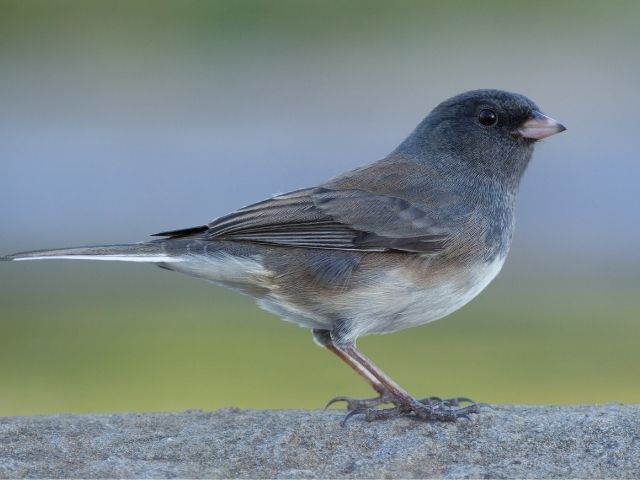
Not by name maybe, but juncos are technically part of the sparrow family. The Dark-eyed Junco is one of the most abundant birds in North America, with several color variations across the continent.
The most common form, the “slate-colored” junco, is dark gray with a white belly and outer tail feathers that flash in flight.
They’re often called “snowbirds” because of their winter appearance in many parts of the U.S. They forage in flocks on the ground, feeding on seeds, insects, and small fruits.
The Role of Sparrows in Ecosystems
Sparrows may be small, but their ecological contributions are immense:
Seed Dispersal: By eating seeds and moving across landscapes, sparrows help regenerate plant communities.
Insect Control: During breeding season, sparrows switch to protein-rich insect diets, reducing pest populations naturally.
Prey for Others: Sparrows are a key food source for raptors, snakes, and mammals.
Moreover, sparrows are indicator species—their presence and abundance reflect the health of grasslands, forests, and suburban habitats.
Conservation Challenges
While many sparrow species remain common, several are experiencing declines due to:
Habitat loss, especially open and early-successional habitats
Pesticide use, reducing insect prey
Collisions with buildings and vehicles
Invasive species, including the non-native House Sparrow, which competes for nest sites
Citizen science efforts like eBird and Project FeederWatch help track sparrow populations. Installing native plants, reducing pesticide use, and preserving open habitats are key ways individuals can help.
Wrapping Up
Though they may not always command attention, native U.S. sparrows are among the most adaptable, diverse, and ecologically important birds on the continent. From the musical Song Sparrow to the fleet-footed Savannah Sparrow, each species brings its own story, song, and contribution to the web of life.
So next time you see a small, streaked bird hopping through grass or singing from a shrub, take a closer look—it might be one of the many sparrows quietly enriching the natural world around you.
