

Demanding Respect
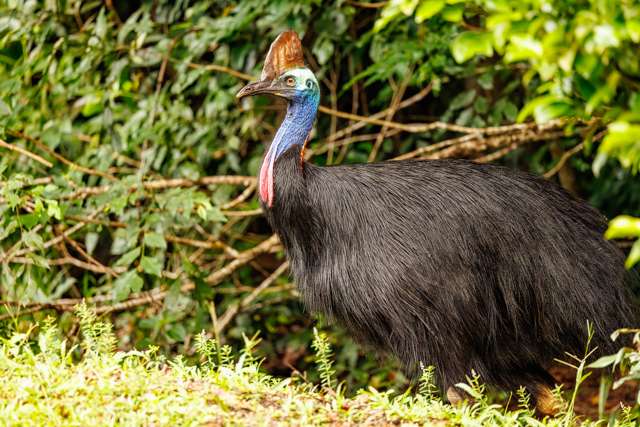
With its brilliant blue and purple neck, a helmet-like casque, and a dagger-like claw on each foot, the Southern Cassowary (Casuarius casuarius) is one of the most magnificent—and notoriously dangerous—birds in the world. Often described as a modern-day dinosaur, this immense flightless creature from the tropical rainforests of Australia and New Guinea commands instant attention and a healthy dose of fear. Yet, the perception of the cassowary as an aggressive monster is largely a myth. It is a formidable animal, but its true nature is one of powerful shyness, reserving its legendary ferocity for moments when its life or its young are genuinely threatened.
A Prehistoric Presence
Standing up to six feet tall and weighing as much as 160 pounds, the Southern Cassowary is the second-largest bird in the world after the Ostrich. Its appearance is startlingly prehistoric, a powerful reminder that birds are the direct descendants of theropod dinosaurs.
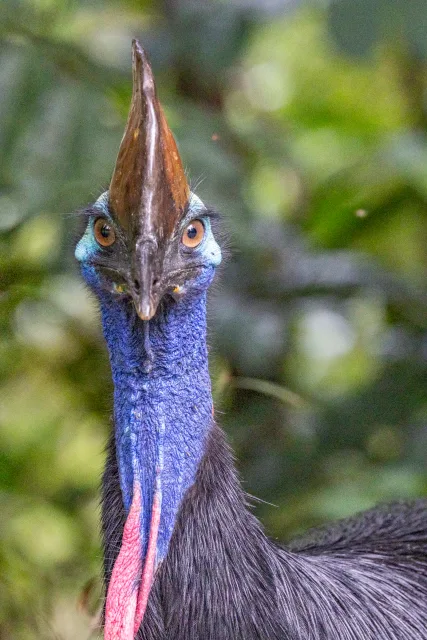
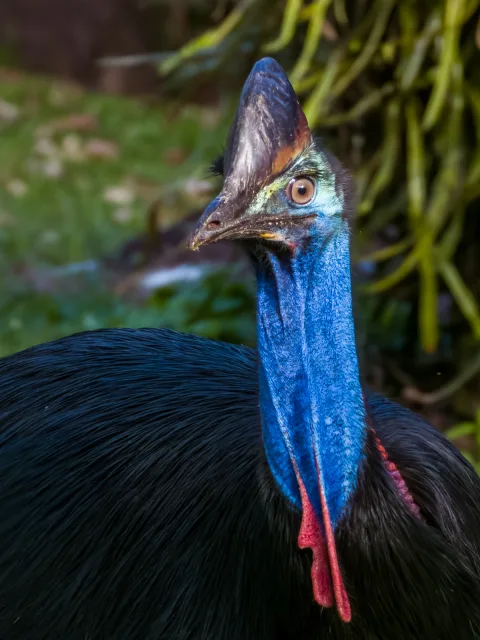
The body is covered in coarse, black, hair-like plumage, perfectly suited for shedding the constant moisture of its rainforest home. Its head, however, is a masterpiece of vibrant color: a striking blue neck and face, a bright red wattle hanging from its throat, and a head crowned with a distinctive, bony plate known as a casque. The purpose of this casque is debated, but theories suggest it may act as a resonating chamber for its deep, booming calls, a tool for pushing aside underbrush, or even a shield for protection when running through the dense jungle.
The cassowary’s role in its ecosystem is critical. As an obligate frugivore, it feeds almost exclusively on fallen fruits. It is one of the very few animals capable of consuming large fruits whole and later dispersing the seeds intact across its territory. Without the cassowary, the seeds of many rainforest plants cannot germinate, making it a crucial "keystone species" for maintaining the biodiversity and structure of the entire ecosystem.
The Weaponry: A Foot to Fear
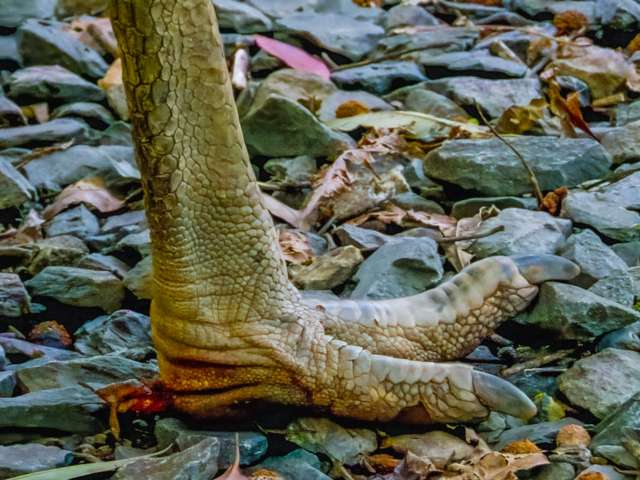
The cassowary’s reputation for danger stems entirely from its weaponry: its feet. Unlike many animals whose primary defense is a jaw or horns, the cassowary’s danger lies in its powerful legs and specialized talons.
Each of the bird's three toes features a long, sharp nail, but the most formidable is the inner toe, which is armed with a particularly vicious, dagger-like claw that can measure up to four inches long. When threatened, the cassowary does not peck or bite; it leaps into the air and delivers a powerful, swift kick. The sheer force of the blow, combined with the razor-sharp claw, is capable of inflicting severe, deep lacerations.
Historically, documented attacks—many of which have occurred in the bird's native range in Australia—have often been sensationalized, but they confirm the bird’s lethal potential. In 2019, a well-publicized fatality in Florida occurred when a captive cassowary attacked its owner. Prior to that, the last confirmed human fatality caused by a cassowary was in 1926, when a 16-year-old boy in Queensland, Australia, tried to attack one with a club. The rarity of these incidents, however, provides the essential context often missing from the narrative.
The Misunderstood Monster: Potential vs. Provocation
To label the Southern Cassowary as "aggressive" or "man-eater" is to misunderstand its fundamental behavior. Extensive study of the species has revealed that the cassowary is, by nature, a solitary, shy, and extremely wary creature.
Their instinct is to avoid human contact at all costs. When confronted, the cassowary’s first line of defense is always to retreat, using its prodigious speed (it can run up to 30 mph) and its skill at maneuvering through the undergrowth to simply disappear. Encounters in the wild that lead to injury are almost universally traced back to two scenarios: provocation or feeding.
The Problem of Feeding
The single biggest contributor to dangerous encounters is human feeding. When people feed cassowaries—either intentionally or through leaving garbage and accessible food waste—it breaks down the bird’s natural fear of humans and teaches it to associate people with food.
A cassowary that expects a handout is a bird whose personal space boundaries have been dangerously blurred. If the anticipated food is not immediately provided, the bird may become demanding, frustrated, and aggressive, viewing the human as a competitive threat or a failed food dispenser. Researchers strongly advocate for the "not a bite" rule: never feed them, and never leave food accessible.
The Problem of Provocation
The second major cause of conflict is provocation, which often takes the form of cornering, harassing, or surprising the bird. According to analysis by ornithologist Christopher P. Kofron of 221 cassowary attacks, 75% were initiated by the bird being fed or perceiving an immediate threat. The key takeaway is that the cassowary is a reactive animal, not an actively predatory one. It is a creature that would rather hide than fight.
The circumstances most likely to lead to a kick involve:
- Defending Young: Like all responsible parents, the male cassowary—who alone incubates the eggs and raises the chicks—will fiercely defend his brood from any perceived threat, including dogs and unwary humans.
- Defending Territory: A bird may feel trapped or cornered by hikers or vehicles and lash out in a desperate attempt to escape.
- Defending Food: A cassowary intensely focused on foraging may kick to remove a perceived rival near a food source.
In these moments of high stress, the cassowary's powerful kick is an act of self-preservation or parental defense, not malice.
Coexisting with the Dinosaur
The fate of the Southern Cassowary is inextricably linked to the preservation of its habitat. It is classified as Vulnerable in Australia, with population numbers still alarmingly low due to habitat fragmentation, car strikes, and dog attacks. The biggest danger the cassowary faces is not to, but from, humans.
The true solution to avoiding conflict with this spectacular bird is simple: respect and distance.
- Observe from afar: If you encounter a cassowary in the wild, maintain a distance of at least 15 feet (5 meters). Admire its prehistoric beauty, but do not approach it.
- Never feed: Strictly adhere to all warnings and never give the bird food. Feeding is a death sentence, both for the human-habituated bird that loses its fear and for the human who gets too close.
- Mind your pets: Keep dogs leashed and under control, as they are often viewed as a direct threat and are the most common instigators of conflict.
The Southern Cassowary is not the bloodthirsty monster of legend; it is a vital, shy component of one of the world's most ancient ecosystems. It is armed with a magnificent and fearsome defense mechanism, making it potentially dangerous, but only a problem if you fail to leave it alone. By affording this magnificent feathered dinosaur the space and respect it is due, we can ensure the survival of both the species and the safety of the curious observer. The cassowary is an emblem of the wild, untamed power of nature, and a powerful lesson that in the jungle, respect is the most important survival tool of all.
