

South Dakota is a state of remarkable contrasts, split between the rolling, vast grasslands of the prairie and the rugged, forested peaks of the Black Hills. This geological and ecological diversity makes the state a spectacular destination for birders, especially those keen on spotting raptors, falcons, and unique mountain-dwelling species. The landscape shifts dramatically from the surreal, eroded moonscape of the Badlands National Park to the dense, cool Ponderosa Pine forests of the Black Hills National Forest, creating two distinct but equally crucial habitats for birds of prey and high-altitude specialists.
The Badlands: A Raptor Hunting Ground
Badlands National Park, located in southwestern South Dakota, presents a formidable and unforgiving environment. Characterized by spectacular buttes, deep canyons, and razor-sharp ridges made of soft sedimentary rock, the habitat is primarily mixed-grass prairie. This open environment, while harsh, provides the perfect stage for raptors to hunt.
Falcons of the Prairie
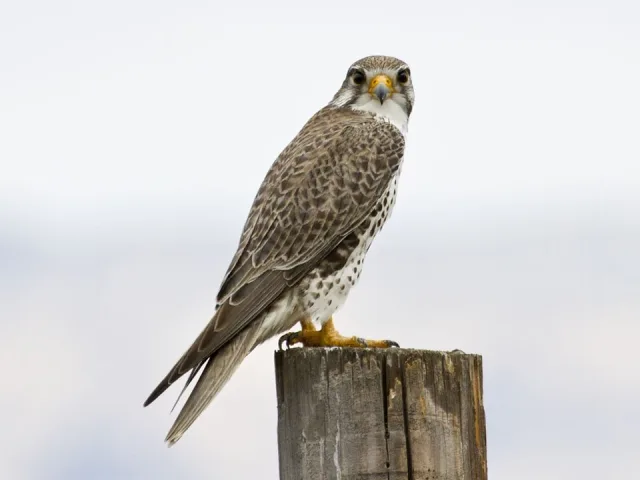
The expansive sightlines of the Badlands are ideal for high-speed avian hunters. The most sought-after raptor in this area is the Prairie Falcon (Falco mexicanus).
Hunting Strategy: The Prairie Falcon is a creature of the arid American West, relying on its incredible speed to catch prey in mid-air or flush it from the short prairie grasses. It frequently nests in the small crevices and on the sheltered ledges of the taller Badlands formations, utilizing the eroded cliffs for safe, inaccessible nesting sites.
Prey Base: The falcons and other raptors rely heavily on the abundant small mammals of the prairie, including ground squirrels and Black-tailed Prairie Dogs. The presence of large prairie dog towns is directly correlated with the nesting success of the region's top avian predators.
Other common raptors found hunting over the Badlands' vast grasslands include the widespread Red-tailed Hawk and, during migration, the swift Swainson's Hawk, which often passes through in large numbers. The Golden Eagle is also a resident, using the highest bluffs for nesting and soaring effortlessly on thermal updrafts while searching for larger prey like jackrabbits.

The Black Hills: A Boreal Oasis
Just west of the open plains, the Black Hills rise abruptly—a dome of ancient, dark igneous and metamorphic rock covered mostly by Ponderosa Pine forest. Often referred to as an "island in the plains," the Black Hills' high elevation and coniferous habitat create a cool, moist ecological refuge, providing shelter for birds whose core range is much farther north or west in the Rockies.
Mountain and Forest Specialists
The dense Black Hills forests and scattered spruce groves attract species rarely found elsewhere in South Dakota.
Mountain Bluebird (Sialia currucoides): A visually stunning western species, the male is an entirely sky-blue bird often seen near rocky clearings or high meadows, contrasting sharply with the Ponderosa pines. It uses tree cavities or nest boxes to raise its young.

Mountain Bluebird Clark's Nutcracker (Nucifraga columbiana): This intelligence member of the crow family is a key disperser of pine seeds across the western mountains. It is a noisy, gray bird with black-and-white wings, found mostly in the high-elevation pine and spruce areas.
Red-breasted Nuthatch (Sitta canadensis): This small, active bird is highly dependent on coniferous forests, where it forages on bark and pine cones. Its presence is a strong indicator of the Boreal-like conditions in the higher parts of the Black Hills.

Red-breasted Nuthatch American Dipper (Cinclus mexicanus): Along the cold, clean, fast-flowing streams of the Black Hills, birders can spot this unique gray songbird. The Dipper walks completely underwater along the stream bed to forage for aquatic insects, a behavior utterly unlike any other passerine in the region.


Owls and High-Elevation Hunters
The deep woods provide cover and nesting sites for formidable nocturnal hunters. The Great Horned Owl is common, but the forests also host the Northern Goshawk, a large, fierce accipiter that specializes in hunting other birds through dense forest cover. Its presence is a testament to the health and structural complexity of the Black Hills ecosystem.

Key Birding Locations
To experience the full diversity of South Dakota's western half, birders often focus on two key areas:
Badlands National Park (Pinnacles Area): Excellent for observing Prairie Falcons and Golden Eagles hunting over the vast prairie dog towns along the canyon rims.
Custer State Park & Harney Peak (Black Elk Peak) Wilderness: These areas in the Black Hills offer the best access to high-altitude specialists. Hiking the trails provides a chance to find Clark's Nutcracker in the spruce and Mountain Bluebirds in the meadows.
Primary Prey: The Engine of the Prairie Ecosystem
The diet of the raptors in this region is largely dictated by the abundance and accessibility of ground-dwelling rodents and lagomorphs (rabbits).
1. Black-tailed Prairie Dog (Cynomys ludovicianus)
Significance: This is arguably the most crucial prey species in the Badlands. Prairie dogs live in large, dense colonies ("towns") that create distinct, short-grass habitats.
Role in Diet: Their size makes them a high-value meal for larger raptors. They are the primary food source for Golden Eagles and a significant food source for Ferruginous Hawks and Great Horned Owls.
Ecosystem Service: Beyond being food, their extensive burrow systems are vital for providing ready-made homes for the Burrowing Owl.
2. Thirteen-lined Ground Squirrel (Ictidomys tridecemlineatus)
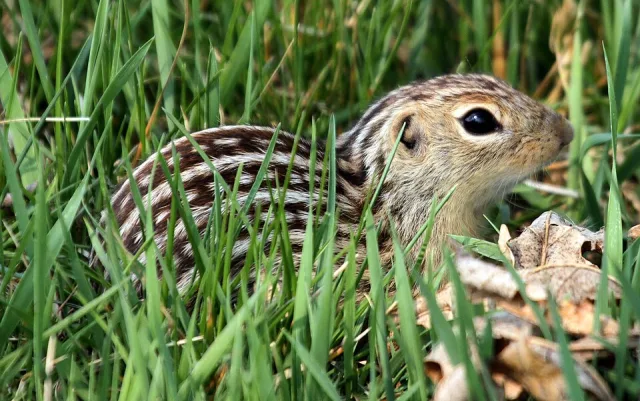
Significance: Named for the thirteen alternating light and dark stripes that run down its back, this species is highly visible due to its diurnal (daytime) activity.
Role in Diet: They are a major food source for mid-sized raptors, especially the Red-tailed Hawk and the smaller Prairie Falcon, particularly early in the nesting season when they emerge from hibernation. Their predictable foraging habits make them relatively easy to hunt.
3. Meadow Vole (Microtus pennsylvanicus)
Significance: Voles are small, extremely numerous, and breed rapidly, providing a consistent, low-effort food source.
Role in Diet: They are the staple prey for smaller raptors and owls, particularly the American Kestrel and Barn Owl. Their high density compensates for their small size, ensuring raptors can easily meet their energy needs.
4. White-tailed Jackrabbit (Lepus townsendii)
Significance: This is one of the largest prey items regularly taken by the biggest raptors.
Role in Diet: Jackrabbits are vital to the survival of the Golden Eagle and the Northern Goshawk (in the Black Hills). They provide a large caloric return per capture, which is essential for feeding large nestlings. However, they require a skilled, powerful hunter to catch.
5. Eastern Cottontail (Sylvilagus floridanus)
Significance: Common in the brushy draws and riparian areas near the Badlands and in the lower elevations of the Black Hills.
Role in Diet: A frequent food source for large hawks and eagles. Unlike the Jackrabbit, the Cottontail's tendency to hide in dense cover means it is often hunted near the edges of forest and shrublands.
Prey in the Black Hills
The prey base shifts slightly in the higher elevations of the Black Hills to reflect the forest environment:
Chipmunks and Tree Squirrels: Species like the Least Chipmunk and Red Squirrel become more important, particularly for the Northern Goshawk and Great Horned Owl, as they forage on the forest floor and in the pine canopy.
Deer Mice and Shrews: These are common throughout the forest floor, fueling smaller owls and migrating raptors.
The presence of these small, abundant mammals is the direct reason the Badlands and Black Hills can sustain such a dense and diverse population of birds of prey. The raptors are effectively managing the rodent and rabbit populations, creating a classic predator-prey balance within the unique topography of western South Dakota.
The contrast between the sun-scorched, rugged peaks of the Badlands and the cool, dense forests of the Black Hills creates an ecological dynamic unmatched in the region. This unique geology ensures that South Dakota remains a critical and fascinating crossroads for North American raptors and mountain birds.
