
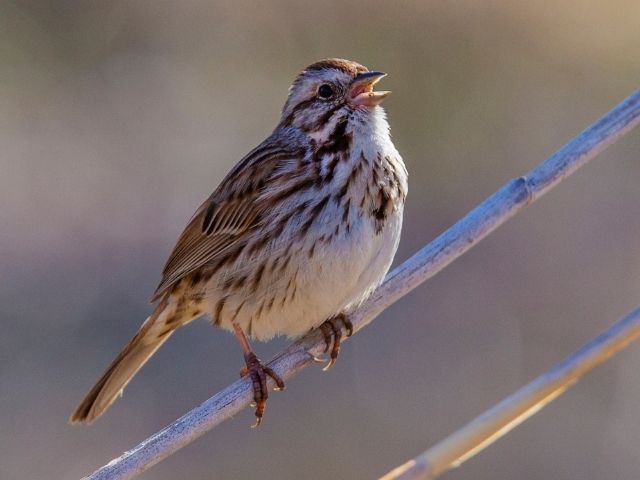
Across the fields, marshes, suburbs, and woodlands of the United States, a small, unassuming bird pours its heart into song. Often overlooked due to its muted brown plumage, the Song Sparrow (Melospiza melodia) is anything but ordinary. This prolific vocalist is one of North America’s most familiar and widespread native birds, captivating birdwatchers and backyard nature lovers alike with its beautiful voice and resilient spirit.
A Familiar Face Across the Continent
The Song Sparrow is one of the most broadly distributed songbirds in North America, found year-round in much of the continental United States and southern Canada. Its range stretches from the Alaskan tundra to the deserts of the Southwest, from the Atlantic seaboard to the Pacific coast. Thanks to this wide geographic spread, Song Sparrows display considerable regional variation—there are more than 25 recognized subspecies, some adapted to very specific habitats.
Whether it’s hopping through a snowy thicket in Minnesota or flitting among cattails in a Florida marsh, this little bird makes itself at home. Urban parks, gardens, brushy roadsides, and wetland edges all provide the kind of low, dense vegetation the Song Sparrow prefers for nesting and cover.
Plumage and Personality
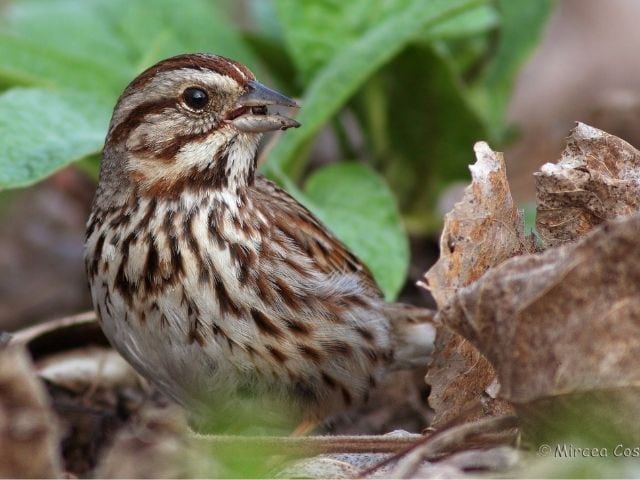
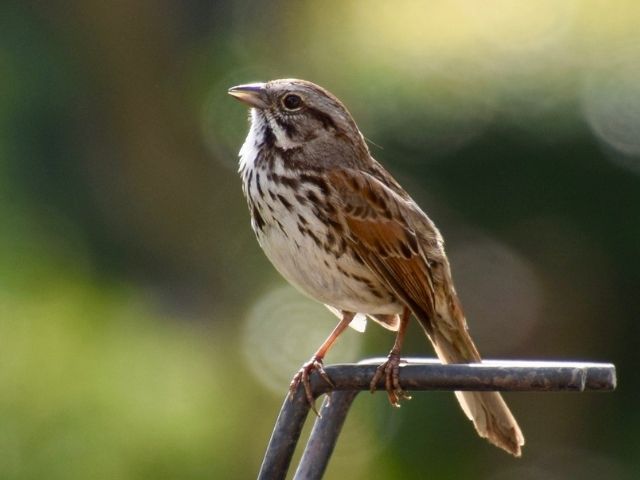
Though it may not have the brilliant coloring of a cardinal or bluebird, the Song Sparrow has its own understated charm. Adults are typically brown above with darker streaks, a grayish eyebrow stripe, and heavy brown streaking on the white breast that often forms a central “blotch” or spot. This streaked pattern provides excellent camouflage, helping the bird remain inconspicuous to predators.
Measuring about 5 to 7 inches in length with a wingspan of around 9 inches, Song Sparrows are slightly larger than house sparrows. But unlike their urban namesakes, Song Sparrows belong to a different genus and display more solitary, ground-foraging behaviors. They are often seen scratching in leaf litter or fluttering up to perch on a fencepost or branch to deliver their namesake song.
Nature’s Songwriter
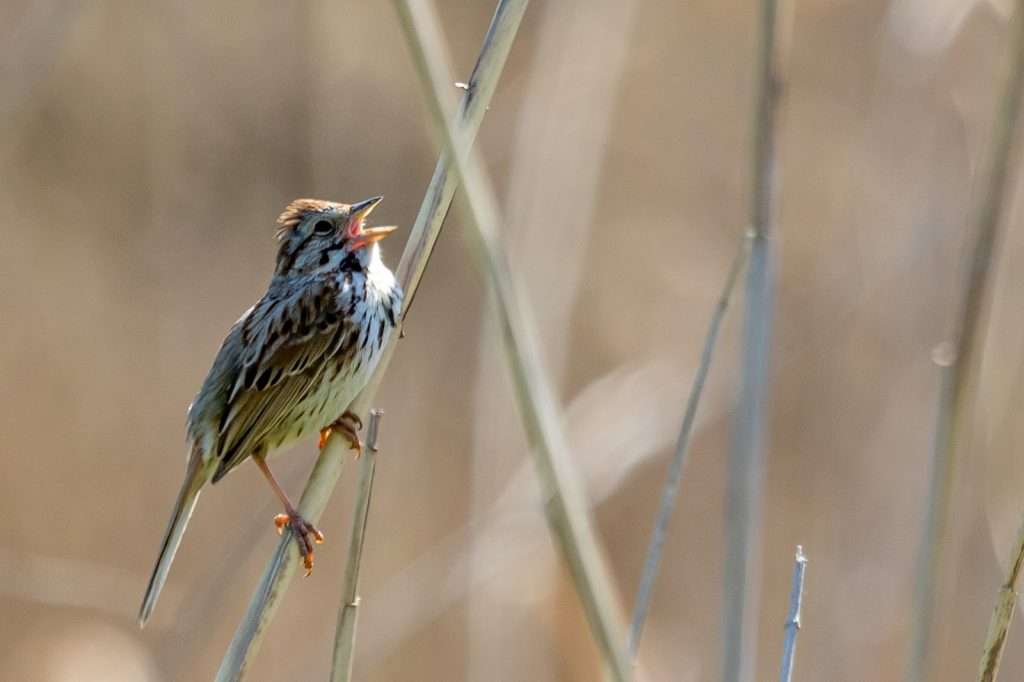
The true claim to fame for this bird lies not in its feathers, but in its voice. The Song Sparrow’s call is complex and melodious—typically beginning with a few clear whistles followed by a jumble of trills, buzzes, and warbles. Each male Song Sparrow has a repertoire of several different song types, and no two birds sound exactly the same.
These vocalizations serve crucial roles in both defending territory and attracting mates. During the breeding season (generally spring through early summer in most of the U.S.), males perch prominently and sing persistently to establish dominance and court females. Once paired, the birds maintain monogamous bonds for the season and may even return to the same nesting area year after year.
Research has shown that Song Sparrows exhibit a form of cultural transmission—their songs are learned from adult tutors during a sensitive period in early life. As a result, “dialects” can emerge in local populations, with neighboring birds singing more similar songs than distant ones. This fascinating behavior has made the Song Sparrow a popular subject of scientific study in fields like animal communication, neuroscience, and behavioral ecology.

Breeding and Nesting Habits
A typical Song Sparrow nest is a tidy, cup-shaped structure woven from grasses, bark, and rootlets, and usually well-hidden in low shrubs or grasses. The female does most of the building and incubates a clutch of 3 to 5 bluish or greenish eggs marked with brown spots. Incubation lasts around 12 to 14 days, followed by 9 to 12 days of feeding the nestlings before they fledge.
In warmer parts of the U.S., Song Sparrows can raise two or even three broods per season. The diet during the breeding period consists largely of insects, which provide essential protein for growing chicks. Outside of the breeding season, the birds switch to a more seed-heavy diet, often foraging in mixed flocks with other sparrows.
A Resilient Resident
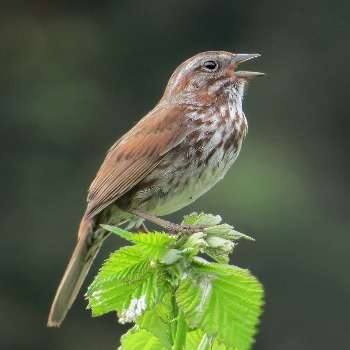
Unlike many migratory songbirds whose numbers have plummeted in recent decades, the Song Sparrow has remained relatively stable overall. The species benefits from its flexible habitat preferences and generalist diet, allowing it to thrive in both wild and suburban environments.
Still, Song Sparrows are not immune to the broader environmental pressures facing all bird species. Habitat fragmentation, predation by domestic cats, pesticide use, and climate change all pose localized threats. In particular, loss of wetland and grassland habitats can impact breeding populations in certain regions.
Citizen science initiatives like the Cornell Lab of Ornithology’s eBird and NestWatch projects help researchers track Song Sparrow populations and behavior across North America. Backyard birders can also contribute by maintaining native plant gardens, minimizing pesticide use, and keeping pet cats indoors.
Song Sparrow in American Culture
Though not as emblematic as the Bald Eagle or as celebrated as the robin, the Song Sparrow holds a quiet place in the American psyche. Its cheerful music has inspired poets like Emily Dickinson and naturalists like John Burroughs, who wrote extensively about the birds around his Catskill Mountain home.
Burroughs, in particular, saw the Song Sparrow as a symbol of enduring beauty in ordinary places. In one essay, he described the bird’s song as “a strain of happy, careless improvisation, full of freedom and the joy of being.” Even today, that sentiment resonates with anyone who pauses to listen to a birdsong on a spring morning.
Wrapping Up
In a world increasingly dominated by noise and distraction, the Song Sparrow remains a gentle, persistent voice in the American soundscape. Unflashy yet deeply expressive, common yet regionally unique, this bird reminds us that wonder is often found in the everyday. Whether you’re a seasoned birder or a casual hiker, chances are you’ve crossed paths with a Song Sparrow. The next time you do, stop for a moment and listen—you just might hear nature composing a melody all its own.
Quick Facts: Song Sparrow (Melospiza melodia)
Size: 5.5–7 inches long; wingspan ~9 inches
Habitat: Marshes, meadows, suburbs, woodlands, brushy edges
Range: Widespread across the U.S., southern Canada, and parts of Mexico
Song: Series of clear whistles followed by varied trills and buzzes
Diet: Insects, seeds, and small fruits
Conservation Status: Least Concern (IUCN)
The Rarest Dance in the West: The Plight and Preservation of the Gunnison Sage-Grouse
