
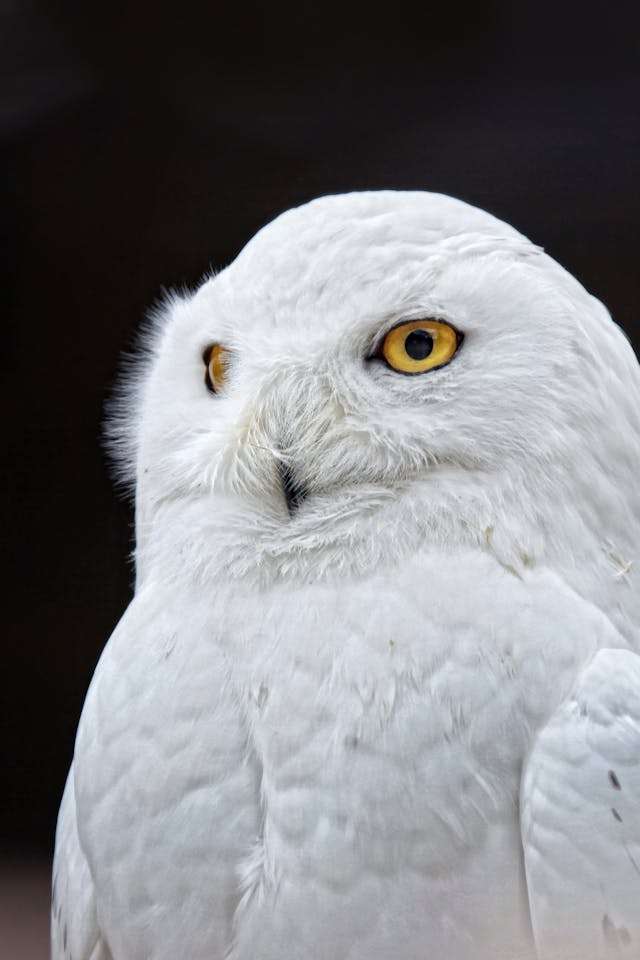
White plumage in the avian world is not a blank canvas; it's a sophisticated evolutionary strategy. While we often associate brilliant white birds with coastal areas—gulls, herons, and pelicans—a diverse and fascinating group of white land birds inhabits the forests, mountains, and plains of the United States. These species use their pale coloration for everything from camouflage in snowy environments to communicating dominance, making them some of the most striking and specialized birds in North America.
This article explores the science behind the brilliant white feathers of U.S. land birds, delves into the specific ecological roles of the color, and profiles the most prominent species that showcase this monochromatic marvel.
The Science of White: Not a Pigment, But a Structure
Unlike vibrant colors like red, yellow, or blue, which are produced by biological pigments (carotenoids or melanins) deposited into the feather structure, the color white is purely structural.
- No Pigment: A white feather contains little or no melanin or other pigments.
- Keratin and Air: The color comes from the keratin (the protein that forms the feather) and the numerous tiny air bubbles trapped within the feather's internal structure.
- Light Scattering: When light hits the feather, these countless microscopic air bubbles scatter all wavelengths of light equally. Since all visible light wavelengths are reflected back to the eye, the feather appears brilliant white. This process is the same phenomenon that makes snow and clouds appear white.
In some land birds, particularly those that are entirely white, the absence of melanin can be a trade-off. Melanin provides structural strength and is an important defense against wear and tear. Therefore, extremely white feathers can be more brittle and wear out faster than darker ones.
The Ecological Strategy of White Plumes
For land birds, white plumage serves three primary, often overlapping, ecological purposes: camouflage, communication, and thermoregulation.
1. Cryptic Camouflage in Seasonal Environments
The most intuitive reason for white plumage is camouflage in snow. Many of the northern species that spend winters in the U.S. rely on a transformation in color to match their seasonally white landscape.
- Year-Round Defense: For permanent residents of high-altitude or northern areas, like the Ptarmigan, white provides year-round defense against predators that hunt against a snowy backdrop.
- Seasonal Molt: Species that undergo a complete color change in the winter (like the Snow Bunting) dramatically reduce their visibility to raptors.
2. Social Signaling and Communication
For species that are white year-round, the color can be an excellent form of conspicuous communication against a dark background of soil, rock, or trees.
- Display: A large white bird is highly visible during courtship rituals, helping to attract mates.
- Warning: The flash of white feathers during flight or display can serve as a warning signal or a means of drawing attention away from a nest.
3. Thermoregulation (Heat Reflection)
While dark colors absorb heat, white reflects heat. In intensely sunny, open environments (like high mountains or deserts), white plumage can help a bird avoid overheating by reflecting solar radiation. This is a crucial adaptation for birds that spend hours exposed to the sun.
Profiles of U.S. White Land Birds
The following profiles highlight key American land birds that utilize white plumage as a core component of their survival strategy.
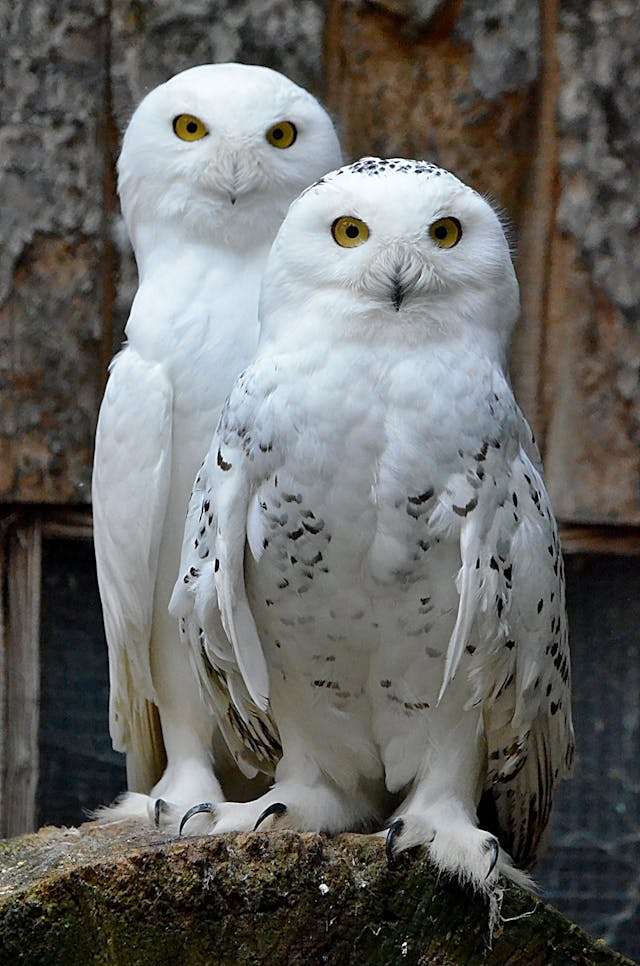
Snowy Owl (Bubo scandiacus)
- Classification: Large owl (Raptor/Hunter).
- Plumage Strategy: Permanent cryptic camouflage.
- Details: The Snowy Owl is the quintessential white land bird, breeding in the Arctic tundra and irrupting south into the U.S. during winter when northern prey (lemmings) is scarce. The adult male is almost pure white, while females and juveniles have dark barring. This coloration is a perfect camouflage against the snow and ice of their hunting grounds. During irruption years, they can be seen on beaches, vast prairies, or airport fields in the Northeast, Midwest, and Great Plains, hunting rodents during the day. Their thick, white feathers also provide exceptional insulation against extreme cold.
White-tailed Ptarmigan (Lagopus leucura)

- Classification: Grouse/Gamebird.
- Plumage Strategy: Seasonal camouflage.
- Details: The only land bird in the U.S. to remain completely white year-round, the White-tailed Ptarmigan is an adaptation master of the high alpine tundra of the Rockies (from New Mexico up to Alaska). In the summer, it has a mottled brown and gray plumage. As winter approaches, it undergoes a complete molt, replacing every feather, including its wing and tail feathers, with brilliant white. Even its legs are covered in white feathers, forming "snowshoes" that help it walk on soft snow. This color change is vital for avoiding predators like Golden Eagles and coyotes.
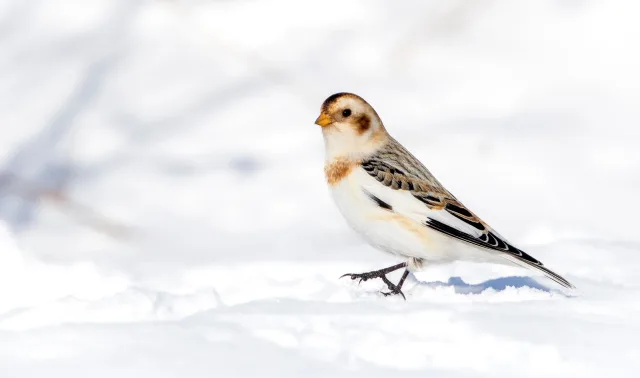
Snow Bunting (Plectrophenax nivalis)
- Classification: Songbird/Passerine.
- Plumage Strategy: Seasonal plumage and social signaling.
- Details: The Snow Bunting is a hardy, northern songbird that breeds on the Arctic tundra and winters across the northern tier of the contiguous U.S. (especially the Great Lakes and northern Great Plains). In the winter, males are striking in white and brown, with massive patches of white on their wings. These large white patches act as a strong visual signal when flying in flocks over open, often snowy, fields. Flocks are often seen feeding on the seeds of weeds and grasses that poke through the snow.
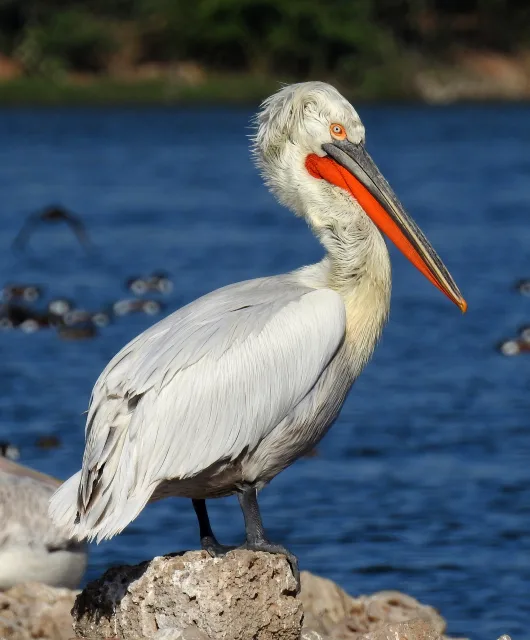
American White Pelican (Pelecanus erythrorhynchos)
- Classification: Pelicans.
- Plumage Strategy: Social signaling and co-operative hunting.
- Details: The American White Pelican is an inland giant, whose imposing 9-foot wingspan and conspicuous white body make it a beacon while soaring in synchronized flocks over lakes and reservoirs across the continent's interior. This species relies on large inland water bodies for its breeding colonies and undertakes one of the longest annual migrations of any North American bird to warmer southern coasts for the winter.
Snow Goose (Anser caerulescens)
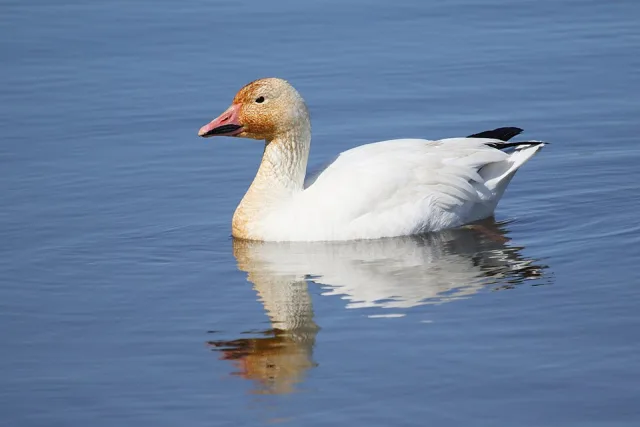
- Classification: Ducks, geese and swans.
- Plumage Strategy: Social signaling.
- Details: The Snow Goose is a spectacle of collective whiteness, migrating in flocks sometimes numbering in the thousands and concentrating in fields and wetlands along the Atlantic, Central, and Pacific Flyways. When these vast, bright flocks descend upon coastal fields and wetlands, their sheer volume and brilliant color turn the landscape white, representing a massive force of winter survival and highly visible communication rather than solitary concealment.
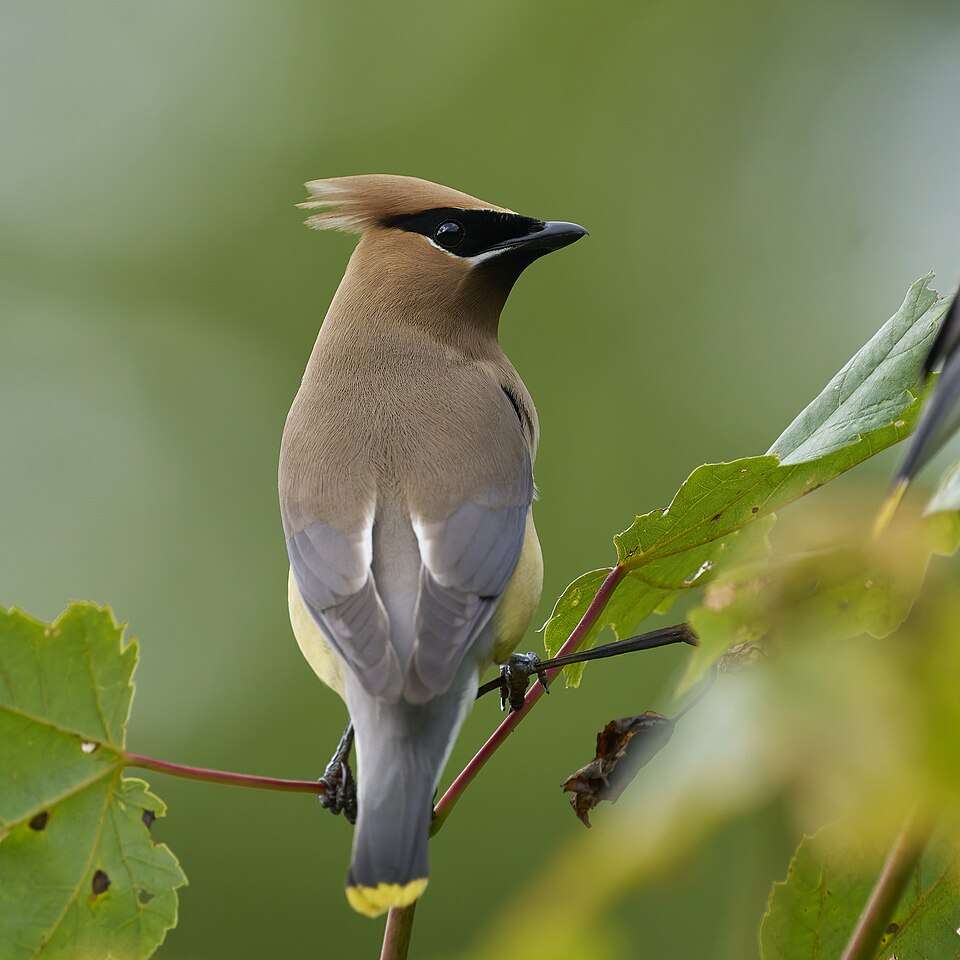
Bohemian and Cedar Waxwings (Bombycilla garrulus and B. cedrorum)
- Classification: Songbird/Passerine.
- Plumage Strategy: Conspicuous flight and display.
- Details: While not entirely white, both species feature striking, bright white markings that are essential for their social behavior. The primary white features are the white wing bars and white under-tail coverts (the feathers beneath the tail). When a flock of Waxwings lands to feed on berries, the sudden flash of white as they settle is a highly visible signal to the rest of the flock. The overall silky brown and gray plumage is accented by these bright white flashes, which likely aid in flock coordination during fast, erratic flights.
The Conservation Importance of White Birds
The white land birds of the U.S. are crucial indicator species for the health of both Arctic and alpine ecosystems.
- The presence of Snowy Owls and winter finches indicates the cyclical nature of the boreal forest and tundra food webs.
- The persistence of the White-tailed Ptarmigan is tied directly to the health and preservation of the fragile, high-altitude habitats of the Western U.S.
When birders spot that telltale flash of white against a gray winter sky or a dark forest backdrop, they are witnessing more than just a beautiful bird; they are observing a triumph of evolution—a species that has mastered the cold and the camouflage of the harsh, beautiful northern landscape.
