
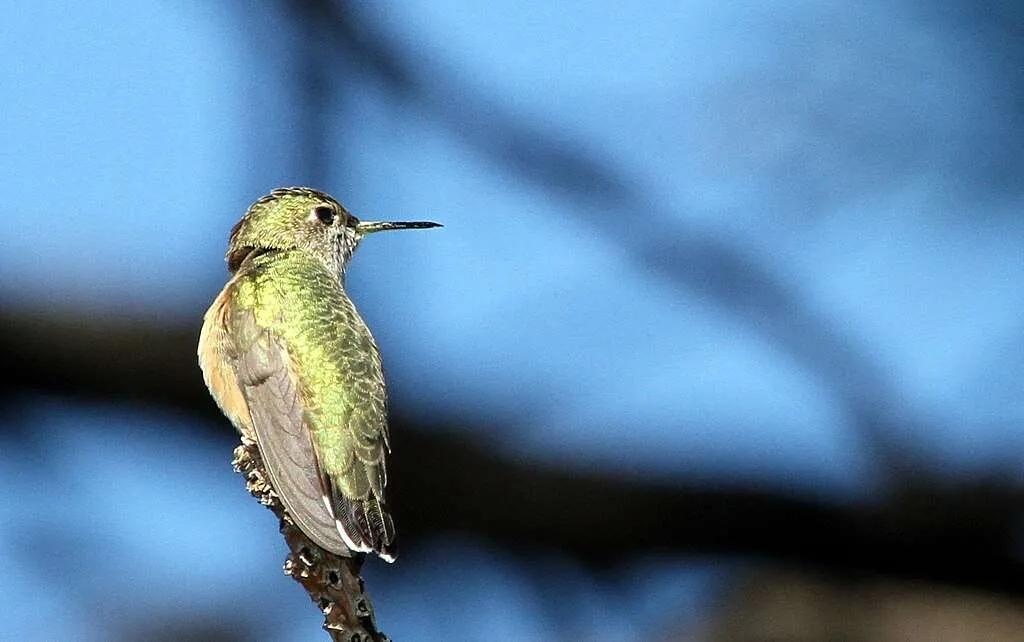
In the vast panorama of American birdlife, it is often the bold and the beautiful—the eagles, the flamingos, the vibrant cardinals—that steal the spotlight. Yet, the true marvel of avian engineering lies in the Tiny Titans: the smallest bird species that inhabit our forests, deserts, and backyards. These miniature marvels, often weighing less than a nickel, possess metabolic rates and migratory capabilities that defy their size.
The smallest bird title is generally shared by the Hummingbirds and the Kinglets. While the Bee Hummingbird (Mellisuga helenae), found only in Cuba, holds the record for the world's smallest bird (under two inches long!), the U.S. is home to its own pint-sized champions.
Here, we explore the fascinating facts about the smallest birds commonly found or breeding across different U.S. regions, highlighting their incredible adaptations for survival.
The Western Contender: Calliope Hummingbird
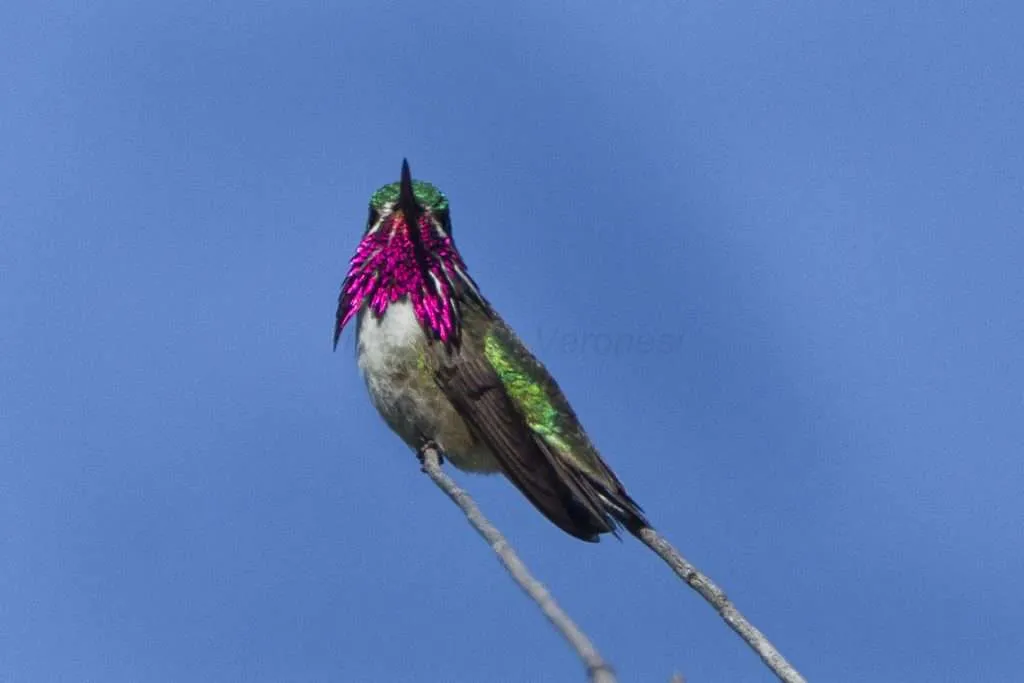
The title of the smallest bird in North America belongs to the Calliope Hummingbird (Selasphorus calliope).
- Size and Weight: Averaging just 3 inches (7.5 cm) in length and weighing about 3 grams (the weight of a single penny), this bird is a genuine miniature.
- Adaptation: The Calliope undertakes the longest migratory journey of any hummingbird in the world, traveling up to 5,000 miles round-trip between its breeding grounds in the Pacific Northwest and its wintering grounds in Mexico. To survive this trek, it can nearly double its body weight before migration.
- Regional Presence: Breeds primarily in Washington, Oregon, Idaho, Montana, and northern California, and is a frequent sight during migration through the Southwest.
The Eastern Miniature: Ruby-throated Hummingbird
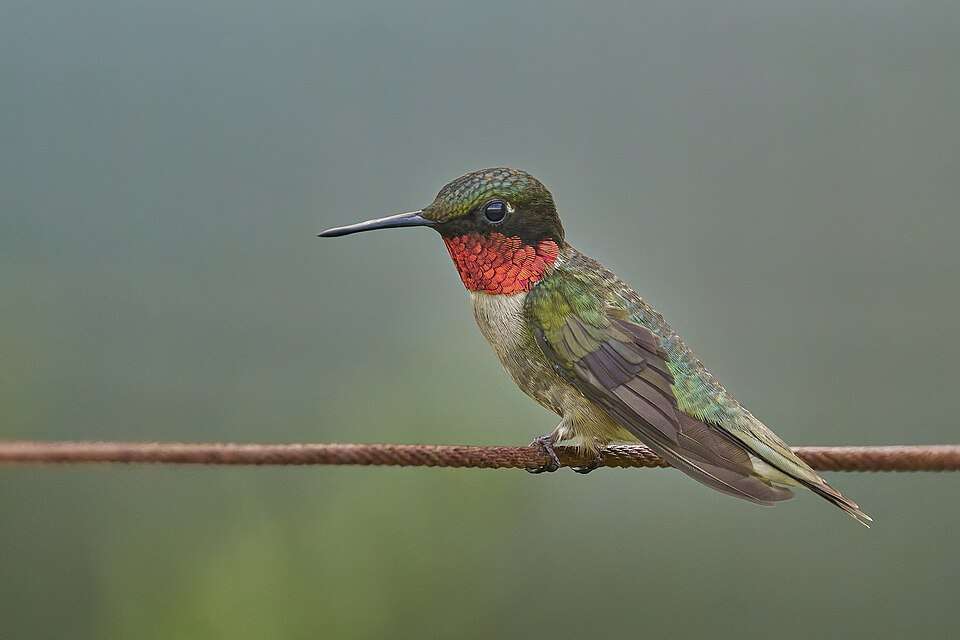
While not the smallest hummingbird overall, the Ruby-throated Hummingbird (Archilochus colubris) is the only hummingbird species that breeds extensively east of the Mississippi River, making it the smallest bird in dozens of Eastern states.
- Adaptation: This tiny titan performs a miraculous feat: it flies 500 miles non-stop across the Gulf of Mexico, a journey that takes approximately 18–20 hours. To fuel this flight, it must store enough fat (triglycerides) to survive.
- Metabolic Marvel: Like all hummingbirds, its heart beats up to 1,260 times per minute during flight, and it enters a state of torpor (a short-term hibernation) on cold nights to conserve energy, dropping its body temperature drastically.
- Regional Presence: The smallest breeding bird in states from Florida to Maine and inland to Texas and the Dakotas.
The Kinglets: The Boreal Featherweights
When hummingbirds migrate out of a region, the title of the smallest passerine (perching bird) usually falls to the Kinglets. These tiny, acrobatic birds are critical components of coniferous and mixed-wood forests.
Golden-crowned Kinglet (Regulus satrapa)
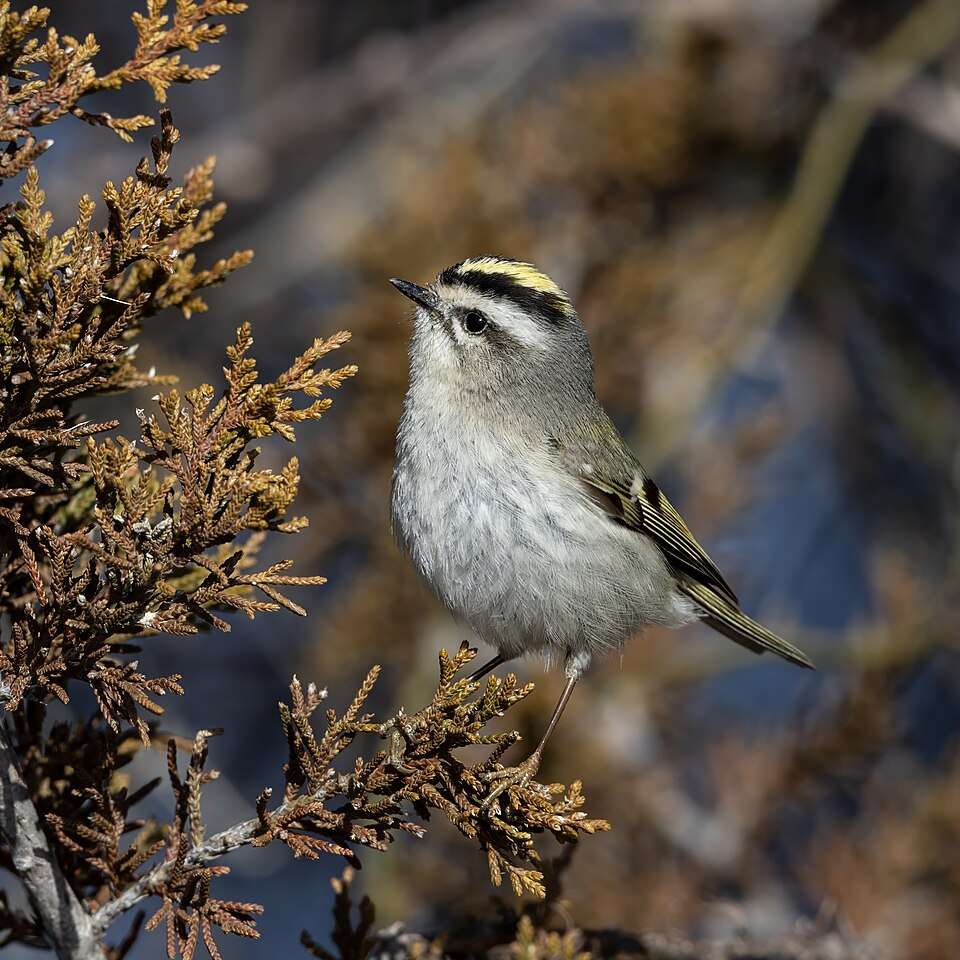
- Size and Weight: Approximately 4 inches (10 cm) long and weighing about 6 grams. They are roughly the size of a large moth.
- Adaptation: The Golden-crowned Kinglet is a true cold-weather survivalist. It can endure temperatures down to -40°F (-40°C) and survives by constantly foraging on insects and spider eggs found on the underside of conifer needles. To stay warm, it shivers continuously and possesses an extremely dense layer of feathers.
- Regional Presence: Found year-round or breeding in the mountainous and coniferous forests of the Northeast (e.g., New Hampshire, New York) and the West (e.g., Colorado, Washington).
Ruby-crowned Kinglet (Corthylio calendula)
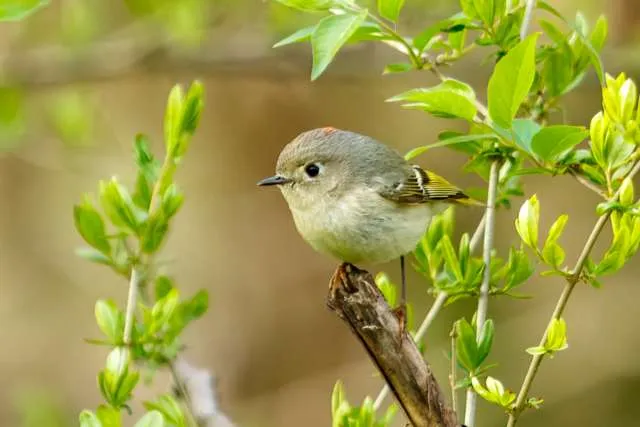
- Size and Weight: Nearly identical in size to the Golden-crowned Kinglet.
- The Crown Surprise: The male's distinctive ruby-red crest is rarely visible. It is a concealed patch of feathers that is only flashed during moments of excitement, aggression, or courtship display. For the rest of the time, the bird looks plain.
- Regional Presence: More migratory and widespread than its cousin. It is often the smallest bird seen during winter in the lower 48 states, particularly in the Southern and Central U.S. (e.g., Arizona, Texas, Alabama).
The Deep South and Desert Tiny Titans
Beyond the Kinglets and Hummingbirds, other small birds dominate specific habitats with specialized adaptations.
The Verdin (Auriparus flaviceps)

- Size and Weight: About 4.5 inches (11.5 cm) long, making it a very small, active species.
- Adaptation: The Verdin is a specialist of the thorny, dry scrub and desert habitats. It is the only North American member of the family Aegithalidae (penduline tits). A unique adaptation is its incredible ability to construct two types of nests: a large, protective roosting nest for year-round shelter from extreme temperatures and a separate, smaller breeding nest.
- Regional Presence: The smallest non-hummingbird in the desert Southwest, including parts of Arizona, New Mexico, and Texas.
The Blue-gray Gnatcatcher (Polioptila caerulea)
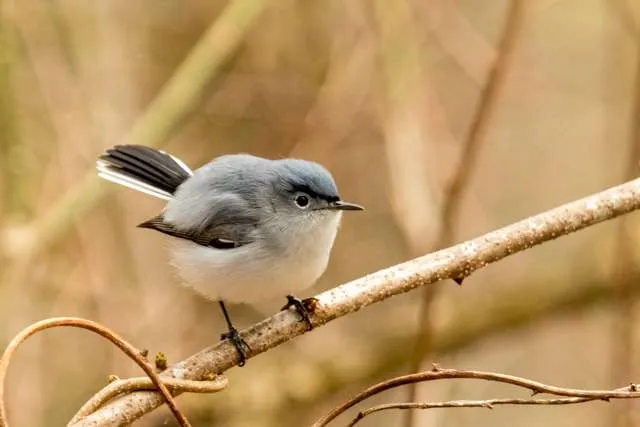
- Size and Weight: Roughly 4.5 inches long, with a very long, constantly flicking tail that makes up half its length.
- Adaptation: Despite its tiny body, the Gnatcatcher is known for its complex, camouflaged nest—a tiny cup built of spider silk and lichens, making it look like a natural knot on a branch. Its constant, frantic tail-flicking is thought to startle insects, making them easier to catch.
- Regional Presence: Widespread across the eastern and southwestern U.S., making it one of the smallest species found in many states that lack breeding hummingbirds, such as Missouri and Illinois.
The Finches: The Smallest Seed-Eaters
While many finches are mid-sized, the smallest members of this group are diminutive seed-eaters that brave harsh winters.
Pine Siskin (Spinus pinus)
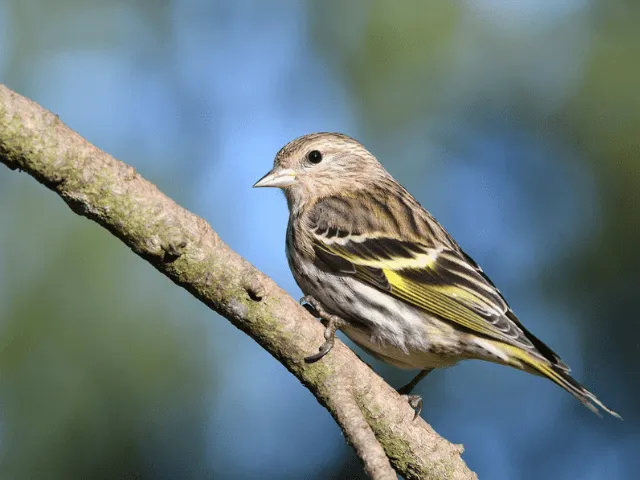
- Size and Weight: About 4.5 inches long, slightly larger than the kinglets but still a featherweight.
- Adaptation: The Siskin is highly nomadic and irruptive, meaning it doesn't follow a set migratory path but travels great distances south into the U.S. only when pine cone and seed crops fail in the boreal forests. This unpredictable movement allows them to survive resource scarcity.
- Regional Presence: Highly variable, but often the smallest winter visitor in many northern and central states.
Wrapping Up: Lessons from the Little Ones
The Tiny Titans of the U.S. avifauna teach us that size is no barrier to complexity. They are metabolic wonders that endure extreme temperature swings, undertake continent-spanning migrations, and possess sophisticated behaviors to survive in highly specialized niches.
Next time you are out birding, take a moment to peer into the dense foliage or look closely at the smallest whirring body at a nectar feeder. These smallest birds—the Kinglets, the Verdins, and the Hummingbirds—are a living testament to the powerful, efficient artistry of nature, proving that the greatest wonders often come in the smallest packages.
