

Bird flight is one of nature’s most elegant engineering feats—a combination of anatomy, physics, and evolutionary innovation that has fascinated scientists for centuries. Across the United States, millions of birds take to the air each day, from tiny hummingbirds beating their wings faster than the human eye can follow to broad-winged raptors soaring effortlessly on rising columns of warm air. While each species has its own unique adaptations, all birds rely on the same fundamental principles of aerodynamics and biomechanics to stay aloft.
Understanding the science behind bird flight not only enriches birdwatching, but also helps explain how different species thrive in their particular habitats. Here’s how American birds—from Mallards in wetlands to Peregrine Falcons in cityscapes—master the sky.
1. The Physics: Lift, Drag, Thrust, and Weight
Bird flight operates on four basic physical forces:
Lift
Lift opposes gravity and keeps a bird airborne. It is generated by the shape of the wing, especially the airfoil design—thicker at the front, thinner at the back. As a bird moves forward, air travels faster over the curved upper surface than beneath the wing, creating lower pressure on top. The difference in pressure pulls the bird upward.
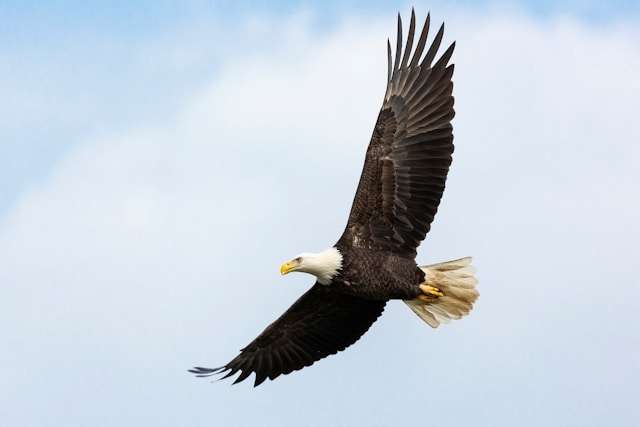
Example: The Bald Eagle
With its long, broad wings (up to 7.5 feet), the Bald Eagle maximizes lift with minimal flapping. These wings create tremendous surface area, allowing the eagle to ride air currents for miles while conserving energy.
Thrust
Thrust propels the bird forward, overcoming drag (air resistance). It is produced primarily by the downstroke of the wings, which push air backward and downward.
Example: The Ruby-throated Hummingbird
This tiny bird beats its wings up to 70 times per second, generating constant thrust. Unlike most birds, its wing joints allow rotation, enabling both the forward and backward strokes to produce lift and thrust—a necessity for hovering.

Drag
Drag is the resistance birds encounter as they fly. Body shape, feather alignment, and wing position all affect drag.
Birds streamline their bodies and tuck in their feet during flight to reduce resistance. Feathers even zip together through tiny hooks called barbules, forming smooth, aerodynamic surfaces.
Example: The Peregrine Falcon
When diving, the peregrine reshapes its body into a teardrop form—tucking wings tightly to minimize drag. This aerodynamic streamlining helps it reach speeds over 200 mph, making it the fastest animal on Earth.

Weight
Gravity pulls the bird downward. Evolution has lightened bird anatomy dramatically to counteract weight:
Hollow (pneumatized) bones
Lightweight feathers
Fused bones for strength without bulk
Air sacs connected to the respiratory system for buoyancy
Example: The Turkey Vulture
Its lightweight skeletal structure and enormous wings allow it to soar for hours with nearly no wingbeats while searching for carrion.
Birds of West Virginia: The Common, Migratory, and Rare Species
2. Wing Shapes: Why Different Birds Fly Differently
Bird wing shapes vary by habitat and lifestyle, each optimized for a different kind of flight.
A. High-Aspect Ratio Wings (Long + Narrow)
Best for soaring and gliding over long distances.
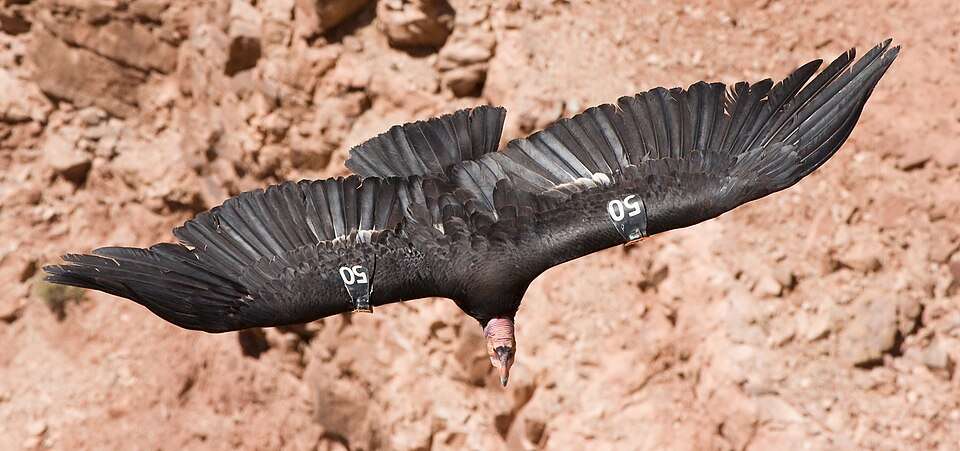
Example: California Condor
This species has some of the longest wings in North America—up to 9.5 feet. Long, narrow wings reduce drag and allow the condor to use thermal updrafts to stay airborne with minimal effort.
B. Elliptical Wings (Rounded + Broad)
Great for quick maneuvering, especially in forests.
Example: Northern Cardinal
Its rounded wings allow rapid takeoff and agile movements between branches, helping it avoid predators in dense vegetation.
C. High-Speed Wings (Long + Tapered)
Designed for swift, sustained flight.
Example: Mourning Dove
With long, pointed wings, doves can reach speeds up to 55 mph, useful for traveling long distances during migration.
D. Hovering-Adapted Wings
Short, flexible wings that rotate at the shoulder.
Example: Hummingbirds
Their wings behave more like helicopter blades, producing lift on both strokes. This adaptation is unique among birds.
3. The Mechanics of Flapping Flight

While soaring and gliding conserve energy, flapping is essential for takeoff, maneuvering, and acceleration.
The Downstroke: Power Phase
Primary feathers spread out like fingers
Wing moves downward and forward
Generates lift and thrust simultaneously
Example: Mallards
These common American ducks rely heavily on strong downstrokes for fast, direct flight during migration, sometimes traveling hundreds of miles overnight.
The Upstroke: Recovery Phase
Wing partially folds to reduce drag
In many birds, lift is minimal on the upstroke
In hummingbirds, the upstroke also generates lift
Example: American Crow
Crows use powerful, slow wingbeats that create visible “rowing” motions, distinguishing them from similar-sized birds like ravens or hawks.

4. Feathers: The Engineered Marvels of Flight
Feathers are essential for flight. Their structure is unmatched in the natural world.
Types of Feathers Involved in Flight
Primary feathers (wing tips): Provide thrust
Secondary feathers (inner wing): Provide lift
Contour feathers: Streamline the body
Tail feathers: Steer and brake
Feathers are made of keratin, the same protein in human hair and nails, but arranged in an intricate branching structure that allows flexibility, strength, and repairability.
Example: Red-tailed Hawk
Watch a hawk soaring and you may see the “fingers” at the wing’s edge—the spread primary feathers that reduce drag and improve control.

5. Soaring, Gliding, and Riding the Air
Birds often use environmental energy to supplement their own. The U.S. offers diverse landscapes that provide different types of lift.
Thermals: Rising Warm Air
Common in open landscapes, thermals help large birds stay aloft.
Seen in: Hawks, vultures, eagles
Example: Turkey Vultures circle upward on thermals before gliding long distances.
Dynamic Soaring: Using Wind Gradients
Some coastal birds use wind layers.
Seen in: Albatrosses (though not U.S. inland), and occasionally gulls and pelicans
Example: Brown Pelicans glide just above waves, using updrafts for free lift.

Slope Lift: Air Deflected Upward by Terrain
Occurs near cliffs or mountains.
Seen in: Ravens, eagles, condors
Example: Golden Eagles in the Rocky Mountains use canyon updrafts to travel huge distances while hunting.
6. Navigation and Migration: Long-Distance Flight Science
Bird flight isn’t just about staying in the air—it’s about knowing where to go.
Birds navigate using:
The sun and stars
Earth’s magnetic field
Landmarks and coastlines
Scent cues
Memory
Example: The Arctic Tern
While not limited to the U.S., it passes through American waters during a 25,000-mile migration—the longest of any animal.

Example (U.S.-based): Sandhill Cranes
These cranes follow traditional flyways using thermal lift to travel thousands of miles each year between the northern Midwest and the southern U.S.
7. The Future of Bird Flight Research
Scientists study bird flight using wind tunnels, GPS tagging, drones, and high-speed cameras. Understanding bird aerodynamics has influenced:
Aircraft wing design
Drone development
Wind turbine engineering
Robotics
And as climate change alters migration patterns, studying flight helps researchers monitor shifts in species behavior and habitat use.
Conclusion: A Sky Full of Science
Bird flight is a masterpiece of biological engineering—feathers, bones, muscles, and physics working in harmony. Whether it's the silent glide of a Red-tailed Hawk, the high-speed dive of a peregrine falcon, or the shimmering hover of a hummingbird, every flight tells a story of adaptation, survival, and evolution.
Next time a flock passes overhead or a bird lifts off from a fencepost on your morning walk, you’ll know the remarkable science behind their journey through the air.
