

Each spring, as the ice recedes and the days lengthen, an ancient rhythm stirs across North America. It is the call of the Sandhill Crane, an iconic harbinger of spring, drawing hundreds of thousands of these magnificent birds to a relatively small stretch of river in central Nebraska. The Platte River, a wide, shallow, braided waterway, becomes the temporary capital of the Sandhill Crane world, hosting what is arguably one of the greatest wildlife spectacles on Earth. For a few short weeks, the skies above the Platte are filled with the sight and sound of nearly half a million cranes, an experience that transforms the landscape and leaves an indelible mark on every witness.
An Ancient Pilgrimage: The Platte River's Enduring Role
The Sandhill Crane migration on the Platte River is not merely an annual event; it is a deeply ingrained biological imperative honed over millennia. For an estimated 90% of the world's Sandhill Crane population, this particular 80-mile stretch of the Platte, primarily between Kearney and Grand Island, is an absolutely critical stopover point. They arrive typically from late February through early April, resting and refueling before continuing their journey to breeding grounds in the Canadian Arctic, Alaska, and Siberia.
Why the Platte? The river’s unique characteristics make it indispensable:
Shallow, Braided Channels: The wide, shallow nature of the Platte creates countless sandbars and islands, offering safe, predator-free roosting sites where the cranes can gather in immense numbers at night. The cold, flowing water provides a natural barrier against coyotes and other ground predators.
Abundant Food Resources: The surrounding agricultural fields, particularly cornfields, provide a rich bounty of waste grain. This high-energy food source is vital for the cranes to replenish fat reserves necessary for their arduous journey and to prepare for breeding. The nearby wet meadows and grasslands also offer invertebrates and plant matter, diversifying their diet.
Historical Significance: This region has likely served as a migration bottleneck for these birds for millions of years, long before human settlement. The cranes are simply following a deeply etched migratory pathway.

The Daily Rhythm: From Roost to Roost
Witnessing the crane migration is an experience best observed by following their daily rhythm.
Dawn Lift-off: Before sunrise, the sandbars are a mosaic of gray and rust-colored bodies. As the first hint of light paints the eastern sky, a low murmur begins to rise. Soon, individual cranes start to call, a bugling cry that quickly multiplies into a deafening chorus. Then, in small groups at first, then in waves of thousands, the cranes lift off, their long legs trailing behind as they head to the feeding grounds. The sight of so many birds taking flight against a pastel sky, accompanied by their ancient calls, is profoundly moving.
Daytime Foraging: Throughout the day, the cranes disperse across the vast cornfields and wet meadows. Here, they spend their hours diligently gleaning waste grain, probing for invertebrates, and performing their characteristic "dancing" displays – an elaborate series of bows, jumps, and wing flaps that serve both as courtship rituals and social bonding. This is an excellent time to observe them at closer range from designated viewing areas or country roads.
Sunset Return: As dusk approaches, the spectacle reverses. From all directions, individual cranes, small groups, and massive V-formations begin their return flights to the river. The sky fills once more with their haunting bugles, now softer and more reflective. Landing gracefully on the sandbars, they settle in for the night, a dense, living blanket covering the river, ready to repeat the cycle the next morning. The sound of hundreds of thousands of cranes calling as they settle in is an unforgettable natural symphony.

Conservation Challenges and the Future of the Platte
The remarkable congregation of Sandhill Cranes on the Platte River is a testament to both their resilience and the critical importance of specific habitats. However, this natural wonder faces ongoing challenges:
Water Management: The Platte River’s flow is heavily managed and diverted for agriculture and human consumption. Maintaining adequate water levels and a braided channel structure is crucial for providing the safe roosting sites the cranes require. Conservation organizations are constantly working to ensure sufficient water flows for ecological health.
Habitat Loss and Degradation: While cornfields provide food, the encroachment of development and changes in land use around the river can impact the quality of both feeding and roosting habitats.
Climate Change: Shifting weather patterns could alter migration timing and resource availability, posing long-term threats to the cranes’ success.
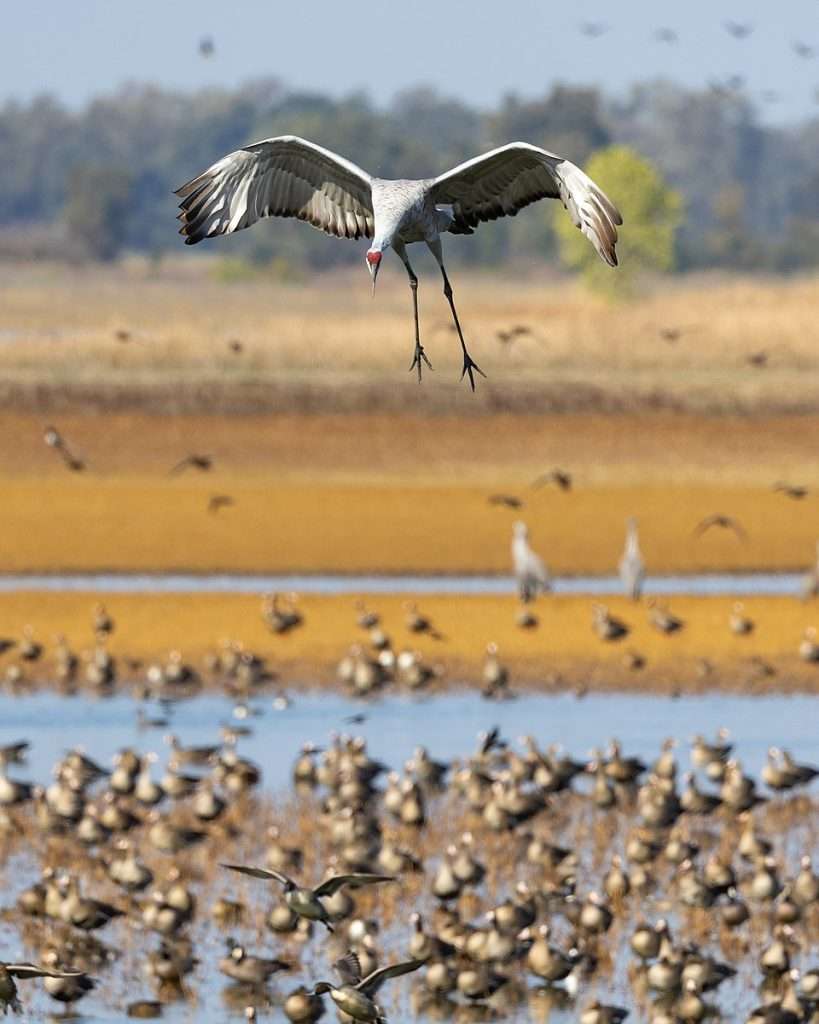
Dedicated conservation efforts by groups like the Rowe Sanctuary (Audubon Nebraska), the Crane Trust, and state agencies are vital. These organizations work tirelessly to acquire and restore riverine habitat, educate the public, and advocate for sustainable water management practices to ensure the Platte remains a haven for these magnificent birds for generations to come.
Experiencing the Migration: Tips for Visitors
For those planning to witness this spectacle, here are some tips:
Best Time: The peak migration usually occurs from mid-March to early April.
Prime Locations: The areas around Kearney and Grand Island are the primary viewing hubs.
Viewing Options:
Rowe Sanctuary: Offers guided blind tours at dawn and dusk for an intimate, managed experience (reservations essential, often booked months in advance).
Crane Trust: Provides similar blind tours and an informative visitor center.
Public Viewing Decks: Free public viewing decks, like the Fort Kearny Bridge deck, offer excellent opportunities to see the cranes.
County Roads: Exploring rural roads can yield unexpected views of cranes feeding in fields.
Essentials: Binoculars, warm layers (even in spring), and a quiet, respectful demeanor are crucial.
The Sandhill Crane migration on the Platte River is more than just a birding event; it's a profound connection to the ancient rhythms of nature, a reminder of the power of instinct, and a vibrant demonstration of the interconnectedness of ecosystems. It is a spectacle that truly must be seen and heard to be believed, a testament to the enduring wild heart of North America.
