
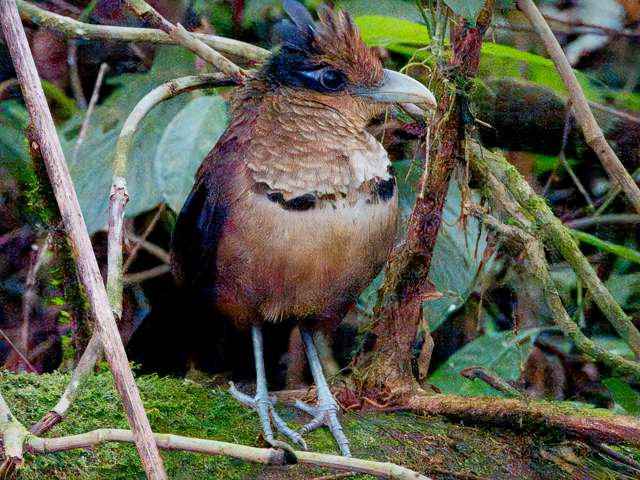
The Ghost of the Understory: Unveiling the Enigmatic Rufous-vented Ground-Cuckoo
In the dense, shadowy realm of Central America's rainforest floor, there exists a bird that has earned a near-mythical reputation among ornithologists and birdwatchers. It is the Rufous-vented Ground-Cuckoo (Neomorphus geoffroyi), a creature so elusive and secretive that a mere glimpse is considered a monumental achievement. Unlike its well-known cuckoo relatives that perch in trees, this large, terrestrial bird spends its life walking and running through the forest understory, a silent and shadowy phantom of the deep woods. Its rarity and enigmatic behavior make it one of the most sought-after and least-understood birds in the world, a living testament to the mysteries that still exist in the heart of our planet's wild places.
An Elusive Enigma: The Ghost of the Rainforest Floor
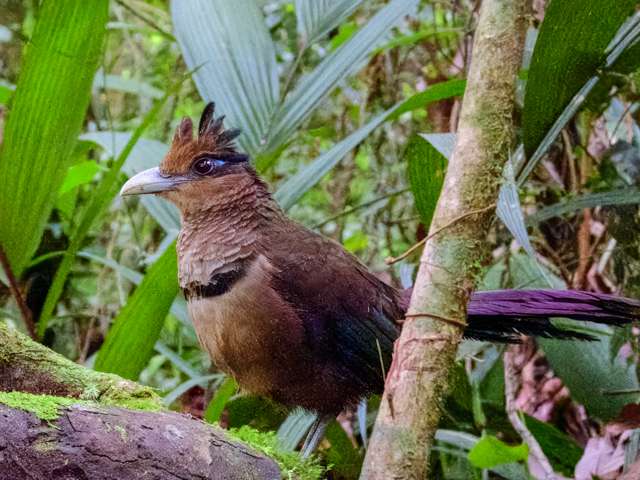
The Rufous-vented Ground-Cuckoo’s elusiveness is its most defining characteristic. Sightings are so uncommon that many researchers and guides consider themselves lucky to have seen one in a lifetime of fieldwork. The bird’s primary reason for being so difficult to observe is its habitat and behavior. It lives almost exclusively in the understory of large, undisturbed primary rainforests, preferring areas with a thick, tangled network of vines and foliage. This is a bird that rarely, if ever, flies. Its flights are clumsy and short, typically a simple glide from a low branch to the ground. Instead, it is a runner and a walker, moving with a surprising speed and agility through the leaf litter.
The bird is also notoriously silent. While it does have a distinct call, it is rarely heard, and its movements are quiet and deliberate. It has a way of melting into the background, becoming one with the shadows and dappled light of the forest floor. The Rufous-vented Ground-Cuckoo is not a bird that you stumble upon; it is one you wait for with endless patience, hoping for a fleeting, unforgettable moment. Its life is a perfect echo of its home: a dense, complex, and beautiful mystery.
Anatomy of a Terrestrial Cuckoo
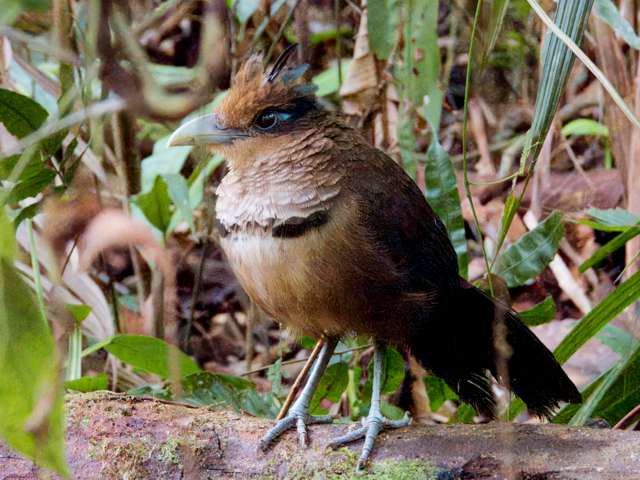
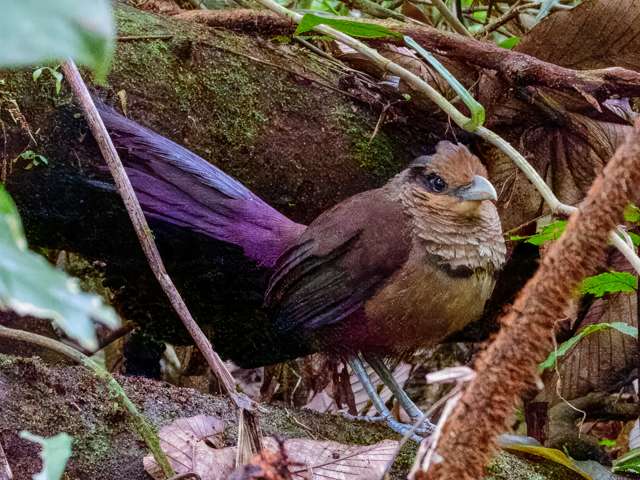
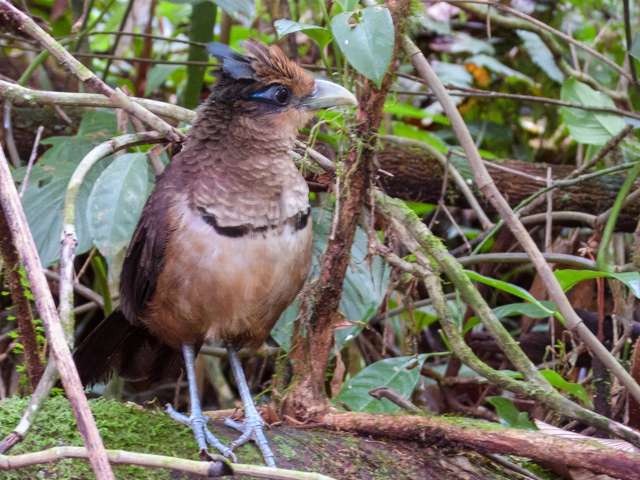
Despite its secretive nature, the Rufous-vented Ground-Cuckoo is a striking bird in appearance. It is a large bird, reaching lengths of up to 48 centimeters (19 inches). Its body is built for its terrestrial lifestyle, with a long tail and incredibly strong, muscular legs that end in large, powerful feet. Its plumage is a masterpiece of camouflage, allowing it to blend into the dark forest floor. The back and wings are a deep, glossy brownish-green or blue-black, shimmering with an iridescence that is often the first hint of its presence.
The bird's most noticeable features are its contrasting colors and a distinctive head. The underparts are a duller gray-brown, which gradually gives way to a vibrant rufous (a reddish-brown) patch on its belly and vent (the area under its tail). This "rufous vent" is the source of its name and a key identification marker. On its head, the Rufous-vented Ground-Cuckoo sports a prominent, shaggy crest that it can raise and lower depending on its mood or level of excitement. Its eyes are set in a patch of bright, bare skin that can be blue, purple, or red, adding a flash of color to its otherwise somber appearance. Its thick, curved beak is a strong, formidable tool, perfectly suited for seizing prey.
A Symbiotic Hunter: Following the Army Ant Swarms
The most fascinating aspect of the Rufous-vented Ground-Cuckoo's behavior is its unique foraging strategy. Unlike most birds that actively hunt on their own, this cuckoo is an ant-follower, meaning it shadows the massive, mobile swarms of army ants that march across the forest floor. Army ants, with their millions of aggressive soldiers, create a chaotic wave of predation that flushes out all manner of insects, spiders, lizards, frogs, and other small creatures from the leaf litter.
The ground-cuckoo uses its powerful legs to keep pace with the army ant swarm, moving with a deliberate, high-stepping gait. As the ants advance, they disturb and dislodge hidden prey. The ground-cuckoo, with its sharp eyesight and lightning-fast reflexes, seizes these fleeing animals before they can escape. Its long legs allow it to stride over the ants without being bitten, while its strong beak and powerful neck muscles enable it to catch and swallow even relatively large prey.
This symbiotic relationship is a marvel of ecological cooperation. The army ants, in their hunt for food, inadvertently provide an abundant feast for the cuckoo. The cuckoo, in turn, helps to clear the area of larger prey that the ants cannot handle, allowing the ant swarm to move more efficiently. The Rufous-vented Ground-Cuckoo is not the only bird that follows army ants, but it is one of the most specialized, so much so that its existence is intrinsically linked to the health of the ant colonies and the undisturbed forest environment they live in.
The Mystery Continues: Calls and Reproduction
While its foraging behavior is understood, much of the Rufous-vented Ground-Cuckoo's life remains a mystery. Its call is a deep, booming "oo-woo" or "coo-woo" that resonates through the forest, often the only sign that the bird is even present. It is a low, mournful sound that seems to fit its shadowy existence.
Its reproductive biology is almost entirely unknown. It is a member of the cuckoo family, but unlike its brood-parasitic relatives, the Rufous-vented Ground-Cuckoo builds its own nest and raises its own young. However, very few of its nests have ever been found, and those that have been documented are simple, bulky structures of twigs and leaves placed in a low branch. How long the eggs take to hatch, what the chicks look like, and the nature of their parental care are all questions that have yet to be fully answered. This lack of knowledge makes every new observation a potential scientific discovery.
A Vulnerable Ghost: Conservation Challenges
The Rufous-vented Ground-Cuckoo's reliance on a specific and shrinking habitat makes it incredibly vulnerable. Its need for large, undisturbed primary rainforests and healthy army ant populations means that deforestation and habitat fragmentation are major threats. While the International Union for Conservation of Nature (IUCN) currently lists the species as being of "Least Concern" due to its wide range, this status is misleading. Its population is believed to be in decline, and its elusive nature makes it difficult to get accurate population estimates. The destruction of its native forests in Central America is a direct threat to its long-term survival. The ground-cuckoo is a powerful indicator species; if it disappears from a forest, it is a sure sign that the entire ecosystem is in distress.
Wrapping Up
The Rufous-vented Ground-Cuckoo is far more than just a rare bird. It is a symbol of the profound and often-unseen complexity of rainforest ecosystems. Its strange, ghost-like existence, its powerful legs, and its symbiotic relationship with army ants all tell a story of a creature so finely tuned to its environment that it embodies the very essence of its home. To catch a glimpse of this phantom of the understory is to see a living puzzle, a reminder that some of the greatest wonders of the natural world are the ones we have yet to fully understand.
Read here about other unusual birds: the Kookaburra.
