
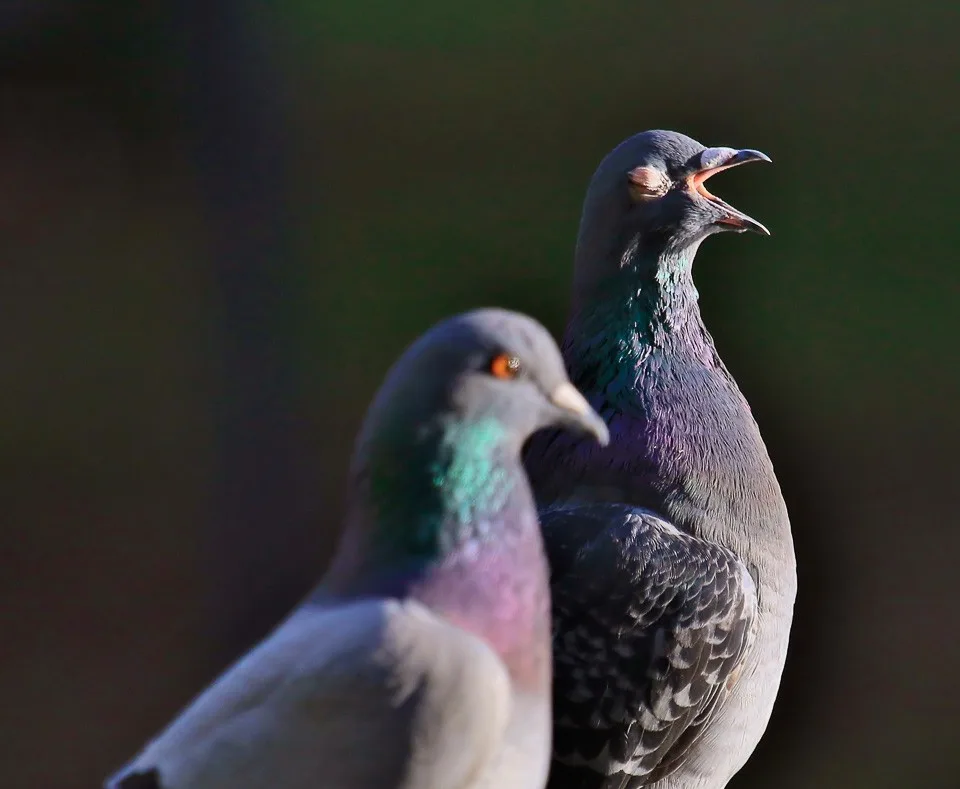
The Rock Pigeon (Columba livia), often simply referred to as the common pigeon, is the most successful and ubiquitous bird species in human-dominated landscapes across the globe. From the bustling squares of New York City to the quiet alleys of London, this familiar bird is an inseparable part of the urban environment. Its phenomenal success is a result of a long, intertwined history with humanity that stretches back millennia. In the United States, the Rock Pigeon is present in virtually every major city and town, thriving as a feral species and embodying the ultimate story of domesticity gone wild.
Rock Dove vs. Feral Rock Pigeon: The Ancestral Difference
To understand the urban pigeon, one must first distinguish it from its original wild ancestor: the Rock Dove.
The Original Rock Dove
The true wild Rock Dove (Columba livia) is native to coastal cliffs and mountainsides primarily in Europe, North Africa, and the Middle East.
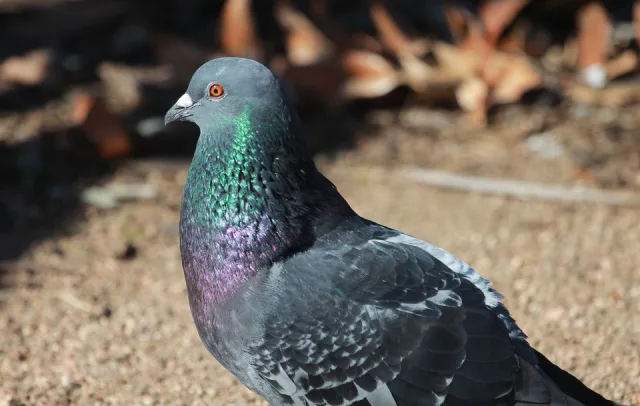
Its original, pure form is characterized by:
Plumage: A light gray body, an iridescent green and purple patch on the neck, a grayish-white rump (lower back), and, crucially, two distinct black bars across the wings.
Habitat: Strictly restricted to nesting on sheltered ledges and caves on sea cliffs or steep inland gorges, far from human settlement.
The Feral Rock Pigeon
The pigeons we see in city parks and under bridges today are feral populations—domesticated animals that have returned to a wild state. They are descended from birds originally bred for food, homing, and exhibition.
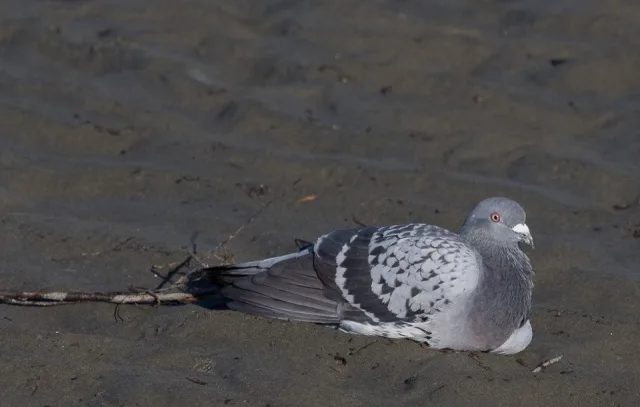
Plumage: Feral pigeons exhibit an astonishing polymorphism (variety in color and pattern). While many individuals retain the ancestral blue-gray coloration with the two black wing bars, others are nearly all black, rusty-red, white, or mottled. This genetic variation is a legacy of intentional selective breeding by humans.
Habitat: Feral pigeons treat human structures—skyscrapers, bridges, eaves, and barns—as artificial cliffs, adapting perfectly to the urban environment that provides both shelter and an endless food supply.
In essence, the "pigeon" of the U.S. city is a mongrel, a genetic tapestry woven from centuries of domestication, but whose habits are governed by the instincts of its cliff-dwelling ancestors.
The Global Conquest: A Shared History with Humanity
The incredible range of the Rock Pigeon across the world is a direct result of its ancient relationship with humans, one that began perhaps 5,000 to 10,000 years ago in the Fertile Crescent.
Domestication (Food and Sacrifice): Early human societies domesticated the Rock Dove for easy protein (squab) and for religious sacrifices. As humans migrated, they took these domesticated birds with them.
Homing and Communication: The pigeon's exceptional homing instinct—its ability to return to its nest from vast distances—was harnessed for communication. They served as vital messengers in warfare (famously in both World Wars) and commerce, ensuring their dispersal across military and trade routes worldwide.
Accidental Release and Establishment: Every major wave of European colonization and settlement in the Americas, Australia, and other regions involved importing domestic pigeons. When these birds escaped (or were intentionally released) in new territories where the climate was suitable and human structures provided ample nesting ledges, they quickly established self-sustaining feral colonies.
Urban Success: The final push in global dominance came with 20th-century urbanization. Cities provided an inexhaustible, year-round food source (refuse, discarded food, and handouts) and safe, predator-free nesting sites. This allowed populations to explode far beyond the limits of their original natural habitats.
In the United States, populations established rapidly following their introduction by European settlers, creating the immense, successful flocks seen today.
The Unseen Beauty: Iridescence and Flight
Despite its commonness, the Rock Pigeon possesses a subtle but undeniable beauty that is often overlooked when viewed against the backdrop of concrete and grime.
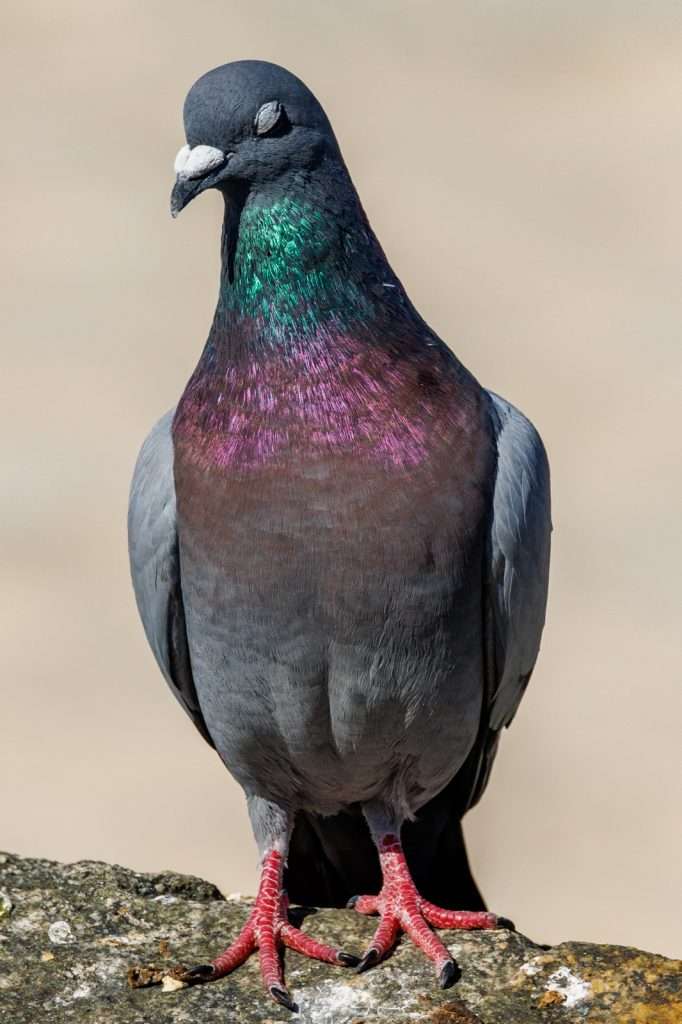
Iridescence: The most beautiful feature is the iridescence of the neck and upper chest feathers, which flash brilliant, shifting shades of green, purple, and magenta when viewed in direct sunlight. This color is structural, caused by the reflection of light off the microscopic barbs of the feathers, a feature shared with hummingbirds and peacocks.
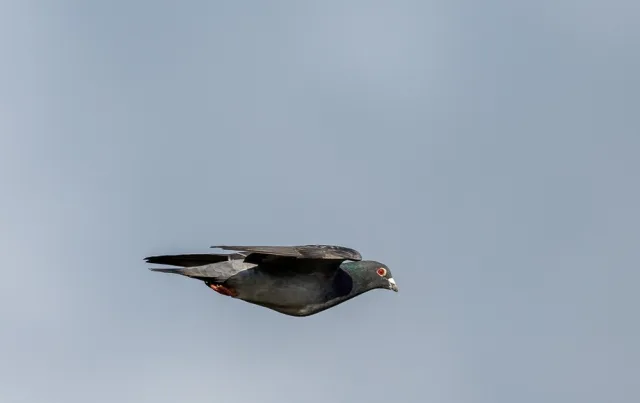
Aviation Prowess: Their appearance in flight is majestic. They are incredibly strong and agile flyers, capable of impressive speeds. The synchronized movement of a large flock, known as a 'kit' or 'flock,' as they wheel and turn over city rooftops, is a breathtaking display of collective intelligence and aerial synchronization.
Soft Cooing: Their characteristic soft, repetitive "coo-roo-coo-coo" call, while monotonous to some, is a gentle, comforting sound that provides a soft audio backdrop to the relentless hard sounds of the city.

Rock Dove
The Pest Status: Conflict with Humanity
The very success of the Rock Pigeon, fueled by its relationship with humanity, is what leads to its classification as a pest in many jurisdictions.
Fecal Accumulation: This is the primary complaint. Large, resident flocks produce enormous amounts of droppings that accumulate rapidly on statues, buildings, sidewalks, and cars. This is not just aesthetically unpleasant; pigeon droppings are highly acidic and can cause significant structural damage to limestone and marble buildings over time.
Health Concerns (Minor): Pigeons can carry various bacteria, fungi, and parasites. While the risk of direct disease transmission to humans is generally low for the average person, large accumulations of droppings can harbor fungi like Cryptococcus neoformans, which can cause serious illness in immunocompromised individuals.
Nesting Issues: Their nests, often built with sparse twigs and debris, are frequently constructed in sheltered areas like air-conditioning units, vents, eaves, and gutters. This can lead to clogging of drainage systems and disruption of HVAC function.
Feeder Competition: They aggressively dominate backyard bird feeders, often chasing off smaller, native songbirds and rapidly depleting seed supplies.
Management of feral pigeon populations typically focuses on deterrence—using netting, spikes, and wires to exclude them from nesting and roosting ledges—rather than outright eradication, a testament to the fact that they are simply too numerous and too successful to eliminate entirely from the urban landscape they have claimed.
The Rock Pigeon is a living historical monument—a wild bird that willingly entered into domestication and, upon being released, found its true, dominant niche, making the modern city its permanent, if sometimes begrudgingly shared, home.
