

From the tropical coastlines of Florida and California to the chilly urban parks of Chicago and New York, the skies and trees of the United States are host to a vibrant, often loud, cast of characters that aren't supposed to be here. These aren't the native cardinals or blue jays, but exotic bird species—feral parrots, escaped doves, and established populations of birds from every corner of the globe. Their presence is a fascinating, complex, and sometimes troubling feature of the American landscape, painting a picture of a nation shaped by global trade, the pet industry, and human-driven change.
The stories of these non-native birds fall broadly into two categories: accidental or intentional releases of domesticated pets (resulting in feral populations and escapees) and purposeful introductions or translocations (often for pest control, aesthetics, or, increasingly, conservation).
The Feral Flock: Parrots and Pet Escapees
The most striking and widely distributed group of exotic birds in the U.S. are the members of the parrot family, or psittacines. Their presence is a direct consequence of the pet trade, with thousands of birds imported over the last century. Whether through accidental escapes or intentional releases by overwhelmed owners, these birds have found surprising success adapting to American cities, particularly in the warmer "Sunshine States."
The Parrot Hotspots: Florida, California, and Texas
The three states with the most diverse and abundant feral parrot populations are Florida, California, and Texas. The climate in these regions closely mimics their native tropical or subtropical homes in Central and South America, allowing for year-round survival and breeding.
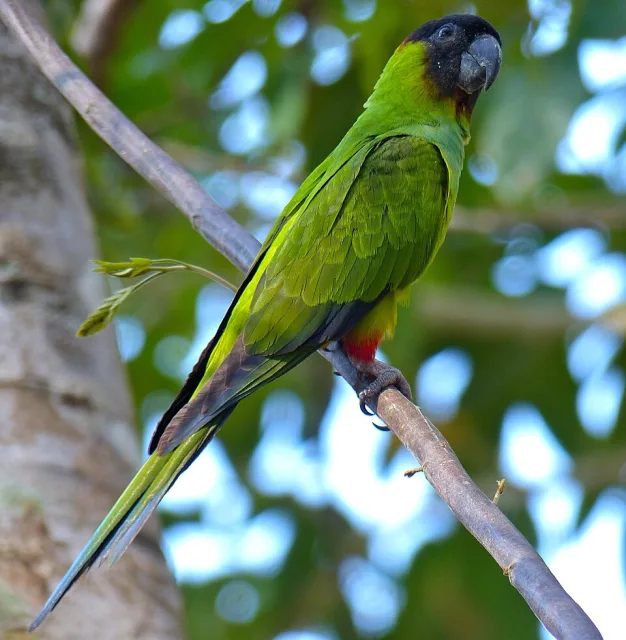
Florida's Avian Melting Pot: The Miami area is an undeniable epicenter. Here, one can find the iconic, lime-green Monk Parakeet (Myiopsitta monachus), as well as Nanday Parakeets (or Black-hooded Parakeets) and even the majestic Blue-and-yellow Macaw (Ara ararauna). But the Sunshine State hosts more than just parrots; it’s also home to established populations of non-native doves and waterfowl, often escaping from private collections.

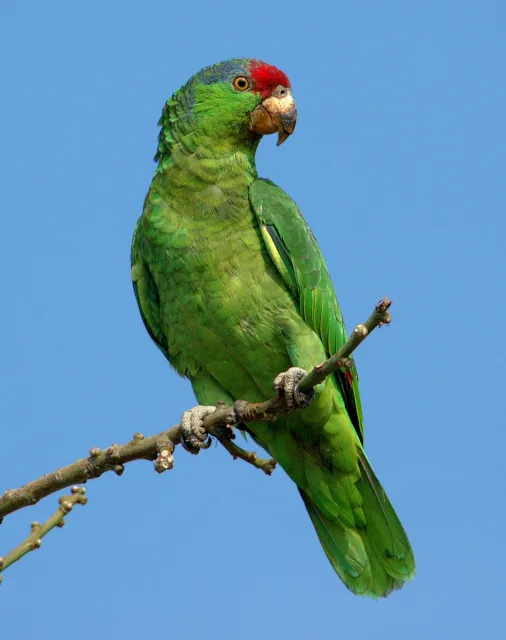
Nanday Parakeet California’s City Parrots: Feral parrot flocks are now a definitive part of the urban soundtrack in cities like Los Angeles and San Francisco. The famous Red-masked Parakeets of Telegraph Hill in San Francisco, immortalized in a popular documentary, showcase the tight-knit, charismatic nature of these flocks. In Southern California, species like the Lilac-crowned Parrot and Red-crowned Parrot (or Red-crowned Amazon) have thrived, with scientists even suggesting that the feral Red-crowned Parrot population in the U.S. may now exceed its numbers in its native Mexican habitat, highlighting an unexpected, if controversial, conservation outcome.
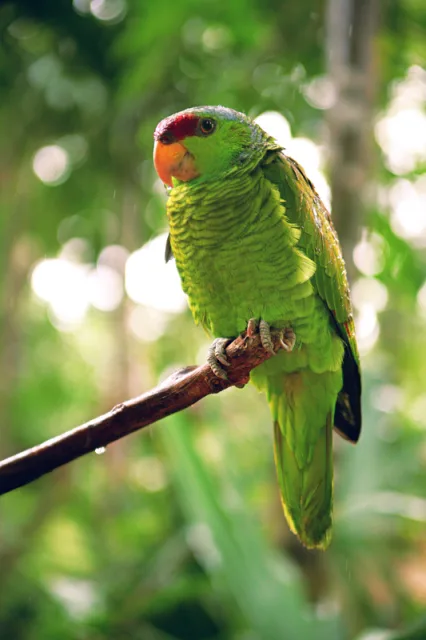
The Texas-Mexico Border Blend: Texas, particularly the Lower Rio Grande Valley, hosts populations that may naturally extend from Mexico (like the Green Parakeet and the Red-crowned Parrot), but it also harbors established groups of escaped pets, notably the ubiquitous Monk Parakeet.
The Cold-Climate Conqueror
The success of the Monk Parakeet is especially noteworthy because it shatters the myth that tropical birds can't survive harsh northern winters. Native to the temperate regions of South America, the Monk Parakeet has established breeding colonies far from the sunbelt, including in major metropolitan areas like Brooklyn, New York, Boston, and Chicago.
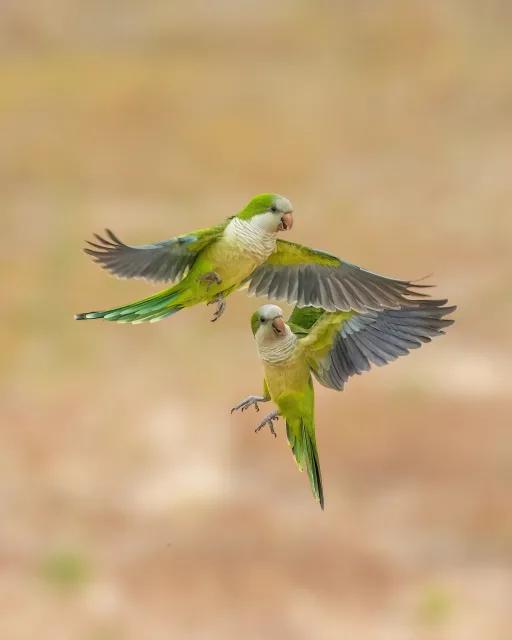
Their secret? They are the only parrot species known to build large, multi-chambered communal nests out of sticks. These massive structures, often built on utility poles or communication towers, offer superior insulation against cold weather. Furthermore, studies in places like Chicago's Hyde Park have shown the birds survive by switching their diet in winter to rely almost exclusively on backyard bird feeders provided by human residents, illustrating a remarkable adaptation to an urban environment.
Other Well-Established Feral Species
While parrots steal the spotlight, other exotic bird species are far more widespread and have a longer history in the U.S.
European Starling (Sturnus vulgaris): This is perhaps the most famous example of a bird introduced for purely aesthetic and cultural reasons. In the 1890s, a small group of starlings was released in Central Park, New York, as part of a project to introduce to the U.S. every bird mentioned in Shakespeare's works. The result was an ecological and agricultural disaster. With no natural predators and a highly adaptable nature, the European Starling exploded in population and now spans all 50 states, numbering over 200 million individuals. They aggressively outcompete native cavity-nesting birds like Bluebirds and Woodpeckers for nesting sites, posing a serious threat to native biodiversity.

Common Starling House Sparrow (Passer domesticus): Another European import, released in the mid-1800s in New York, the House Sparrow is now one of the most common and widespread birds in North America. Like the starling, it's a generalist that thrives near human settlements and aggressively displaces native species from nesting cavities.
House Sparrow Eurasian Collared-Dove (Streptopelia decaocto): This species arrived in the Bahamas in the 1970s and quickly spread to Florida in the 1980s. Since then, it has rapidly expanded across nearly all 50 states, a testament to its successful adaptation. It’s significantly larger and more assertive than the native Mourning Dove, raising concerns about competition, though its ultimate ecological impact is still being studied.
Eurasian Collared-Dove


The Translocation Strategy: Conservation vs. Introduction
The third major category of exotic bird movement, translocation, is distinct because it is generally a purposeful effort by wildlife managers, not a private escape. However, translocation can be a double-edged sword.
Historically, this involved ill-conceived non-game introductions like the European Starling and House Sparrow. Today, translocation is used as a critical conservation tool for native species at risk.
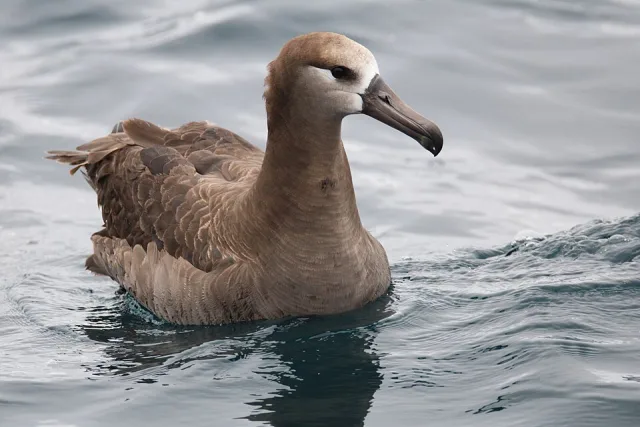
For example, conservationists employ managed translocation to move native seabirds, such as the endangered Laysan Albatross and Black-footed Albatross, to higher ground and protected habitats in places like Hawaii. This proactive strategy is designed to safeguard their populations from threats like rising sea levels, severe storms, and non-native predators (like rats and mongooses), which are themselves exotic introductions. By translocating chicks to predator-free areas, experts are creating new, more secure breeding colonies.
The Impact: A Mixed Bag for Ecosystems
The impact of exotic birds is not a simple good or bad equation; it is nuanced, though largely negative from an ecological perspective.
Negative Consequences
Competition: Species like the European Starling and House Sparrow are notorious for aggressively seizing the nests of native birds, reducing the reproductive success of species like the Eastern Bluebird and various woodpeckers.
Agricultural Damage: Feral species, especially large flocks of parakeets or starlings, can cause significant damage to fruit and grain crops, leading to economic losses for farmers. The Monk Parakeet, in particular, is viewed as a potential agricultural pest.
Infrastructure Hazard: Monk Parakeets build their large stick nests on utility poles and transformers, leading to power outages and even fires, requiring costly intervention by utility companies.
Unexpected Upsides
In some cases, the feral populations of exotic birds, especially parrots, may be providing an unlikely genetic reservoir for species that are critically endangered in their native range due to habitat loss or illegal trapping. The Red-crowned Parrot, for example, is struggling in Mexico, yet thriving in California. This accidental second home raises complex ethical and scientific questions about the role of introduced populations in global conservation efforts.
The vibrant, diverse, and unexpected aviary of the U.S.—a blend of escapees, feral populations, and translocated native birds—serves as a constant reminder of the profound and enduring effects of human activity on the natural world, turning routine birdwatching into a truly global experience.
The Unseen Invasion: Why Feral Birds Are a Threat to Our Native Ecosystems
