Love The Birds is reader-supported. When you purchase through one of our links we may earn an affiliate commission (at no cost to you).
Redstarts: Flames Of The Woods
Share your love
A flash of flame-orange and black darting through a deciduous forest, followed by a blaze of scarlet and black against the backdrop of a high-elevation pine-oak canyon: these are the signature sights of two of North America's most captivating songbirds, the American Redstart and the Painted Redstart.
While they share a part of their name and a family, these two species, found in vastly different corners of the U.S., showcase a remarkable diversity within the New World Warbler family, Parulidae. Their distinct appearances, behaviors, and habitats tell a story of evolutionary divergence, a tale of how similar names can belie profound differences. This article delves into the fascinating worlds of these two avian gems, exploring their unique characteristics and the roles they play in their respective ecosystems.
The American Redstart: A Fiery Flit in the Eastern Woods
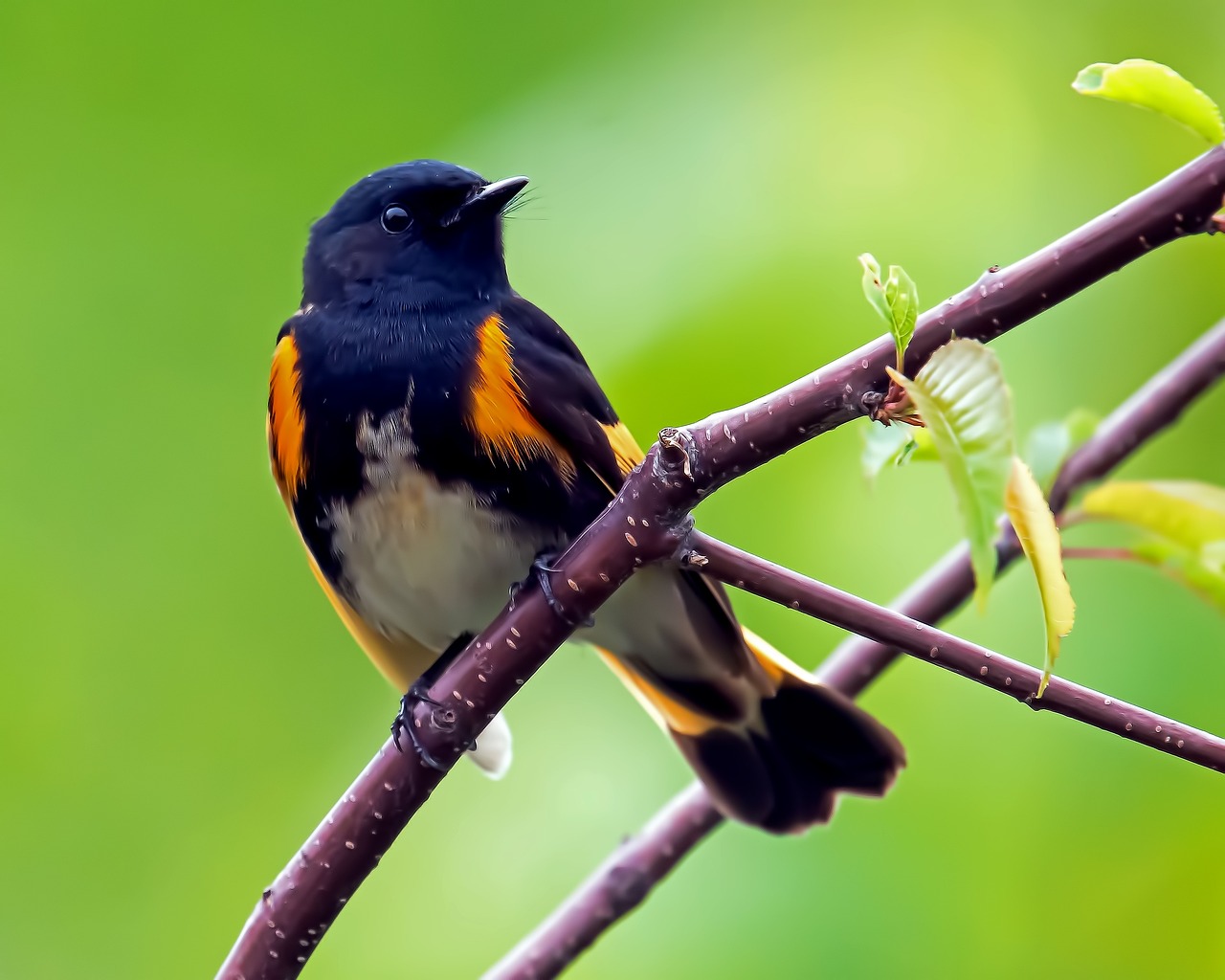
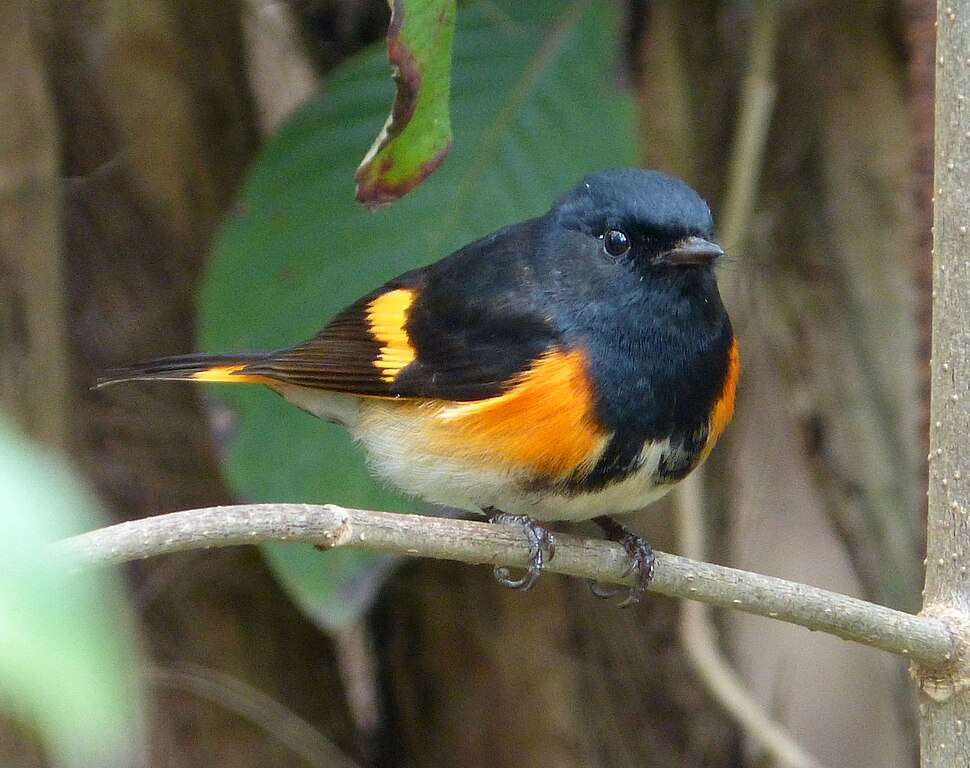
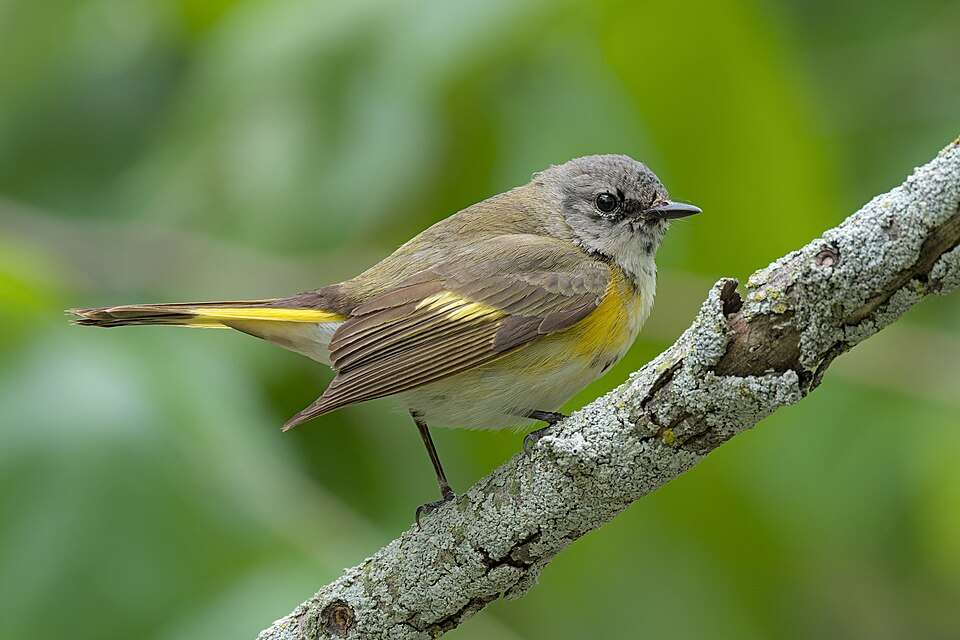
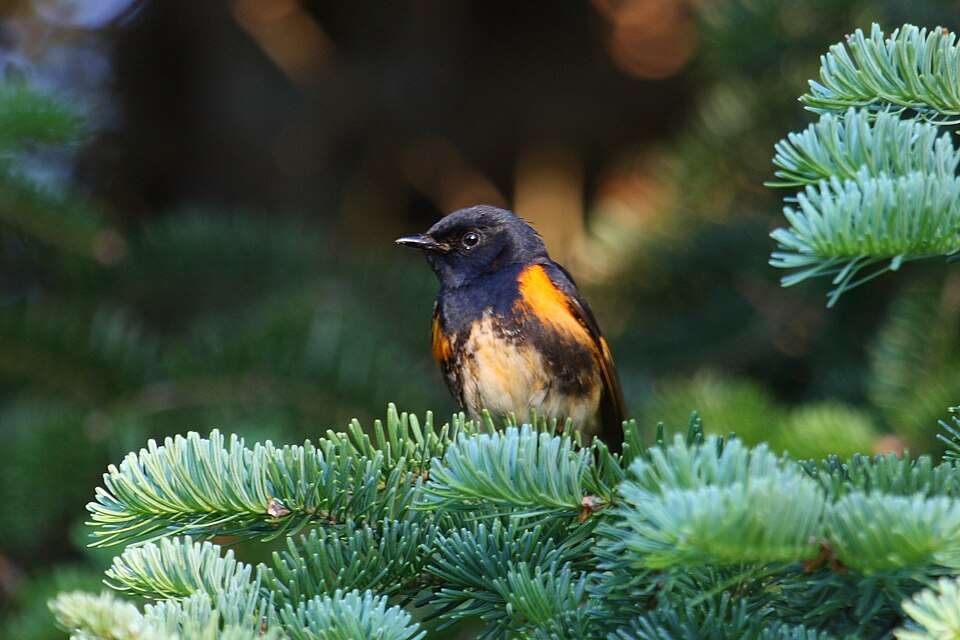
The American Redstart (Setophaga ruticilla) is a quintessential symbol of the vibrant, bustling forests of the eastern and northern United States and southern Canada. A small, active bird, it's often described as a "butterfly of the woods" due to its constant, erratic movements. Males are unmistakable, with their glossy black plumage offset by a brilliant splash of flame-orange on their flanks, wings, and tail. Females and younger birds are more subdued, sporting a gray-olive body with lemony-yellow patches in the same locations. The name "redstart" comes from an old English word, "start," meaning "tail," a fitting descriptor for a bird that constantly fans its tail to reveal its striking colors.
American Redstart
Their habitat is typically moist, deciduous woodlands, often near water sources. They favor second-growth forests with a dense shrub layer, and while they can be found at the edges of woodlands, they prefer large, contiguous tracts of forest. Their breeding range extends across a vast swath of the continent, from the Pacific Northwest to the Atlantic coast, and they are one of the most widespread warblers.
A Master of the Aerial Chase
The American Redstart's most notable behavior is its unique foraging style. It's an expert flycatcher, often seen darting out from a branch to snatch an insect mid-air. What makes their hunting so special, however, is the way they use their plumage. As they flit through the canopy, they droop their wings and fan their tails, flashing the vibrant orange or yellow patterns. This sudden burst of color is thought to startle and flush out hidden insects, making them easier to catch. This technique, a form of active foraging, sets them apart from many other warbler species who primarily glean insects from leaves and twigs.
American Redstart
Their diet consists almost exclusively of insects, including leafhoppers, flies, moths, and caterpillars. In late summer, they may supplement their diet with small berries and fruits. This insectivorous nature makes them a valuable component of the ecosystem, helping to control insect populations.
A Journey of Ten Thousand Flaps
American Redstarts are long-distance migrants. Their biannual journey takes them from their North American breeding grounds to wintering habitats in southern Florida, the Caribbean, Central America, and northern South America. The males, being the more dominant, often secure the prime wintering habitats, such as moist mangrove forests, while females and younger birds may occupy drier scrub forests. This habitat segregation during the non-breeding season is a fascinating aspect of their social structure. During migration, they can be found in a wide variety of wooded and shrubby areas, often joining mixed-species flocks.
The Painted Redstart: A Jewel of the Arid Southwest
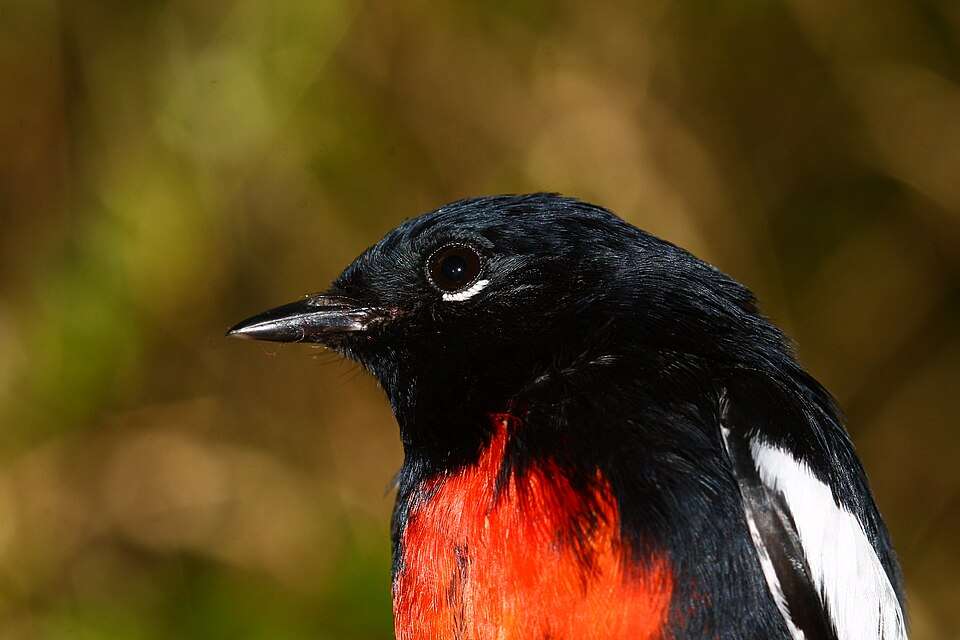
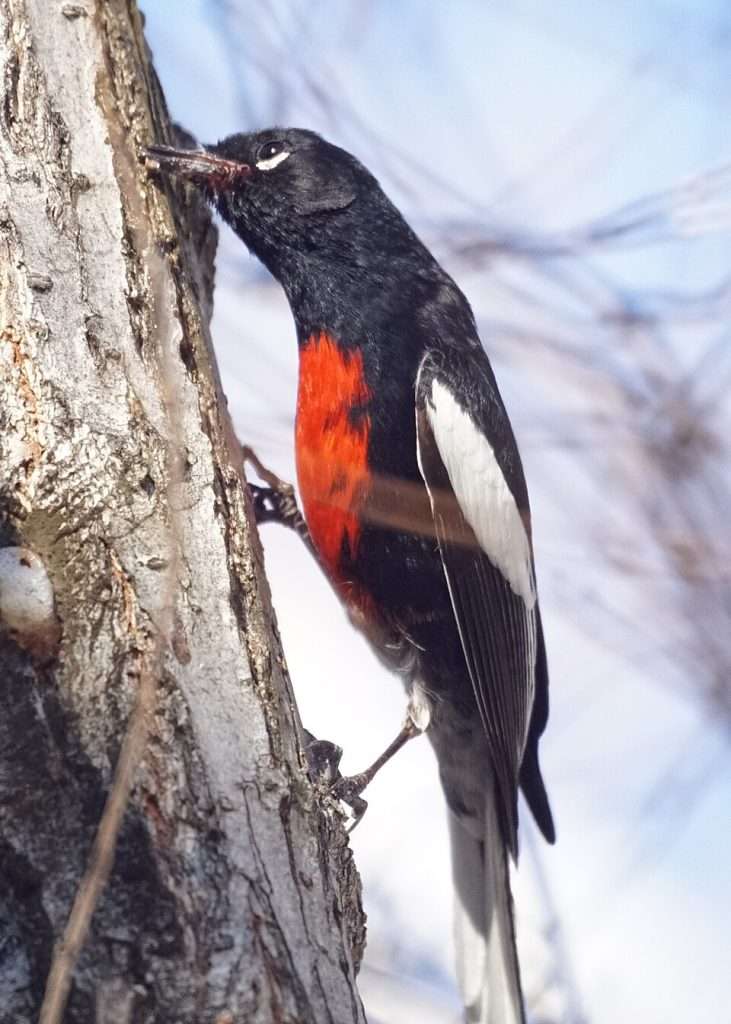
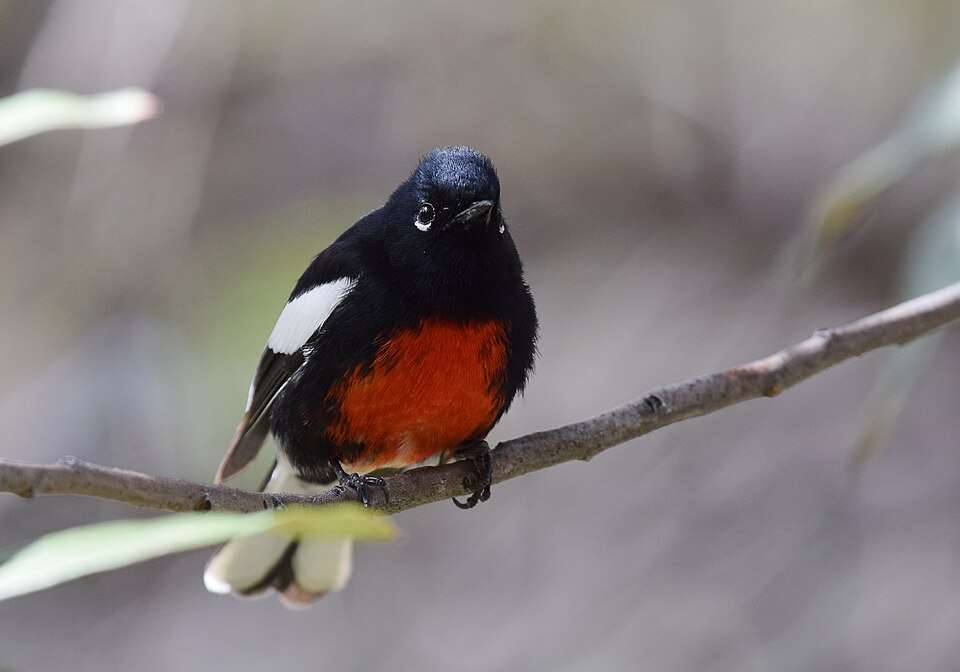
In stark contrast to its eastern counterpart, the Painted Redstart (Myioborus pictus) is a resident of the rugged, high-elevation canyons and pine-oak forests of the southwestern U.S. and Mexico. This is a bird of striking, almost theatrical, beauty. Males and females look remarkably similar, a rarity among warblers. They have a deep, glossy black head and back, with a brilliant scarlet-red belly that gives them their name. Their wings are adorned with a bold white wing patch, and a prominent white patch above and below the eye creates a "spectacled" appearance. They are also known for a constantly fanned, white-fringed tail that they wag side to side, a behavior that adds to their charismatic charm.
Painted Redstart
Their U.S. range is much more restricted than the American Redstart, primarily found in the "sky island" mountain ranges of southeastern Arizona and southwestern New Mexico, as well as a small, irregular population in West Texas. They inhabit pine-oak and pine-juniper forests at elevations typically between 5,000 and 7,500 feet, often preferring riparian areas within these arid habitats.
A Ground-Nesting Sentinel
Unlike the American Redstart, the Painted Redstart is a ground-nester. The female builds a neat, cup-shaped nest, often on a slope or a creek bank, and well-concealed from above by rocks, roots, or clumps of grass. This choice of nesting site is a key difference in their life histories and reflects their close evolutionary ties to a different group of New World Warblers, the Myioborus genus.
The Painted Redstart's foraging is a mesmerizing ballet. It is a highly active insectivore, often seen hopping along the ground or low branches, with its tail constantly fanned and flicking. This flashing of their plumage, similar in principle to the American Redstart, is a powerful tool for flushing prey. They also engage in a behavior known as "tail-fanning," where they fan and close their tail in rapid succession, a vibrant semaphore against the dark of their body. Their diet, like their cousin, consists of a variety of insects, including butterflies, flies, and cicadas, which they catch with agile, flycatcher-like sallies.
Painted Redstart
A More Sedentary Life
Painted Redstarts are considered short-distance migrants or year-round residents, a stark contrast to the epic journeys of the American Redstart. Northern populations in the U.S. may move to lower elevations or southward into Mexico for the winter, but their movements are not the grand, cross-continental migrations that define the life of the American Redstart. This more sedentary lifestyle is a reflection of their habitat, where food resources may be available year-round at different elevations.
A Tale of Two Redstarts: Key Differences
While both birds are charismatic members of the same family, their differences highlight the remarkable diversity of avian life.
Plumage: The most obvious difference is color. The American Redstart male is black and orange, while the Painted Redstart is black and white with a striking red belly. This difference is also seen in the sexes; American Redstart males and females are strikingly different in color, while Painted Redstart males and females are nearly identical.
American Redstart
Habitat and Range: The American Redstart is a bird of the moist, deciduous woodlands of the eastern U.S., while the Painted Redstart is a denizen of the arid, high-elevation pine-oak forests of the Southwest.
Foraging and Behavior: Both use their tails to flush out prey, but their styles differ. The American Redstart is a classic flycatcher of the mid-canopy, while the Painted Redstart often forages closer to the ground, with its characteristic tail-wagging.
Migration: American Redstarts are true long-distance migrants, traveling thousands of miles each year. Painted Redstarts are more sedentary, with only short-distance, elevational migrations.
Painted Redstart
Conservation Status
Both species are currently considered of "Least Concern" by the International Union for Conservation of Nature (IUCN). However, they face different threats. American Redstarts are susceptible to habitat loss and fragmentation, as their breeding success can be negatively impacted by the loss of large, contiguous forest tracts. Their long-distance migration also exposes them to a variety of threats along their migratory pathways and on their wintering grounds, including habitat degradation from deforestation and the use of pesticides.
The Painted Redstart, with its more restricted range, is vulnerable to climate change, which could alter the delicate balance of its high-elevation habitat. Habitat loss from development and the threat of catastrophic wildfires in the arid Southwest also pose significant risks to their populations.
Wrapping Up
The American Redstart and the Painted Redstart are two unique and captivating birds that, despite sharing a name, represent two very different ecological niches. They serve as a reminder that within the broad tapestry of American birdlife, there is a wealth of diversity in color, behavior, and life history. To see either of these birds is a treat, a glimpse into the intricate and beautiful world of the New World Warblers.
Palmer is a bird watcher and writer with 20 years experience of documenting the birds he has seen and the places he has visited. He has traveled all over the world to find the beauty of common birds and photograph rare and exotic species. Now he is sharing his knowledge about bird watching, bird species and all the gear needed to care and photograph our feathered friends.
Read more about Love The Birds on our About page.