

The Red-tailed Hawk (Buteo jamaicensis) is arguably the most recognizable and ubiquitous raptor across the North American continent. A quintessential sight, whether perched regally atop a roadside utility pole or tracing lazy, wide circles high above a sun-drenched field, this magnificent bird of prey is the true monarch of the open sky. Its broad wings, chunky build, and the namesake flash of brick-red on its tail make it an icon of the wilderness, even in highly urbanized environments.
To profile the Red-tailed Hawk is to explore a creature of remarkable adaptability, powerful hunting prowess, and complex natural history, all wrapped in a confusingly variable plumage.
A Master of the Air: Physical Characteristics
The Red-tailed Hawk is one of the larger members of the Buteo genus—the group of broad-winged, heavy-bodied hawks often referred to as "buzzards" in the Old World. These birds possess a robust structure built for efficiency in soaring. They typically measure between 18 and 26 inches in length, with an impressive wingspan that can stretch up to 57 inches (4.75 feet).

A distinctive feature of raptors is sexual dimorphism, a trait the Red-tail exhibits in size: the female is notably larger and heavier than the male, sometimes by as much as 25%. While males weigh roughly 1.5 to 2.8 pounds, a large female can tip the scales at over 4 pounds. This difference is believed to allow the pair to hunt different-sized prey, thus maximizing the resources available to their young.
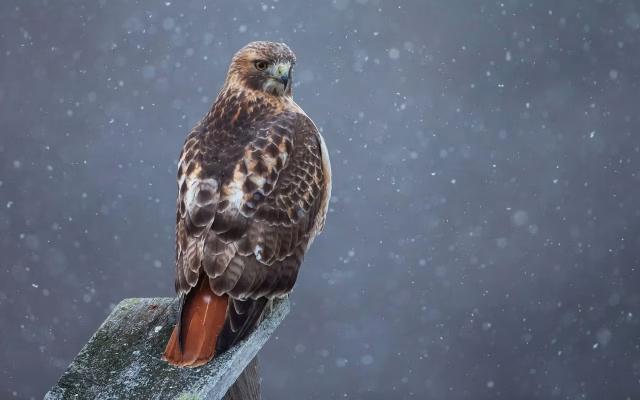
The most famous identifying mark, the red tail, is present only in adults. This uniformly brick-red upper tail surface is usually contrasted by a light, almost buff-orange underside. Immature Red-tails, however, sport a brown tail with thin, dark banding, only achieving the characteristic rusty hue during their second year.
Beyond the tail, plumage is highly variable, especially across the species’ massive range, which spans from western Alaska and northern Canada south to Panama and the West Indies. The most common color variation, particularly in eastern North America, features a dark brown back and wings, a light, creamy chest, and a diagnostic dark "belly-band"—a patch of horizontal streaks across the abdomen. In the West, however, individuals can range dramatically, including nearly all-white light morphs and rare, almost entirely dark melanistic morphs. The short, hooked beak and the powerful, yellow legs and feet tipped with razor-sharp black talons complete the classic raptorial portrait.

The Voice and the Vision: Sensory Prowess
For many, the Red-tailed Hawk is known not by sight, but by sound. Its voice is a defining characteristic of North American wildlife, often heard in popular culture where it is, ironically, used as the generic "scream" of a powerful bird of prey, even for species like the Bald Eagle. The call is a drawn-out, hoarse, and rasping scream, often written phonetically as "kree-eeee-arrr." It serves as both a territorial declaration and a warning to intruders.
As a diurnal predator, the hawk relies on extraordinary eyesight—estimated to be up to eight times more powerful than a human’s. From a high perch, the Red-tail can detect the slightest movement of a mouse in the grass below, a feat essential to its hunting success. The bird’s eyes are also shaded by a prominent bony ridge above the brow, protecting them from the sun’s glare during long hours of hunting.
Hunting Strategy: The Sit-and-Wait Specialist
The Red-tailed Hawk’s preferred hunting technique is that of the perch-and-pounce or sit-and-wait predator. Its broad wings are optimized for soaring on thermals (rising columns of warm air), allowing it to conserve energy while scanning a vast area. Yet, it is most often observed stationary—a sentinel on the landscape—occupying a commanding vantage point like a tall tree, cliff face, or a telephone pole along an open stretch of road.
Once prey is sighted, the hawk launches its attack, often in a slow, controlled, and methodical dive, sometimes exceeding speeds of 120 miles per hour in a steep stoop. Its powerful talons are the primary weapon, closing with immense grip strength to capture, subdue, and kill the prey.

Its diet is highly varied, a key factor in its widespread success and stable conservation status. Small to medium-sized mammals, primarily rodents, form the bulk of its meals. Voles, mice, rats, ground squirrels, chipmunks, and rabbits are frequent targets. Depending on the region and season, the Red-tail will also regularly consume snakes, lizards, and other birds up to the size of a pheasant. This flexibility ensures that the species can thrive in almost any environment with an adequate supply of small terrestrial animals.
Habitat, Range, and Migration
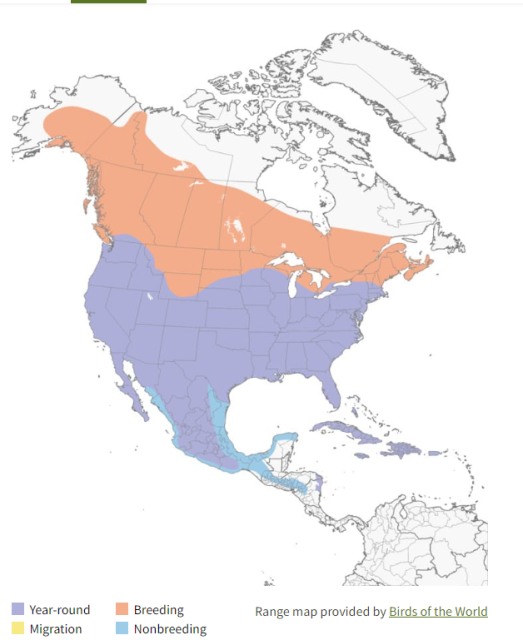
The Red-tailed Hawk is truly a generalist when it comes to habitat. It is found in nearly every type of open or semi-open terrain imaginable: from arid scrublands and deserts to prairie groves, agricultural fields, woodland edges, and even bustling urban parks. The common thread is the need for open ground to hunt and elevated perches to spot prey.
The species exhibits a complex pattern of migration. Birds that breed in the far northern reaches of Canada and Alaska are largely migratory, heading south in the autumn to escape the harsh winters and scarcity of prey. Conversely, populations in the central and southern United States, Mexico, and the Caribbean are generally sedentary, remaining on or near their established territories year-round. This partial migration helps explain why the Red-tail is a common sight across so much of the continent throughout the year.
Courtship and Nesting
Red-tailed Hawks are generally monogamous, often bonding for life and returning to the same breeding territory annually. Courtship is an impressive aerial ballet, frequently starting with the pair soaring in high, wide circles. The male performs spectacular aerial displays, diving and ascending in a series of dramatic maneuvers. The most thrilling sight occurs when the pair locks talons mid-air and descends in a synchronized, whirling spiral before breaking apart just above the treetops.
The nest, built by both partners, is a large, bulky bowl of sticks, lined with bark, leaves, and other softer materials. It is typically situated high up in the crotch of a tall tree near the edge of a woodlot, or occasionally on a cliff ledge or an artificial structure like a billboard or cell tower. The female lays between one and five eggs, which are incubated by both parents for about a month. The nestlings are fed by both parents for approximately six to seven weeks until they fledge (leave the nest). They remain in the vicinity, still dependent on the adults for food, as they hone their hunting skills over the following weeks.
Conservation and Legacy

The Red-tailed Hawk currently holds a conservation status of Least Concern, a testament to its wide distribution, adaptable diet, and ability to coexist with human development. The species has recovered well from historical persecution, but still faces modern threats, including collisions with vehicles and buildings, electrocution on power lines, and secondary poisoning from rodenticides.
Its ubiquity and sheer majesty have cemented the Red-tailed Hawk's place in the human consciousness. It is a vital apex predator in every ecosystem it inhabits, playing a crucial role in controlling populations of small mammals. More than just a bird of prey, the Red-tailed Hawk is a symbol of wild, untamed nature—a soaring monarch whose striking form remains the definitive image of the North American sky.
