
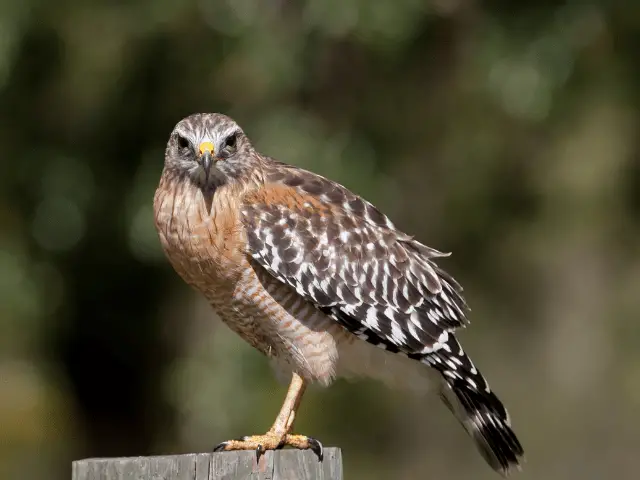
Range and Preferred Habitat: An Eastern and Pacific Presence
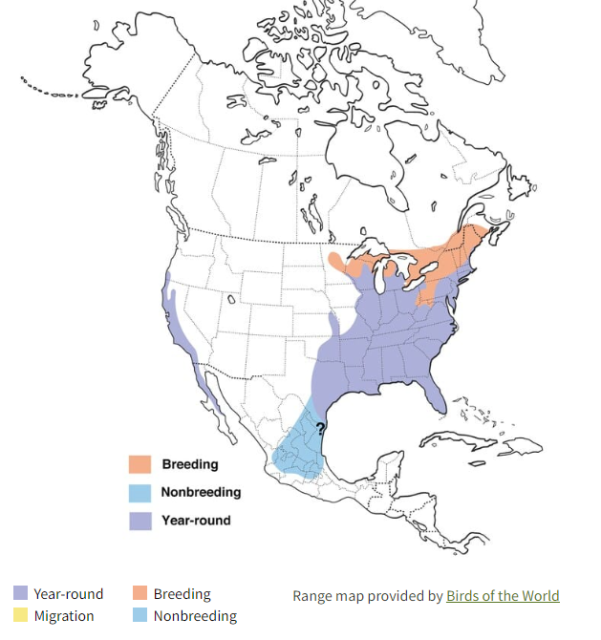
The Red-shouldered Hawk's primary range stretches throughout the eastern half of the United States, west to the edge of the Great Plains, and south to Florida and the Gulf Coast. However, there is also a distinct, isolated population that resides along the Pacific Coast in California and Oregon.
This hawk is a "buteo," a group of raptors characterized by broad wings and wide tails, but the Red-shouldered Hawk possesses a more slender, lankier build than its relatives. Its preference for moist, mature, contiguous forests is the defining feature of its ecology. It thrives where water meets woods:
- Bottomland Hardwoods and Swamps: These are the ideal nesting and hunting grounds, providing a dense canopy for nesting and an open understory for hunting.
- Riparian Corridors: Wooded streamsides and river valleys are essential. These areas offer the diverse, often aquatic, prey that forms a major part of the hawk's diet.
While they once outnumbered the Red-tailed Hawk in parts of the Northeast, extensive logging in the 20th century reduced the large, mature forests they rely on, which is a key factor in their localized declines. However, in recent decades, population numbers appear to be stable or even increasing in most of their range, partly due to the reforestation of former agricultural land in the Northeast. Populations in the south and west are often year-round residents, while those in the north migrate short distances, typically wintering no further south than the Gulf Coast and central Mexico.
A Unique Hunting Style and Varied Diet
The hunting strategy of the Red-shouldered Hawk sets it apart from the high-soaring raptors of open fields. It is a master of the forest interior, blending a perch-and-pounce technique with low, stealthy flight.

The Art of the Perch
The most common hunting method involves watching patiently from a low perch within the tree canopy or at a forest edge, often near water. From this vantage point, the hawk scans the ground, waiting for movement. Once prey is sighted, it quickly swoops down in a direct, powerful attack.
An "Accipiter-like" Flight
Unlike the broad, slow circles of many buteos, the Red-shouldered Hawk’s active flight is often described as Accipiter-like (resembling the flight of a Cooper's Hawk or Sharp-shinned Hawk) — a quick series of flaps followed by a short glide. This rapid, maneuverable flight allows it to navigate the dense forest structure and catch prey by surprise with a low-to-the-ground pounce. In courtship and when alarmed, however, they will readily take to the skies, soaring on bowed wings and displaying the translucent, crescent-shaped patches visible near their wingtips.
The Frog-Eating Hawk
Its diet is exceptionally varied and opportunistic, but shows a clear preference for prey associated with its wet habitat. During the warmer months, the hawk often targets cold-blooded animals, leading to one of its informal nicknames: the "Frog Feeder." Its menu includes:
- Amphibians and Reptiles: Frogs, toads, and snakes are a favorite, as are crayfish.
- Small Mammals: Voles, mice, and chipmunks.
- Other Prey: Small birds, lizards, and large insects like grasshoppers.
This diverse diet and forest hunting style mean that the Red-shouldered Hawk and the Barred Owl are often described as diurnal and nocturnal counterparts, respectively. They share the same moist woodland habitat and feed on similar animals, but their different activity cycles minimize direct competition.
Vocalization and Life Cycle
The Forest's Signature Scream
The Red-shouldered Hawk is one of the most vocal raptors in North America, particularly during the late winter and spring breeding season. Its typical call is a loud, repeated, two-part scream: "kee-aah, kee-aah," with the second note often descending in pitch. This call serves to announce territory and attract a mate, and is so distinctive that birders often hear it long before they see the bird. Interestingly, the local Blue Jay has been known to give a near-perfect imitation of this call, which it may use to frighten other birds away from feeding stations.
Courtship and Nesting
Red-shouldered Hawks are monogamous and highly territorial, returning to the same nesting area year after year. Courtship is dramatic, involving a "sky-dance" of high circling, calling, and steep dives. They build a large, sturdy nest—often refurbishing an old one—of sticks, leaves, and bark, typically placed high in the main fork of a tall deciduous tree, such as an oak or pine, in a dense, mature forest.
The female usually lays a clutch of 3–4 eggs in the early spring, with nesting commencing as early as January in the southern parts of the range. Incubation lasts about 33 days, mostly performed by the female. After hatching, the young remain in the nest for about 5–7 weeks, but the parents will continue to feed them for an additional 8–10 weeks as they learn to hunt, ensuring their survival. The longest recorded lifespan for a wild Red-shouldered Hawk is over 25 years.
Conservation Status and Modern Threats
Globally, the Red-shouldered Hawk is listed as a species of Least Concern, and overall North American populations have shown a modest increase in recent decades. This positive trend is thanks in part to legal protections like the Migratory Bird Treaty Act, which ended the practice of shooting hawks that were once incorrectly feared as "chicken hawks."
However, this raptor is still vulnerable to threats, particularly at the local level:
- Habitat Loss and Fragmentation: The single biggest threat remains the clearing and degradation of their mature, wooded wetland habitats. They are considered "area sensitive" and require large, unfragmented tracts of forest for successful breeding.
- Human Disturbance: Breeding pairs are easily disturbed by human activities such as logging, hiking, and the use of off-road vehicles near their nest sites, which can lead to nest abandonment.
- Contaminants: Like many apex predators, they are susceptible to accidental poisoning from pesticides and other industrial pollutants in their prey.
- Vehicle and Powerline Collisions: In more fragmented and suburban areas, collisions pose a significant threat.
In states like New Jersey, local populations have been hit hard, leading to the breeding population being listed as Endangered at the state level. Conservation efforts are focused on protecting and managing riparian and swamp forests, maintaining mature forest structures, and creating buffer zones around known nest sites to minimize human disturbance.
The Red-shouldered Hawk is an indicator of a healthy, complex forest ecosystem. Its powerful cry and vivid presence are a reminder that even in the face of development, the keeper of the wet woods persists, a vital part of the American landscape.
