
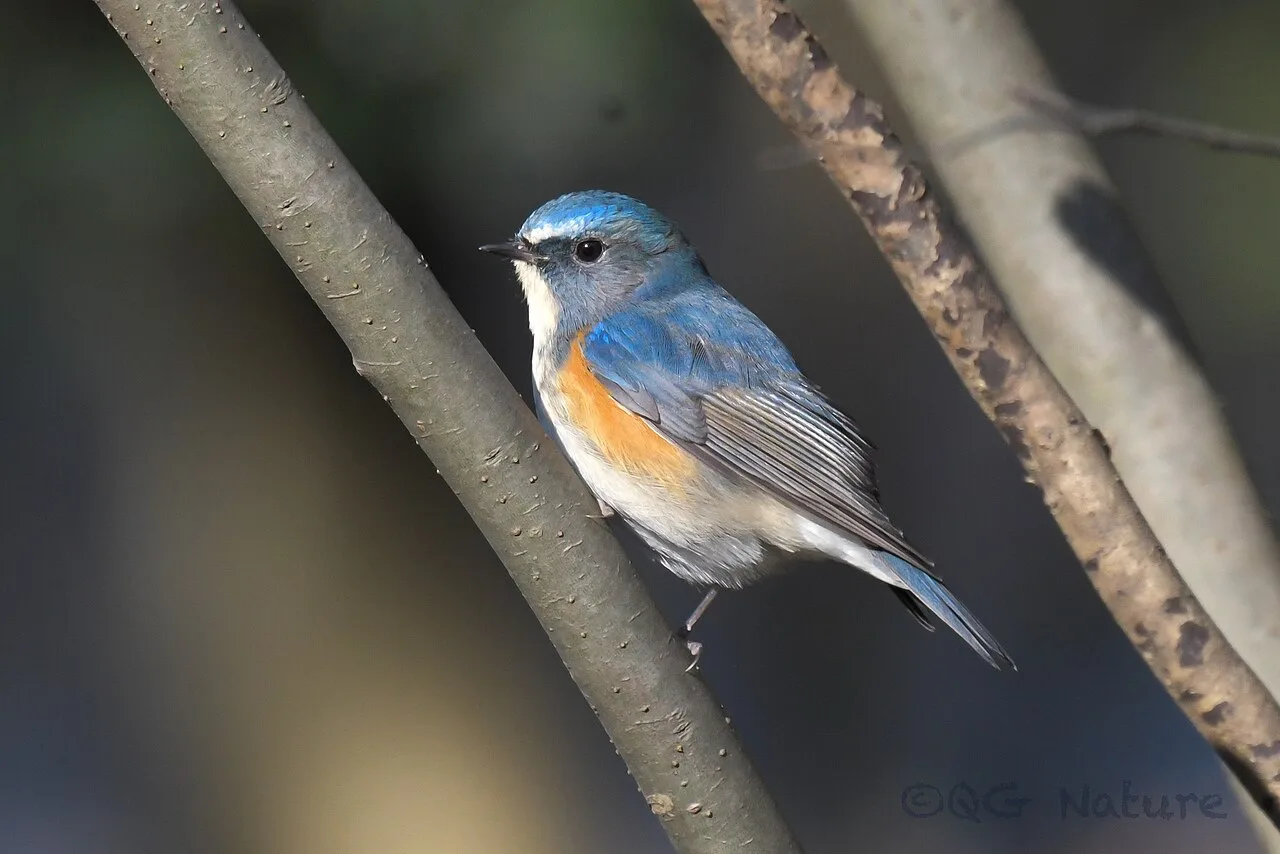
While the European Robin may have captured the hearts of the general public this year, the "hardcore" birding community has been fixated on an even more elusive traveler from the East: the Red-flanked Bluetail (Tarsiger cyanurus). Typically found breeding in the dense, mossy coniferous forests of Siberia and wintering in Southeast Asia, this bird is a legendary "mega-rarity" in the Lower 48 states.
When a stunning male was discovered in a wooded park in Virginia this April, it didn't just break local records—it became one of the most significant sightings in East Coast birding history. For a bird that normally migrates between the Russian taiga and the jungles of Thailand, a detour to the American South is a geographical anomaly of epic proportions.
1. Anatomy of a Rarity: What Makes it Special?
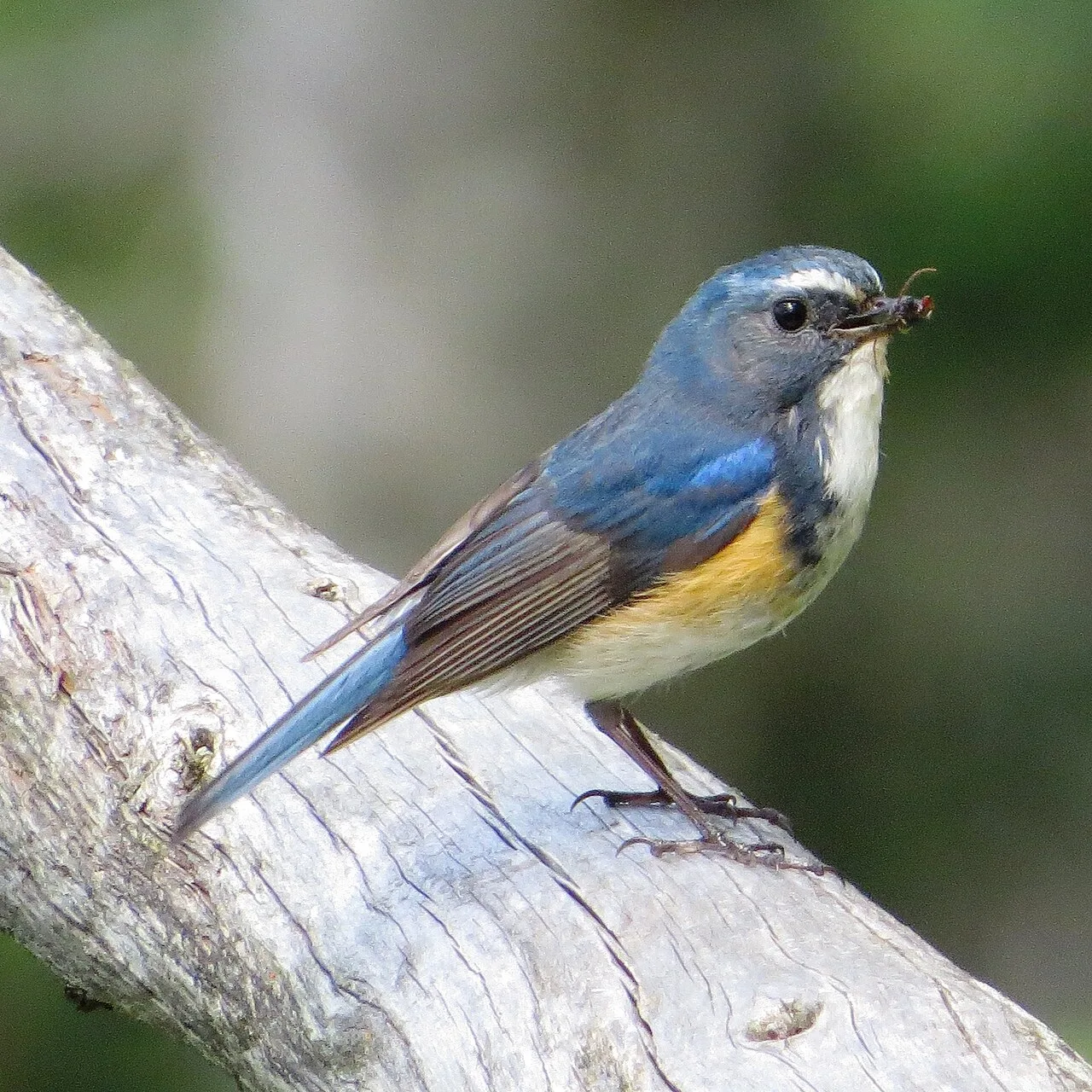
The Red-flanked Bluetail is a small, insect-eating bird that, like the European Robin, belongs to the Old World Flycatcher family. It is roughly the size of a Bluebird but carries itself with a nervous, twitchy energy.
The Colors: The male is a visual masterpiece. It features deep, indigo-blue upperparts, a bright white throat, and its namesake vibrant orange-red flanks (the sides of the body under the wings).
The Tail: True to its name, it possesses a bright blue tail that it frequently flicks downward—a key behavior for identification when the bird is darting through thick underbrush.
The "Look": They have a prominent white "eyebrow" (supercilium) and large, dark eyes that give them an alert, inquisitive expression.
2. The Great Detour: How Did It Get to Virginia?
To understand how rare this sighting is, one only needs to look at a globe. The Red-flanked Bluetail is a common vagrant in Western Alaska (specifically the Aleutian Islands) during migration, but it almost never makes it to the eastern half of the North American continent.
Ornithologists suspect this individual may be an "over-wintering" bird that took a wrong turn last fall. Instead of heading south to Vietnam or southern China, it likely flew east across the Pacific, crossed the Rockies, and found a suitable microclimate in the sheltered, damp ravines of Virginia to survive the winter. Its discovery in April likely coincides with its "spring urge" to head back north, causing it to become more active and vocal.
3. Behavior: The "Hide and Seek" Master
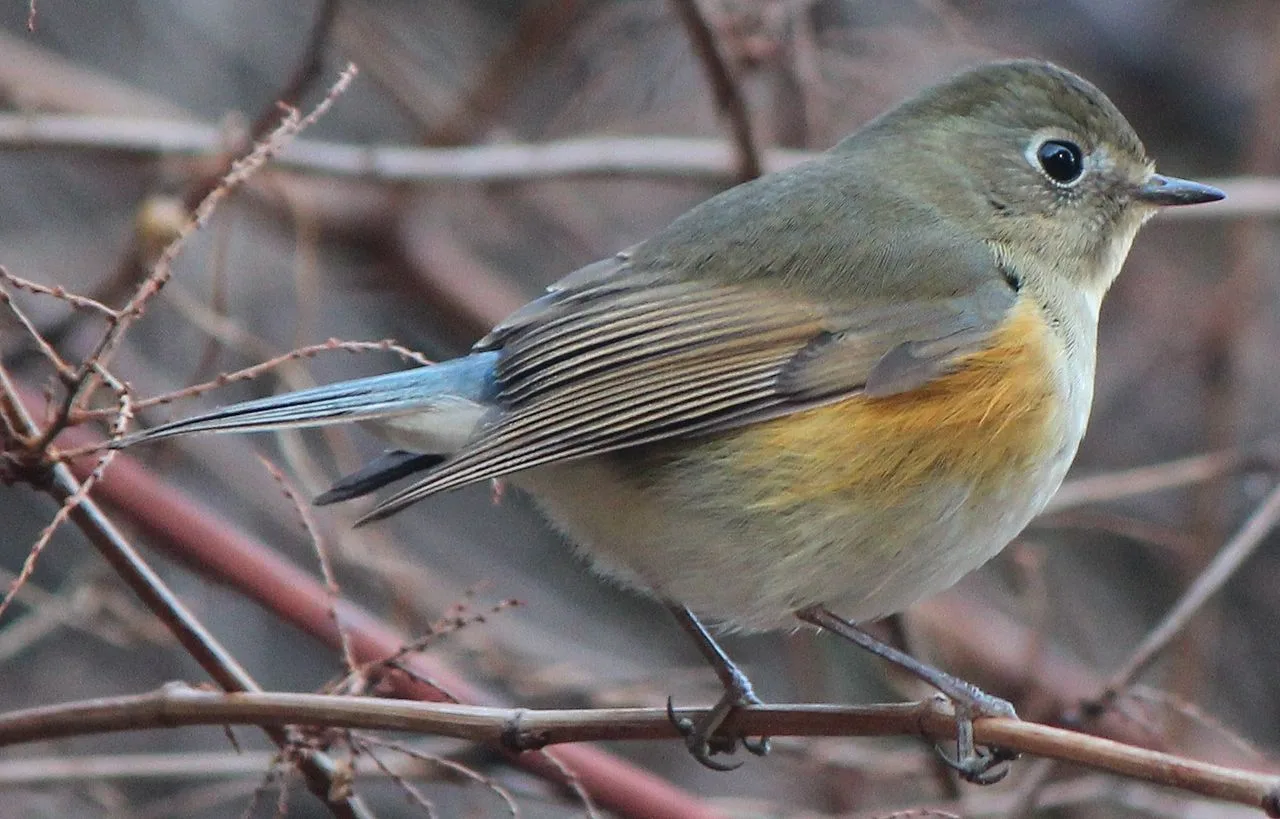
Unlike the bold European Robin, the Red-flanked Bluetail is notoriously shy. It is a bird of the "shadows," preferring the dark, lower branches of evergreen trees and dense thickets near water.
Foraging: It hunts like a typical flycatcher, darting out from a perch to snatch an insect mid-air or dropping to the ground to grab a beetle before vanishing back into the cover.
The "Tchick" Call: Birders often find this bird by ear before they see it. It makes a soft, rhythmic "tchick-tchick" sound that blends easily into the rustle of leaves, making the search a true test of patience.
4. Comparison: Bluetail vs. Bluebird
For beginner birders in the U.S., a quick glance at a blue bird with orange on it might lead to a "Bluebird" identification. However, the differences are distinct:
| Feature | Red-flanked Bluetail | Eastern Bluebird |
| Orange Placement | Only on the flanks (sides). | Across the entire breast and throat. |
| Tail Color | Bright, electric blue. | Subtle, darker blue. |
| Posture | Horizontal, twitchy, tail-flicking. | Upright, steady, perched on wires/posts. |
| Habitat | Deep, dark woods/thickets. | Open fields, parks, and golf courses. |
5. The "Bluetail Effect" on Virginia Birding
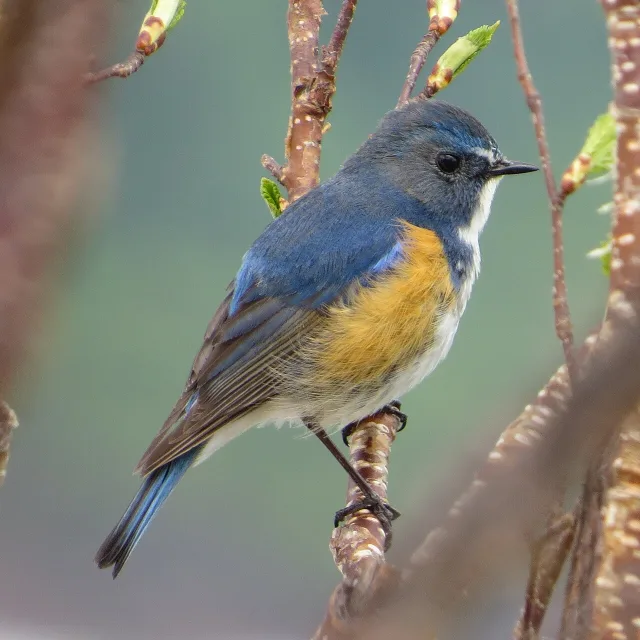
The Virginia sighting has turned a local park into a pilgrimage site. Birders have traveled from as far as Maine and Florida, equipped with high-end spotting scopes and "super-telephoto" lenses.
This sighting highlights a growing trend in 2026: The use of "Audio Lures" and Ethics. Because the Bluetail is so shy, some birders are tempted to play recorded songs to draw it out. However, conservationists warn that this can be extremely stressful for a bird that is already thousands of miles off course and needs to conserve energy for a potential return flight. The "Virginia Bluetail" has become a case study in "Citizen Science Ethics," with local wardens patrolling the area to ensure the bird is viewed respectfully.
6. Why 2026 is the "Year of the Vagrant"
Between the European Robin in Pennsylvania and the Red-flanked Bluetail in Virginia, 2026 is shaping up to be one of the strangest years on record for North American birding. Meteorologists point to an unusually active "Polar Vortex" earlier in the year and shifting jet stream patterns that may be "scooping up" birds from Europe and Asia and depositing them in the United States.
Where to Look Next
If you are in the Mid-Atlantic, keep an eye on damp, pine-heavy woodlands near the coast. Vagrant birds often follow "leading lines" like coastlines or mountain ridges. While the chances of finding another Bluetail are slim, the presence of one proves that anything is possible.
The Red-flanked Bluetail is a reminder that the sky is a vast, interconnected highway. A bird hatched in a Siberian forest can, by some miracle of flight and fate, end up in a Virginia park, reminding us all to keep our binoculars at the ready.
