

If blue feathers are a clever trick of physics, red feathers are a triumph of chemistry. While the blue bird is an illusion of light, a red bird is—quite literally—what it eats.
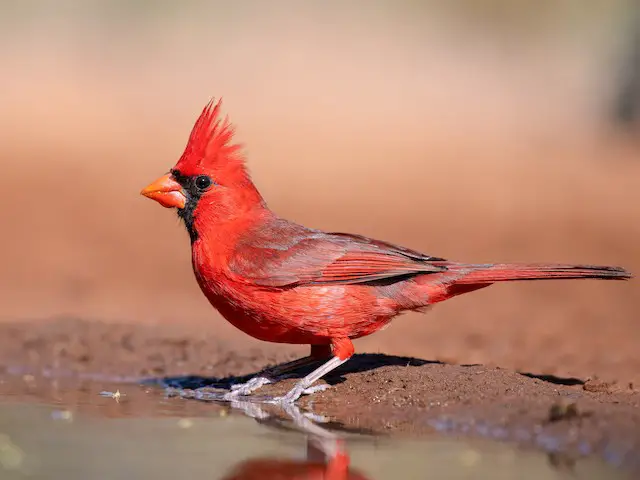
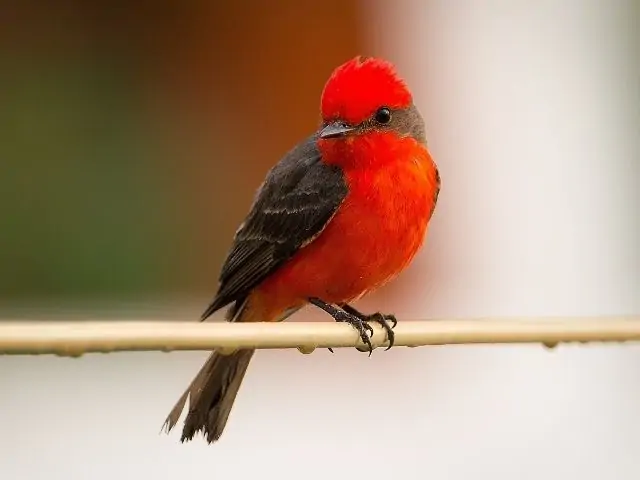
From the iconic Northern Cardinal to the tropical flash of a Vermilion Flycatcher, the color red is one of the most high-stakes signals in the avian world. Here is the science behind the scarlet.
The Chemistry: You Are What You Eat
Unlike blue, which is created by the structure of the feather, red is a pigment-based color. Specifically, it comes from carotenoids.
Birds cannot manufacture carotenoids on their own. They must ingest them by eating red berries, certain seeds, or insects that have already consumed those plants. Once eaten, the bird's body chemically processes these pigments and deposits them into the growing feathers.
The Conversion: Many birds eat yellow carotenoids and use a special enzyme (recently identified by scientists as CYP2J19) to "upgrade" them into red pigments before they reach the plumage.
The Exception: Parrots are the rebels of the bird world. They don't use carotenoids at all; they produce a unique set of pigments called psittacofulvins that create their reds, oranges, and yellows internally.
Does Skin Color Matter?
In short: No. Just like with blue feathers, the "canvas" of the skin doesn't change the paint. The pigments are packed so densely into the feather’s keratin that they become opaque. Whether the bird’s skin is pink, gray, or black, the red you see is entirely contained within the feather itself.
Why Go Red? (The Cost of Being Bold)
In nature, red is a "high-cost" signal. Because it requires a specific diet and a healthy metabolism to process the pigments, a bright red coat is an honest signal of health.
Sexual Selection: A male house finch that is "cherry red" is telling females, "I am an excellent forager and my immune system is top-notch." A pale orange or yellow version of the same bird usually indicates poor health or a lack of quality food.
Territorial Defense: Red is a high-visibility "warning" color. The red epaulets (shoulder patches) on a Red-winged Blackbird are used to flash at rivals, signaling dominance without needing to pick a fight.
Do Birds See "Red" Differently?
While we see red as a bold, solid color, birds see a version that is much more complex. Most birds have a fourth cone in their eyes that detects Ultraviolet (UV) light. Many red feathers reflect UV light, making them appear "glowy" or more saturated to other birds than they do to us. To a cardinal, his rival probably looks like a vibrating neon sign rather than just a red bird.

The Spectrum of Red: Why Different Shades?
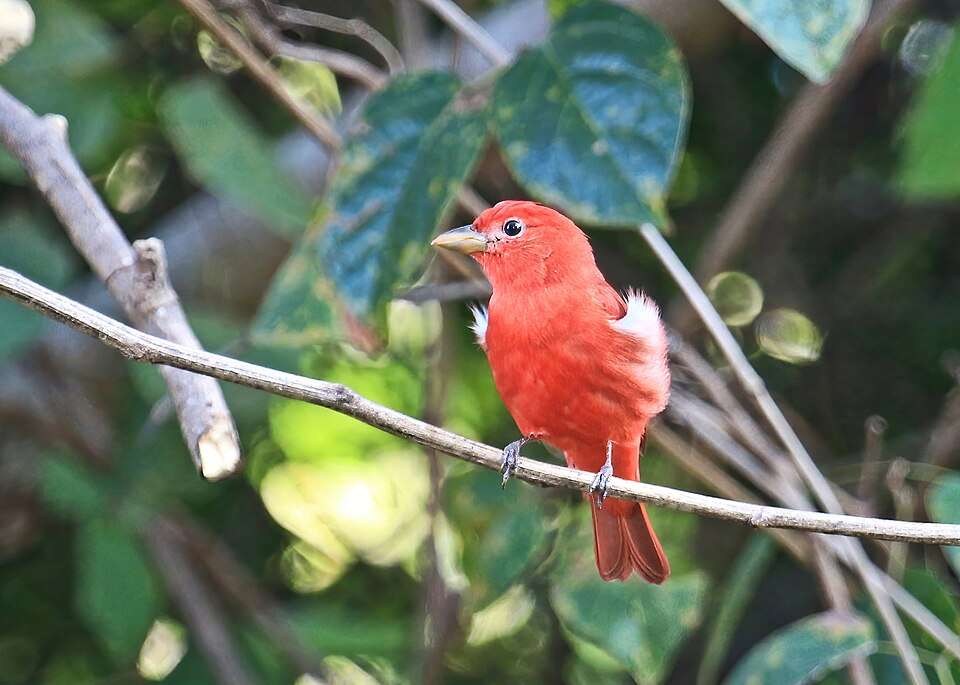
Why is a Summer Tanager "fire-engine red" while a Hepatic Tanager looks more like "rusty brick"?
Pigment Concentration: The more carotenoids a bird can process, the more "saturated" the red appears.
The "Liver" Look: Some birds, like the Hepatic Tanager, have melanin (dark brown/black pigment) mixed in with their red, creating a deeper, darker, or more "liver-colored" hue.
Genetic Mutations: Occasionally, you might see a "Yellow Cardinal." This is a rare genetic mutation where the bird lacks the enzyme to convert yellow food into red pigment, leaving it a bright, sunny yellow instead.
American Icons of Red
If you’re looking for a splash of crimson, keep an eye out for these North American stars:
| Bird | Shade of Red | Best Place to Spot Them |
|---|---|---|
| Northern Cardinal | Classic Crimson | Backyards across the Eastern & Central U.S. |
| Scarlet Tanager | Brilliant Neon Red | High in the forest canopy (Eastern U.S.) |
| Vermilion Flycatcher | Glowing Orange-Red | Desert scrub and parks (Southwest U.S.) |
| Summer Tanager | Solid Rose-Red | Open woodlands (Southern U.S.) |
The "Dull" Side of Red
Interestingly, if you see a red bird that looks a bit "washed out" in the winter, it might be due to feather wear. Some species have red feathers with tan or gray tips. As the tips wear off over the winter, the "true" red underneath is revealed just in time for the spring breeding season!
