
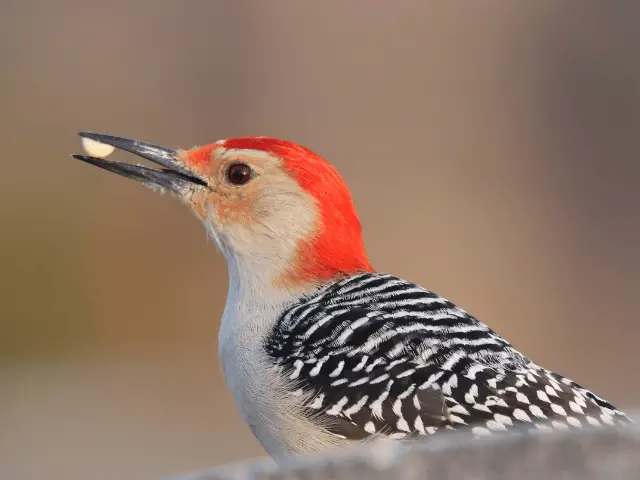
The Red-bellied Woodpecker (Melanerpes carolinus) is one of the most familiar, dynamic, and vocal avian residents of the eastern United States. With its striking plumage, unique vocalizations, and adaptable nature, this medium-sized woodpecker has firmly established itself as a common sight in woodlands, suburban parks, and backyards alike. Despite its common name, which refers to a subtle, pale-red wash on its underside, it is the bold, zebra-like barring on its back and the brilliant red cap that truly catch the eye, leading to frequent misidentification with the much rarer Red-headed Woodpecker. Far from being a shy forest dweller, the Red-bellied Woodpecker is a gregarious and assertive bird whose presence is often announced by its loud, rolling calls and rapid drumming.
Range and Habitat: A Southern Species on the Move
The Red-bellied Woodpecker is a year-round resident across most of the eastern half of the continental United States, extending its range as far north as southern Canada and south to Florida. Historically, it was primarily a bird of the Southeast, but in the latter half of the 20th century, its population and range have been steadily expanding northward and westward, a trend attributed to its generalist habits and perhaps a warming climate.
Today, you can find it in an array of habitats, showing a high degree of adaptability. It thrives in deciduous forests, particularly along river bottoms and in swampy woodlands, but is equally at home in mixed pine-hardwood forests, suburban groves, orchards, and even city parks. This adaptability to fragmented and human-modified landscapes has been a key factor in its successful expansion. Only birds at the northernmost edge of the range may exhibit some seasonal southward movement during the coldest parts of winter, but for the most part, they are non-migratory and maintain year-round territories.
A Diet of Insects, Nuts, and Everything In Between
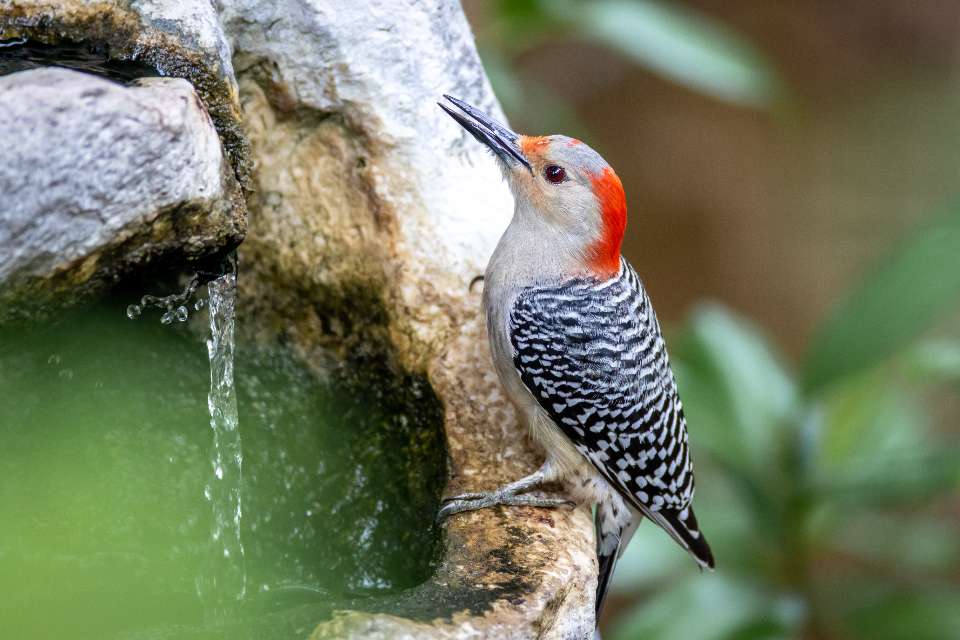
Unlike the popular image of a woodpecker ceaselessly drilling for wood-boring insects, the Red-bellied Woodpecker is a true omnivore with a highly varied and opportunistic diet. While it certainly consumes insects—such as beetles, ants, grasshoppers, and caterpillars—these make up less of its diet than many other woodpecker species. Often, it forages by simply gleaning and probing the surface of bark rather than deep excavation.
Plant material, especially during the non-breeding season, constitutes a major part of its food intake. This includes acorns, nuts, seeds, wild fruits, and berries. An interesting foraging behavior is its habit of caching food; it will wedge nuts or seeds into bark crevices or fence posts for storage and later consumption. It can be seen using its beak to whack large nuts, like acorns, into smaller, more manageable pieces. The tongue is an incredible tool, able to extend nearly two inches past the tip of the beak and equipped with a barbed, sticky tip to snatch prey from deep crevices.

As a result of this generalized diet, the Red-bellied Woodpecker is a frequent and enthusiastic visitor to backyard feeders, especially for suet, peanuts, and sunflower seeds, which further aids its survival in urban and suburban environments. The presence of the Red-bellied Woodpecker as an omnivore and insect predator, like its role in preying on the invasive emerald ash borer, highlights its essential function in maintaining forest health and balancing insect populations.
Communication: Calls and the Drumming Ritual
The Red-bellied Woodpecker is one of the most vocal woodpeckers, a characteristic that often reveals its presence before a sighting. Its most recognizable call is a loud, rolling, and distinctive "churr" or "qurr," which serves as a general contact call and territorial advertisement. It also produces a variety of sharp chi calls and a rattling chi-chatter.
However, like all woodpeckers, it substitutes the melodic songs of passerines with a percussive display known as drumming. This is a rapid, rhythmic, and intentional series of strikes on a resonant surface. Drumming is primarily a breeding season behavior used by both sexes to attract a mate, establish a territory, and communicate with partners. The woodpecker seeks out surfaces that will amplify the sound, such as hollow tree trunks, dead snags, or, in a suburban environment, even metal gutters, aluminum roofs, or chimney caps, much to the chagrin of homeowners. The specific rhythm and cadence of the drum is a form of species-specific communication, acting as the woodpecker's equivalent of a song.

Nesting and Life Cycle: The Arboreal Keystone
Red-bellied Woodpeckers are cavity nesters, and their nesting activities are crucial to the wider forest ecosystem. They are considered primary cavity excavators, meaning they create their own nest holes, which are then used by countless other secondary cavity nesters, such as bluebirds, chickadees, owls, and even squirrels, once the original tenants have moved on.
The nesting process is a cooperative and ritualistic effort between a mated pair, who are believed to be monogamous, at least for the breeding season. The male usually takes the lead in selecting a nest site, often in a dead or dying tree or a dead limb of a live tree. The pair engages in a mutual tapping ritual—the male taps from inside the cavity, and the female taps back from the outside—to confirm the nest choice. Both parents then excavate the cavity, which is typically about a foot deep and lined with wood chips.
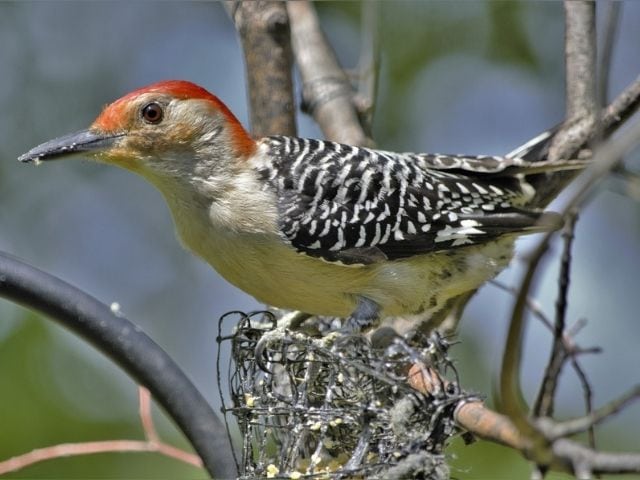
The female lays a clutch of about three to eight white eggs, which both parents take turns incubating for about 12 to 14 days. Notably, the male incubates the eggs overnight. The young hatch helpless and naked, fledging in about 24 to 27 days. The young remain dependent on their parents for many weeks after leaving the nest, with the parents continuing to feed them for up to 10 weeks before driving them out of the territory.
A significant challenge for nesting Red-bellied Woodpeckers is the competition for nest cavities, particularly from the non-native and aggressive European Starling, which often usurps the woodpecker's freshly excavated holes. Despite this, the Red-bellied Woodpecker is currently classified as Least Concern globally and has a stable or increasing population, a testament to its resourcefulness and adaptability in a changing world. It truly is a resourceful, colorful, and boisterous cornerstone of the eastern forest.
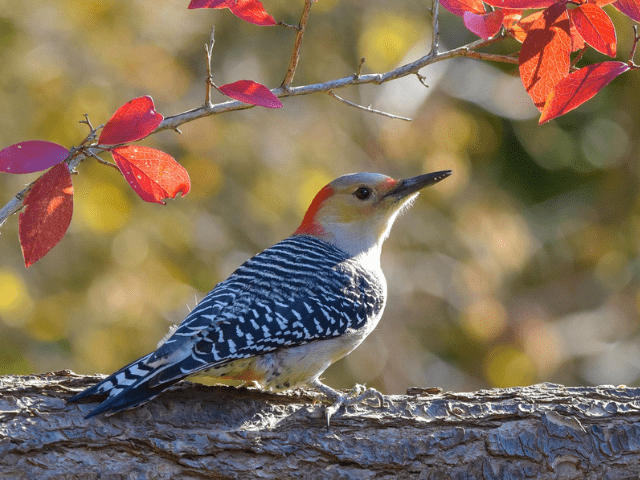
The video titled Red Bellied Woodpecker Sounds: Drumming & 4 Distinct Calls - YouTube offers an excellent acoustic reference to its rolling "Querr" call and rapid drumming sound, which are essential components of its profile.

