
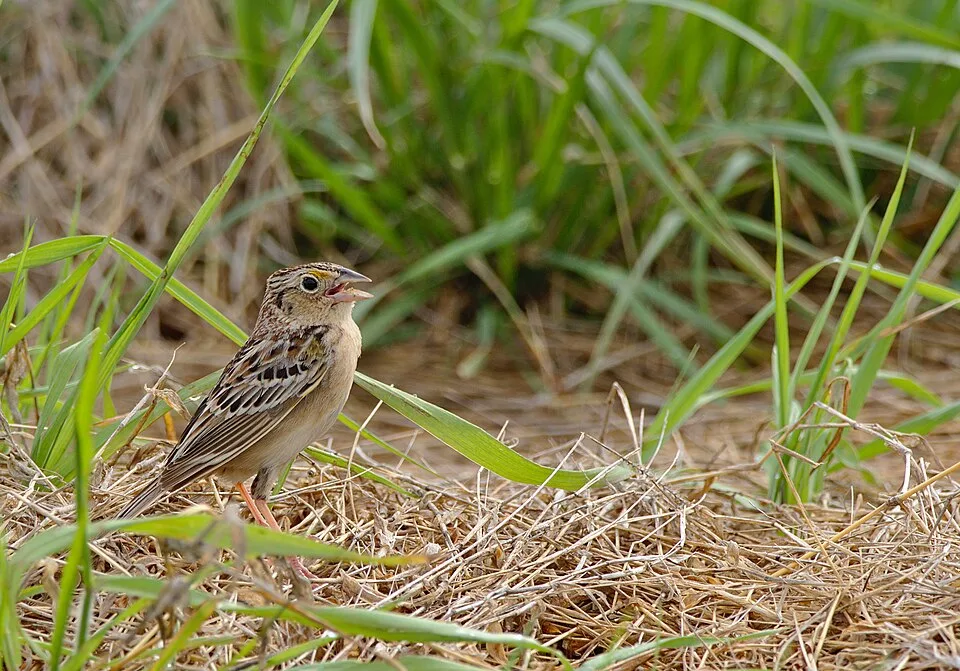
Sparrows, often dismissed as "little brown birds" (LBBs), are one of the most diverse and fascinating avian groups in the United States. While the common House Sparrow thrives in urban settings, many native American sparrow species are indicators of ecosystem health, and their declining numbers signal a profound crisis in the nation's most endangered habitat: the grasslands.
The U.S. is home to over 30 species of native sparrows, and while not all are officially listed as endangered, many are facing significant threats. The decline of these secretive, ground-nesting birds is overwhelmingly tied to the wholesale conversion and fragmentation of native prairie, desert scrub, and savanna into agricultural and residential lands. The loss of a diverse, healthy sparrow population is, therefore, a direct barometer of the ongoing ecological collapse of North America’s vital grasslands.
The Most Critically Endangered: Bachman's Sparrow (Peucaea aestivalis)
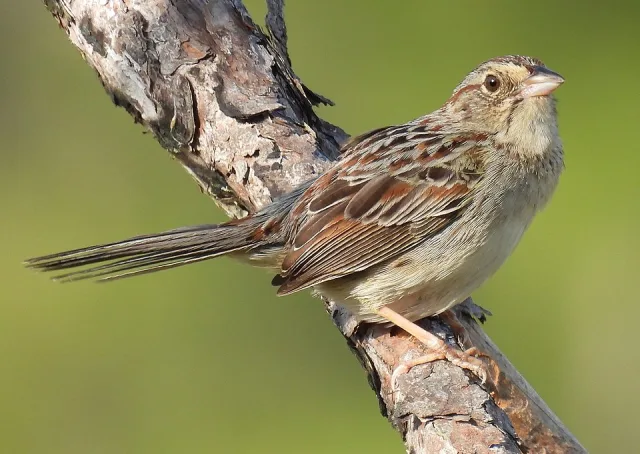
The Bachman's Sparrow is perhaps the most urgent case among U.S. sparrows. Once a common bird across the Southeast, its population has plummeted, and its range has contracted severely due to the near-total loss of its specialized habitat.
Habitat and Threat
The Bachman's Sparrow is a flagship species of the Longleaf Pine savanna. This ecosystem, historically maintained by frequent, low-intensity fires, features an open canopy and a dense, diverse understory of grasses and wildflowers. Unfortunately, less than 3% of the original Longleaf Pine ecosystem remains today. The primary threats are:
Fire Suppression: Without natural fire, the savanna understory becomes too dense, eliminating the open ground the sparrows need for foraging and the tall grasses they use for nesting.
Conversion: The land has been converted into commercial pine plantations (dense, single-species stands) or developed for housing.
Identification and Conservation
Known for its beautiful, complex, and musical song—a single, long clear whistle followed by a rapid trill—the Bachman's Sparrow is much easier to hear than to see. It is a small, rufous-backed sparrow with a clear, unstreaked buffy breast. Conservation efforts are now intensely focused on prescribed burning and Longleaf Pine restoration in states like Florida, Alabama, and Georgia to try and stabilize the remaining populations.
The Coastal Crisis: Saltmarsh Sparrow (Ammodramus caudacutus)

The Saltmarsh Sparrow faces a unique and immediate threat tied directly to global climate change and coastal geography. This small sparrow is a strict specialist, found only in the narrow band of high marsh along the Atlantic Coast, from Maine down to Virginia.
Habitat and Threat
This species nests directly on the ground in the high marsh, right at the maximum high-tide line. This is a risky strategy that evolved to avoid land predators. However, they are now trapped by a lethal combination of:
Sea-Level Rise: As ocean levels creep up, the high marsh area that provides their nesting zone is slowly being squeezed out.
Coastal Development ("Coastal Squeeze"): Development behind the marsh prevents the habitat from migrating inland. The nests are now increasingly susceptible to tidal inundation (flooding).
Status and Future
The outlook for the Saltmarsh Sparrow is grim. Research suggests that the species could be extinct by 2050 without massive intervention, due to the complete loss of nesting success. Conservation focuses on research into raising nesting platforms and developing "living shorelines" that allow the marsh to naturally migrate inland. The Saltmarsh Sparrow is widely considered the most immediate avian casualty of sea-level rise in the continental U.S.
https://lovethebirds.com/motus-bird-tracking/
Desert Denizens in Decline: Five-striped Sparrow (Amphispiza quinquestriata)
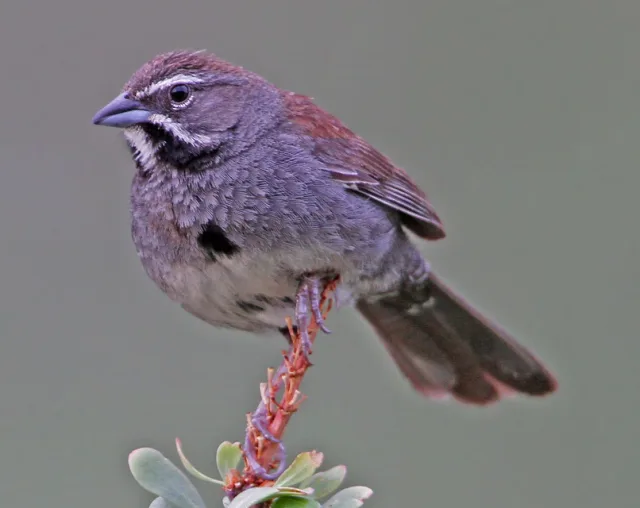
The Five-striped Sparrow is a rarity primarily because of its extremely limited U.S. distribution, making its small population highly vulnerable to localized habitat changes.
Habitat and Range
This striking sparrow is primarily a Mexican species, but its U.S. range is confined to a tiny area of southern Arizona, specifically the mountainous canyons and slopes of the Sky Islands region (such as the Santa Rita and Atascosa Mountains). It prefers dense, thorny scrub (like mesquite and acacia) and steep, rocky canyons.
Threat and Identification
While not facing the same widespread habitat destruction as the grassland birds, the Five-striped Sparrow's small U.S. population is threatened by climate change-driven drought and overgrazing in its limited border habitat, which degrades the scrub cover it requires for nesting and foraging.
The sparrow is easily identified by its unique pattern: a dark head, a white stripe over the eye and a prominent white "mustache" stripe, and a heavily streaked breast with a dark spot. Its distinctive buzzing song is a necessary tool for locating this shy bird in the rugged terrain.
The Prairie Crisis: Grasshopper Sparrow (Ammodramus savannarum)
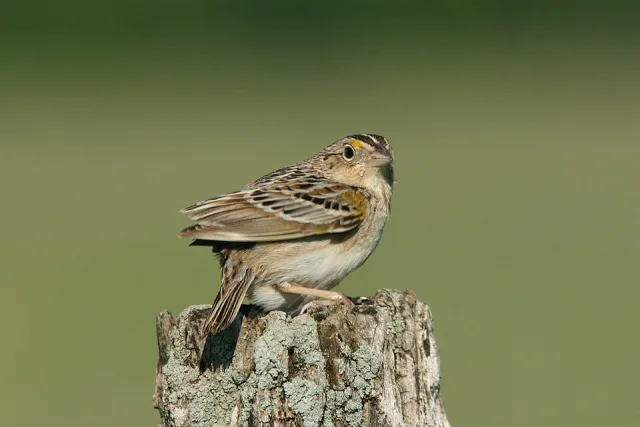
While still widespread, the Grasshopper Sparrow is a tragic example of a bird undergoing one of the steepest population declines among all North American songbirds, placing it firmly in the category of species facing a "silent extinction."
Habitat and Threat
This bird is a true obligate of native grassland and savanna. Its life history is tied to the thick, uniform prairie sod where it nests in a tiny, domed nest concealed at the base of the grass.
The Problem: The Grasshopper Sparrow population has declined by an estimated 80-90% across its range, primarily because native grasslands are the most converted ecosystem in the U.S.
Agricultural Monoculture: The conversion of diverse prairie into single-crop fields or closely mowed hayfields eliminates the complex vertical structure and insect diversity the sparrow requires.
Name Origin: The sparrow is named for its primary food source and its song, a dry, buzzing insect-like trill that sounds remarkably like a grasshopper.
Conservation efforts are focused on the Conservation Reserve Program (CRP), which pays farmers to restore and maintain native grasses, and establishing bird-friendly grazing practices that mimic the historical movement of bison herds.
Conservation: A Call to Action for Grasslands
The plight of these rare and endangered sparrows serves as a powerful reminder that conservation is often habitat-specific. Saving the sparrows means saving the ecosystems they rely upon:
Restoring Fire: For the Bachman's Sparrow, restoration means reintroducing prescribed fire to maintain open Longleaf Pine savannas.
Addressing Climate Change: For the Saltmarsh Sparrow, action means mitigating sea-level rise and planning for coastal adaptation.
Protecting Native Prairie: For the Grasshopper Sparrow, it means protecting every remaining acre of native sod and incentivizing the ecological management of private rangelands.
The next time a birder looks at a small, brown bird, they should recognize not a common sight, but a potential symbol of a threatened heritage. The songs of the Bachman's Sparrow and the sight of the Saltmarsh Sparrow are auditory and visual barometers of the health of the American landscape. Protecting these inconspicuous heroes is essential for the future of North American biodiversity.
The Bird Decline Crisis: Which Species Are Disappearing & What You Can Do
