
Located just southeast of Cheyenne Bottoms, Quivira National Wildlife Refuge (NWR) offers a distinctly different, yet equally vital, wetland experience. Established in 1955 to protect migratory waterfowl habitat, Quivira’s 22,135 acres are defined by a rare and unique ecosystem: inland salt marshes and sand prairie.
The presence of ancient subterranean salt deposits has resulted in two large, shallow lakes—Big Salt Marsh and Little Salt Marsh—where the salinity creates a specialized environment typically found only along the coasts. This unique chemistry adds another layer of biological diversity to the Central Flyway.
A Haven for Waterfowl and Coastal Species

Quivira’s salt marsh is a major draw for migratory species, and its diverse habitat supports over 340 recorded bird species.
Inland Coastal Birds: The salt environment attracts species one might only expect to see near the ocean. American Avocets and Black-necked Stilts nest here. Quivira is also designated critical habitat for the threatened Western Snowy Plover and the Interior Least Tern.
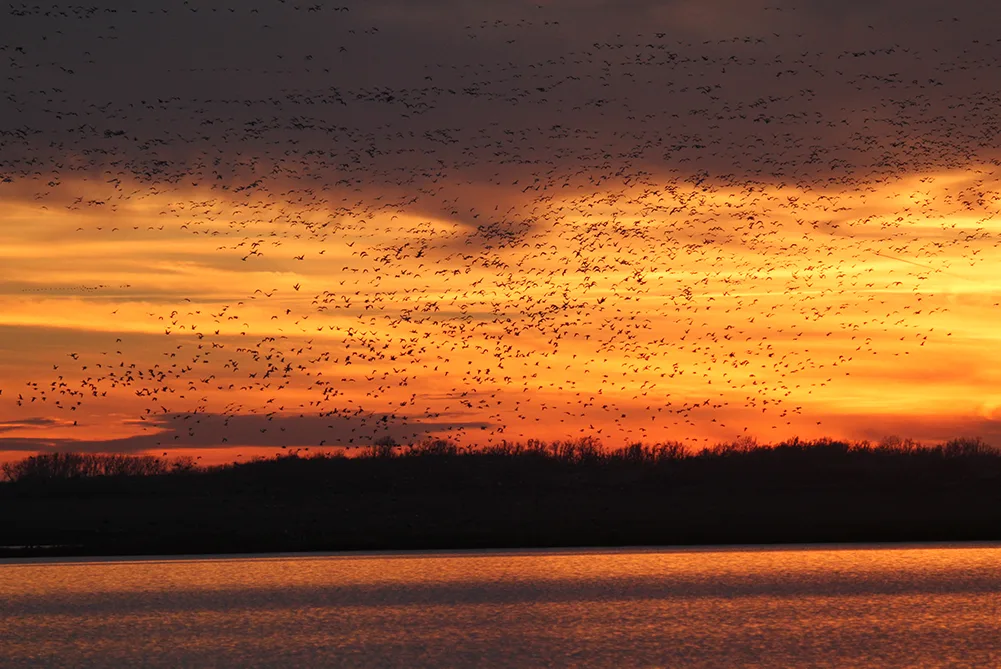
Waterfowl Spectacular: During the fall migration (September to December), the refuge becomes a powerhouse for waterfowl, with counts often reaching hundreds of thousands of birds. Massive flocks of Canada Geese, Snow Geese, and various Ducks fill the sky and the water pools.

Whooping Crane The Crane Connection: Like its neighbor, Quivira is a designated critical habitat for the endangered Whooping Crane. They stop here during their journey from their Canadian breeding grounds to their wintering sites in Texas. Large, loud flocks of Sandhill Cranes are also common during peak migration.
Year-Round Raptors: The mixed-grass prairie and marsh provide excellent hunting grounds for raptors. The refuge hosts both Bald Eagles (winter) and Golden Eagles (winter), as well as resident Northern Harriers and various hawk species.

Golden Eagle


Birding Access and Habitat Features
Quivira NWR is highly accessible, designed for wildlife observation with several key infrastructure features:
Auto-Tour Routes: The refuge features a 14-mile and a 4-mile auto-tour road that circle the main wetland units, providing excellent, vehicle-based viewing and photography opportunities.
Trails and Blinds: A 1.2-mile nature trail includes a boardwalk passing through the marsh. The refuge also maintains multiple photography blinds and a wildlife observation tower near the Little Salt Marsh.
Habitat Variety: Birding success often depends on checking all of Quivira's habitats: the wet, saline marshes, the sand prairie, and the dense riparian (wooded) areas along Rattlesnake Creek, which attract songbirds and land mammals.
Together, the Baker Wetlands, Cheyenne Bottoms, and Quivira NWR form the foundational triangle of wetlands in Kansas, offering unparalleled opportunities to witness the grandeur of the North American migration.
