
The great northern forests of Pennsylvania, particularly the sprawling, half-million-acre Allegheny National Forest (ANF), transform into one of North America's premier avian spectacles every spring. As May arrives and the hardwood canopy begins to unfurl its new, vibrant leaves, the woods are suddenly alive with movement and song. This is the Warbler Explosion, a massive influx of tiny, jewel-toned songbirds that have flown thousands of miles from their wintering grounds in Central and South America to reach the insect-rich breeding habitats of the temperate zone.
Pennsylvania is a critical stopover and breeding ground, situated right in the heart of the eastern migratory flyway. Of the roughly 50 species of New World warblers (Parulidae), over 30 can be found passing through or breeding within the state’s borders. For birders, the challenge is as intoxicating as the reward: spotting these hyperactive, elusive birds as they dart through the developing foliage, relying heavily on song to separate one species from another.
The Allure of the Allegheny: Habitat is King
The Allegheny National Forest and the surrounding state forest lands and game lands of northern and central Pennsylvania owe their status as a warbler haven to their vast, unbroken forest cover and the resulting habitat diversity.
A Mosaic of Microclimates
The ANF sits on the Allegheny Plateau, characterized by rolling hills, deep ravines carved by tributaries of the Allegheny River, and a mix of deciduous and coniferous stands. This variety creates an ecological mosaic that attracts a wide range of warbler species, each specializing in a slightly different niche:
Mature Hardwood Forests: These deep woods, dominated by oaks, maples, and cherries, are the domain of classic eastern species. Here, birders search for the Ovenbird (often heard before it is seen, walking on the forest floor) and the Scarlet Tanager, whose brilliant red male and yellow-green female are often found together with warbler flocks. The high canopy is the favored haunt of the Cerulean Warbler (Setophaga cerulea), a species of conservation concern that requires large tracts of mature deciduous forest for breeding.

Ovenbird Hemlock and Spruce Groves: Cooler, darker stands of conifers, particularly near creeks and ravines, mimic the boreal forests farther north, attracting species like the Black-throated Green Warbler and the Magnolia Warbler. These areas can be especially productive during late spring migration.
Early-Successional and Disturbed Habitat: Areas of logging clear-cuts or forest edges, often found along gated forest roads, provide dense shrubbery and young growth. This habitat is vital for species that thrive in the brushy transition zones, such as the colorful Chestnut-sided Warbler and the Mourning Warbler. The rare Golden-winged Warbler (Vermivora chrysoptera), a species experiencing dramatic population declines, also prefers this type of scrub-shrub habitat.

Golden-winged Warbler


The sheer scale of the ANF means that even after decades of human use, the core forest remains large enough to support the area-sensitive species that cannot tolerate fragmented woodlands.
The Spring Rush: Peak Migration and Key Species
The best window for the warbler explosion in Pennsylvania is typically the first two weeks of May, though migration can stretch from late April to late May. During this peak, an experienced birder can often tally over 20 species in a single morning.
The Early Arrivals
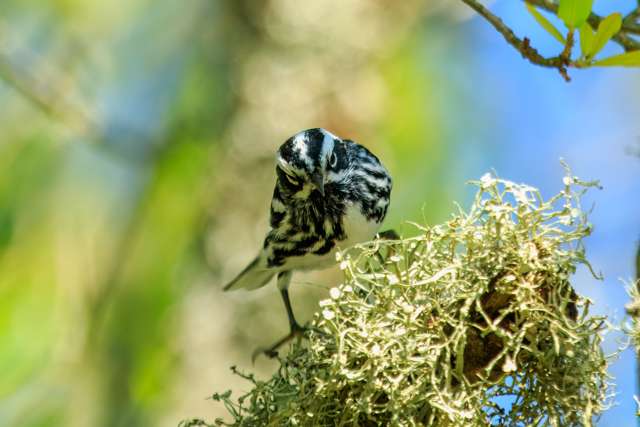
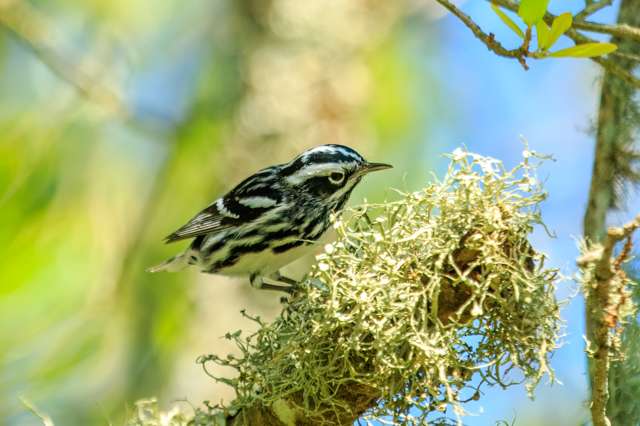
Migration is a staggered affair. Among the first warblers to arrive in late April are the Black-and-white Warbler and the Louisiana Waterthrush. The Black-and-white Warbler is easily identified by its unique foraging style, creeping and circling along tree trunks and major limbs like a nuthatch or creeper. The Louisiana Waterthrush is always found near flowing water, staking out territories along bubbling streams where it forages for aquatic insects, constantly bobbing its tail.
The Mid-May Deluge
The second week of May brings the deluge. This is when the canopy seems to burst with color:
Blackburnian Warbler: A spectacular sight, the male features a fiery orange throat and black-and-white striping, often feeding high in the topmost branches.
Canada Warbler: A beautiful gray and yellow bird with a distinct "necklace" of black streaks across its chest, typically found in dense understory thickets.
American Redstart: A hyperactive, flashing bird whose male is a striking mix of black, orange, and white. It flutters and darts about the foliage, often flashing its tail feathers to flush out insects.

American Redstart

The Breeders and the Rare
Pennsylvania serves as a critical breeding ground for many species. The Ovenbird (Seiurus aurocapilla) and the American Redstart are among the most prevalent in the northern and central forests.
Conservationists and birders also focus intently on species listed as Birds of Conservation Concern or state-listed as endangered:
Cerulean Warbler: As mentioned, the ANF's mature forest offers critical habitat. Finding this electric blue bird high in the oaks is a celebrated birding feat.
Golden-winged Warbler: Declining rapidly due to habitat loss and hybridization with the abundant Blue-winged Warbler, Pennsylvania is one of its last strongholds in the eastern U.S.
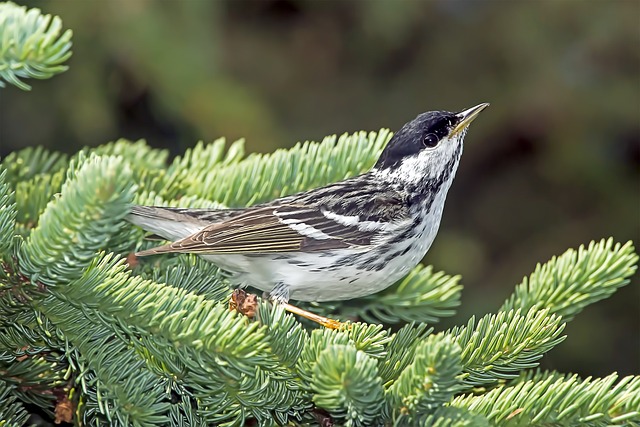
Blackpoll Warbler: This species, though more common as a passage migrant, is listed as state endangered in Pennsylvania due to only a handful of confirmed nesting locations, usually in high-elevation spruce and hemlock stands, making its presence in the ANF's northern sections highly significant.
Birding Strategies for Success
Warblers are notoriously difficult to see, leading to the popular birding phrase, "You have to bird with your ears, not your eyes."
Learn the Songs: The most essential tool for warbler birding is familiarity with their songs. Each species has a distinctive pattern and cadence. The buzzy song of the Black-throated Green Warbler ("Zzz-Zzz-Zoo-Zee") or the loud, ringing song of the Hooded Warbler ("Weeta-Weeta-Witee-O") can lead you directly to the bird before you ever lay eyes on it.
Focus on Mixed Flocks: Warblers often travel in large mixed-species flocks during migration, frequently joining up with chickadees, kinglets, and vireos. Finding one warbler often means finding ten.
Check Edges and Roads: Gated forest roads and the edges of forest openings (where the insects tend to congregate) are excellent places to find warblers at eye-level or slightly above, rather than straining to look straight up into the dense canopy.
Visit Known Hotspots: While the ANF itself is excellent, surrounding locations also offer high-quality warbler viewing. These include Cook Forest State Park (known for its old-growth hemlocks) and parts of the Laurel Highlands in the southwestern part of the state, such as Powdermill Nature Reserve.
The Warbler Explosion in the Allegheny Forests is more than just a seasonal event; it is a vital ecological pulse that confirms the health and importance of Pennsylvania’s deep woods. It is a time when the forest, temporarily silent in the winter, finally sings its heart out, inviting any who will listen to share in its vibrant, fleeting beauty.
