
If you’ve ever spent a morning walking along a rugged shoreline or a sandy beach and heard a loud, piercing wheep! over the sound of the crashing waves, you’ve likely met one of the most charismatic residents of the U.S. coast: the Oystercatcher.
With their neon-orange "carrot" bills and golden eyes, these birds look less like typical shorebirds and more like they were designed by a high-end sporting goods brand. In the United States, we are lucky enough to host two distinct species.
Here is everything you need to know about these iconic coastal specialists.
1. The American Oystercatcher (Haematopus palliatus)

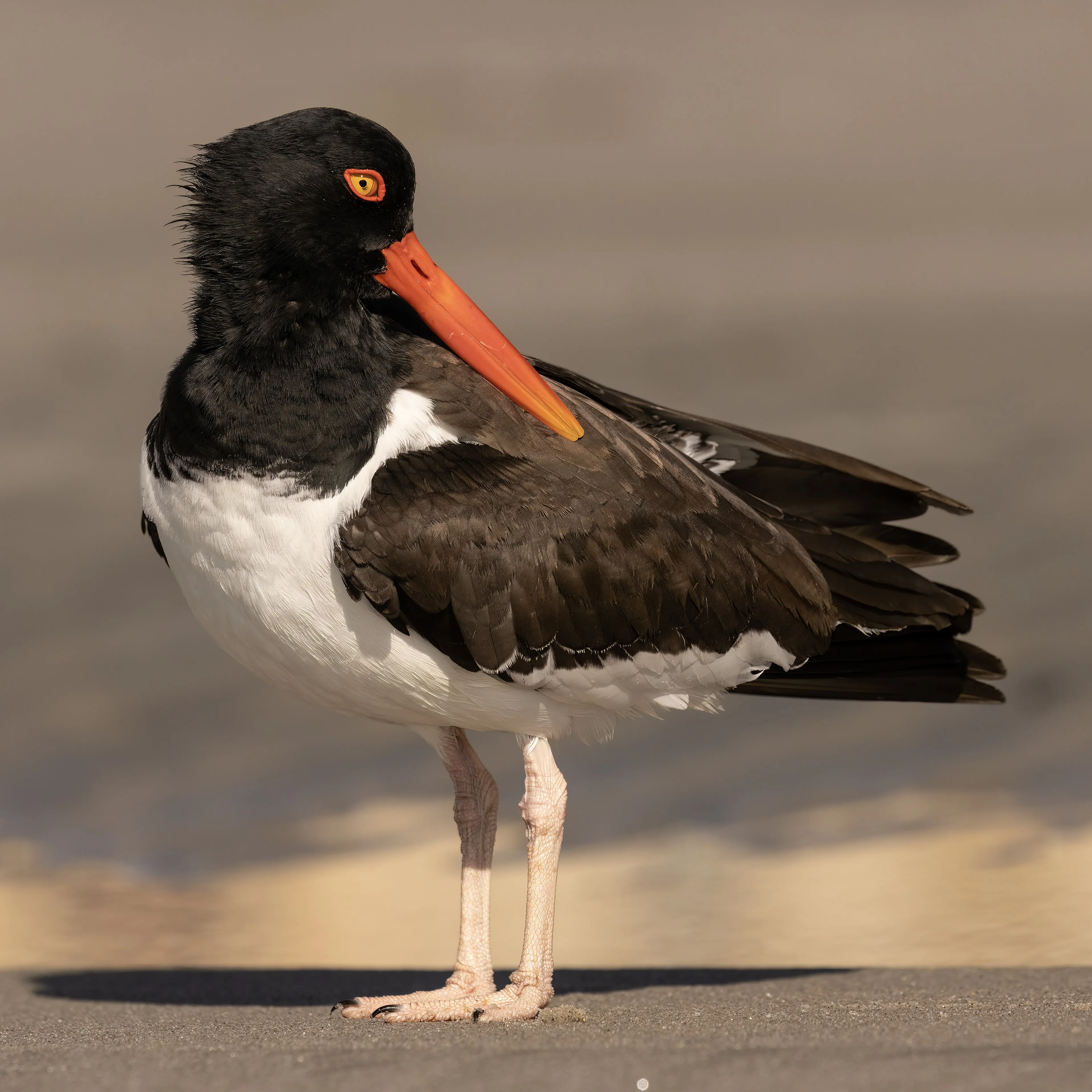
The star of the Atlantic and Gulf Coasts, the American Oystercatcher is hard to miss. They are large, bulky shorebirds with a striking "tuxedo" look.
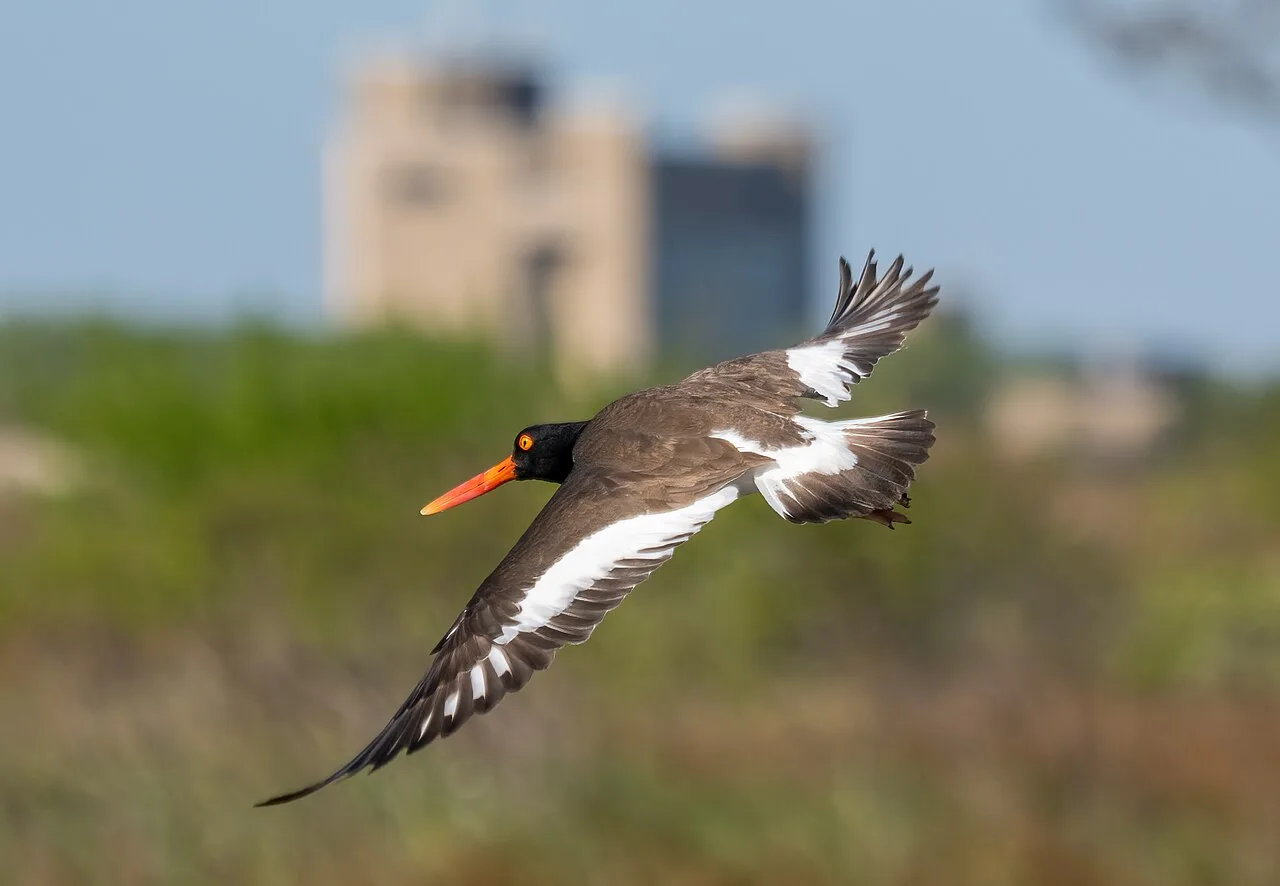
Appearance: Bold black heads, brown backs, and bright white bellies. When they fly, they show off a dramatic white wing stripe.
Where to find them: You’ll spot them along the Eastern Seaboard (from Massachusetts down to Florida) and along the Gulf Coast. They love salt marshes, oyster reefs, and sandy beaches.
Fun Fact: They are one of the few birds that can actually open heavy mollusks. While other birds wait for the tide to go out to find scraps, the Oystercatcher uses its bill like a specialized shucking knife.
2. The Black Oystercatcher (Haematopus bachmani)
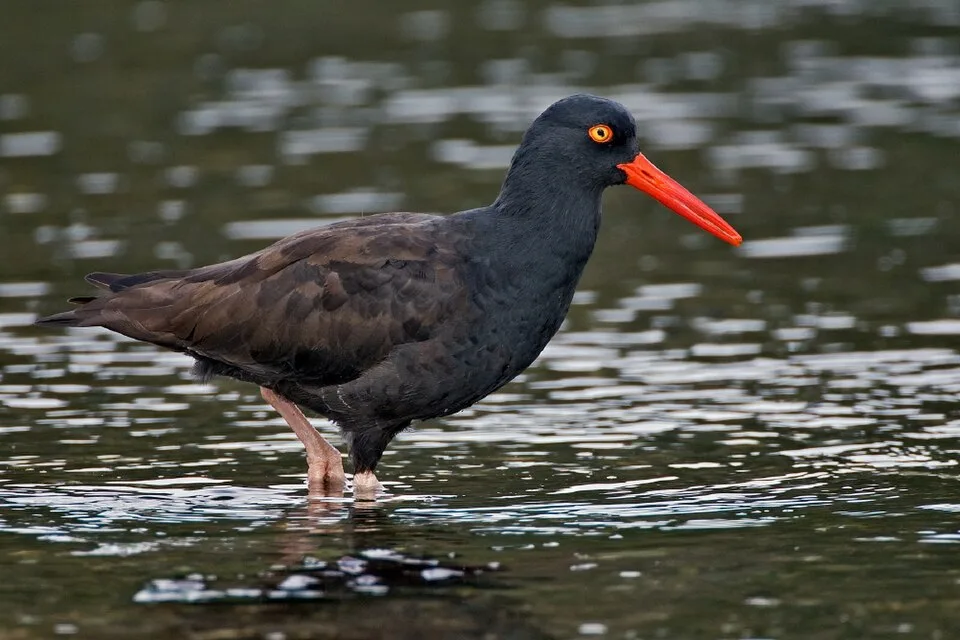
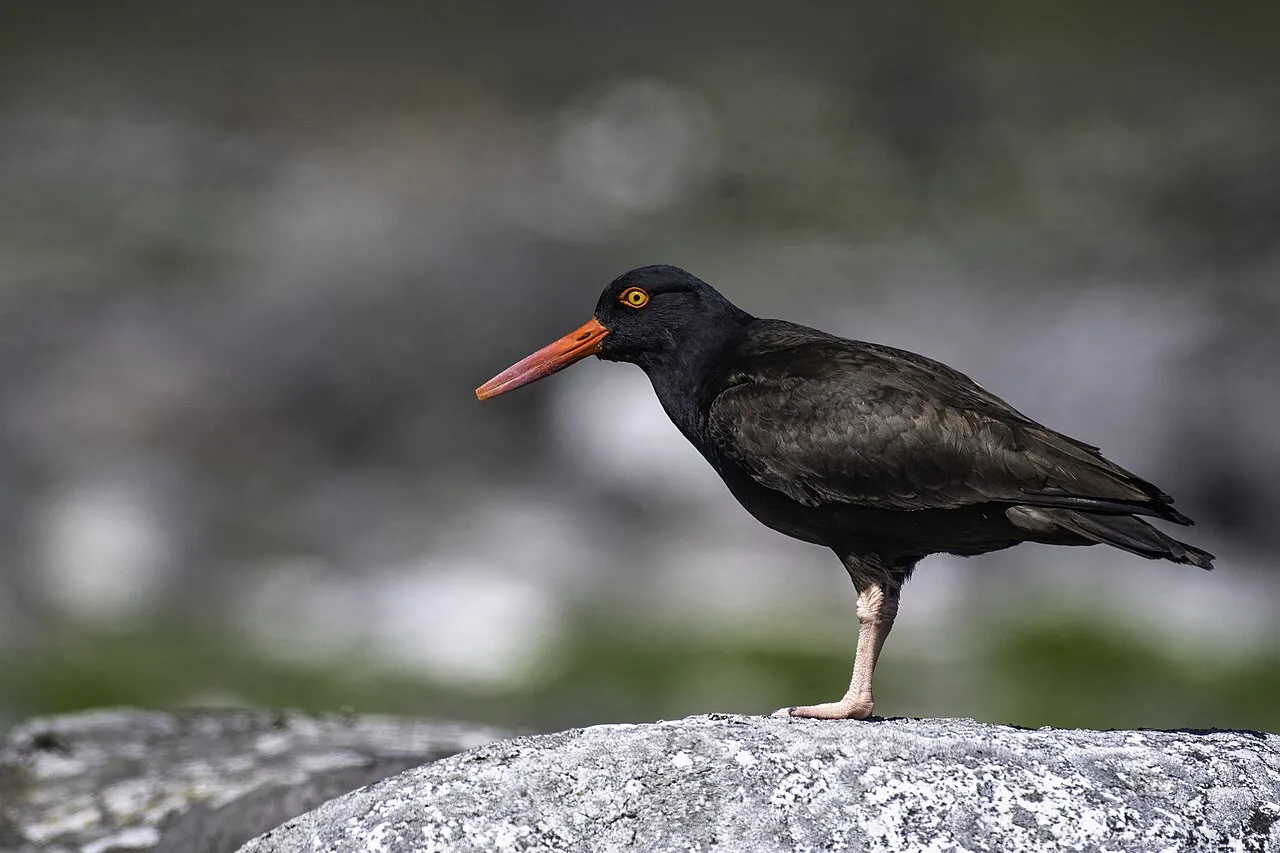
Head west to the Pacific, and the wardrobe changes. The Black Oystercatcher is the moody, goth cousin of the American variety, perfectly camouflaged for the dark, volcanic rocks of the West Coast.
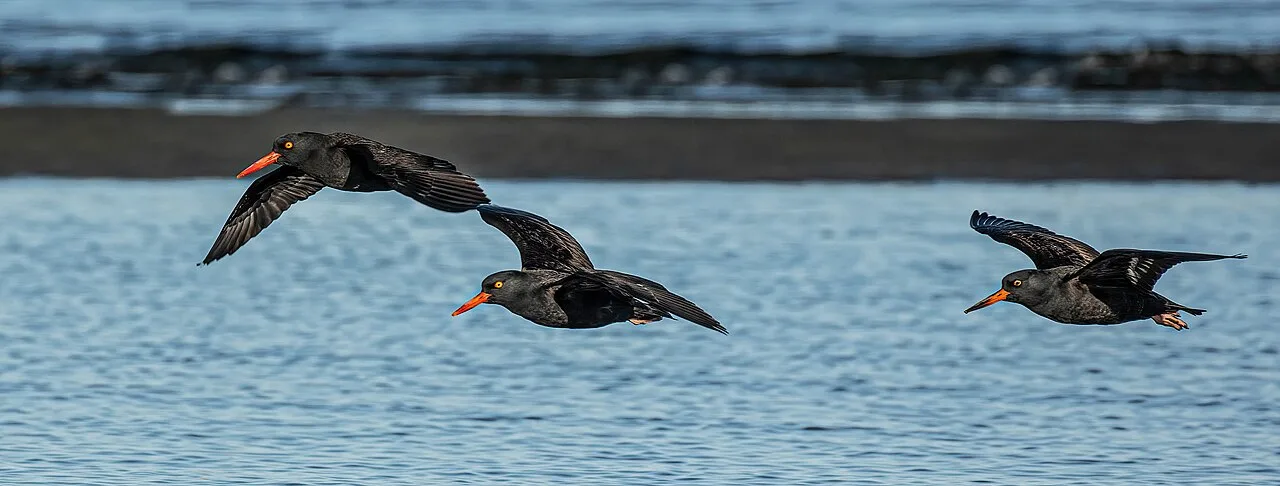
Appearance: Entirely sooty-black plumage, which makes that fire-orange bill and yellow eye-ring pop even more.
Where to find them: They stick to the Pacific Coast, ranging from the Aleutian Islands in Alaska all the way down to Baja California. Unlike their eastern cousins, they prefer rocky intertidal zones over sandy beaches.
Fun Fact: They are highly territorial and "site faithful," meaning the same pair will often return to the exact same stretch of rocky coast year after year to raise their young.
The Tool of the Trade: That Incredible Bill
The Oystercatcher’s bill isn't just for show. It is a highly evolved tool that comes in two "models" depending on the individual bird's preference:
The Stabber: Some birds specialize in sneaking their bill into a slightly open mussel or oyster and snipping the adductor muscle before the shell can snap shut.
The Hammer: Others use their bill to literally bash through the shell of a limpet or barnacle.
Pro Tip: Young Oystercatchers actually have to learn these techniques from their parents. It takes up to 60 days for a chick to master the art of the "shuck," which is a long time in the bird world!
Conservation: Sharing the Shore
While they look tough, Oystercatchers are quite vulnerable. Because they nest directly on the ground—often just a small scrape in the sand or rocks—they are easily disturbed by beachgoers, off-leash dogs, and rising sea levels.
How you can help:
Watch your step: During nesting season (spring and summer), stay below the high-tide line and respect "Area Closed" signs.
Keep dogs leashed: A playful pup can accidentally crush a well-camouflaged nest in seconds.
Pack it out: Trash attracts predators like gulls and crows, which prey on Oystercatcher eggs.
Seeing Them in the Wild
If you want to add these birds to your life list, grab your binoculars and head to a local birding hotspot like Cape May, NJ, the Outer Banks, NC, or Olympic National Park, WA.
Listen for that unmistakable high-pitched whistle. Once you see that bright orange bill against the blue of the ocean, you’ll understand why these birds are the undisputed royalty of the American shoreline.
Have you ever spotted an Oystercatcher on your travels? Let us know which coast you were on in the comments!
