
Washington State, a land of dramatic contrasts—from the damp, mossy old-growth of the Olympic Peninsula to the arid shrub-steppes of the Columbia Plateau and the alpine heights of the Cascades—provides a mosaic of habitats perfectly suited for one of nature's most elusive and fascinating groups: the owls. More than a dozen species of these silent hunters grace the skies and forests of the Evergreen State, each with unique adaptations, calls, and ecological roles.
To truly appreciate the richness of Washington's owl population, one must look beyond the familiar hoot. The state is home to a spectacular range of species, from the largest wood owl to the smallest migratory specialist, reflecting the incredible biodiversity of the region.
The Giants of the Night: Large Forest and Open-Country Owls
The state's most powerful and widespread owls dominate their respective ecosystems:
1. Great Horned Owl (Bubo virginianus)

The quintessential owl of North America, the Great Horned Owl is a common, year-round resident found virtually everywhere in Washington, from dense forests and canyons to suburban parks. Recognizable by its prominent "ear" tufts, piercing yellow eyes, and deep, resonant hoot—hoo-hoo-hoo-HOO-hoo—this powerful raptor is an opportunistic predator that preys on everything from rodents and rabbits to skunks and other birds of prey. Its adaptability is key to its success across the state's diverse environments.
2. Great Gray Owl (Strix nebulosa)

The longest owl in North America, the Great Gray Owl is a magnificent, though uncommon, resident of the state's higher-elevation forests, particularly in the northern and eastern Cascades. Despite its impressive size (up to 33 inches), it is surprisingly lightweight. Its massive, gray, concentric facial disc and piercing yellow eyes, set within a striking 'bow tie' pattern, help it locate small rodents by sound even under deep snow.
3. Barred Owl (Strix varia)

A relative newcomer to Washington, the Barred Owl has rapidly expanded its range westward from the eastern United States. This large, round-headed owl has dark eyes and is named for the horizontal barring on its chest and vertical streaking on its belly. Its characteristic call, often transliterated as "Who cooks for you? Who cooks for you all?", is a common sound in the mixed forests of both Eastern and Western Washington. Its rapid colonization has created significant conservation challenges, particularly for the federally protected Northern Spotted Owl.
4. Northern Spotted Owl (Strix occidentalis caurina)

A symbol of old-growth forest conservation, the Northern Spotted Owl is one of the state's most endangered residents. Closely related to the Barred Owl but smaller, darker, and more heavily spotted, this subspecies relies on structurally complex, older forests for nesting and roosting. Critically, it has dark eyes. The Washington population, primarily found in the western Cascades and Olympic Peninsula, has faced precipitous declines due to both historical habitat loss and direct competition from the more aggressive, adaptable Barred Owl. It remains a focal point of conservation efforts and a flagship species for the health of Washington’s ancient forests.
5. Snowy Owl (Bubo scandiacus)
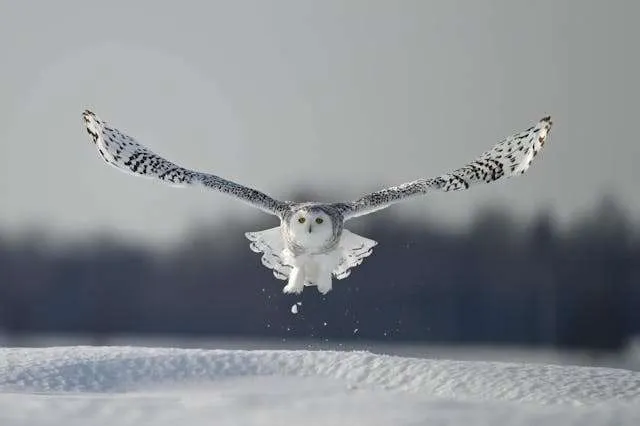
A spectacular, primarily white owl, the Snowy Owl is an irruptive winter visitor to Washington. Though it breeds in the Arctic, it occasionally moves south into the state's open country and coastal areas—particularly the Puget Sound region and the Columbia Basin—during years when prey populations in the far north are low. Their massive, rounded heads, bright yellow eyes, and habit of hunting in daylight make them a thrilling, albeit rare, sight.
The Open-Country and Grassland Specialists
A few species eschew the deep woods for the wide-open spaces, specializing in hunting over fields and wetlands:
6. Short-eared Owl (Asio flammeus)
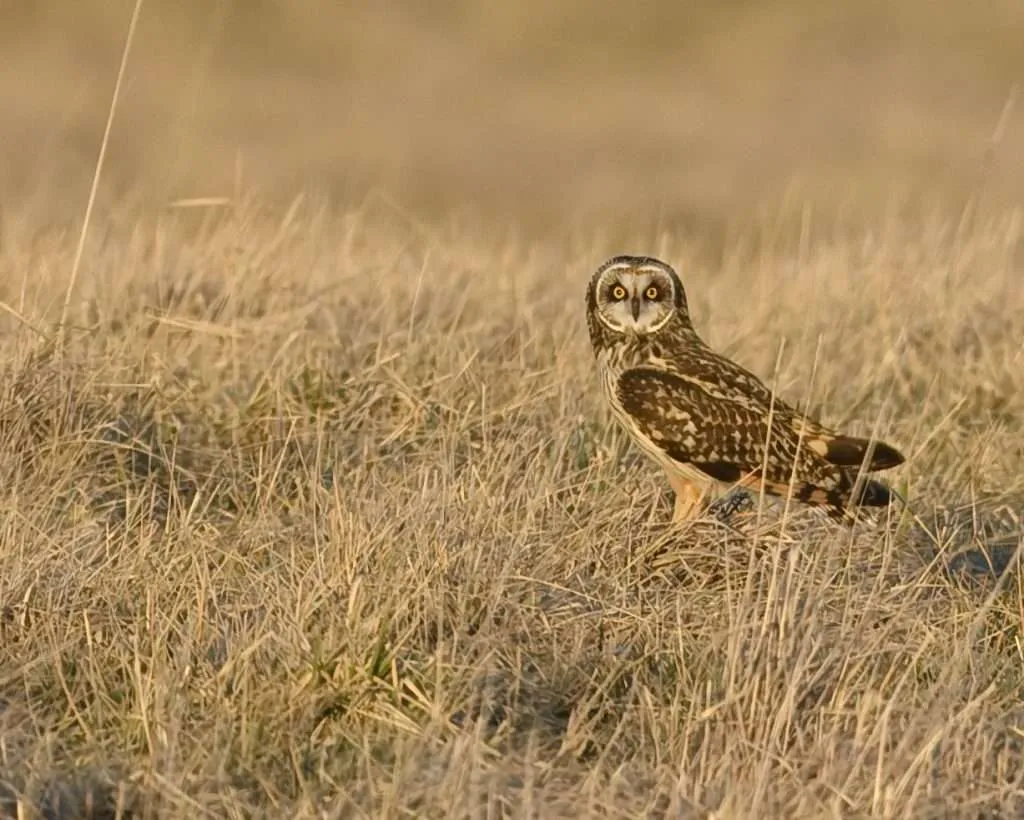
Unlike most owls, the Short-eared Owl is often seen hunting during the day, quartering low over open fields, prairies, and salt marshes on buoyant wings. It is a medium-sized owl with a streaky, buff-brown plumage and inconspicuous ear tufts (hence the name). A year-round resident in parts of Eastern Washington and a winter visitor/migrant in the west, its presence is strongly tied to local vole populations.
7. Long-eared Owl (Asio otus)
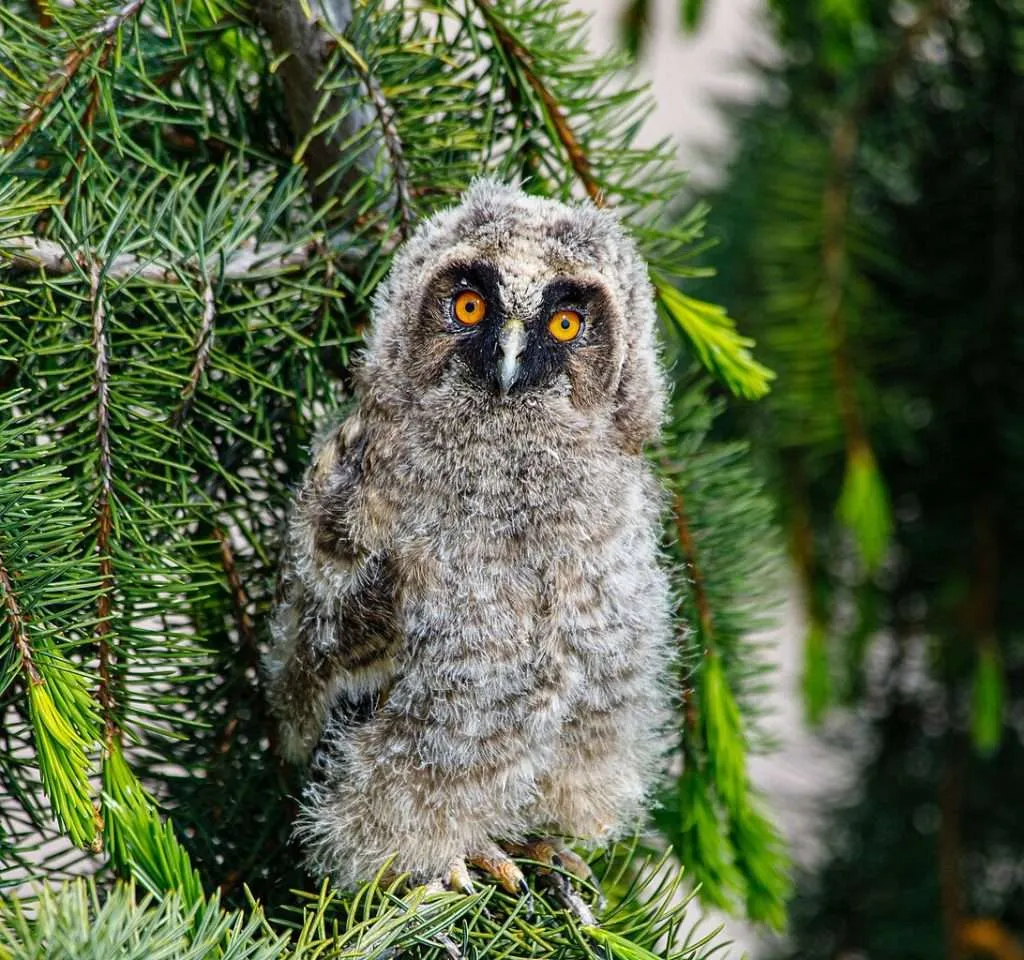
A master of camouflage, the Long-eared Owl is a slender, medium-sized raptor with very long, prominent ear tufts that are held flat when at rest. It is strictly nocturnal and highly secretive, preferring dense thickets and riparian woodlands near open foraging areas, making it much harder to observe than its short-eared relative. It is an uncommon resident, found more frequently in the wooded areas of Eastern Washington.
8. Barn Owl (Tyto alba)

With its distinctive, ghostly white, heart-shaped face and dark eyes, the Barn Owl is easily identified. It prefers open farmlands, grasslands, and agricultural areas where it hunts its preferred prey, voles and mice. As its name suggests, it readily nests in human structures—barns, silos, and abandoned buildings—and is found year-round throughout much of the state at lower elevations, particularly in the south.
The Smaller, Secretive Owls: Screech-Owls and Pygmy-Owls
Washington is also home to several smaller, cavity-nesting species that are more often heard than seen:
9. Western Screech-Owl (Megascops kennicottii)

A small, stocky owl with prominent ear tufts and bright yellow eyes, the Western Screech-Owl is a common year-round resident in most of Washington outside the highest mountains. It has both a grayish and a reddish-brown color morph, providing excellent camouflage in wooded habitats near water. Its characteristic accelerating-bounce trill call is a common sound of the Pacific Northwest night.
10. Northern Pygmy-Owl (Glaucidium gnoma)
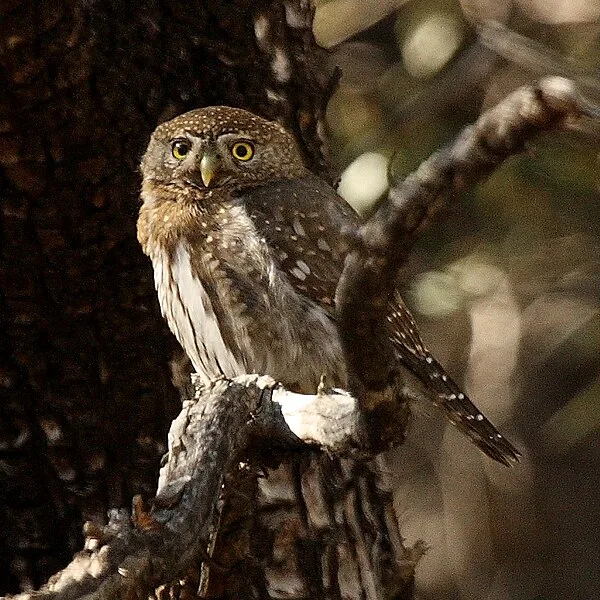
One of the state’s few diurnal owls, the Northern Pygmy-Owl is a tiny, fierce predator often seen hunting songbirds and small mammals during the day. It is easily recognized by its small size (robin-sized), round head, and the striking black 'false eyes' on the back of its neck, which confuse potential predators. It is a common resident of foothill and mid-elevation coniferous forests throughout the state.
11. Northern Saw-whet Owl (Aegolius acadicus)

A tiny, secretive owl with large, dark eyes, the Northern Saw-whet Owl is a widespread year-round resident, though its strictly nocturnal habits and preference for dense coniferous woods make it difficult to spot. It is named for its high-pitched, repetitive call, which sounds like the whetting of a saw. In winter, they often descend to lower elevations, increasing the chances of a lucky sighting.
12. Flammulated Owl (Psiloscops flammeolus)
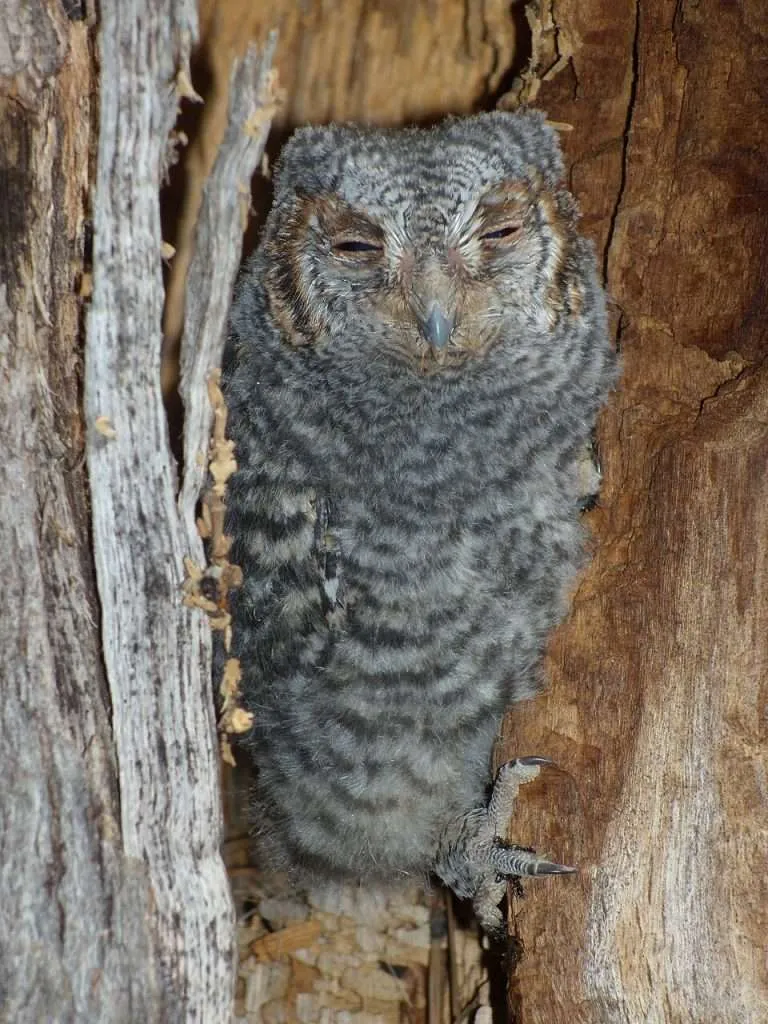
The smallest of Washington's migratory owls, the Flammulated Owl is a summer-only resident found in the open, high-elevation ponderosa pine and mixed-conifer forests of Eastern Washington. Named for the reddish, or 'flammulated,' markings on its gray-brown plumage, this diminutive raptor feeds almost entirely on large insects. Its soft, low hoot is one of the most subtle sounds of the eastern forests.
13. Burrowing Owl (Athene cunicularia)

Truly unique, the Burrowing Owl is a long-legged, small owl of the state’s dry shrub-steppe and grassland habitats, primarily in Eastern Washington. Unlike other owls, it nests underground in burrows, often repurposed from badgers or ground squirrels. It is active during the day (diurnal) and is easily recognized by its bright yellow eyes and white eyebrows. It is listed as endangered or threatened in much of its range, facing threats from habitat loss due to agriculture and development.
The Rare and Elusive Visitors
Two final species complete Washington’s roster, though they are rarely encountered:
14. Boreal Owl (Aegolius funereus)

A close relative of the Northern Saw-whet Owl, the Boreal Owl is an uncommon and highly elusive resident of dense, high-elevation boreal forests, found mostly in the remote northeastern corner of the state and the northern Cascades. Its soft, mechanical-sounding call is the best way to detect its presence.
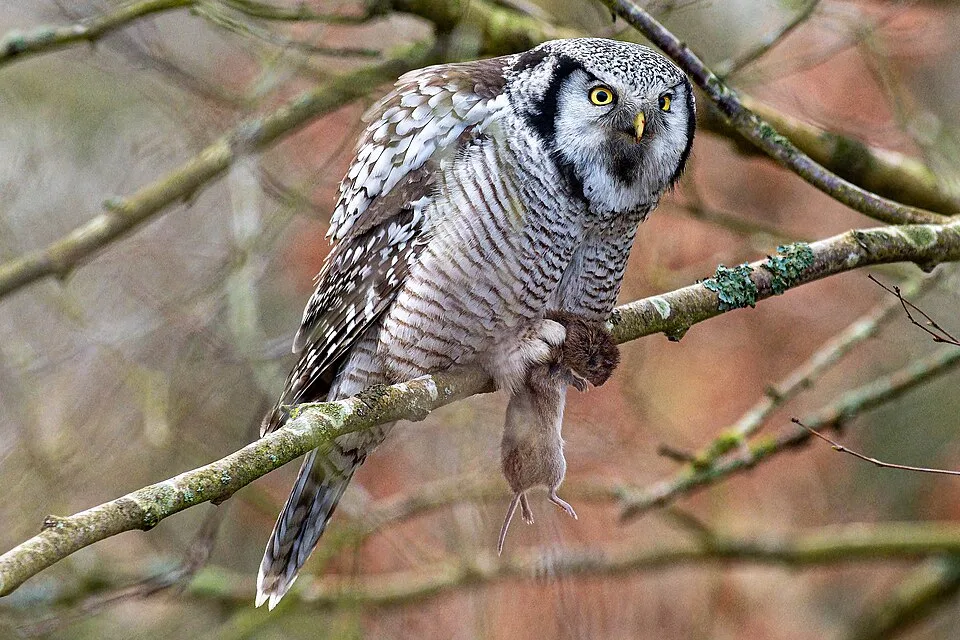
15. Northern Hawk Owl (Surnia ulula)
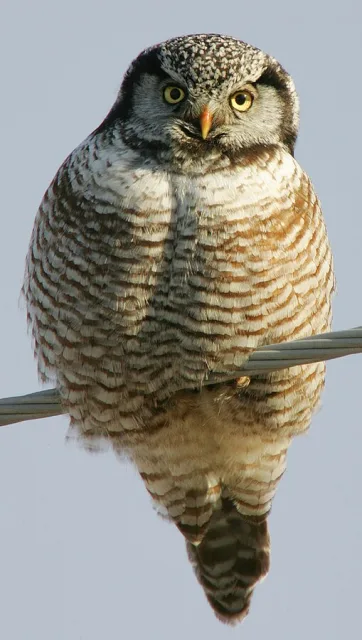
This medium-sized owl has a long tail and a hawk-like profile, a reflection of its diurnal, active hunting style. It is an occasional winter visitor to Washington, typically found in open, boreal-like habitats in the northern part of the state.
A Legacy to Protect
The fifteen species of owls in Washington State offer a remarkable study in adaptation, filling every niche from urban parks to remote alpine passes. They are a critical part of the state's ecological balance, but many face growing threats. The Northern Spotted Owl and Burrowing Owl represent the extreme ends of this conservation challenge, highlighting the need to preserve both Washington’s ancient forests and its shrinking grasslands. For birders and nature enthusiasts, the quest to find these silent hunters is a profound reminder of the wildness and fragility of the Evergreen State’s natural heritage.
