
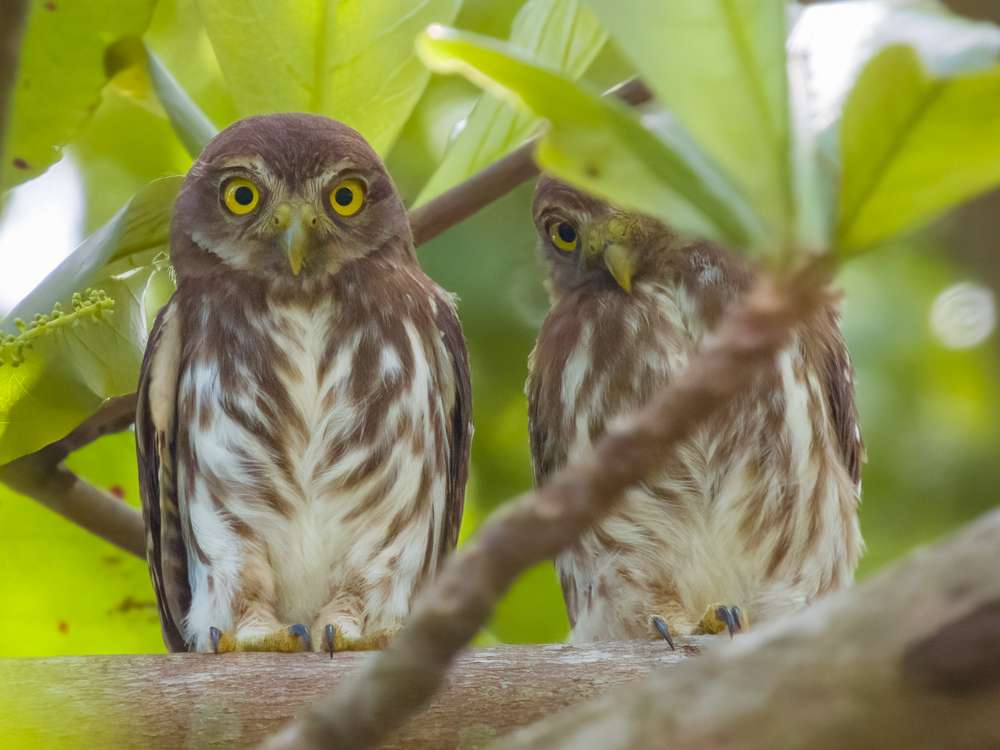
With their silent flight, haunting calls, and piercing, forward-facing eyes, owls are arguably the most enigmatic birds of prey in the United States. Far from being a single, uniform species, they represent a diverse group of nocturnal predators adapted to nearly every ecosystem the country has to offer, from the arid deserts of the Southwest to the dense, snowy forests of the North.
The precise count can vary slightly depending on how vagrant or extremely rare sightings are tallied, but ornithological consensus suggests there are 19 to 23 species of owls found within the borders of the United States. These raptors belong to one of two families: Tytonidae (Barn Owls) and Strigidae (True Owls).
The Giants: Largest Owls in the US
The largest owls command attention, dominating the nighttime skies with their size, wingspan, and deep, resonant calls.
Great Gray Owl (Strix nebulosa)
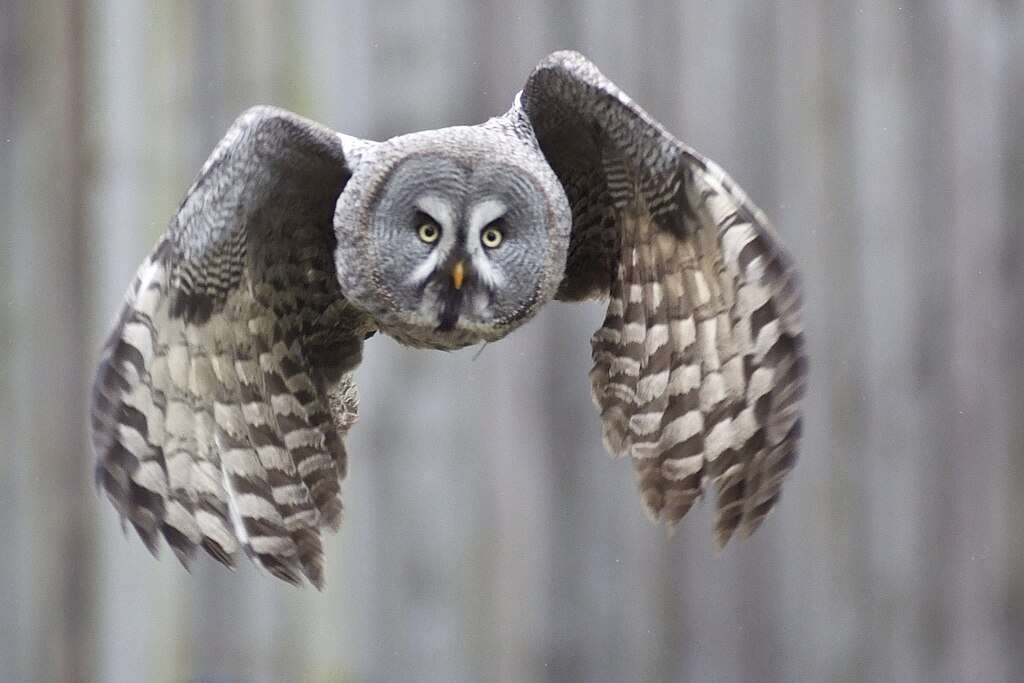
The Great Gray Owl is often considered the longest owl in North America, with a body size that can reach up to 33 inches. Despite its massive size, it's surprisingly light for its stature, relying on its large facial disk and acute hearing to hunt voles and other rodents beneath a layer of snow.
- Size: Very large (24–33 inches).
- Range: Primarily dense boreal forests of the Pacific Northwest and the Rocky Mountains, often extending into Alaska and Canada.
- Key Feature: The largest facial disc of any raptor, giving it a characteristic "dinner plate" face.
Snowy Owl (Bubo scandiacus)
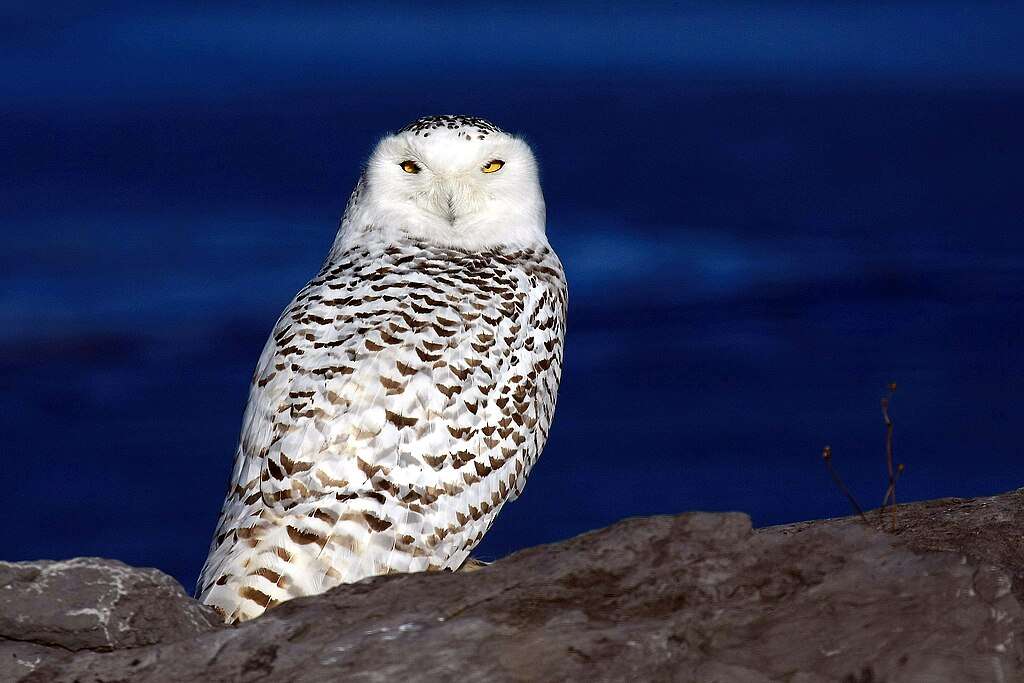
An unmistakable symbol of the Arctic, the Snowy Owl is the heaviest owl in North America. Its brilliant white plumage provides perfect camouflage on its arctic breeding grounds. In winter, during what are known as irruptions, these spectacular birds may travel far south into the northern and central US.
- Size: Large (20–27 inches).
- Range: Sporadic winter visitor across the northern US, extending as far south as the central states during irruptive years.
- Key Feature: Almost completely white, with varying amounts of black or brown barring, and striking yellow eyes.
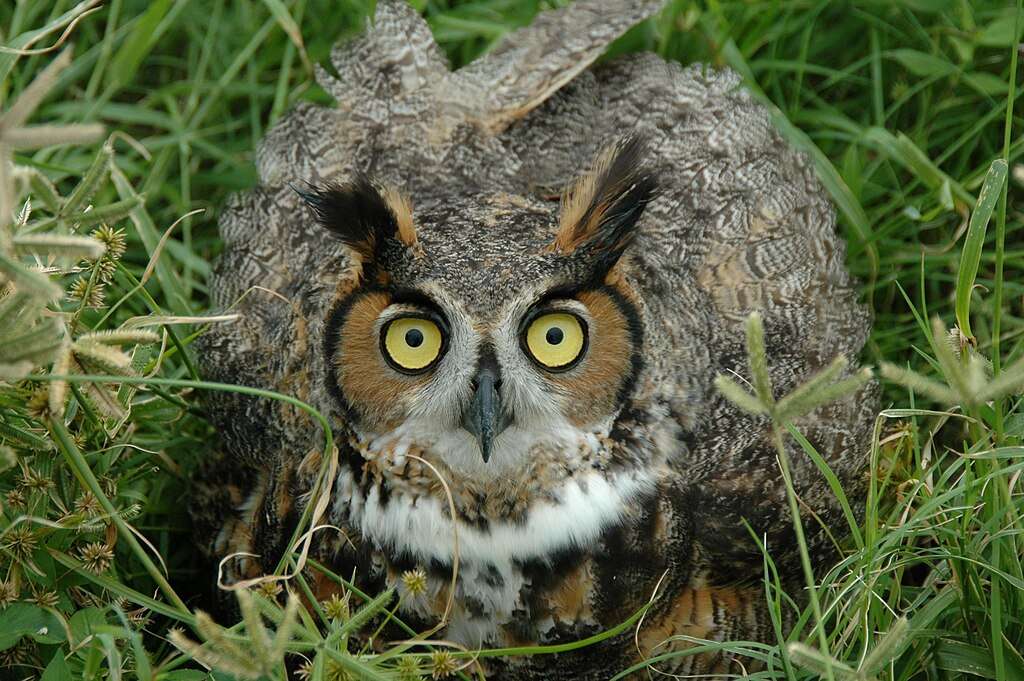
Great Horned Owl (Bubo virginianus)
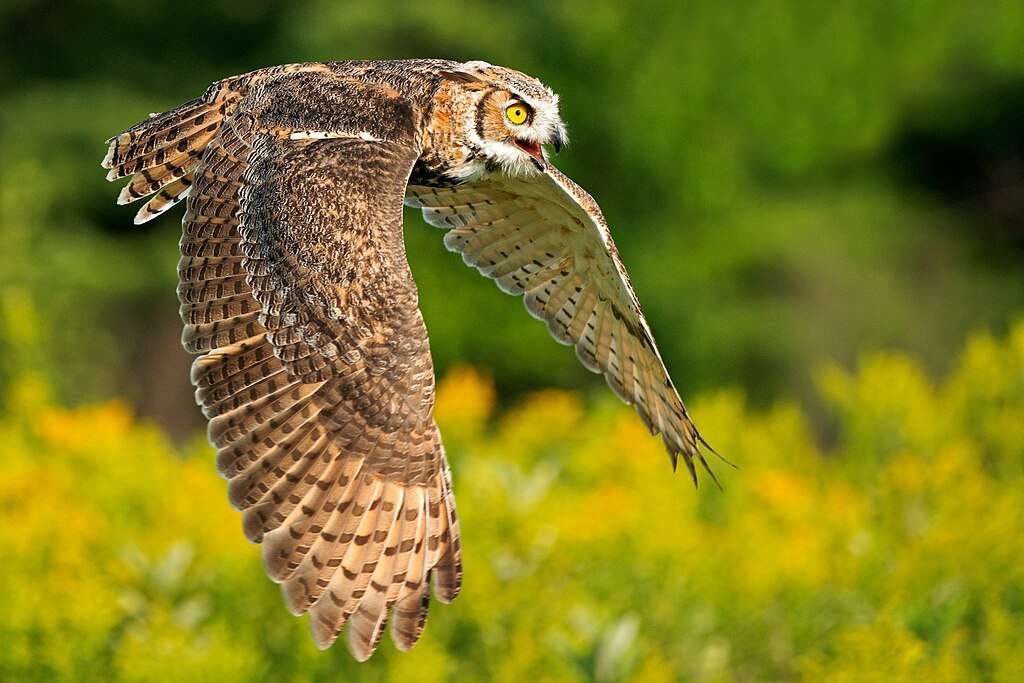
Perhaps the most widespread and recognized owl, the Great Horned Owl is a formidable, adaptable hunter found across the entire United States. Nicknamed the "tiger of the air," it hunts everything from small rodents to large birds (including other owls) and even skunks, which it is relatively immune to.
- Size: Large (18–25 inches).
- Range: Found everywhere from forests and deserts to suburban parks and city edges.
- Key Feature: Prominent, widely-spaced ear tufts (feather tufts, not actual ears) and a deep, distinctive five to eight hoot call.
The Woodlanders: Forest Owls
These species are typically found in forested environments, using tree cavities or dense canopy for nesting and camouflage.
Barred Owl (Strix varia)

Known for its unmistakable and friendly-sounding call—"Who cooks for you? Who cooks for you allll?"—the Barred Owl is a staple of old-growth forests and riparian (riverside) zones, primarily in the Eastern and Central US. Unlike many owls, it's often active before dusk.
- Size: Medium-large (19–21 inches).
- Range: Eastern half of the US, with populations rapidly expanding westward.
- Key Feature: Dark brown, almost black eyes, and a vertical streaked pattern on its belly and chest.
Spotted Owl (Strix occidentalis)
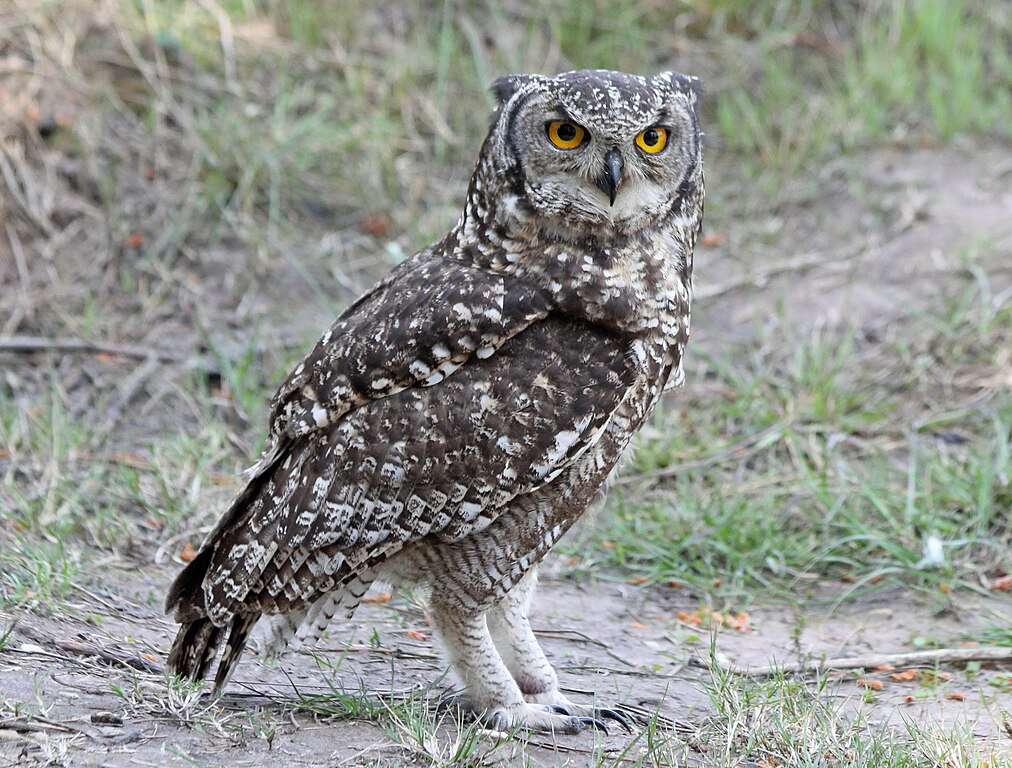
Closely related to the Barred Owl, the Spotted Owl is a medium-sized bird of the Western forests. Its conservation status is highly charged, as its reliance on large tracts of old-growth forest has made it a focal point of environmental debates in the Pacific Northwest.
- Size: Medium (16.5–19 inches).
- Range: Western mountainous forests, especially in California, Oregon, and Washington.
- Key Feature: Large, dark eyes and a heavily spotted chest and head.
American Barn Owl (Tyto alba)

The only US representative of the Tytonidae family, the Barn Owl is easily identified by its unique, heart-shaped facial disk and lack of ear tufts. They are essential to agricultural areas, where they prey on massive numbers of rodents.
- Size: Medium (14–16 inches).
- Range: Widespread throughout much of the lower 48 states, typically nesting in abandoned barns, silos, or tree cavities.
- Key Feature: Heart-shaped face, white or pale orange underparts, and a distinct rasping, hissing call rather than a hoot.
The Minis: Tiny & Secretive Owls
The US is home to some of the world's smallest owls, which are often the most difficult to spot due to their size and cryptic coloring.
Elf Owl (Micrathene whitneyi)
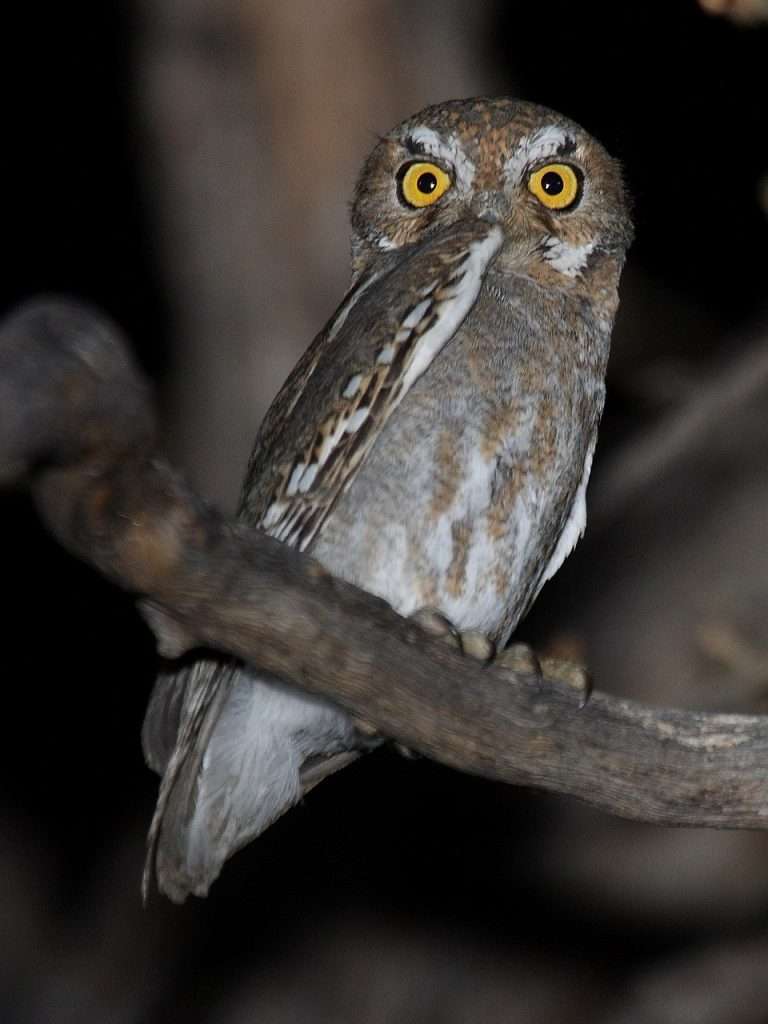
The title of the smallest owl in the world belongs to the Elf Owl. Measuring just 5 to 5.5 inches (about the size of a sparrow and weighing less than a golf ball), this tiny hunter lives in the desert.
- Size: Very small (5.1–5.5 inches).
- Range: Southwestern US, specifically Southern Arizona, New Mexico, and Texas.
- Key Feature: Nests in cavities excavated by woodpeckers in large cacti, such as saguaros, and has an insect-heavy diet.
Northern Saw-whet Owl (Aegolius acadicus)
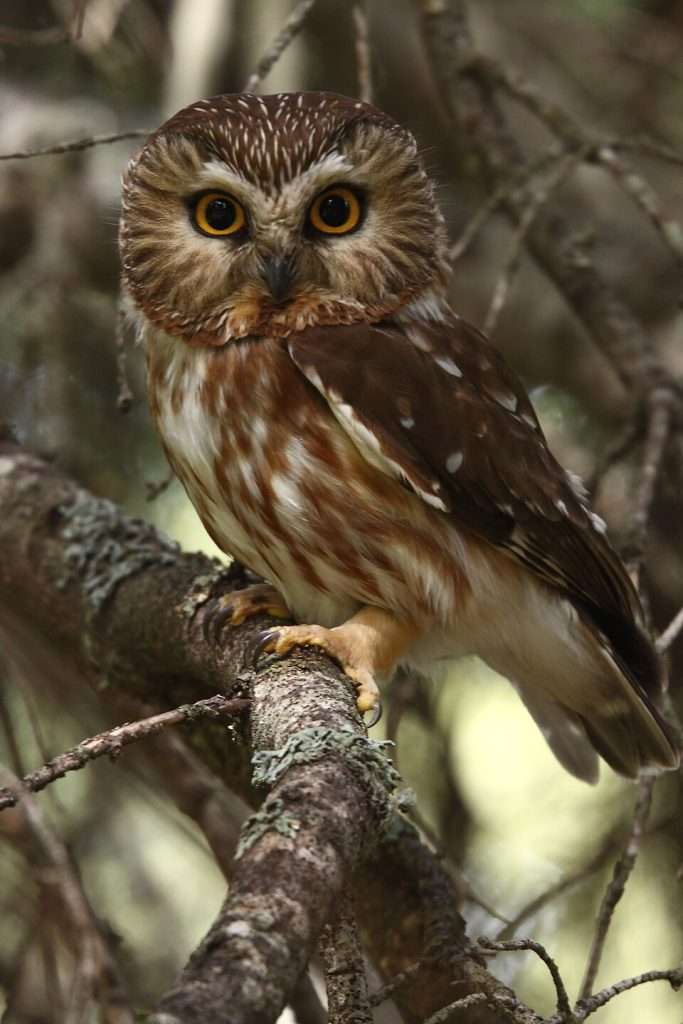
A favorite among birders, the Northern Saw-whet Owl is small (around 7–8.5 inches) and notoriously secretive, making it difficult to find outside of winter banding programs. Its name comes from its vocalization, which resembles the sound of a saw being sharpened on a whetstone.
- Size: Small (7–8.5 inches).
- Range: Coniferous and deciduous forests across the US and Canada.
- Key Feature: Large, round head with a white V-shaped brow.
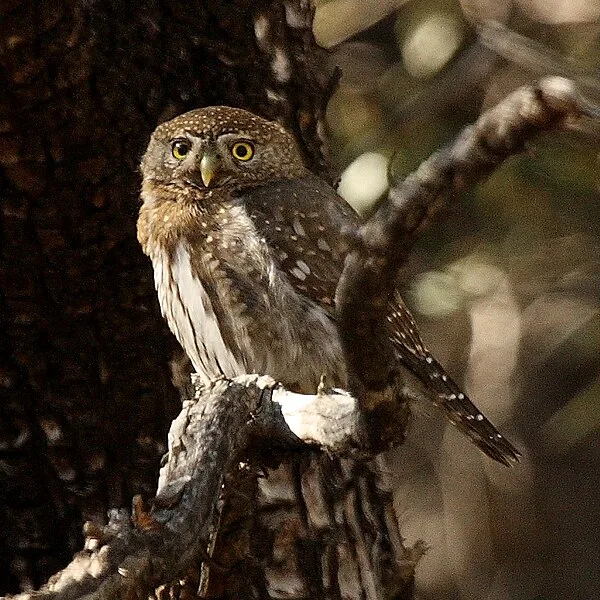
Pygmy-Owls (Glaucidium species)
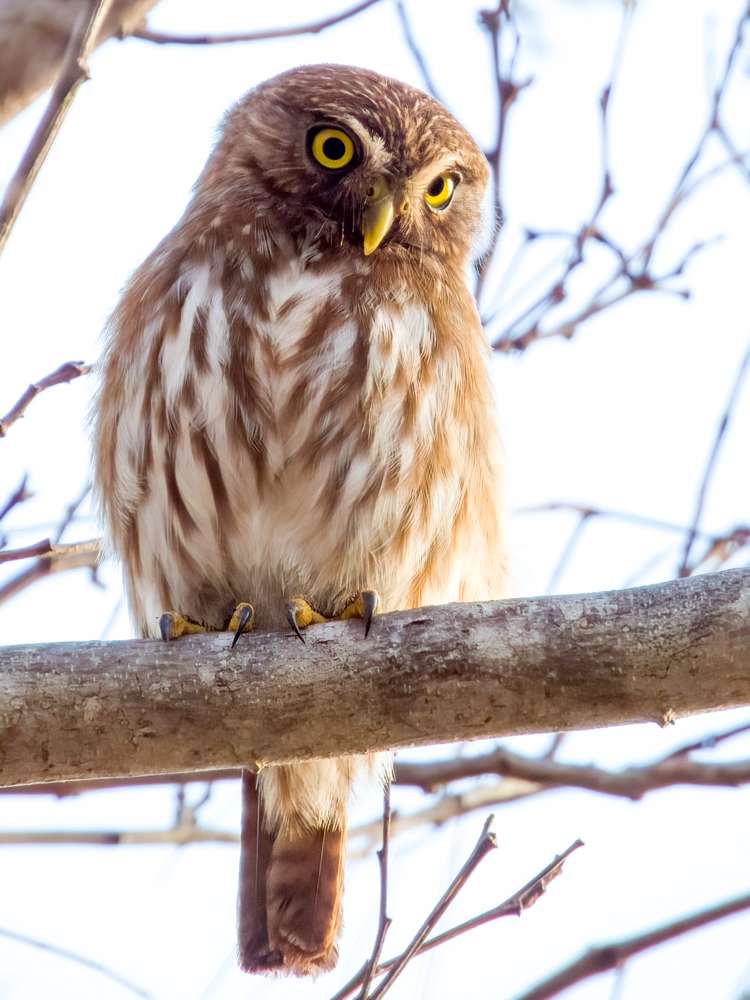
The Pygmy-Owl group includes the Northern Pygmy-Owl and the Ferruginous Pygmy-Owl. These are unique for being largely diurnal (active during the day), often perching openly at the top of trees and preying aggressively on small birds.
- Size: Very small (6–7 inches).
- Range: Western forests (Northern) and the far Southern US, primarily Arizona and Texas (Ferruginous).
- Key Feature: Fierce, sparrow-sized hunters; the Northern species has "false eyes" on the back of its head to deter predators.
The Eared Owls: Master Camouflagers
These owls are defined by their prominent ear tufts, which help them blend seamlessly into the bark of trees. Note that these "ears" are feather extensions used for camouflage and visual displays, not actual auditory organs.
Eastern Screech-Owl (Megascops asio) and Western Screech-Owl (Megascops kennicottii)
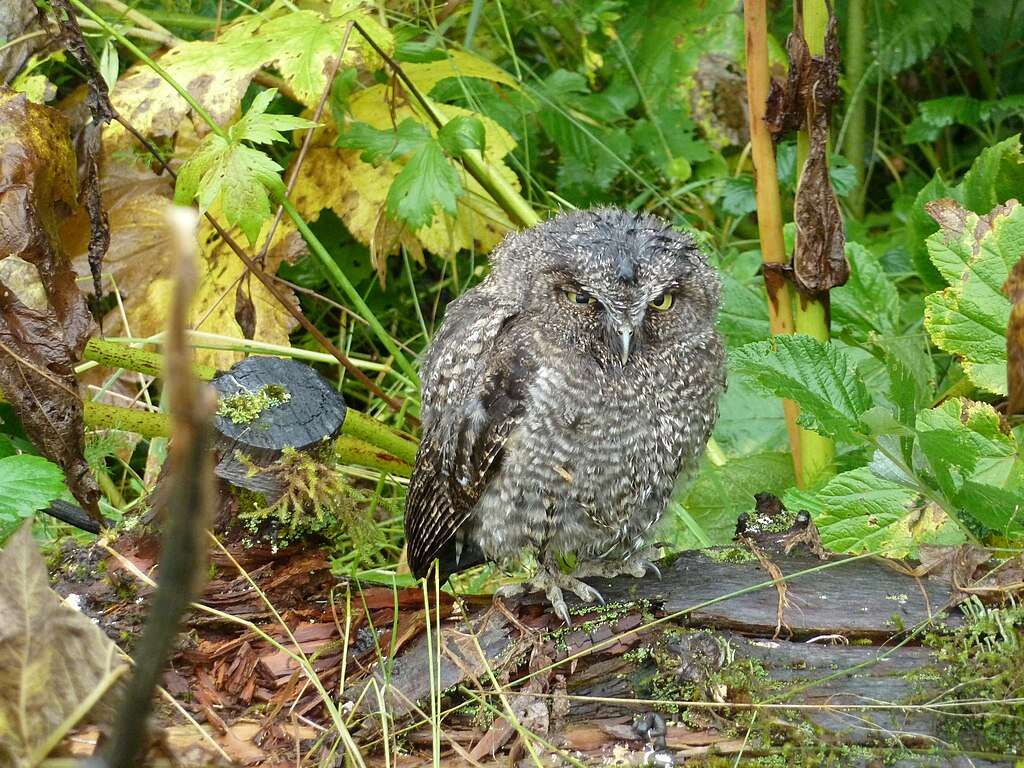
The screech-owls are small cavity nesters, often found in backyard woodlands and urban parks across their respective ranges. The Eastern species has two distinct color morphs—gray and rufous (reddish-brown)—making it a true master of disguise. Their calls are not a "screech" but rather a descending whinny or trill.
- Size: Small (8–9.5 inches).
- Range: Eastern Screech-Owl across the East and Central US; Western Screech-Owl west of the Rockies.
- Key Feature: Small, dense body with ear tufts.

Long-eared Owl (Asio otus)
A master of camouflage, the Long-eared Owl is slender and difficult to find, preferring to roost motionless in dense conifers. Its tufts are long and held close together, making it look like a piece of broken branch.
- Size: Medium (13–16 inches).
- Range: Widespread but patchy, preferring dense thickets and conifer groves.
- Key Feature: Extremely long, close-set ear tufts and a dark, vertical facial disc.
The Ground Dwellers and Boreal Visitors
Some US owls defy the classic image, hunting over open plains or making only sporadic visits from the far north.
Burrowing Owl (Athene cunicularia)
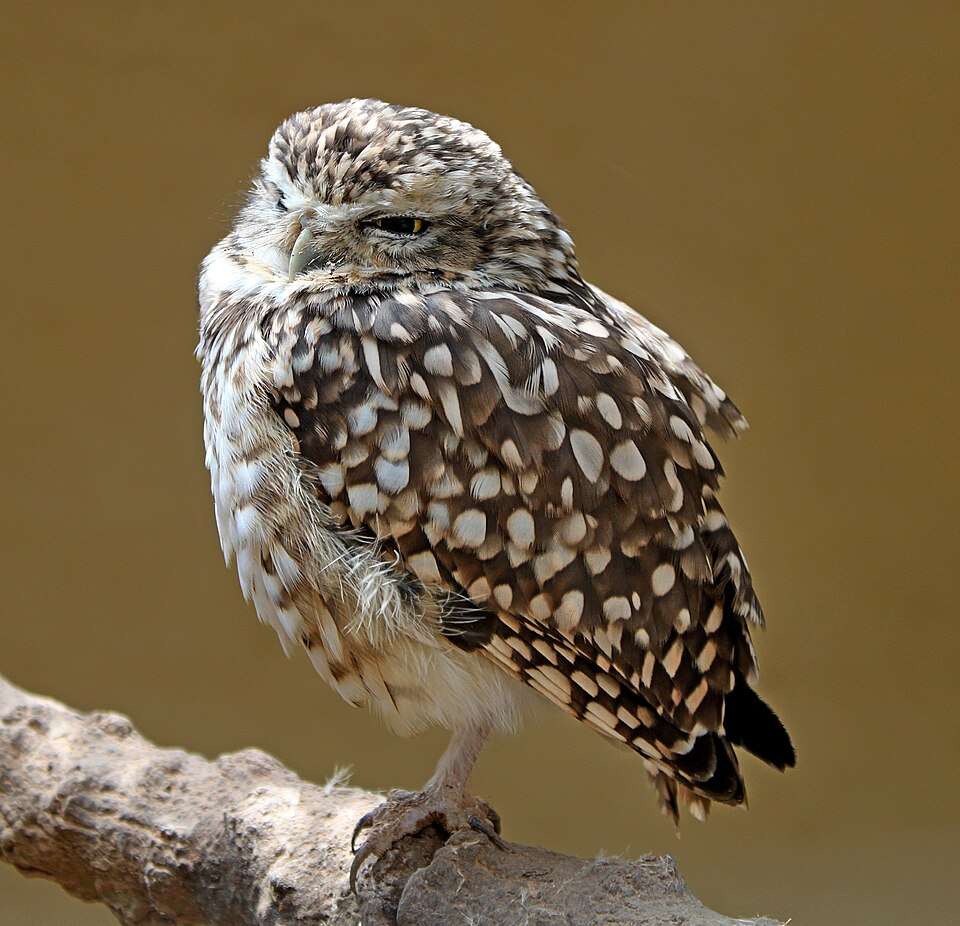
A true anomaly, the Burrowing Owl is a long-legged, largely diurnal owl that lives and nests underground, often utilizing burrows dug by prairie dogs, ground squirrels, or tortoises. It’s found in open grasslands, prairies, and desert habitats.
- Size: Small (9–11 inches).
- Range: Western US and Florida.
- Key Feature: Long legs, no ear tufts, and often seen standing on the ground near its burrow entrance.
Short-eared Owl (Asio flammeus)
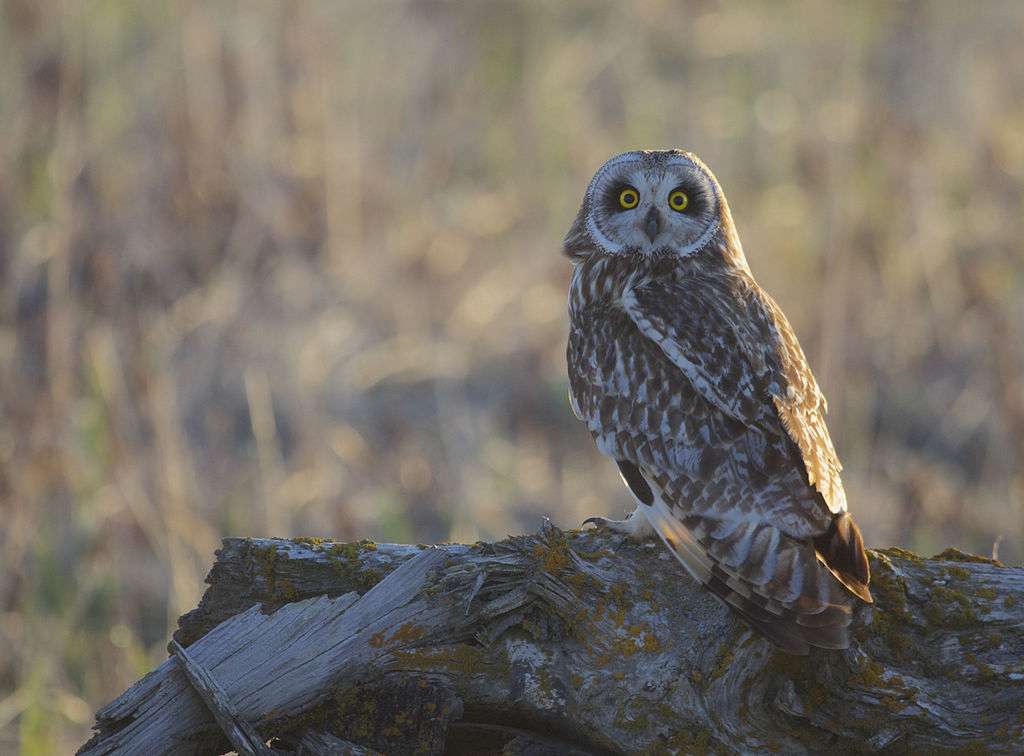
The Short-eared Owl is a medium-sized species that hunts over open fields, marshes, and grasslands. It is highly crepuscular (active at dawn and dusk) and nests directly on the ground.
- Size: Medium (15–17 inches).
- Range: Found globally, utilizing open country across most of the continental US during winter and migration.
- Key Feature: Small, barely visible ear tufts, a prominent facial disc, and a distinctive moth-like, erratic flight pattern while hunting.
Boreal Owl (Aegolius funereus)
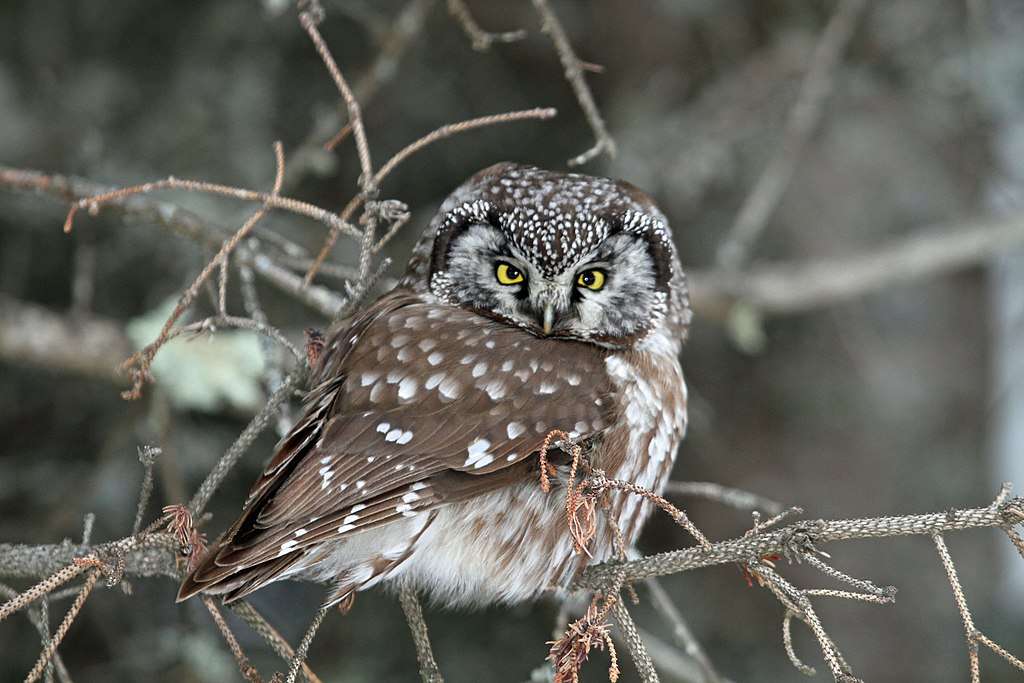
A small, northern relative of the Saw-whet, the Boreal Owl is a rare sight, mostly restricted to the dense boreal forests of Alaska, Canada, and the high-elevation forests of the Northern US. It's strictly nocturnal and primarily a cavity nester.
- Size: Small (8.5–12 inches).
- Range: Northern US, specifically the Great Lakes region and the northern Rocky Mountains.
- Key Feature: Black-rimmed facial disc and a relatively flat-topped head.
The Rare & Elusive
A few species are either extremely rare, have highly restricted ranges, or are only occasional visitors.
| Species | Size (Inches) | Primary US Range | Conservation Note |
|---|---|---|---|
| Northern Hawk Owl (Surnia ulula) | 14–17.5 | Far Northern US, Alaska | Has a long, hawk-like tail and hunts during the day; rare visitor from the north. |
| Whiskered Screech-Owl (Megascops trichopsis) | 6.3–7.5 | Extreme Southern Arizona/New Mexico | Smallest of the screech-owls, named for its longer facial feathers (whiskers). |
| Flammulated Owl (Psiloscops flammeolus) | 5.9–6.7 | Western Mountain Forests | Tiny, migratory owl, named for the subtle reddish (flammulated) patterns in its plumage. |
From the largest Great Gray Owl to the tiniest Elf Owl, the US ecosystem supports a breathtaking array of silent hunters. Their varied adaptations—long legs for prairie life, white feathers for the snow, and complex camouflage for the forest—highlight the magnificent specialization that makes owls the undisputed masters of the American night. The presence of such diversity is a powerful indicator of the health and breadth of the country's natural habitats.
