

The North American summer landscape is a canvas of green, but it is often punctuated by bursts of brilliant color and rich, whistling song that signal the arrival of one of the continent's most beloved migratory birds: the Oriole. These members of the Icteridae family—which also includes blackbirds, meadowlarks, and cowbirds—are celebrated for their vibrant, contrasting plumage, their intricate, woven nests, and their sweet, fluting calls. For U.S. birders, spotting an oriole is a quintessential summer thrill, a sign that the sun is high and the season is ripe.
While the genus Icterus boasts over 30 species across the New World, the United States is primarily home to a select, dazzling few, each occupying a distinct ecological niche and geographical range. From the common backyard visitor of the East to the desert specialist of the Southwest, these iconic orioles paint the nation with shades of deep orange, vibrant yellow, and rich chestnut.
The Great Divide: East Meets West
The story of the U.S. orioles is a tale of two coasts, dominated by two species that were, for a time, considered a single bird. The Baltimore Oriole (Icterus galbula) and the Bullock's Oriole (Icterus bullockiorum) are the archetypal New World orioles, split only by the invisible line of the Great Plains, where their ranges meet and hybridize.
1. The Eastern Icon: The Baltimore Oriole
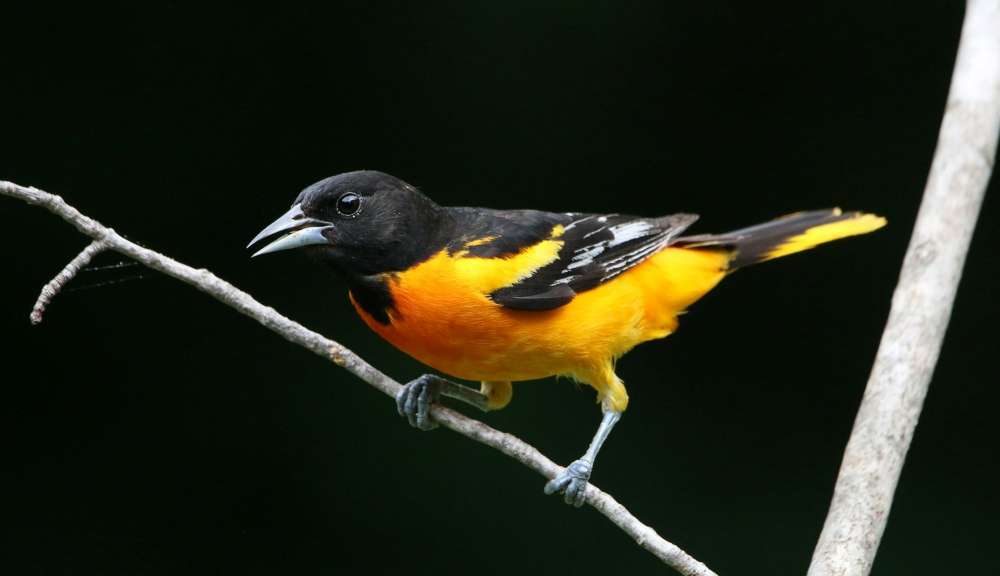
The Baltimore Oriole is, perhaps, the most famous of the group, a celebrated harbinger of spring in the eastern and central United States. Named for the family crest colors of the British Lord Baltimore, this bird is a stunning study in contrast: a rich, fiery orange undercarriage, rump, and shoulder patch, set against a solid jet-black head, back, and wings.
Range and Habitat:
The Baltimore Oriole's breeding range extends across the entire eastern half of the U.S. and into Canada, from the Great Plains eastward. Unlike many birds, it prefers open, fragmented woodlands, residential areas, and river edges with tall, mature deciduous trees like maples, cottonwoods, and elms. They are birds of the canopy, spending their time high among the leaves where they can forage for their primary diet of insects and caterpillars, including notorious pests like tent caterpillars and gypsy moth larvae.
Nesting and Migration:
The nest of the Baltimore Oriole is one of the true marvels of American ornithology. The female, using plant fibers, animal hair, and fine grasses, weaves a remarkable, sock-like pendulous nest. This intricate, hanging pouch is suspended from the slender tips of high, horizontal branches, making it a masterpiece of engineering that protects the clutch of eggs from climbing predators like snakes and squirrels.
As a long-distance Neotropical migrant, the Baltimore Oriole’s stay in the U.S. is relatively brief. They arrive in the U.S. in late April or May and begin their southern journey as early as late July, making the massive trek to their non-breeding grounds in Florida, the Caribbean, Central America, and northern South America.
2. The Western Counterpart: The Bullock's Oriole
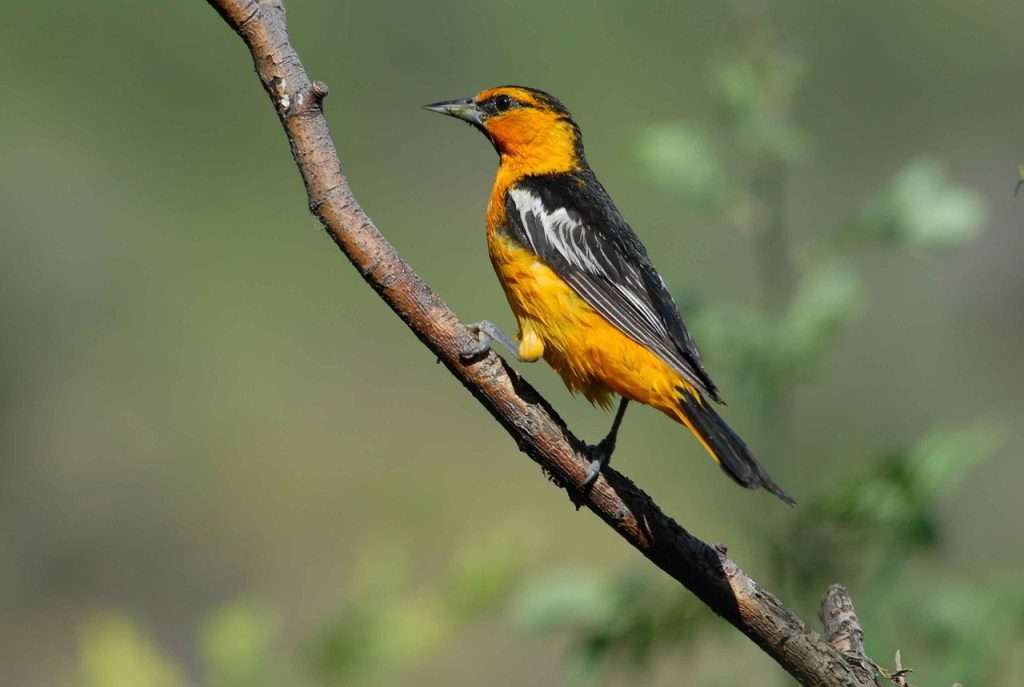
Across the Great Plains, the Baltimore Oriole gives way to its western relative, the Bullock’s Oriole. While sharing the same genus and a similar black-and-orange palette, the Bullock’s Oriole possesses its own distinct pattern, characterized by a flame-orange face and a prominent black line running through the eye, replacing the solid black hood of the Baltimore.
Range and Habitat:
The Bullock's Oriole is the dominant oriole of the western U.S., breeding from the Pacific Coast eastward to the Great Plains, and as far north as British Columbia. Like its eastern cousin, it is strongly tied to open woodlands, but its preference is for the riparian corridors—the strips of cottonwood, willow, and sycamore trees that line rivers and streams in the otherwise arid West. These moist, gallery forests provide a crucial oasis for nesting and foraging.
Ecology and Hybridization:
The Bullock's Oriole is an agile forager, often hanging upside-down from branches to glean insects. They are also highly opportunistic, readily consuming nectar from flowers (sometimes by piercing the base to steal the sugary reward) and accepting offerings of oranges and jelly from backyard feeders.
The point where the Bullock's and Baltimore Orioles’ ranges overlap—a hybridization zone stretching through the central Great Plains—is a fascinating subject of study. The two species interbreed freely, producing offspring with mixed plumage characteristics. This phenomenon led to them being temporarily classified as a single species, the "Northern Oriole," until genetic research confirmed they are, in fact, two distinct species.
The Other Stars: The Specialty Orioles
Beyond the two migratory "Northern Orioles," the U.S. is visited by several other captivating species, each occupying a specialized corner of the country.
3. The Juvenile-Hued Gem: The Orchard Oriole
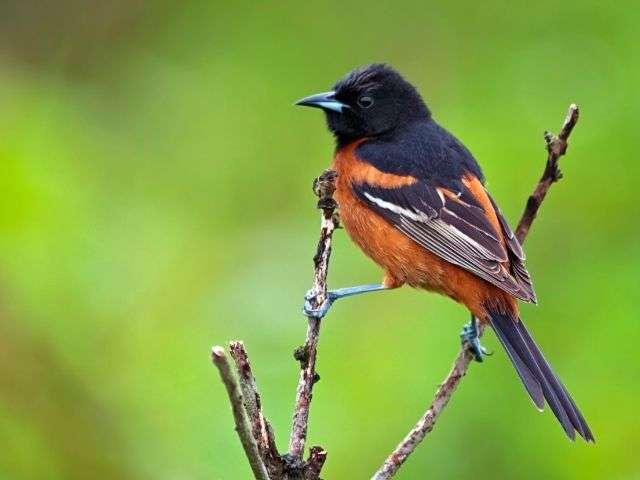
The Orchard Oriole (Icterus spurius) is the smallest of the North American orioles and is easily distinguished by its unique color. Instead of the fiery orange of the Baltimore and Bullock's, the adult male Orchard Oriole sports a deep, burnished chestnut or brownish-red on its underparts, shoulder, and rump, contrasting sharply with its black head, back, and wings. This richer, darker hue makes it look like an oriole that has been dipped in molasses.
Range and Characteristics:
The Orchard Oriole’s breeding range largely mirrors that of the Baltimore Oriole, inhabiting open deciduous woods, parks, and, true to its name, orchards, though it tends to prefer slightly younger, scrubbier growth.
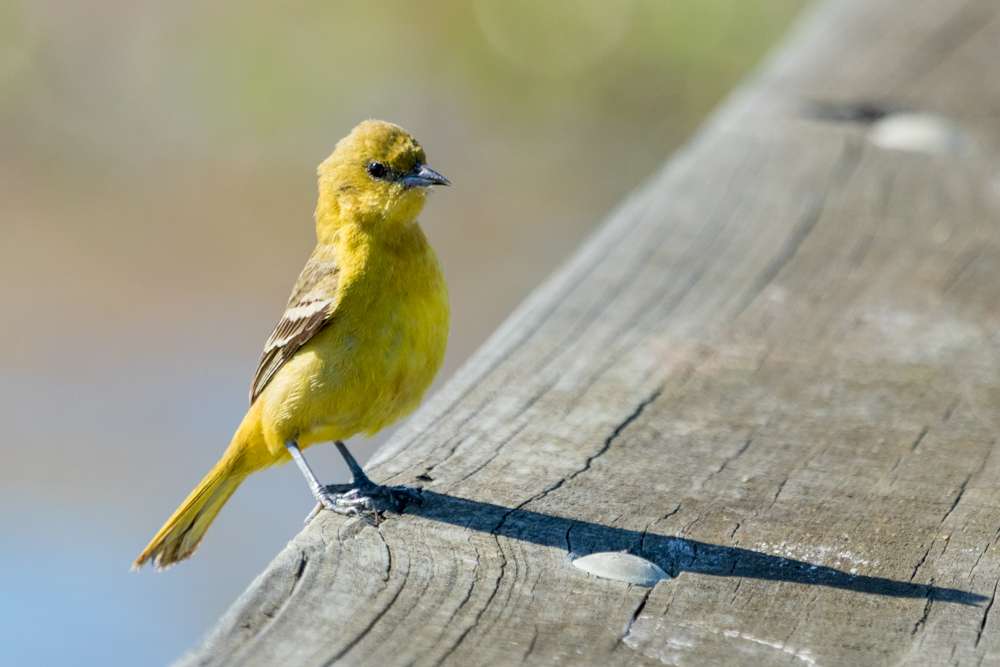
The species is also notable for the plumage of its young males. First-year males resemble the yellowish-green females but possess a black throat—a stage of plumage that can easily confuse new birders into mistaking them for a completely different species. The Orchard Oriole is an early migrant, often heading south to its wintering grounds in Central and South America by mid- to late-July, well before many other summer residents.
4. The Desert Specialist: Scott’s Oriole
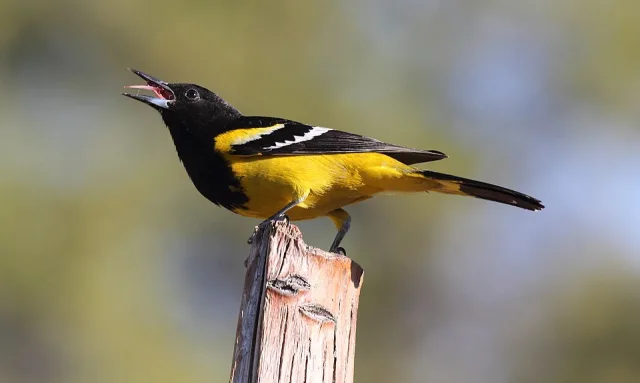
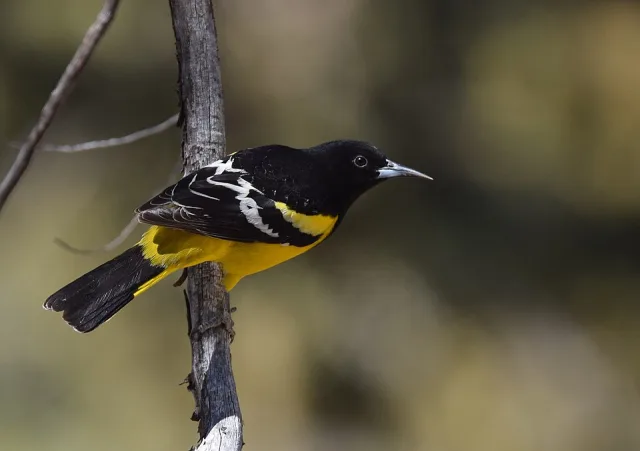
In the arid, often stark landscapes of the southwestern United States, the Scott's Oriole (Icterus parisorum) offers a brilliant splash of color. This species is named after Major General Winfield Scott and is a true specialist of the desert scrub and mountain foothills.
Range and Habitat:
The Scott's Oriole breeds across the Southwestern U.S., from southern California, through Arizona and New Mexico, and into western Texas. Its habitat is defined by drought-tolerant plants, primarily yucca and scattered juniper and desert scrub. The yucca plant is not just a food source; its tough fibers and protective, sword-like leaves are essential for nesting.
The adult male is perhaps the most striking of the U.S. orioles: a solid black hood, bib, and back, paired with a vibrant, glowing lemon-yellow undercarriage. Unlike the others, it carries no true orange. Its song—a slow, clear, musical whistle—is a sweet sound echoing through the canyons and desert washes.
5. The Southern Visitors: Hooded and Altamira Orioles
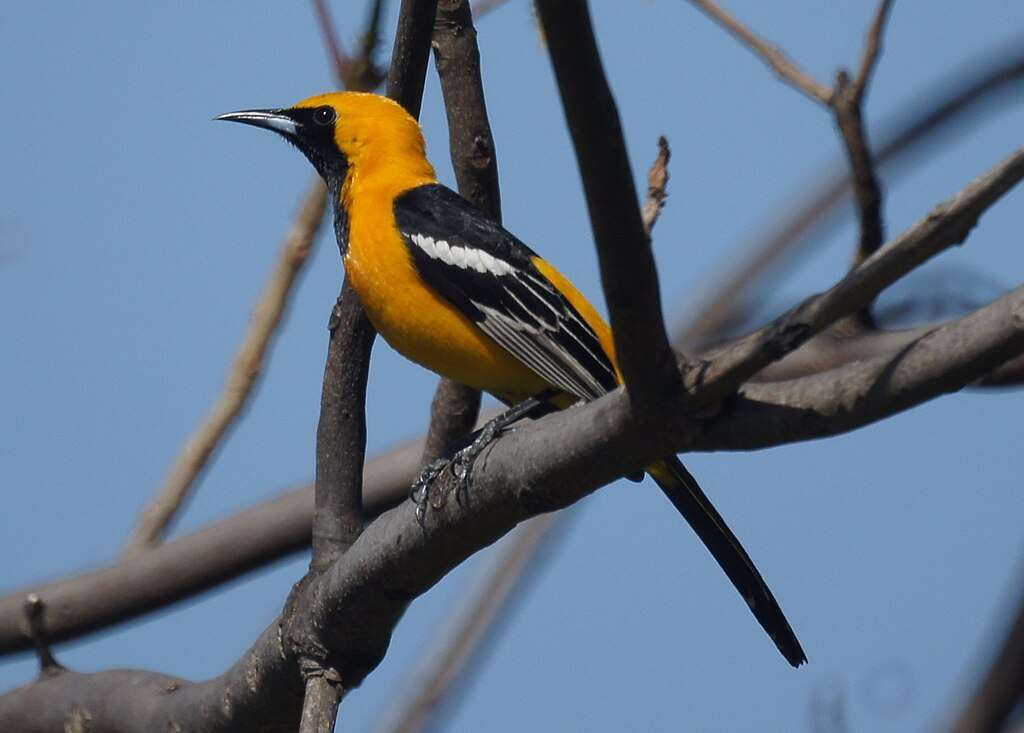
Rounding out the U.S. oriole diversity are species with ranges that just barely creep across the southern border, making them prized sightings for U.S. birders.
- Hooded Oriole (Icterus cucullatus): Primarily a resident of the Southwest, especially Southern California and Texas, this bird is famously tied to the introduction and spread of palm trees, where it often weaves its hanging nest beneath the fronds. The male has an orange-yellow "hood" and breast with a black bib.

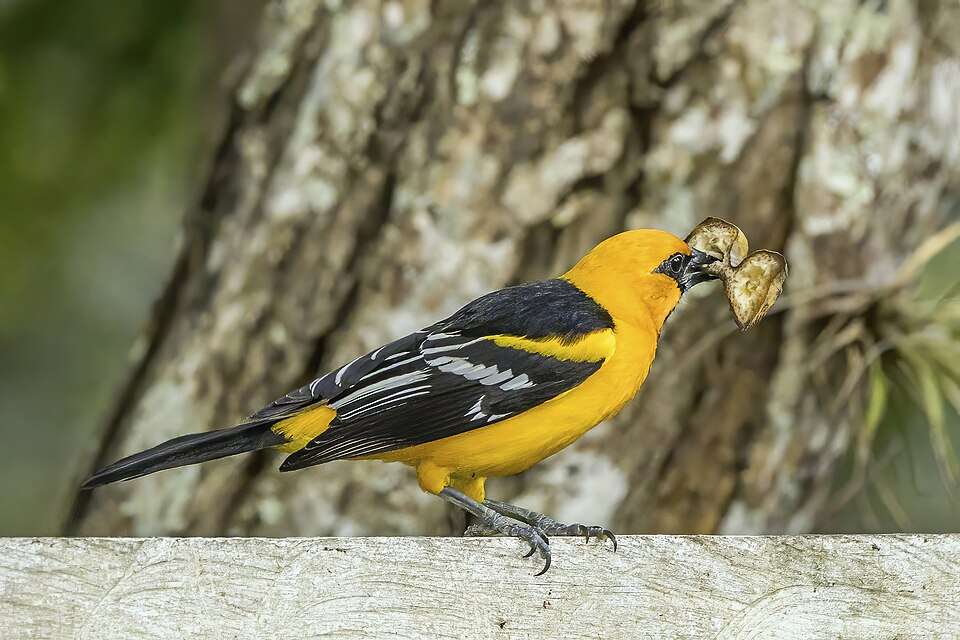
Altamira Oriole - Altamira Oriole (Icterus gularis): Found almost exclusively in the Lower Rio Grande Valley of Texas, this is the largest oriole in the U.S. The male is characterized by its deep, rich orange head and underparts, with a small black bib, and is famous for building the longest woven nest of any North American bird.
Attracting Orioles to the Backyard
Orioles have become favorite targets for backyard bird feeding, offering a delightful challenge for enthusiasts seeking to draw in these vibrant, elusive visitors. Unlike seed-eating finches or chickadees, orioles are primarily insectivores and frugivores, meaning they require a different approach.
The key to attracting orioles lies in sugary, high-energy foods and their favorite color: orange.
- Fruit: Halved or quartered oranges are the quintessential oriole lure. The birds are drawn to the color and the sweet pulp. Birders often secure orange halves on nails or specially designed oriole feeders.
- Jelly and Nectar: A small amount of grape jelly placed in a shallow dish is highly effective. The high sugar content provides the energy they need, particularly after long migratory flights. Orioles will also readily drink from hummingbird feeders, especially those with larger ports and perches, provided the nectar is plain sugar water (four parts water to one part sugar) without red dye.
- Water: A source of fresh, moving water, such as a bird bath with a dripper or mister, can be a magnet for orioles, especially during dry summer months.
- Habitat: Planting native, fruit-bearing trees and shrubs—such as mulberry, serviceberry, and chokecherry—is the best long-term strategy for providing natural food and nesting materials.
The presence of the oriole in the American summer is a reminder of the continent's incredible ecological connectivity. From the dense urban elms of a New England suburb to the remote yucca stands of the Chihuahuan Desert, these bright, whistling gems connect the diverse landscapes of the U.S. with the tropical rainforests of the south. They are a fleeting, brilliant flash of color, a true gift to those patient enough to listen for their sweet, fluting song in the summer canopy.
