

The phenomenon of vagrancy—when a bird appears far outside its normal migratory or resident range—is a natural, yet often perplexing, aspect of avian life. For birders, a vagrant is a "mega-rarity," a reason to travel thousands of miles for a single sighting. For science, it’s a crucial indicator of navigational error, demographic pressure, or, increasingly, the disruptive forces of climate change.
The last decade has seen a remarkable increase in both the frequency and the sheer distance of these navigational mishaps. Extreme weather events, shifting ocean currents, and population booms and busts have propelled numerous birds onto world stages where they are recognized as the most lost travelers on the planet.
The Transoceanic Drifters: Crossing the Atlantic and Pacific
The most geographically significant vagrants are those that successfully cross the world's largest oceans, a feat often accomplished by migrating shorebirds and stout-winged passerines (songbirds) caught in massive weather systems.
1. North American Birds in Europe (and Vice-Versa)
The transatlantic crossing is a regular feature of vagrancy, but the last decade has produced records for particularly sensitive or long-distance species:
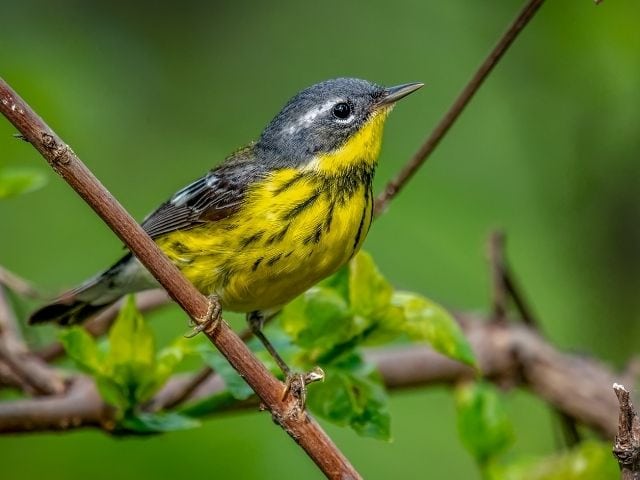
- North American Passerines in the UK and Ireland: Autumn sees a consistent 'fall' of American warblers (such as Magnolia, Blackburnian, and Canada Warblers), vireos, and thrushes in western Europe. These birds, breeding in eastern North America, are typically pushed off course by strong westerly winds and low-pressure systems over the Atlantic, effectively reverse-migrating across the ocean. While not single records, the influxes of multiple species, sometimes dozens at a time, have become a notable feature of the last ten years, signaling highly unusual Atlantic weather patterns.

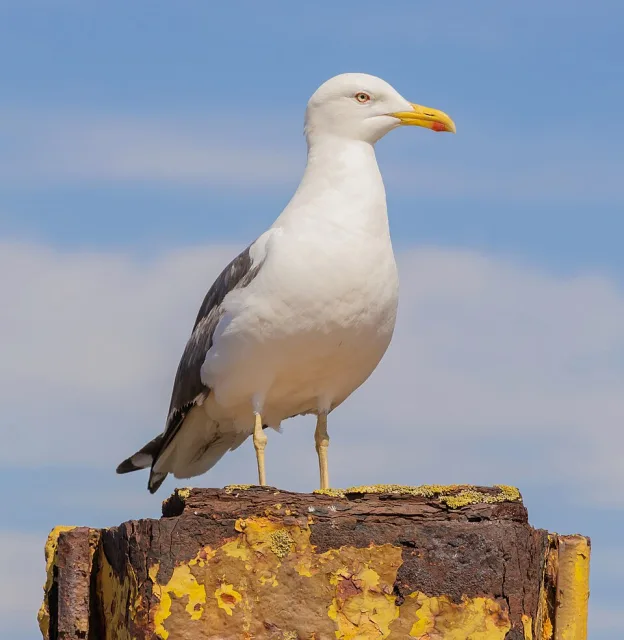
Magnolia Warbler - European Gulls in North America: The Atlantic divide is crossed in both directions. Studies have noted an increase in transatlantic vagrancy for gulls, with species like the Lesser Black-backed Gull showing successful long-distance dispersal. This rise has been correlated with increased population sizes in the source areas, suggesting that population pressure may drive birds to explore new non-breeding or breeding territories.

Lesser Black-backed Gull
2. The Asian-American Exchange
The Bering Strait acts as a funnel and a barrier, making the Aleutian and Pribilof Islands (especially Attu and St. Paul) in Alaska the world capital of Asian vagrants.
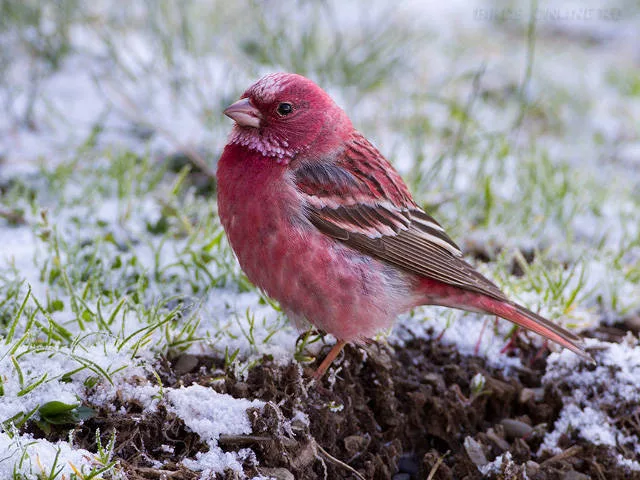
- Pallas's Rosefinch (St. Paul Island, Alaska): In 2015, the discovery of a Pallas's Rosefinch in Alaska represented the fourth record for North America and one of the most unexpected, hailing from central Asia (Siberia and Northeast China). Such a journey, estimated to be nearly 4,000 miles off-course, highlights the staggering scale of misorientation that occurs in long-distance migrants.
Pallas's Rosefinch - Narcissus Flycatcher (Western Australia): Traveling in the opposite direction, a Narcissus Flycatcher, native to East Asia (Korea, Japan), was spotted in 2022 at a remote roadhouse near Port Hedland, Western Australia. This represents a colossal journey far south of its usual wintering grounds in Southeast Asia, indicative of a severe navigational blunder.

Narcissus Flycatcher

The Longest Detours: Crossing Latitudes
Some of the most spectacular vagrants are not those crossing oceans, but those that overshoot their migration routes by thousands of miles of latitude, often ending up in polar or deep Southern Hemisphere locations.
1. The Antarctic Travelers
Antarctica, the most remote and climatically extreme continent, regularly hosts vagrants—mostly shorebirds and petrels. The records from the last decade, however, emphasize the astonishing resilience of smaller, less-equipped species:
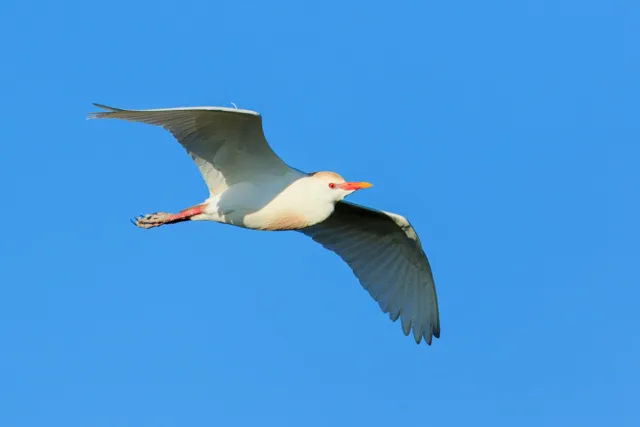
- Cattle Egret (Antarctica): The Cattle Egret is a highly successful colonizer globally, often following livestock. Nevertheless, its appearance as one of the most frequently observed vagrant species in the Antarctic region (including the South Shetland Islands), is a truly off-course phenomenon. While their large global population contributes to these rare sightings, finding a bird known for following cattle near penguin colonies highlights an extreme displacement event, often attributed to severe storms.
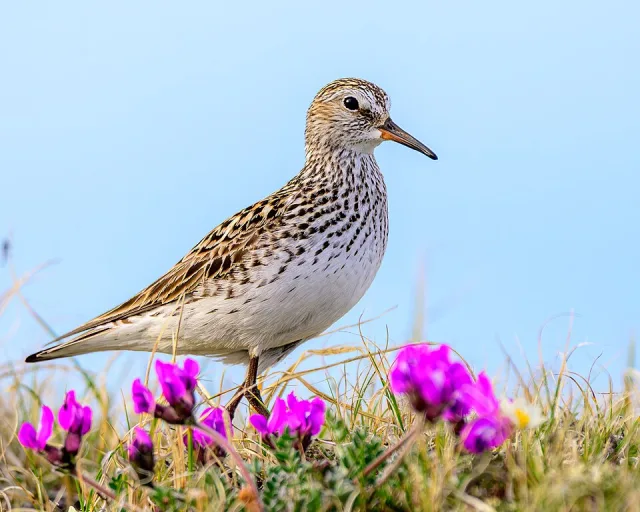
- White-rumped Sandpiper (Antarctica): This long-distance boreal migrant, which normally winters in southern South America, is one of the species with the most vagrant records in Antarctica. While closer to its normal range than the egret, being found foraging near defrosted lakes on Elephant Island underscores a significant southern overshoot, likely storm-assisted.

White-rumped Sandpiper
2. The Great Overshoots and Reverse Migrations
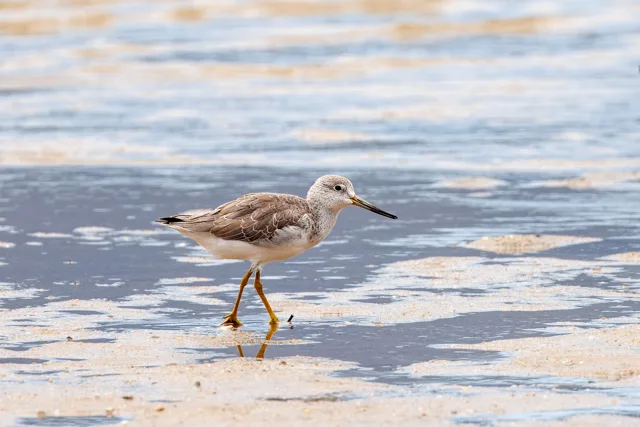
- Nordmann's Greenshank (Cairns, Australia): In 2021, a single, lone Nordmann's Greenshank, known affectionately as 'Nordy,' was spotted in Cairns, Queensland. This species breeds in Russia and typically migrates to Southeast Asia. Its appearance in far northeastern Australia meant it was dramatically off course, a concern given that the species is globally very rare, with little more than 1,000 left in the wild.
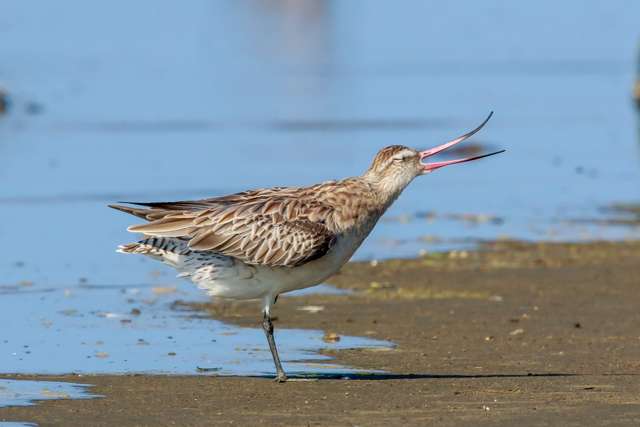
Nordmann's Greenshank (Nordy) - Bar-Tailed Godwit (Alaska to Tasmania): Though an extreme record of normal migration rather than vagrancy in the strictest sense, one individual, a young Bar-Tailed Godwit, broke a world record in October 2022 by flying 8,426 miles non-stop from Alaska to Ansons Bay, Tasmania, in just 11 days. While this is its expected winter destination, the immense, non-stop nature of the journey—far longer than any other documented flight—shows the navigational capability (and potential for slight miscalculation) that enables true vagrancy.
- Limpkin (Niagara Falls, New York): An American vagrant that caused a stir in 2022 was the Limpkin found near Niagara Falls. Typically a resident of the deep southeastern swamps of the U.S. (Florida, Georgia), its presence in upstate New York represented an unprecedented northward expansion for a bird with relatively limited flight ability, highlighting a profound range shift or extreme overshoot.
Limpkin

The Changing Face of Vagrancy
The increasing number and geographical extremity of vagrant records worldwide are leading researchers to consider forces beyond simple navigational error.
- Climate Change and Storm Systems: Climate change is creating more volatile weather, including stronger and more frequent storms. These extreme weather systems are highly effective at displacing birds far from their intended routes, particularly those making long oceanic crossings, which accounts for many of the transatlantic and Antarctic records.
- Habitat Loss and Population Pressure: For species whose populations are increasing or whose traditional habitats are shrinking (like the Ibis in Australia, or certain gulls), birds may be forced to explore new, extra-limital areas.
- New Migration Routes: A recent study on an Asian songbird suggested it was establishing a new migration route due to habitat loss, indicating that "off-course" may, for some, become the "new course" over time.
The most off-course birds of the last decade serve as much more than a checklist item for avid birders; they are living proof of the incredible distances birds can travel and, perhaps more significantly, a measurable indicator of the immense ecological disruption currently reshaping the world’s avifauna.
