
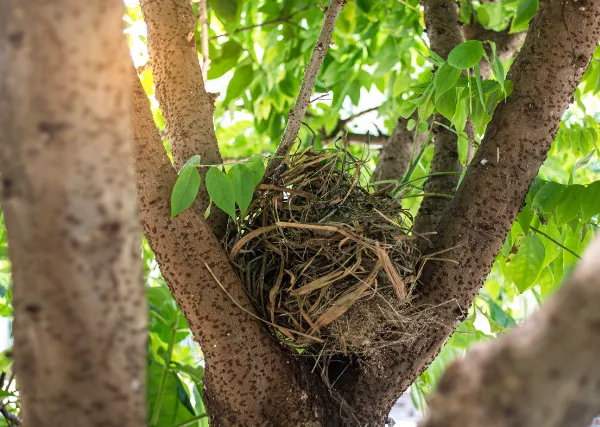
In the United States, the variety of bird nests showcases an astonishing range of avian ingenuity. From monumental stick structures that defy gravity to tiny, camouflaged cups barely larger than a coin, these homes are perfect, engineered responses to the size and survival needs of their occupants. The sheer diversity in scale, material, and placement makes the U.S. avian landscape a natural laboratory for studying architectural extremes.
The Biggest: Feathered Fortresses and Monumental Mansions
The largest nests in the U.S. are built by powerful, long-lived raptors that practice iterative construction—returning to the same site annually to reinforce and expand the structure, allowing them to reach immense proportions.
The Bald Eagle's Aerie
The undisputed heavyweight champion of U.S. nest builders is the Bald Eagle (Haliaeetus leucocephalus). Their nests, known as aeries, are massive platform structures of interwoven sticks built high in tall trees near water.
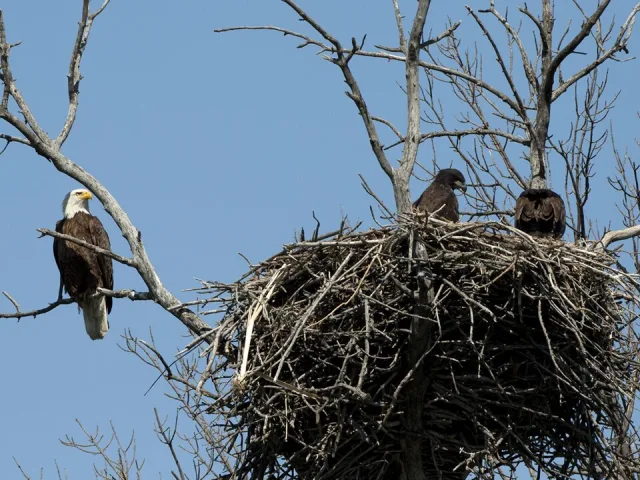
- Average Size: A typical active Bald Eagle nest is around 5 to 6 feet wide and 3 feet deep.
- The Record: The largest bird's nest ever recorded belonged to a pair of Bald Eagles near St. Petersburg, Florida. When examined in 1963, it measured an astonishing 9.5 feet (2.9 meters) wide, 20 feet (6 meters) deep, and was estimated to weigh more than 4,400 pounds (2 tonnes). This colossal size was the result of continuous material addition over decades.
- Engineering: The large sticks are used as structural supports and beams, which are then reinforced with grasses, mosses, and soft materials for the inner cup. The sheer volume provides thermal mass, offering stable insulation against both extreme cold and heat.
The Great Blue Heron's Colony
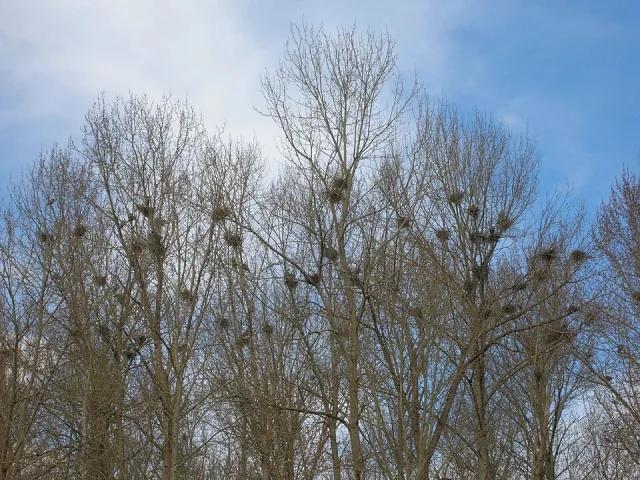
While individual heron nests are large, shallow platforms, their power lies in numbers. Great Blue Herons (Ardea herodias) often nest colonially in tall trees, creating rookeries that collectively form a massive, interwoven architectural complex. The cumulative weight and structural impact of dozens of large, stick nests clustered in a stand of trees highlight another form of "biggest" bird architecture.
The Accidental Empire: A Profile of the Ubiquitous House Finch
The Smallest: Miniature Marvels of Material Science
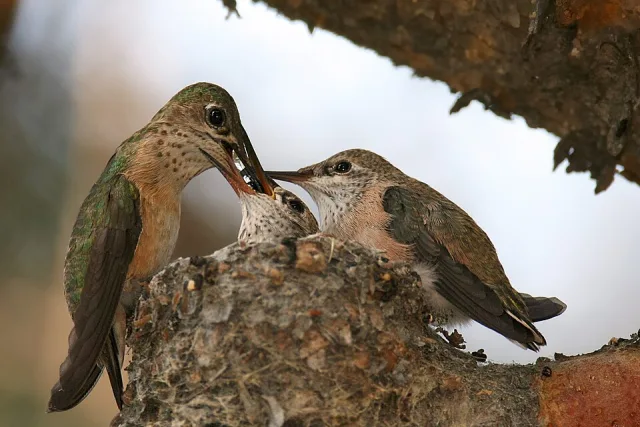
At the opposite end of the spectrum are the nests of the hummingbirds, tiny cups that represent the ultimate in material efficiency, held together by one of nature's strongest fibers.
The Calliope Hummingbird's Cup
The Calliope Hummingbird (Selasphorus calliope) is the smallest bird species native to the United States and Canada, and its nest is appropriately minuscule.
- Dimensions: The Calliope's nest is a tiny cup, typically measuring about 1.5 inches (3.8 cm) in diameter. It is barely large enough to hold the female and her two pea-sized eggs.
- Materials: These tiny architects are masters of biological composite materials. They use fine plant down, soft feather fluff, and bits of moss, all bound together by the extraordinary tensile strength of spider silk.
- Adaptive Design: The use of spider silk allows the nest to be elastic; as the nestlings grow and push against the walls, the silk stretches, accommodating the expanding size of the family without tearing the structure apart. This flexible engineering is essential for a nest that must house growing young for several weeks.
- Camouflage: Females often place their nests high on coniferous branches and decorate the exterior with lichen and bark chips to perfectly camouflage the structure, making it look like a natural tree knot or bud.
The Oddest: Found Objects, Extreme Locations, and Strange Materials
The "oddest" nests are those that utilize unusual materials, defy conventional placement, or leverage unique geological features for protection.
A. The Great Crested Flycatcher's Shed Skin
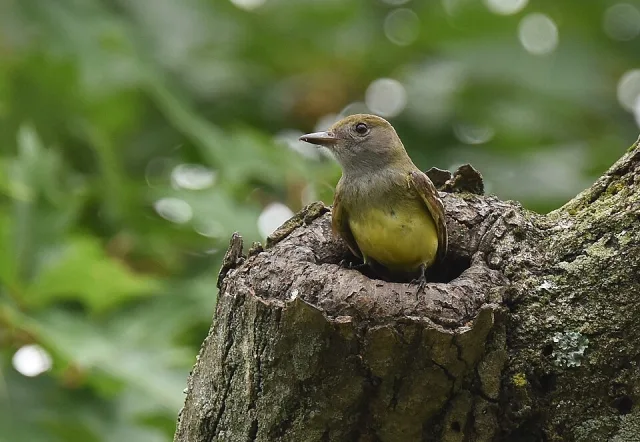
The Great Crested Flycatcher (Myiarchus crinitus) is a common cavity nester across the eastern U.S., but its choice of interior décor is bizarre.
- The Material: This bird has a peculiar, highly specific habit of weaving shed snakeskins—the sloughed-off outer layer of non-venomous snakes—into the lining of its nest.
- Purpose: The exact reason is debated, but the prevailing theory suggests the skin serves as a deterrent to potential predators like squirrels, which may mistake the presence of the shed skin for the presence of a live snake, scaring them away from the nest cavity.
- Placement: Flycatchers will nest in natural tree cavities, old woodpecker holes, or even human-made nest boxes, but the dangling, shimmering snakeskin is a unique architectural signature.
B. The Canyon Wren's Masonry
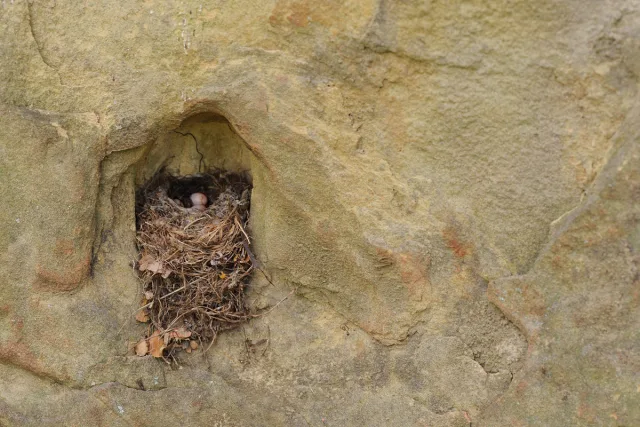
The Canyon Wren (Catherpes mexicanus) is found throughout the arid and rocky canyons of the Western and Southwestern U.S., and its nest mirrors its austere habitat.
- The Architecture: The wren builds its nest deep within crevices, under ledges, or in small caves on vertical rock faces. The nest is a bulky cup made of sticks and grass, but the oddity is the use of small pebbles or small, flat stones cemented into the base or exterior walls.
- Engineering: This use of stone acts as a natural ballast or foundation, providing stability on the uneven, narrow ledges where the nest is situated. It also likely helps with drainage and insulation against the cold rock walls.
C. The Say's Phoebe and Synthetic Materials
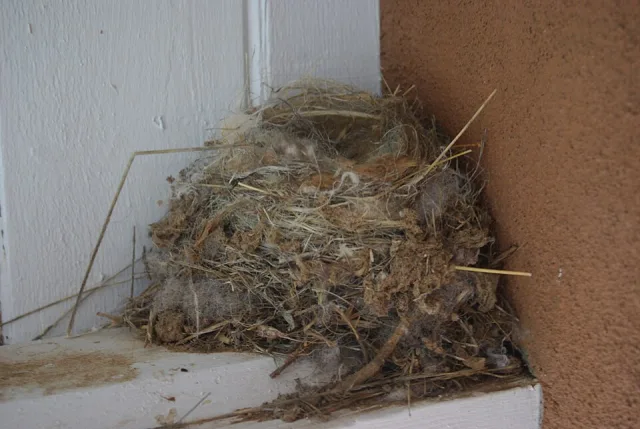
While most birds use natural materials, the Say's Phoebe (Sayornis saya), a flycatcher of the Western U.S., often shows a willingness to adopt materials from the human environment.
- The Oddity: The Phoebe, known for building sturdy nests of mud, moss, and hair under bridges or on building ledges, frequently incorporates man-made materials into its structures. This can include plastic strips, dryer lint, aluminum foil, or twine.
- Adaptation: This highlights avian behavioral plasticity—the ability to utilize readily available synthetic materials to fulfill a basic need for structure and binding, even if the long-term ecological consequences of using plastics are concerning.
Wrapping Up
The world of bird nests, from the smallest gem-like cups to the largest, multi-ton aeries, reveals a profound truth: the act of nesting is a sophisticated, genetically programmed feat of natural engineering. The sheer diversity in architecture—the elastic, camouflaged perfection of the Calliope Hummingbird nest, the rigid, massive beams of the Bald Eagle platform, and the bizarre, snake-skin lined cavities of the Great Crested Flycatcher—underscores a continuous evolutionary process. Every stick, piece of mud, and strand of spider silk is placed to solve complex survival problems like structural load, thermal regulation, and predator defense. The engineering behind these structures is so precise that it continues to inspire human fields like bio-mimicry. Ultimately, these feathered fortresses stand as tangible proof that the greatest architects in the U.S. landscape are the wild birds themselves, ensuring the survival of their species with resourcefulness that is both ancient and astonishingly modern.
