

To encounter the Northern Mockingbird (Mimus polyglottos) is to meet a feathered personality overflowing with song, intelligence, and an aggressive territorial defense. Its very name, which translates to "many-tongued mimic," is a perfect testament to its dazzling and seemingly endless vocal repertoire. More than just a songbird, the mockingbird is a permanent resident throughout much of its North American range, a fierce backyard sentry, and a bird whose character and adaptability have cemented its place in both nature and American culture.
A Study in Gray: Physical Characteristics
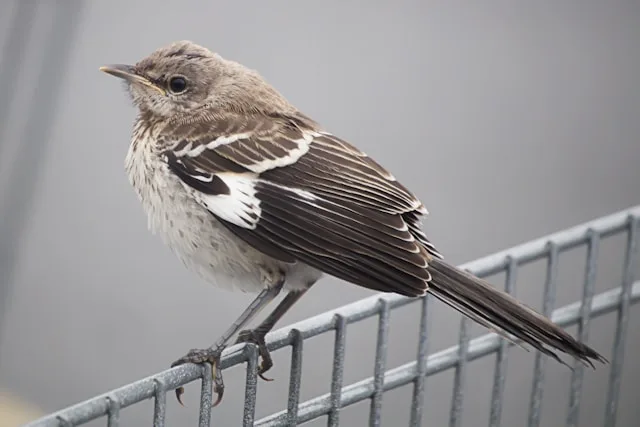
The Northern Mockingbird is a medium-sized songbird, roughly the size of an American Robin, measuring between 8 to 10 inches in length. Its plumage is generally an unassuming, slender, grayish-brown above with a paler, white or buff underside.
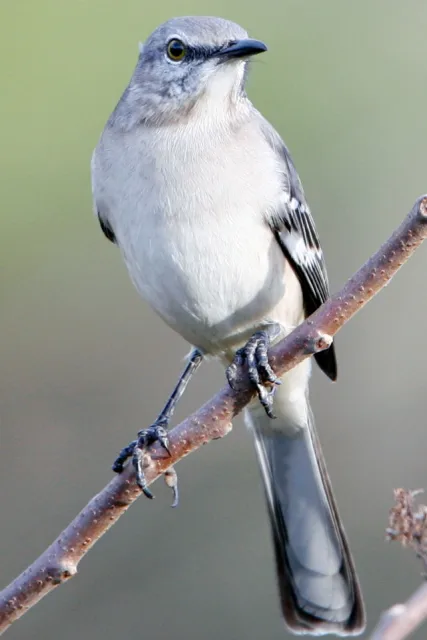
While its body color is modest, its flight is anything but. The bird possesses long legs, a long tail, and, most notably, dramatic white patches on its wings and outer tail feathers. These markings are crucial visual cues, especially during its famous "wing-flashing" display. When foraging on the ground, the mockingbird will often run, stop, and abruptly flash its wings in jerky, intermediate steps, revealing the large white patches. The purpose of this display is debated: some theorize it is meant to startle insects into movement for easier capture, while others suggest it is a form of social signal or courtship display.
The mockingbird is a non-migratory, year-round resident across most of its range, which extends from southeastern Canada through the entire continental United States, Mexico, and the Greater Antilles. Its ability to adapt to human-dominated environments—parks, gardens, farms, and suburban lawns—has allowed its population to remain extensive and widespread.
The King of Song: Vocal Prowess
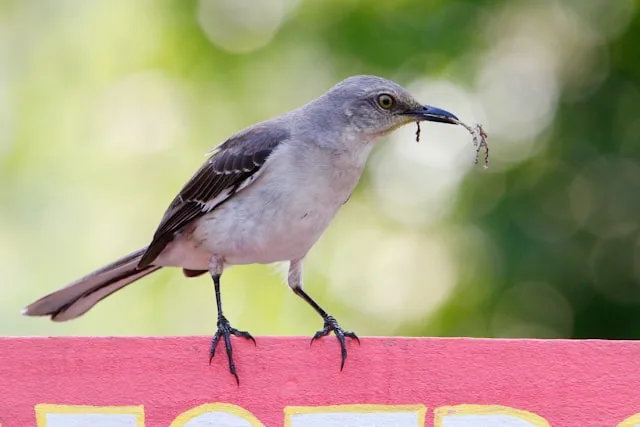
The single greatest defining feature of the Northern Mockingbird is its astonishing vocal ability. Males, in particular, are incessant singers who can be heard year-round, often singing from high, exposed perches like rooftops, utility lines, or treetop branches.
The mockingbird's song is a continuous series of musical phrases, each typically repeated three to five times before transitioning seamlessly to the next. The repetition is the key to identifying the Mimus polyglottos; while many other songbirds mimic sounds, the mockingbird's unique delivery—repeating each phrase multiple times—sets it apart.
Its repertoire is vast, encompassing the songs and calls of dozens, and potentially up to 200 different bird species. Furthermore, it is a master imitator of non-avian sounds, effortlessly weaving in the squawk of a blue jay, the whistle of a chickadee, the bark of a dog, or even the whir of a creaky gate or a car alarm. The complexity and variety of a male's song repertoire are believed to correlate directly with its age, experience, and fitness, making it a critical factor in attracting a mate. Unmated males are the most persistent singers and are often the ones heard singing late into the night, especially under a full moon, a tireless vocal display to advertise their availability and quality.

The Omnivorous Opportunist: Diet and Foraging
The mockingbird is an omnivore, with a diet that shifts seasonally to accommodate food availability. In the spring and summer, its diet is heavily reliant on arthropods and insects, which are essential for feeding its young. It aggressively hunts beetles, ants, wasps, grasshoppers, caterpillars, and even small vertebrates like lizards.
Its foraging technique is active and aggressive; the bird is frequently seen walking and running across open lawns, hopping, lunging, and snatching prey from the ground.
In the fall and winter, the diet switches dramatically to a reliance on fruits and berries. Mockingbirds are highly fond of wild and cultivated fruits from plants like holly, ivy, elderberry, and the berries of the multiflora rose. They are also effective seed dispersers in the ecosystem, aiding the spread of the plants whose fruits they consume. The aggressive defense of a fruit-laden shrub in winter is a common sight, as the mockingbird establishes a winter feeding territory that it will fiercely protect from all intruders, regardless of species.

The Dedicated Defense: Breeding and Territoriality
The Northern Mockingbird is generally monogamous, with pairs often staying together for the duration of a single breeding season, and sometimes, for life. The breeding season begins early, with males establishing territories and performing elaborate courtship displays that involve leaping into the air, fluttering their wings, and parachuting back down while singing vigorously.
The nest is built low to the ground, typically 3 to 10 feet high, in a dense shrub or small tree. The male usually builds the bulky foundation of dead twigs, and the female completes the nest by adding the finer lining of grass, rootlets, moss, and sometimes even human detritus like paper or aluminum foil. They are prodigious parents, producing two to three broods per season. The female incubates the three to four greenish-blue, blotched eggs for nearly two weeks, while the male brings her food. Both parents feed the nestlings, which fledge about 12 days after hatching.
Their commitment to their young is matched only by their incredible territorial aggression. Mockingbirds are famously fearless, attacking perceived threats with a zeal bordering on recklessness. They will dive-bomb and peck at everything from squirrels, crows, and snakes to domestic cats, dogs, and even humans who venture too close to their nest or their feeding territory. This high level of aggression is a display of parental investment and fitness, signaling to the female that the male is a capable and committed defender of their offspring.
Cultural Icon and Conservation
The Northern Mockingbird has been immortalized as a cultural icon, most famously lending its symbolism to Harper Lee’s novel, To Kill a Mockingbird. Its presence in folklore and literature reflects its widespread familiarity and celebrated song.
Ironically, its popularity almost led to its demise in the 18th and 19th centuries, when its vocal talents made it a prized subject of the illegal cage-bird trade. Poaching severely depleted populations along the East Coast until the practice was halted by legislation. The species has since rebounded, and today, it is protected under the U.S. Migratory Bird Treaty Act. While some surveys indicate a modest long-term decline in certain areas, its population remains large, and it is classified as a species of Least Concern.
The Northern Mockingbird is not just a master mimic; it is a survivor whose personality, vocal gymnastics, and tenacious defense of its home make it one of the most compelling and memorable birds in the American landscape. It is the bold, gray-brown singer who turns a suburban yard into a raucous concert hall and a humble shrub into a fortress.
