
The Ant-Eater of the Sky: An Unusual Woodpecker

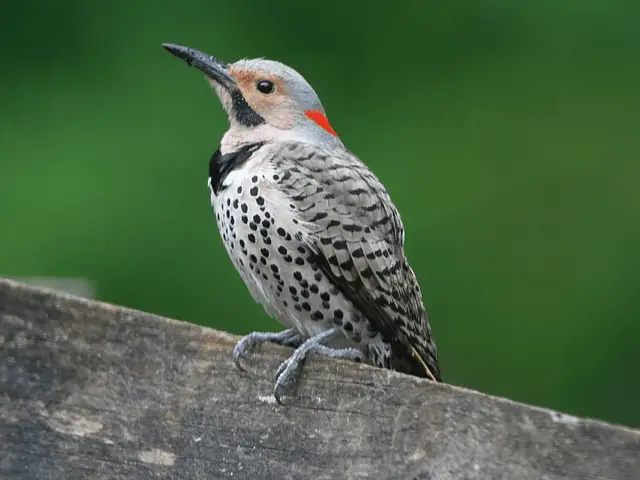
What first strikes an observer about the Northern Flicker (Colaptes auratus) is its relative lack of interest in the vertical world that typically defines its family. While other woodpeckers, like the Pileated or Downy, spend their days clinging to tree trunks, the Northern Flicker is a decidedly terrestrial bird, spending much of its time hopping and walking on the ground.
This preference for the forest floor is driven by its unique diet: ants. While it is an omnivore that will readily consume berries, seeds, and other insects, the Northern Flicker is arguably the single most prolific ant-eater among North American birds. Using its slightly curved, sharply pointed bill, the flicker probes into soil, anthills, and rotting wood to locate its prey. It then employs a remarkable adaptation: a long, barbed, and sticky tongue that can dart out up to two inches beyond its bill tip to lap up thousands of ants and their nutrient-rich larvae. One well-documented study found a single flicker's stomach containing more than 5,000 ants, a testament to its specialized feeding habit.
Its ground-based foraging not only sets it apart but also leads to an endearing and curious behavior known as "anting." The bird will lie on the edge of an ant colony, allowing the insects to crawl over its feathers. It is widely theorized that the formic acid produced by the ants helps the flicker control external parasites, essentially providing the bird with a natural, preening bug spray.
A Study in Contrasts: Range and Regional Identity
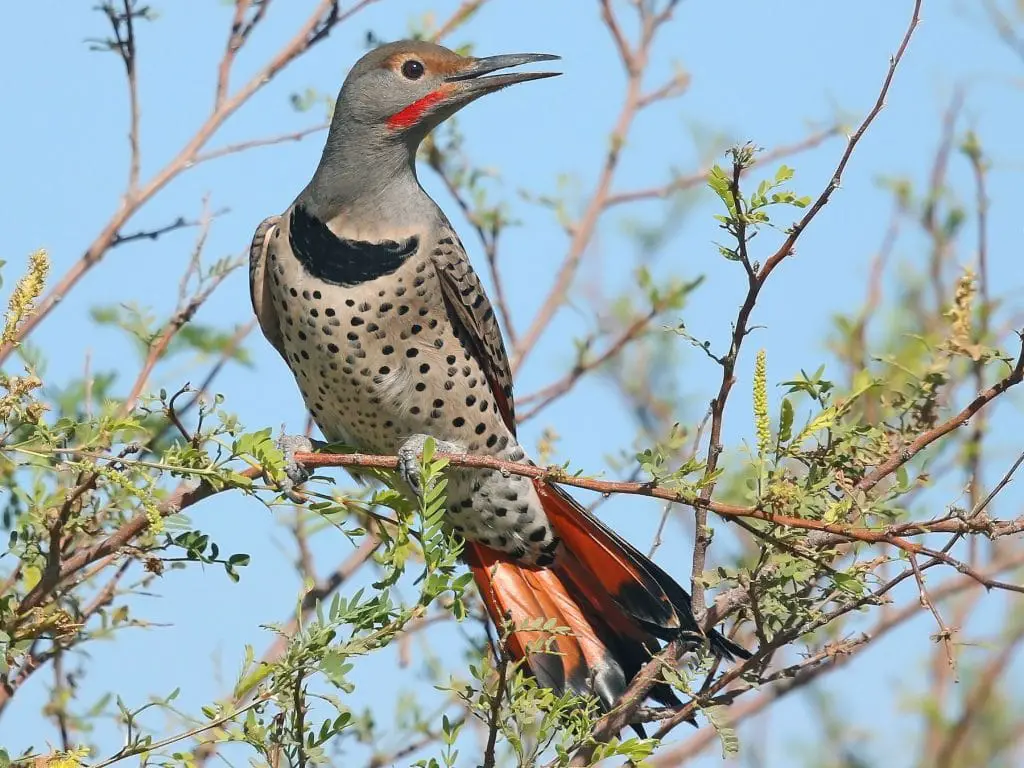
The Northern Flicker is found from Alaska to the Gulf Coast and from the Atlantic to the Pacific, making it the widest-ranging woodpecker on the continent. Within the contiguous U.S., its identity is defined by a striking geographic split, creating what were once classified as two separate species: the Yellow-shafted Flicker in the East and North, and the Red-shafted Flicker in the West.
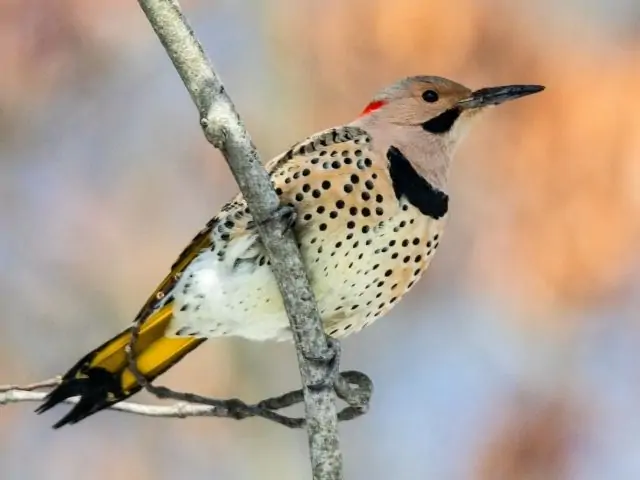
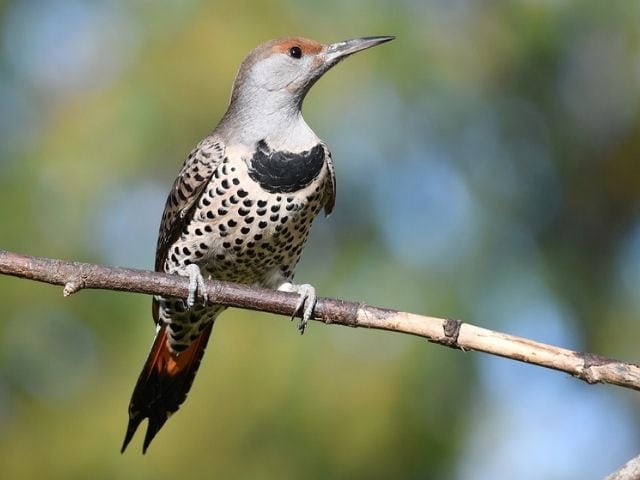
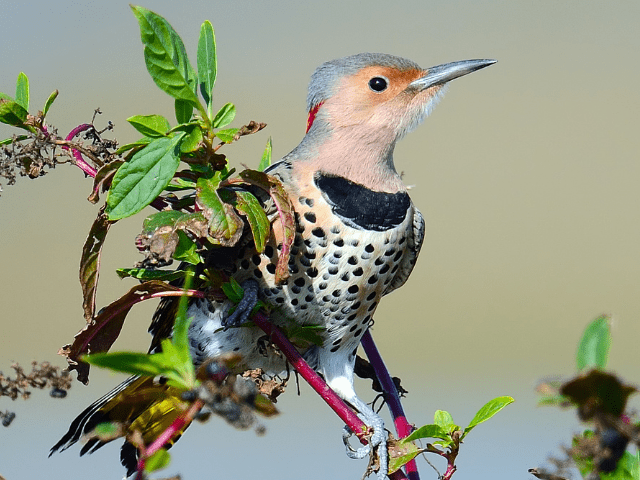
The Yellow-shafted Flicker Found generally east of the Rocky Mountains, this form is characterized by:
- Coloration: Bright, bold yellow feathers visible under the wings and tail when the bird is in flight or displaying.
- Head Markings: A gray cap, a beige face, and a prominent red crescent on the nape (back of the neck).
- Male Mustache: A solid black malar stripe, or "mustache," at the base of the bill.
The Red-shafted Flicker Dominant from the Great Plains westward to the Pacific Coast, this form is characterized by:
- Coloration: Salmon or pinkish-red feathers visible under the wings and tail.
- Head Markings: A beige cap, a gray face, and the absence of the red nape crescent (though some hybrids may show a trace).
- Male Mustache: A vibrant red malar stripe.
In a broad zone, particularly across the western Great Plains, the ranges of these two forms overlap, creating a natural laboratory for evolution known as a hybrid zone. Here, Yellow-shafted and Red-shafted flickers interbreed freely, resulting in offspring that can display a mix of traits—for instance, an "orange-shafted" bird with a red mustache and a hint of a red nape. This extensive hybridization, and the fact that the two forms have virtually identical DNA, led the American Ornithologists' Union to officially merge them into a single species in 1973, confirming the Northern Flicker's identity as one unified, dazzlingly variable bird.
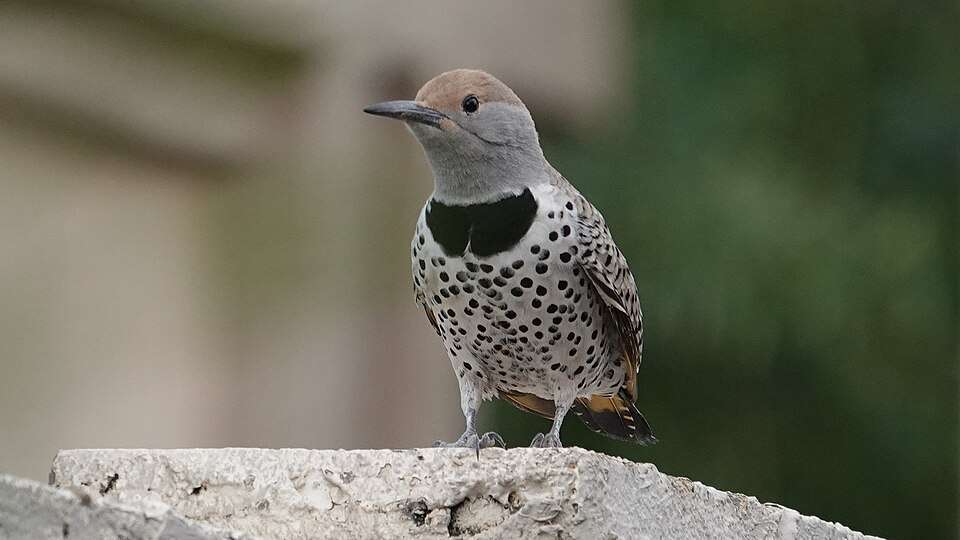
A smaller, separate subspecies, the Gilded Flicker (Colaptes chrysoides), occupies the arid desert regions of the southwestern U.S., particularly in Arizona and southeastern California, where it is uniquely adapted to nesting in Saguaro cacti.
Vocalizations and Courtship: The Sounds of Spring
The flicker’s presence is often announced long before it is seen. Unlike the typical quiet "tap" of a Downy Woodpecker foraging for grubs, the Northern Flicker's communication is loud, ringing, and often highly percussive.
Its primary vocal call is a long, loud, sustained series of notes—a distinctive, rhythmic sound that is often described as a "laugh" or a rolling “ki-ki-ki-ki-ki-ki”. The bird’s common names—such as "Yellowhammer," "Wake-up," and "Wick-up"—are all attempts to mimic this memorable, often high-pitched song.
Beyond vocalizations, flickers employ drumming as a key territorial and courtship ritual, like all woodpeckers. However, the flicker often seeks out the loudest, most resonant surfaces, which is why a homeowner may be startled to find one drumming not on a dead tree, but on a metal chimney vent, a gutter, or the wood siding of a house, turning a territorial declaration into a surprisingly jarring morning alarm.
Courtship and territorial defense also involve a spectacular, stylized physical display. Rival males (and sometimes a pair) will engage in a "Wicka Dance," pointing their bills skyward, bobbing and swaying their heads back and forth, and flicking their wings and tails open to flash their bright yellow or red undersides. These displays, accompanied by loud “wicka-wicka-wicka” calls, can last for hours but rarely escalate to physical violence.
Nesting and the Role of a Keystone Species
Northern Flickers are cavity nesters, but their nesting habits demonstrate another unique difference from their kin. They prefer to excavate their own nest holes, a laborious process that can take a pair up to two weeks, often choosing dead snags, dying trees with soft heartwood (like cottonwood or aspen), or even utility poles. The nest cavity is typically cylindrical, with an entrance hole about three inches wide, extending 13 to 16 inches down to a widened chamber lined only with wood chips.
The clutch size is large for a woodpecker, typically five to eight white eggs, and both parents share the duties of incubation and feeding the altricial young. Southern populations may have two broods per season, while northern birds generally have one.
Crucially, the Northern Flicker plays a vital role as a keystone species in its ecosystem. Because its bill is not as strong as other woodpeckers', it tends to excavate cavities in softer, older wood, and because of its abundance, it creates a significant number of nesting and roosting holes each year. Once the flicker pair moves on, these old holes become invaluable real estate for a wide array of secondary cavity nesters that cannot excavate their own—including small owls, kestrels, tree swallows, chickadees, and squirrels. The health of the flicker population is therefore tied directly to the health of the broader woodland community.
Conservation and Status
Though still classified as common and widespread, the Northern Flicker has faced consistent population decline across the U.S. since the 1960s. Partners in Flight estimates the U.S. population at around four million breeding individuals, but the declining trend is alarming.
The exact causes are not definitively known, but several threats are recognized:
- Competition from Invasive Species: The aggressive, non-native European Starling is a major competitor, frequently usurping freshly excavated flicker nest cavities, sometimes driving the native birds away or forcing them to re-nest.
- Loss of Snags: In suburban and managed forest areas, the common practice of removing "snags" (dead or dying trees) eliminates the soft wood that flickers prefer for nesting and the standing dead wood where they find much of their prey.
- Pesticide Use: As a primary consumer of ground-dwelling insects, particularly ants, the flicker is directly affected by the widespread use of lawn and agricultural pesticides, which can reduce its essential food supply.
Conservation efforts for the flicker focus on public education about the importance of leaving dead trees (snags) standing when safe to do so, and encouraging the placement of appropriately-sized nest boxes to offer an alternative to natural cavities.
Wrapping Up
The Northern Flicker is a charismatic and complex American bird. It is a ground-foraging woodpecker, an accomplished ant-eater, a migratory marvel, and a species with two distinct, interbreeding color phases. Its loud calls, flashy colors, and quirky behaviors make it a lively fixture in the American landscape, and its role as an ecosystem engineer makes its conservation critically important for countless other species that rely on the homes it leaves behind.
Do Woodpeckers Migrate: Understanding Their Seasonal Movements
