
North Dakota, a state defined by its vast, rolling prairies and endless horizon, is perhaps the most critical—and certainly the most productive—region for waterfowl in all of North America. This distinction is entirely due to a geological phenomenon known as the Prairie Pothole Region (PPR). During the last Ice Age, retreating glaciers scoured the landscape and left behind countless depressions—small, shallow basins that now fill with meltwater and rainwater. These "potholes" vary in size from small seasonal puddles to permanent lakes, creating a spectacular mosaic of wetlands that stretches across parts of North Dakota, South Dakota, Minnesota, Iowa, and the Canadian Prairies.
North Dakota sits at the very heart of the PPR. Its landscape is dotted with literally millions of these small wetlands, providing the perfect combination of shallow water, rich vegetation, and abundant invertebrates. This unparalleled concentration of productive habitat has earned the state the undisputed title of "North America’s Duck Factory."
The Duck Factory: Unmatched Productivity
The PPR wetlands are not just numerous; they are extraordinarily productive. The water is often shallow, allowing sunlight to penetrate and fueling an immense growth of aquatic plants and invertebrates. This high biological output is precisely what nesting ducks require.
The Engine of Production
Invertebrate Richness: The shallow potholes warm up quickly in the spring, triggering an explosion of insects, midges, and small crustaceans. This protein-rich diet is essential for female ducks preparing to lay eggs and for newly hatched ducklings, who need protein to grow rapidly.
Nesting Habitat: The surrounding prairie grasses and uplands provide dense, safe nesting cover for hens. The small, dispersed nature of the wetlands means pairs can spread out, reducing competition and predation pressure.
The Key Species: North Dakota is responsible for producing the majority of the continent’s population of several key duck species, including:
Mallard: The most abundant and recognizable duck in the state.
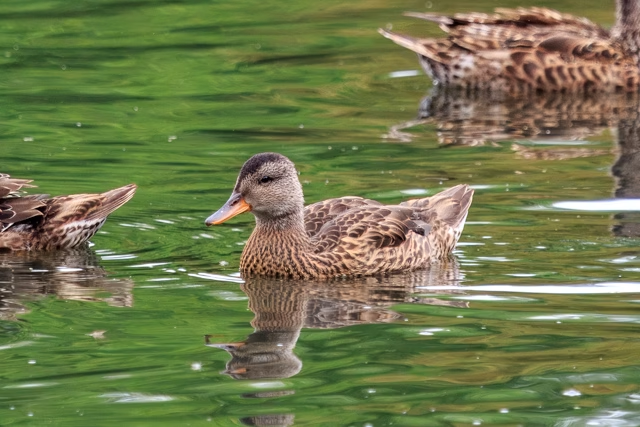
Gadwall: A highly successful and common breeding duck in the pothole region.
Northern Pintail: A beautiful, early-migrating species that relies heavily on the PPR.
Blue-winged Teal: One of the most numerous breeders, often the first to arrive in the spring.
Redhead and Canvasback: Both diving ducks find the shallow, sago-pondweed-rich waters of the deeper potholes ideal for nesting and feeding.

The overall population health of the Central and Mississippi Flyways is directly tied to the annual success of the nesting season in North Dakota.
Birding Beyond the Ducks: Prairies and Plains
While waterfowl are the main attraction, the surrounding prairie environment hosts a unique and specialized suite of birdlife, drawing serious birders seeking true grassland species.
Grassland Endemics
The unbroken prairie is the exclusive home to several birds of conservation concern that are highly adapted to life on the ground:
Baird’s Sparrow: Named for Spencer Fullerton Baird, this secretive sparrow is one of the most sought-after grassland species. It prefers dense, relatively tall mixed-grass prairie, where it is more often heard singing its distinctive, buzzy song than seen.
Sprague’s Pipit: An elusive songbird famous for its spectacular flight song. The male spirals high into the sky, sometimes nearly out of sight, and sings continuously while descending—a behavior necessitated by the lack of tall singing perches in the prairie.
Chestnut-collared Longspur: A flagship species of the short-grass prairie, easily identified in breeding plumage by the male’s unique chestnut collar. Like the pipit, its population has declined severely due to the loss of native grassland.
Sharp-tailed Grouse: A resident prairie grouse famous for its communal lek display in the spring, where males gather to perform elaborate dances to attract females.

Chestnut-collared Longspur

Wetland Waders and Shorebirds
The shallow wetlands also provide critical habitat for large wading birds and shorebirds:
American Avocet: These elegant waders, with their upturned bills, are common sights in the saline or semi-permanent wetlands.
Wilson’s Phalarope: Often seen spinning rapidly in the water to stir up invertebrates, this species nests near the potholes before migrating south.
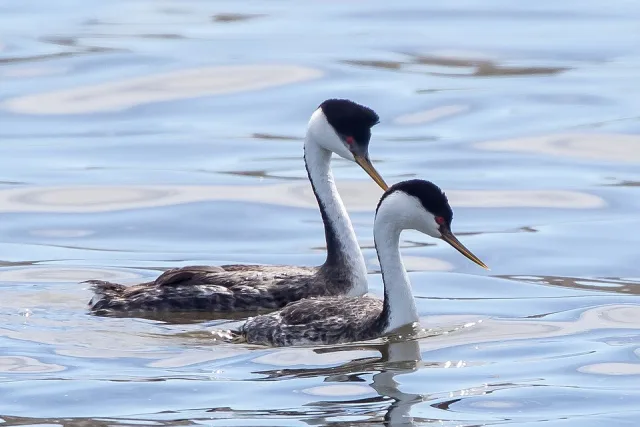
Western Grebe: Known for its dramatic "rushing" courtship display, the Western Grebe breeds on the larger, deeper marshes and lakes.
Key Birding Locations in North Dakota
North Dakota offers vast public lands and dedicated refuges that provide excellent access to these habitats:
1. Des Lacs National Wildlife Refuge (NWR)
Located in the northwestern part of the state, Des Lacs NWR is a chain of deep, narrow lakes and marsh bordered by upland prairie. It’s an exceptional location for viewing breeding waterfowl and hosts large numbers of Western Grebes and Eared Grebes. The surrounding prairie is ideal for searching for Sprague’s Pipits and Sharp-tailed Grouse.
2. J. Clark Salyer National Wildlife Refuge (NWR)
Situated along the Souris River in the north-central part of the state, Salyer NWR features vast stretches of managed wetlands and native prairie. It's a superb site for massive concentrations of Snow Geese during migration and a stronghold for breeding ducks. The refuge offers accessible auto tours and excellent opportunities for sighting various raptors.
3. Chase Lake National Wildlife Refuge (NWR)
Located in the central PPR, Chase Lake NWR is home to one of the most significant nesting colonies of American White Pelicans in North America, with tens of thousands of birds gathering to breed each summer. The spectacle of these large, majestic birds fishing and soaring is a major draw.
4. Tewaukon National Wildlife Refuge (NWR)
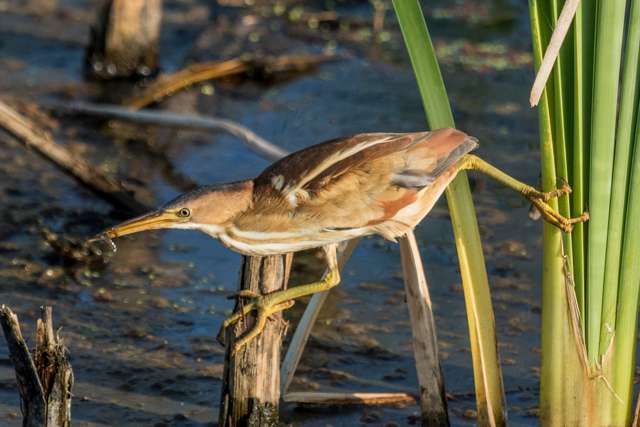
In the southeastern corner, Tewaukon NWR features a mix of deep marshes, upland grassland, and forests. It is an important nesting site and migration stopover, particularly for waterfowl and secretive marsh birds like the Least Bittern and various rails.

Conservation and The Future of the Factory
The ecological productivity of North Dakota is under constant threat. The greatest challenge is the loss of native prairie and the drainage of wetlands. While many potholes are protected through the federal Wetland Reserve Program and conservation easements held by organizations like Ducks Unlimited, vast areas have been converted to farmland. This habitat loss not only reduces nesting cover but also fragments the landscape, making remaining habitats more vulnerable to predators and less effective for breeding success.
The conservation efforts in North Dakota are crucial not just for the state, but for the entire continent. Projects like the North American Waterfowl Management Plan (NAWMP) rely heavily on North Dakota's capacity to produce a robust annual cohort of ducks. Birders who visit and support the state’s refuges directly contribute to the preservation of these essential wetlands and the adjacent grasslands.
North Dakota is a land where the vastness of the prairie meets the richness of the water, creating an avian powerhouse unlike any other. For the dedicated birdwatcher, it offers the spectacle of millions of ducks, the unique challenge of locating cryptic grassland species, and the profound satisfaction of connecting with one of the world's most vital, yet threatened, ecological engines.
