

For most birders, the hobby starts and ends with the sun. The hours between dawn and dusk yield the brightest colors, the clearest songs, and the greatest concentration of visible activity. But for a dedicated few—ornithologists, researchers, and specialized citizen scientists—the real work begins when the sun sets. These night owls participate in nocturnal bird surveys, an often-overlooked but crucial field of research that unlocks the secrets of America’s most elusive and mysterious avian populations.
Nocturnal surveys are not a simple walk in the woods with a flashlight. They are highly specialized, scientifically rigorous endeavors that rely on disciplined timing, advanced acoustic equipment, and a deep understanding of bioacoustics and avian behavior. These surveys are essential for monitoring endangered species, tracking population health, and gathering baseline data on birds that are otherwise virtually impossible to census, primarily owls, nightjars, and rail species.
Why the Night Shift is Necessary
Over 80% of North American bird species are diurnal, meaning they are active during the day. However, the species that are active at night present a unique challenge. Their camouflage is superb, their flight is silent, and their daytime roosts are often hidden.
Nocturnal surveys are conducted primarily because vocalization is the most reliable detection method for these species. During the breeding season (late spring and early summer), male owls and nightjars are actively calling to advertise territory or attract mates. Their powerful hoots, trills, and calls travel long distances through the still night air, making acoustic sampling the most efficient way to inventory large areas.
The data gathered from these surveys is non-negotiable for conservation, as it feeds directly into key population monitoring projects like the Breeding Bird Survey (BBS) and guides decisions by the U.S. Fish and Wildlife Service (USFWS) regarding habitat protection and listing status under the Endangered Species Act.
The Field Manual: Techniques of the Night Surveyor

Nocturnal surveys demand a unique methodology that minimizes disturbance while maximizing detection rates. The primary technique used across the U.S. is the point-count survey with passive or active acoustic sampling.
1. The Route and Timing
Surveys are typically conducted along pre-established driving routes composed of multiple listening stations (points) spaced at least a half-mile apart.
- Timing is Everything: Surveys must be conducted during the peak breeding season (usually May through early July) and under specific environmental conditions: little to no wind, no heavy rain, and ideally, clear skies. The timing within the night is also crucial—surveys often begin 30 minutes after sunset and conclude around midnight, when vocalizations peak.
- Ambient Sound: Unlike diurnal surveys, the darkness eliminates visual cues, making the surveyor acutely reliant on their hearing. Every unexpected rustle or distant truck passing must be accounted for to ensure it doesn't mask a faint owl call.
2. Acoustic Sampling: Passive vs. Active
Passive Acoustic Monitoring (PAM):
- Method: The surveyor simply listens quietly for a predetermined period (e.g., 5 to 10 minutes) at each point. This is the simplest method and avoids artificially drawing in or stressing the birds.
- Equipment: A growing number of surveys use Automated Recording Units (ARUs), which are weatherproof microphones and recorders left in the field for weeks. This method collects vast amounts of data without human presence, allowing for later analysis by specialized sound recognition software to detect target species.
Active Acoustic Monitoring (Playback Surveys):
- Method: This is the most effective way to elicit a response from a territorial male. The surveyor plays short bursts (usually 10 to 30 seconds) of the target species’ vocalization followed by a silent listening period.
- Ethical Considerations: Playback must be used judiciously and ethically. It can stress the birds, causing them to expend energy defending their territory. Protocols strictly limit the number of times a call is played and the proximity of the surveyor to known nesting sites.
3. Distance Estimation
Once a call is heard, the surveyor must accurately estimate the bird's distance and direction. Distance estimation in the dark requires special training, often based on the attenuation (fading) of the sound as it travels through the air. This skill is critical for avoiding double-counting the same bird from different stations.
Targeting the Elusive: Key Species Under the Night Sky
Nocturnal surveys in the U.S. are primarily designed to monitor three distinct groups of birds, each with its own specific detection challenges.
1. The Owls (Strigiformes)
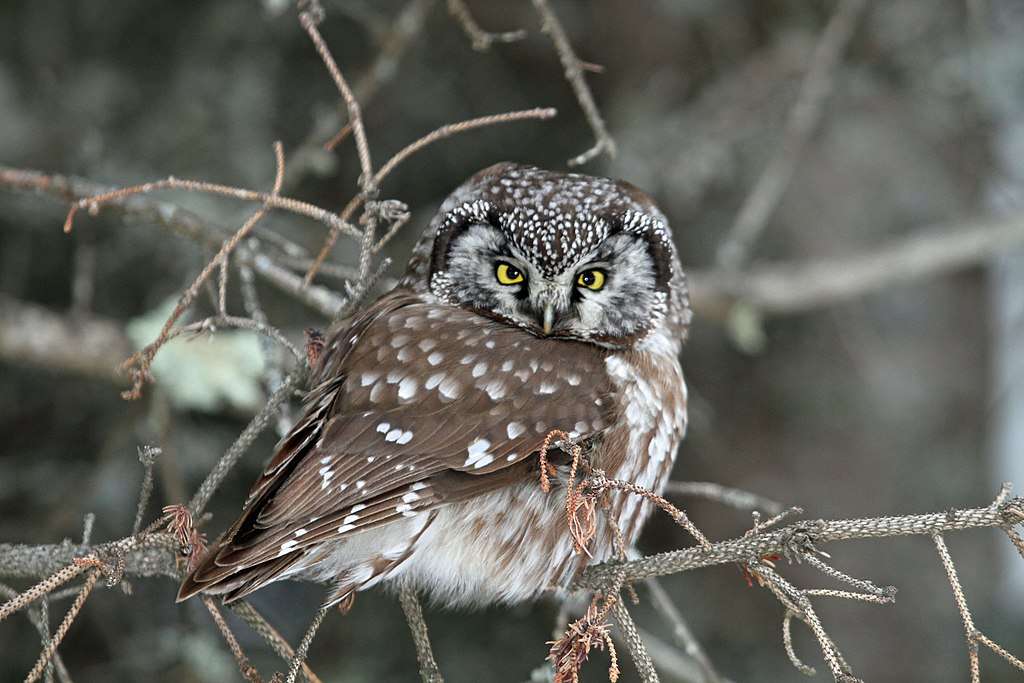
All 19 species of owls that breed in the U.S. are nocturnal and are monitored almost exclusively through acoustic surveys.
- Monitoring Focus: Surveys often target specific size classes. The easily audible, long-range calls of large owls like the Great Horned Owl and Barred Owl are relatively easy to detect. However, the quiet, subtle toots and chirps of small owls like the Northern Saw-whet Owl or the habitat-specialized calls of the Spotted Owl require highly trained ears and targeted playbacks.
- Conservation Importance: The status of the Northern Spotted Owl in the Pacific Northwest—a species linked to mature, old-growth forests—is almost entirely determined by complex, multi-night acoustic surveys.

2. The Nightjars (Caprimulgidae)
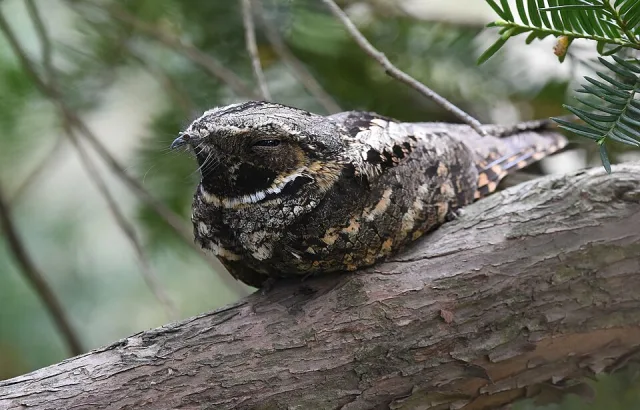
These insectivores are masters of camouflage, spending their days blending perfectly into the leaf litter or tree bark.
- Monitoring Focus: The rapid, distinctive calls of the Whip-poor-will and the Chuck-will’s-widow are counted through systematic surveys. The calls of the Common Nighthawk, often heard over cities and open fields, are also key indicators of the rapidly declining aerial insectivore population.
- The Cause for Concern: Data from nightjar surveys is instrumental in documenting the devastating impact of the "insect apocalypse," as these birds are wholly dependent on flying insects for survival.
3. The Rails and Gallinules (Gruiformes)
Many marsh-dwelling birds are notoriously secretive and primarily vocalize at night or during twilight.
- Monitoring Focus: Species like the King Rail and the smaller, cryptic Black Rail are virtually invisible during the day. Their sharp, mechanical calls and unusual grunts are best inventoried during specialized surveys conducted at dusk and dawn when they are most active.
- Conservation Importance: Coastal and wetland surveys provide vital data on these species, which are facing severe threats from habitat loss and coastal inundation due to rising sea levels.

The Future: Artificial Intelligence and Noise Reduction
The future of nocturnal bird surveys is rapidly moving toward technological integration to handle the massive data load and improve accuracy.
- Machine Learning: Scientists are training machine-learning algorithms to automatically identify species calls from ARU recordings. This allows for faster analysis of thousands of hours of audio and removes the variability of human listening bias.
- Noise Mitigation: Researchers are developing methods to filter out the increasing background noise from human infrastructure (traffic, industry) that masks soft calls, especially for vulnerable species like the tiny Black Rail.
The calling-in-the-dark methodology of nocturnal surveys represents the scientific community's dedication to understanding the full complexity of North America’s avifauna. It’s a quiet but persistent effort to ensure that the unique hoots and trills of the night remain a permanent fixture of the American soundscape.
Birds of Mississippi: a Mix of Common, Migratory and Rare Species
