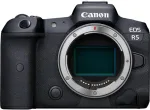
For the dedicated bird watcher or wildlife photographer, the choice of camera is arguably the most critical decision. It’s a contest of technology, portability, and capability, often pitting the pure photographic quality of professional systems against the sheer, unadulterated reach of superzoom optics. In the arena of bird photography, two cameras represent the extremes of this debate: the professional-grade, full-frame Canon EOS R5 mirrorless camera, and the mind-boggling, fixed-lens Nikon Coolpix 11 While the Canon R5, paired with a suitable telephoto lens, offers technical perfection, the Nikon P1000 (now upgraded to the P1100), with its unbelievable optical zoom, presents a compelling case for reach over resolution, ultimately proving that its ability to simply get the shot makes it the superior tool for bird watching.
I have owned both of these cameras and can tell you that the Nikon struggles in low light, gets stuck on writing to the card during burst shooting and the lens hood falls off every 10 seconds. A lot of photographs feel muddy and do not have the sparkling clarity of the Canon. And yet, after using buying it as a back up spare camera, I used it once and never picked up my Canon again.
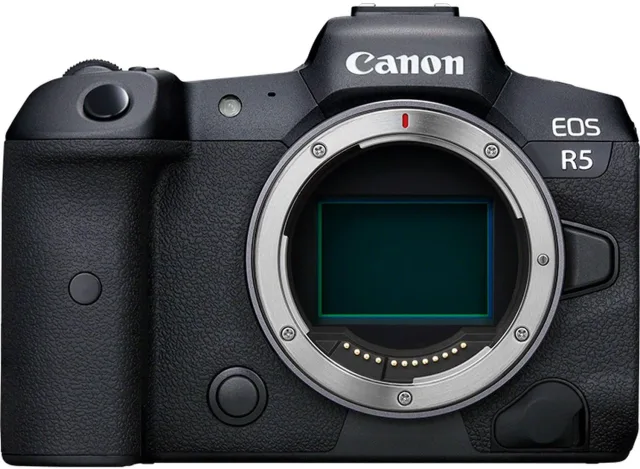
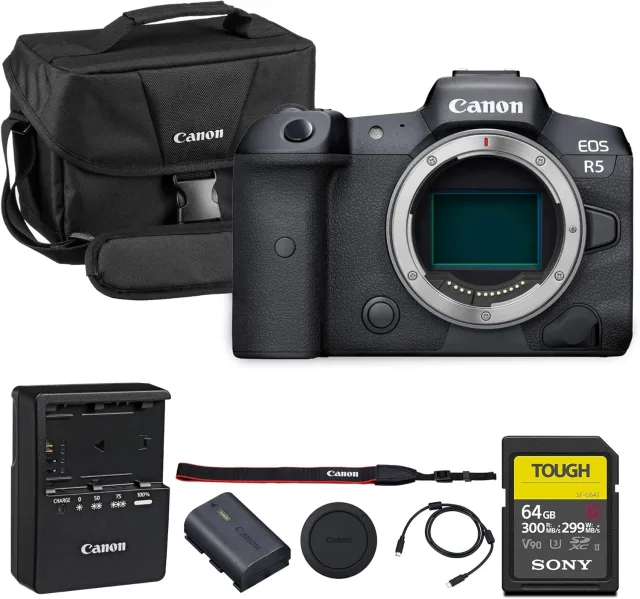
To fully understand this comparison, one must first recognize the fundamental philosophical difference between the two systems. The Canon R5 is a mirrorless powerhouse, built around a massive -megapixel full-frame sensor. Its performance is only as good as the lens attached to it, and for serious birding, this means an investment in a professional telephoto zoom, such as the Canon RF - - IS USM. This pairing represents the pinnacle of photographic engineering: blazing-fast autofocus with brilliant Animal Eye Detection, high-resolution and low-noise images, and exceptional performance in low-light conditions. The total system, however, is a substantial investment, both financially—easily costing five to six times more than the P1100—and physically, weighing several pounds and requiring a dedicated camera bag.
The Nikon Coolpix P1000, in stark contrast, is a superzoom bridge camera built around a much smaller sensor. On the surface, it seems grossly outmatched. Yet, the P1000’s single, defining feature fundamentally changes the calculus: its integrated optical zoom lens. This lens delivers an unparalleled equivalent focal length of all the way up to an astronomical .
This zoom is not just a specification; it is a game-changer for bird watching, a true optical marvel that no interchangeable lens system, not even the most expensive prime lenses for the Canon R5, can match without serious, quality-degrading digital cropping or the addition of teleconverters.
In the world of bird watching, the golden rule is distance. Birds are notoriously skittish, and getting close enough to fill the frame with a short telephoto lens often means disturbing the subject or simply missing the opportunity entirely. The Canon R5, even with the RF - lens—which can be pushed to an effective with a crop mode—still forces the photographer to close the distance. This limits the subject, often to only the most common or habituated species. To reach true parity with the P1000's reach, a Canon R5 user would need to pair a costly or prime lens with teleconverters, resulting in a setup that is astronomically priced, unwieldy, and significantly compromises the R5's technical advantages by limiting the effective aperture and thus low-light performance.
The Nikon P1000, conversely, allows the bird watcher to remain practically invisible. A bird perched high in a distant treetop, a shy shorebird across a wide estuary, or a fleeting raptor miles away on a thermal—these are shots inaccessible to the R5/100-500mm combo. The P1000 effortlessly brings these subjects into the frame, turning a tiny speck on the horizon into a recognizable, full-frame subject. This extreme reach transforms the birding experience from an exercise in patient stalking into one of observation and immediate capture. For the average birder, whose goal is to record a sighting or simply see a bird up close that they would otherwise miss, this capability is invaluable.
It is undeniable that the Canon R5, in good light, will produce a superior quality image. Its full-frame sensor delivers exceptional detail, wider dynamic range, and cleaner files at high ISOs. This is crucial for professional work or large-format printing. However, the P1000’s pictures are far from unusable. In bright daylight—the condition under which most birding is done—its BSI-CMOS sensor produces perfectly adequate images for web sharing, field guides, and small to medium prints. The slight loss in absolute resolution is a worthwhile trade-off for the ability to capture a subject that would otherwise be a mere pixel or, more likely, completely out of reach.
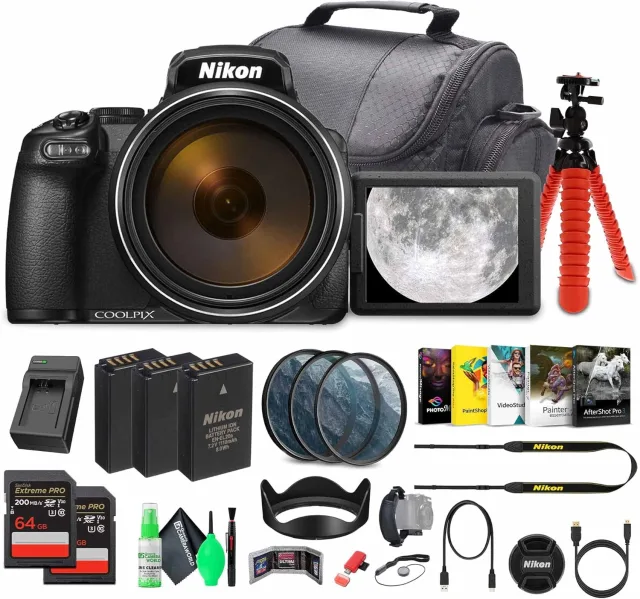
Furthermore, the practical benefits of the P1000 cannot be overstated. It is a single, relatively compact unit, weighing approximately (). The Canon R5 with the RF - lens, though lighter for the body, becomes a much bulkier and heavier system when combined, often exceeding and requiring a lens of significant length. The P1000 is grab-and-go; the R5 is a commitment. For long treks, spontaneous wildlife encounters, or international travel, the simplicity and portability of the Nikon P1000 is a significant advantage.
Wrapping UP
A comparison between the Canon R5 and the Nikon P1000 is not a fair fight on technical specs alone. The R5 wins on image quality, low-light performance, and autofocus speed. However, bird watching is a sport of distance and opportunity. The finest, sharpest image of a subject that is too far away to frame is still a missed opportunity. The Canon R5 is the professional's choice for perfecting a shot; the Nikon P1000 is the birder's choice for getting the shot. For the passionate bird watcher, the paramount importance of reaching the distant, rare, or shy subject outweighs all other considerations. The zoom of the Nikon P1000 is an unparalleled optical advantage that brings the entire world of avifauna closer than any competitor, making it the most essential and superior tool for dedicated bird watching.
Compare prices and kits here:
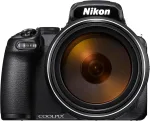
Nikon P1100