

New Jersey offers some of the most spectacular bird watching on the Atlantic Flyway, thanks to its diverse habitats that serve as critical stopover points for thousands of migrating species. The state is celebrated worldwide for its avian riches, with Cape May being the undisputed capital, drawing birders to its peninsula each spring and fall to witness massive concentrations of raptors and songbirds funneling along the coast.
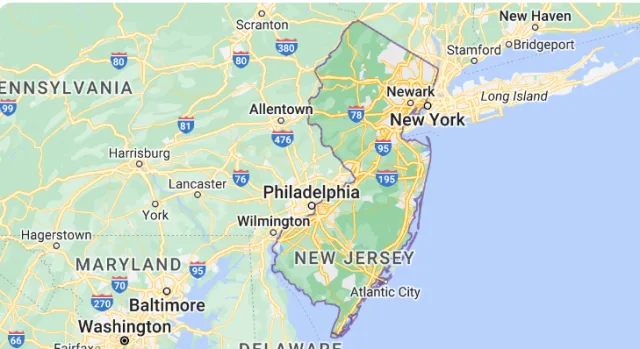
Equally vital, yet often offering a more rugged and expansive experience, is the Heislerville Wildlife Management Area along the Delaware Bayshore, where extensive salt marshes and impoundments provide essential habitat for vast numbers of nesting and migrating shorebirds and waterfowl, including the impressive spring spectacle of shorebirds feeding on horseshoe crab eggs.
Cape May
Cape May is famously situated at the southernmost tip of the Cape May Peninsula in New Jersey, where the Atlantic Ocean meets the Delaware Bay. This unique geographical location forms a natural funnel, acting as a barrier that concentrates southward-migrating birds in the fall. The area is largely flat, part of the Atlantic coastal plain, and features a diverse mosaic of low-lying habitats, including beaches, extensive coastal salt marshes, freshwater ponds, scrub-shrub areas, and mixed deciduous-coniferous woods.
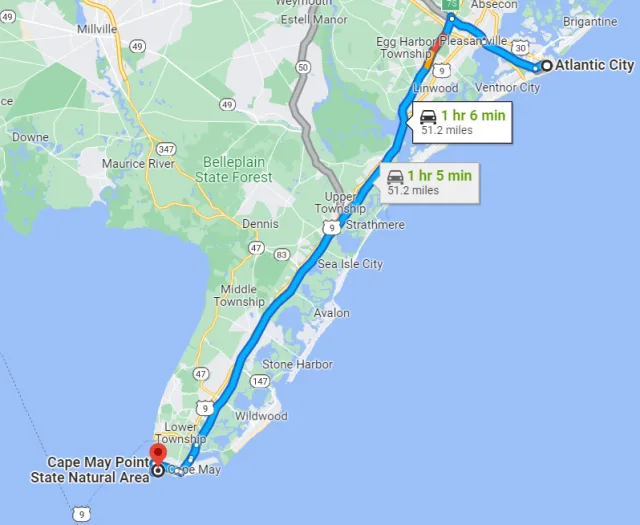
The city of Cape May itself is separated from the mainland by the man-made Cape May Canal and is known for its well-preserved Victorian architecture, but the true birding hotspots lie primarily in the surrounding natural areas like Cape May Point State Park and the Higbee Beach Wildlife Management Area.
Premier Bird Watching Opportunities
The concentration effect created by the peninsula's geography makes Cape May one of the world's most renowned birding destinations, particularly during the fall migration from August to November. As millions of birds travel south along the Atlantic Flyway, they encounter the wide expanse of the Delaware Bay and the Atlantic Ocean, forcing them to pause, rest, and feed at the peninsula's tip before attempting the major water crossing.

This results in spectacular displays, such as the famous Cape May Hawkwatch at the State Park, where thousands of migrating raptors—including Sharp-shinned Hawks, Kestrels, and Peregrine Falcons—pass overhead. Other key areas like Higbee Beach are legendary for their "morning flight" of songbirds, with up to 20 warbler species sometimes visible at dawn, while the coastal wetlands at the South Cape May Meadows provide essential refuge for numerous species of migrating shorebirds and waterfowl.
Target Birds
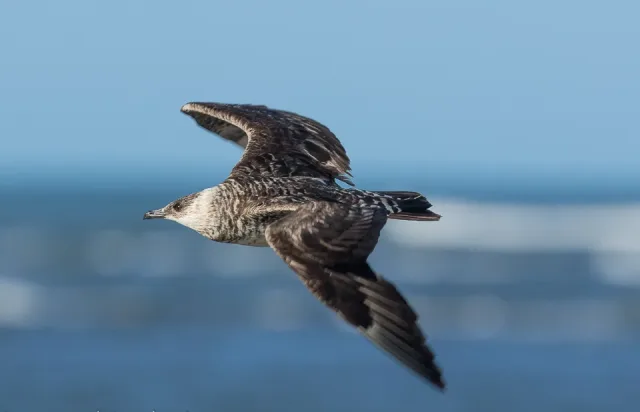
Arctic Skua
Black, Roseate, Common, Royal and Forster's Tern
Wilson's Storm Petrel
Prairie, Magnolia and Blackpoll Warbler
White-winged Scoter
Black Skimmer
Mississippi Kite
New Jersey Audubon has lots of information about the area, starting with their observatory there.
Sandy Hook
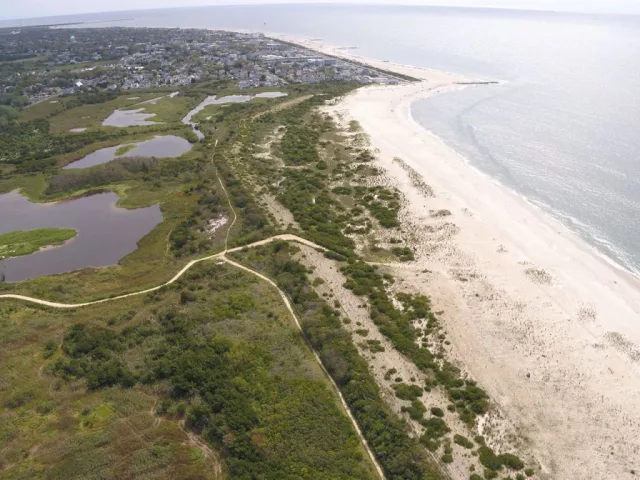
Sandy Hook, a crucial unit of the Gateway National Recreation Area, is a six-mile-long barrier spit located at the northern end of the Jersey Shore in Monmouth County, New Jersey. This dynamic and geographically significant feature separates the Atlantic Ocean to the east from Sandy Hook Bay, an arm of Raritan Bay, to the west. The narrow peninsula is geologically youthful, a result of littoral drift extending from the southern coast.
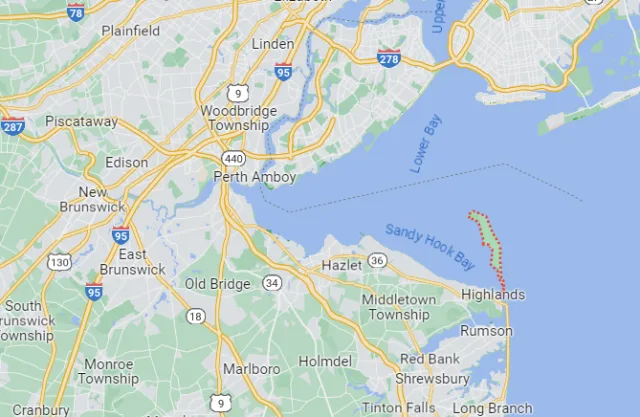
Its terrain is varied, encompassing pristine ocean and bayside beaches, vast salt and freshwater marshes, sand dunes, and a unique 264-acre maritime holly forest—one of the largest in New Jersey. This diverse mix of coastal habitats, protected from major civilian development as a federal enclave (and formerly the site of Fort Hancock), provides a vital ecological refuge for both resident and migratory wildlife in close proximity to the New York metropolitan area.
The varied ecosystems make Sandy Hook a premier location for bird watching, with over 300 species recorded annually due to its position as a major stopover along the Atlantic Flyway. Birders flock here, especially during the spring and fall migrations, to witness impressive flights of raptors, shorebirds, and songbirds.

Key viewing locations include the Spermaceti Cove boardwalk, the extensive salt marsh at Horseshoe Cove, and the North Pond, which attracts a variety of waterfowl and marsh birds like the endangered Least Bittern. The beaches serve as critical nesting grounds for Federally Endangered species such as the Piping Plover and Least Tern, while the maritime forest provides cover for warblers, vireos, and other Neotropical migrants, cementing Sandy Hook's status as a year-round birding hotspot.
Target Birds
American Oystercatcher
Laughing, Ring-billed, Herring and Great Black-backed Gull
Osprey
Piping Plover
Common Nighthawk
Chuck-will's-widow
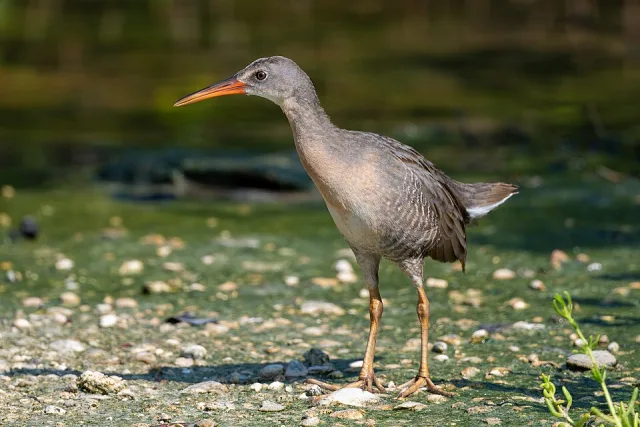
Clapper Rail
Semipalmated Plover and Sandpiper
The National Park Service has up to date information about access to Sandy Hook and the wider Gateway area.
Edwin B. Forsythe NWR
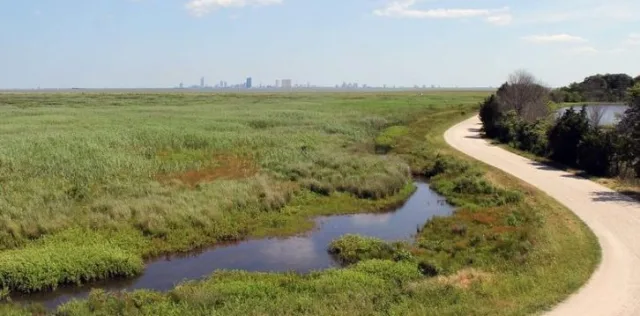
The Edwin B. Forsythe National Wildlife Refuge (NWR) is a critical coastal habitat spanning over 48,000 acres in southern and south-central New Jersey, primarily in Atlantic and Ocean counties. Its location is strategically vital, as it lies along one of the most active flight paths of the Atlantic Flyway, serving as an essential stopover point for migratory birds.
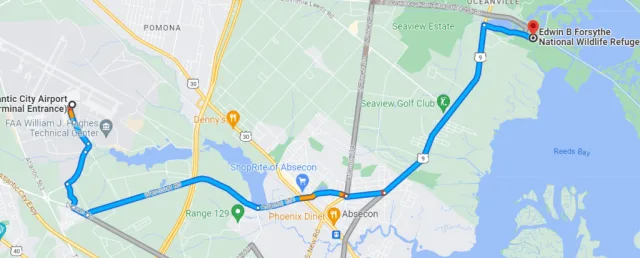
The refuge is comprised of two main divisions, the Brigantine Division (near Oceanville and the mouth of the Mullica River) and the Barnegat Division, which are separated by approximately 20 miles. Geographically, the refuge is overwhelmingly dominated by tidal salt marsh, which makes up over 82% of its area, interspersed with shallow coves, bays, and managed freshwater impoundments. It also protects precious coastal habitats, including two of New Jersey's last remaining undeveloped barrier beaches, Little Beach and Holgate, along with pockets of upland forests and woodlands.
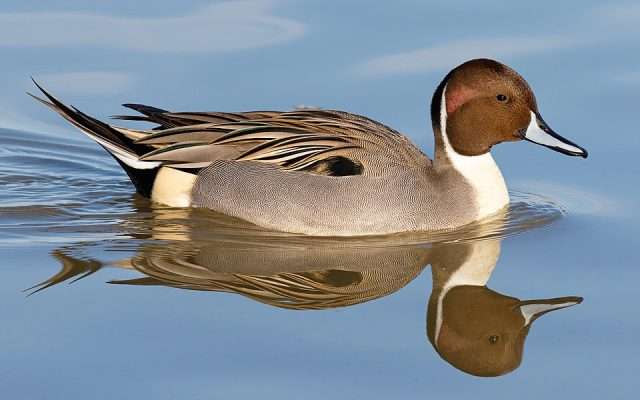
Forsythe NWR is consistently ranked as one of New Jersey's premier birding hotspots, with a recorded list of over 360 species. The refuge's diverse wetlands are expertly managed to maximize benefits for migrating birds, leading to spectacular concentrations of waterfowl, shorebirds, and wading birds, particularly during the spring and fall migrations. Visitors flock to the renowned eight-mile Wildlife Drive, a self-guided auto tour through the Brigantine Division that provides incredible, up-close views of managed impoundments teeming with species like Brant, Snow Geese, Northern Pintail, and various species of ducks and waders.
Beyond the drive, trails like the Bristow Trail offer opportunities to view migratory songbirds in the upland woods, while the refuge's wilderness areas are crucial nesting sites for threatened species such as the Piping Plover, American Oystercatcher, and Least Tern. The year-round opportunities also include excellent winter viewing for raptors like Northern Harriers and Bald Eagles hunting over the massive marsh expanse.

Target Birds
Short-billed Dowitcher
Black-crowned Night Heron
Bald Eagle
Seaside Sparrow
Gray Plover
Least Bittern
Worm-eating Warbler
The U.S. Fish and Wildlife Service has great resources for visitors including an interactive map.
Island Beach State Park
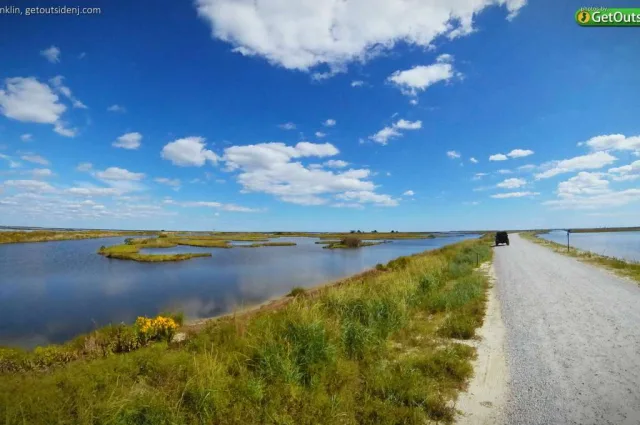
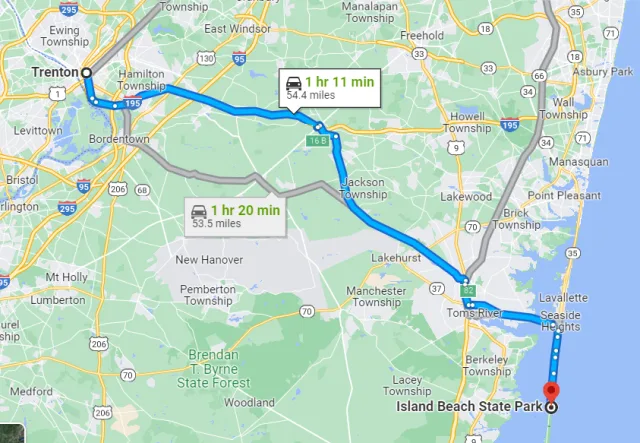
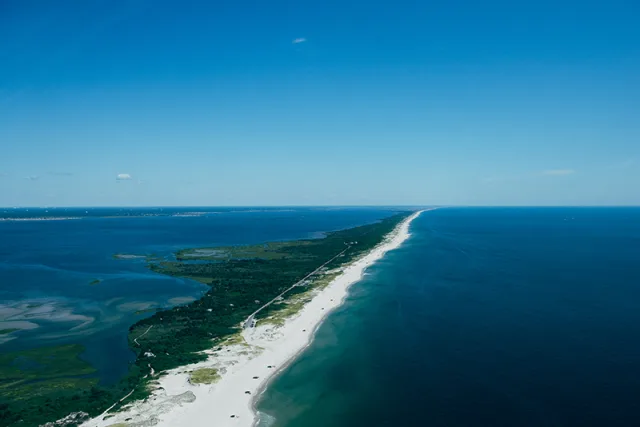
Located on the Barnegat Peninsula in Ocean County, Island Beach State Park is one of the last major undeveloped barrier islands in the Northeastern United States, stretching for approximately ten miles between the Atlantic Ocean and Barnegat Bay. This unique geography creates a diverse mosaic of coastal habitats crucial for birdlife.
From the vigorous Atlantic surf and its vast stretches of sandy beach, the land transitions inland through a succession of habitats: extensive primary and secondary dune systems, nationally significant expanses of beach heather, maritime forest, freshwater wetlands, and finally, the productive tidal marshes and mudflats of the bay shore. This long, narrow corridor of pristine habitat makes the park a protected and indispensable stopover for birds utilizing the Atlantic Flyway, ensuring year-round birding opportunities for enthusiasts.
The varied ecosystems of Island Beach State Park translate into exceptional bird watching across all seasons. The dunes and maritime thickets provide critical cover and foraging areas for migrating songbirds (passerines) in spring and fall, including numerous species of warblers and flycatchers. The park is a major autumn migration corridor for raptors, with Ospreys, Northern Harriers, Merlins, and Peregrine Falcons often seen following the coastline.
The park's mudflats and beaches are vital for shorebirds, hosting species like Black-bellied Plovers, Dunlins, and Sanderlings, and providing nesting habitat for vulnerable species such as the federally threatened Piping Plover, Least Tern, and Black Skimmer. The bayside marshes are home to New Jersey's largest nesting colony of Ospreys, while winter brings a spectacular concentration of sea ducks and waterfowl to the ocean and bay waters. Observation blinds and trails, such as the Spizzle Creek Trail, offer birders excellent, unobtrusive views into this rich coastal world.
Target Birds
Glossy Ibis
Double-crested Cormorant
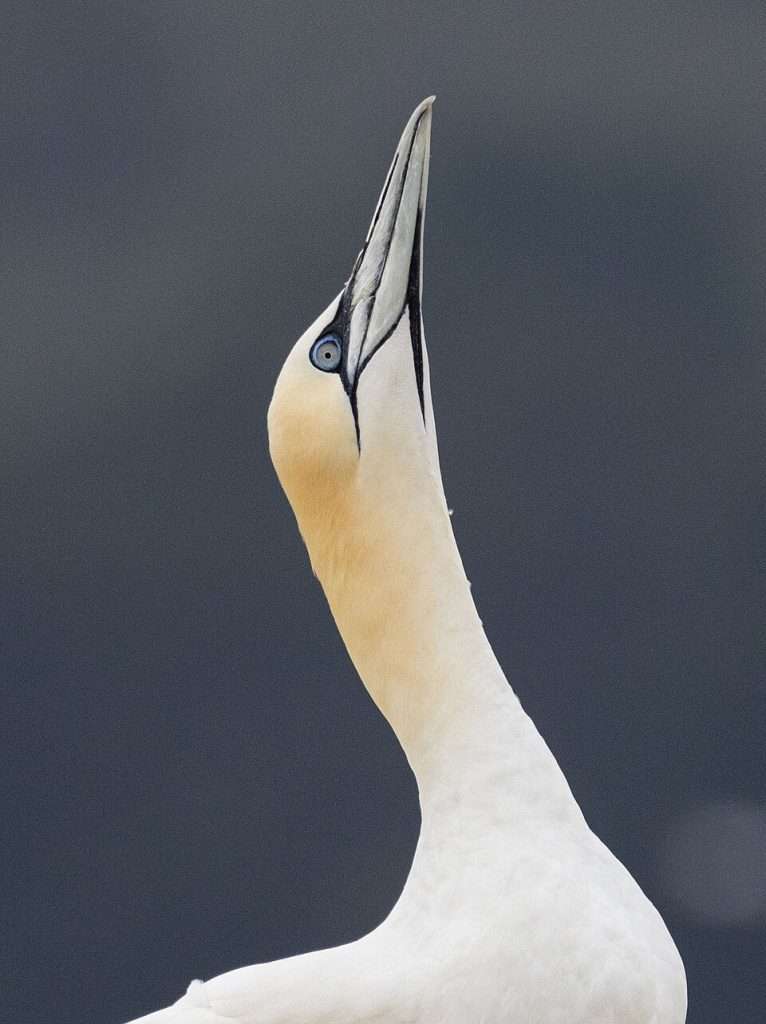
Northern Gannet
Surf and Black Scoter
Great Northern Diver
Red Knot
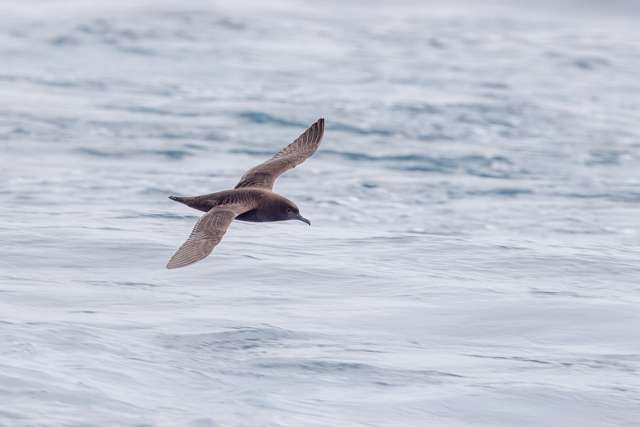
Sooty Shearwater
The Department of Environmental Protection has lots of background on the park as well as current closures and any restrictions. It is a good place to start.
How to Prevent Birds from Nesting: Effective Strategies and Tips
Liberty State Park
Liberty State Park (LSP) is a 1,212-acre urban state park uniquely situated on the Upper New York Bay in Jersey City, New Jersey, directly across from Liberty and Ellis Islands. Its geography is defined by its extensive waterfront on three sides, offering unparalleled views of the Manhattan skyline and New York Harbor.
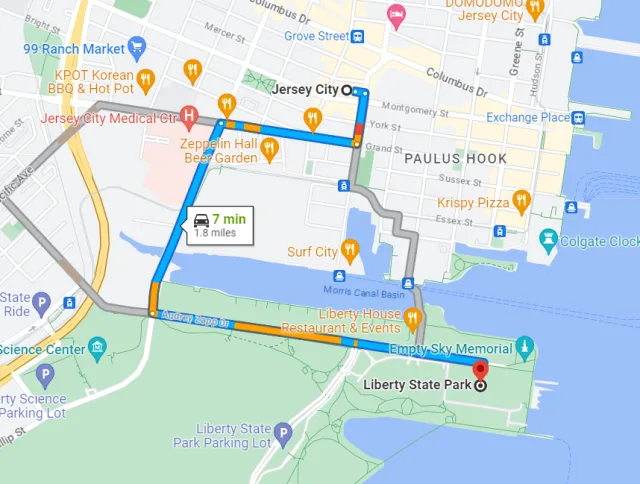
Much of the park was developed on landfill over former tidal flats, but it retains crucial natural areas. Key among these is the Richard J. Sullivan Natural Area which contains Communipaw Cove, a state nature preserve featuring one of the few remaining tidal salt marshes along the Hudson River estuary. The park also includes the peninsula of Caven Point, a vital, ecologically unique area along the shoreline that provides a sandy beach and marsh habitat.
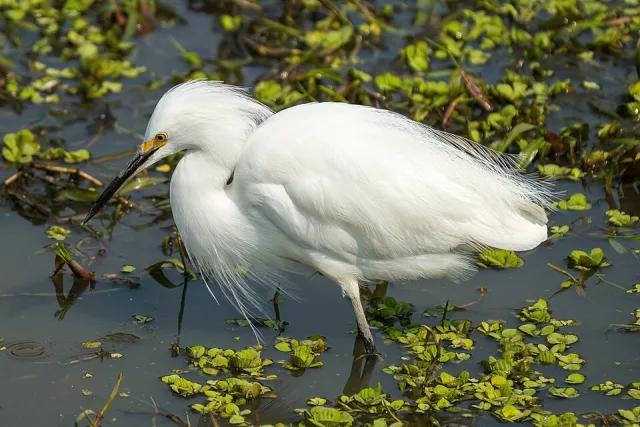
The diverse habitats within Liberty State Park, despite its urban location, make it an exceptional birding destination with a list of over 239 species identified. The tidal salt marsh in the Richard J. Sullivan Natural Area provides essential foraging and nesting grounds for wading birds like Great Egrets, Snowy Egrets, and both Black-crowned and Yellow-crowned Night-Herons during the summer, as well as various waterfowl in the winter.
The Caven Point peninsula is especially critical, serving as an important stopover for migrating shorebirds, including species like American Oystercatchers and Spotted Sandpipers, and is a noted area for winter visitors like the occasional Snowy Owl. The park's pathways and wooded uplands along the nature trails also attract numerous migrating passerines (songbirds) during the spring and fall migrations, providing a fantastic contrast between a bustling metropolitan center and a dynamic ecological refuge.

Target Birds
Black Skimmer
Bufflehead
Killdeer
Spotted Sandpiper
Willow and Great Crested Flycatcher
Cedar Waxwing
Louisiana Waterthrush
New Jersey Audubon has a variety of information for different types of visitor.

Spruce Run Recreation Area
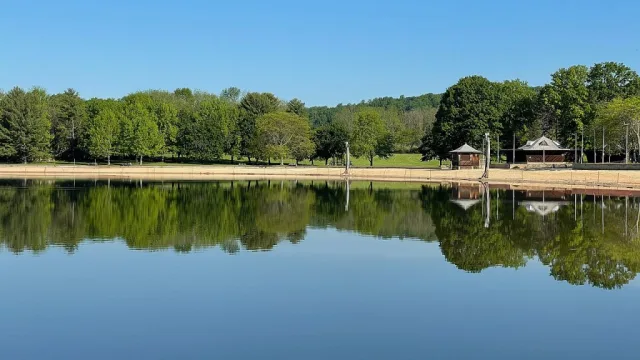
The Spruce Run Recreation Area is a significant natural resource located in the rolling hills of Hunterdon County, New Jersey, near the town of Clinton. Its primary geographic feature is the Spruce Run Reservoir, a vast, 1,290-acre body of water with 15 miles of shoreline, which was one of the state's earliest major water supply facilities.
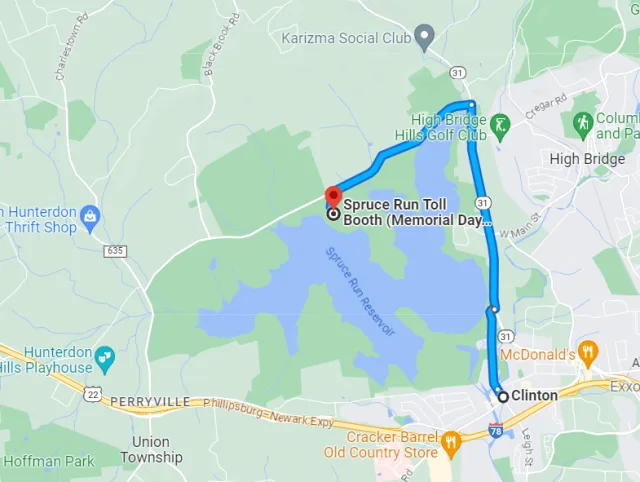
The recreation area is an interesting blend of large open water, surrounding forests (particularly mixed maple and pine), and fields. The adjacent Clinton Wildlife Management Area (WMA) is integrally linked, providing a crucial undeveloped buffer of forest and scrub-shrub habitat. This location sits in a unique overlap of the Piedmont and Appalachian Bird Conservation Regions, giving it a rich mix of avian life typical of both upland and large reservoir environments.
For bird watchers, Spruce Run offers year-round opportunities, though it is particularly notable during the winter months when the reservoir becomes a key site for wintering waterfowl and gulls. Birders frequently record high numbers of ducks, geese, and even up to seven species of gulls, including what is considered one of the highest concentrations of Lesser Black-backed Gulls in North America. During the spring and fall migrations, the mixed habitats, especially the forest interior and scrub-shrub areas of the contiguous Clinton WMA, are excellent for observing a diverse array of breeding and migratory songbirds.
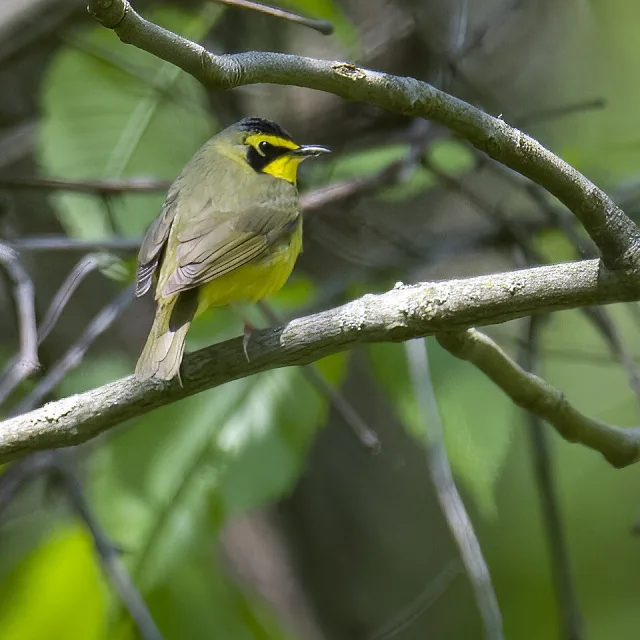
Target species for breeding season birders include forest specialists like Wood Thrush, Scarlet Tanager, and various warblers such as Kentucky, Hooded, and Worm-eating Warblers, alongside shrubland birds like Yellow-breasted Chat and Blue-winged Warbler. The accessibility provided by paths, including a section of the Highlands Trail, makes it an ideal spot for a deep dive into Central Jersey's inland birding landscape.
Target Birds
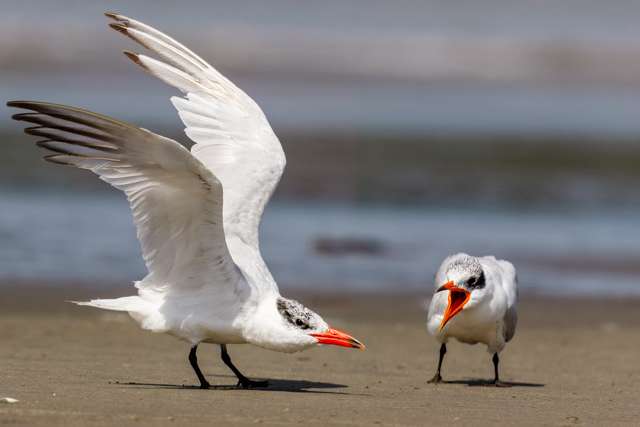
Caspian Tern
Goosander
Green Heron
Belted Kingfisher
Warbling and Red-eyed Vireo
Veery
Indigo Bunting
The NJ Audubon page for the wider Clinton WMA has details about the Spruce Run as well.
Richard W. DeKorte Park
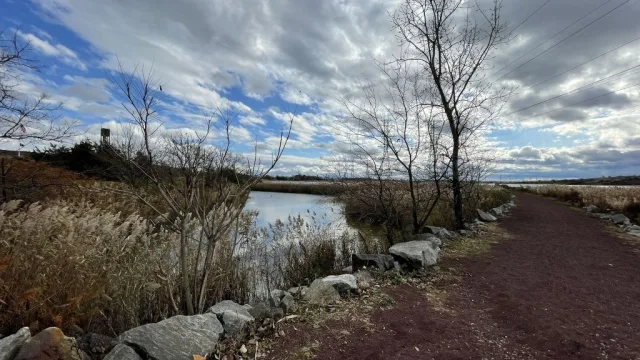
Richard W. DeKorte Park is situated in Lyndhurst, New Jersey, placing it centrally within the Hackensack Meadowlands District, a historically industrial and degraded wetland area that has since undergone extensive environmental restoration. Geographically, the park is a striking example of reclaimed urban ecology, offering a flat expanse of tidal marsh, open water impoundments (like the Shorebird Pool), and grassland habitat, all framed dramatically by the distant skyline of Manhattan.
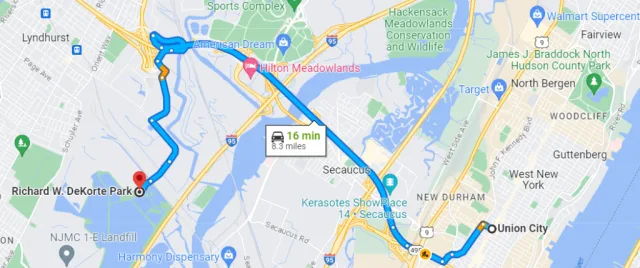
The park encompasses about 110 acres and serves as the focal point for the New Jersey Sports and Exposition Authority (NJSEA) environmental efforts. Its location is strategically important as it lies directly beneath the Atlantic Flyway, making it a critical rest and feeding stop for migrating birds despite its proximity to a dense metropolitan area.
DeKorte Park is a renowned bird watching mecca, with over 285 species documented in the greater Meadowlands region, many of which use the park's diverse habitats. Its network of well-maintained trails, including the accessible Marsh Discovery Trail boardwalk with bird blinds, provides excellent views of the avian life.
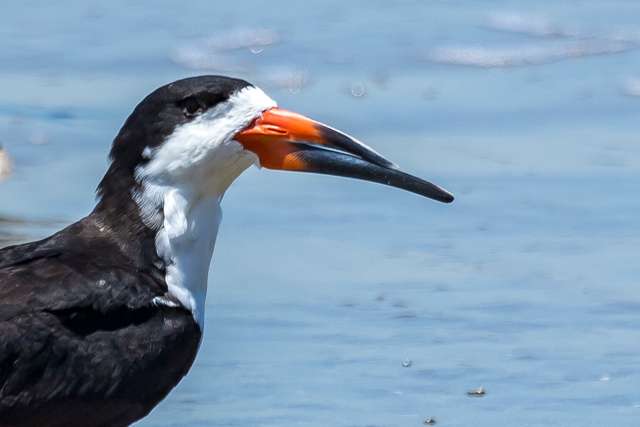
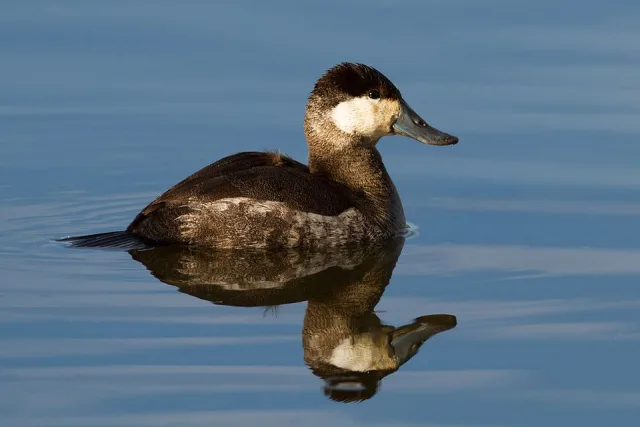
Year-round opportunities abound: in winter, birders look for large flocks of waterfowl such as Ruddy Ducks and Canvasbacks, as well as several species of raptors like Northern Harriers and Snowy Owls. Spring and fall migration bring in vast numbers of shorebirds like Yellowlegs and Semipalmated Sandpipers, and various neotropical migrants. Summer is excellent for nesting birds, including wading birds (Great Egrets, Snowy Egrets), Black Skimmers, and Tree Swallows, which utilize the extensive nest box project in the marsh.
Target Birds
Ruddy Duck
Marsh Wren
Orchard Oriole
American White Pelican
Semipalmated Sandpiper
Hooded Merganser
NJ Audubon has lots of details about different ways to access the area, such as trails and boats. It also has great seasonal bird information.
Heislerville WMA
The Heislerville Wildlife Management Area (WMA) is a massive tract of protected land, encompassing over 7,600 acres in Maurice River Township, Cumberland County, New Jersey. Geographically, it is strategically located near the mouth of the Maurice River as it empties into the vast Delaware Bay, placing it directly on the critical Atlantic Flyway migration path.
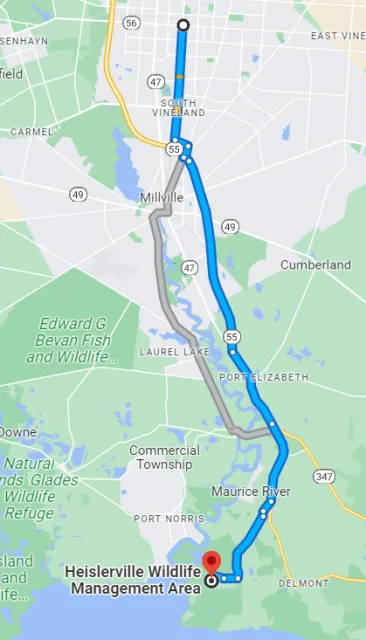
This location grants the WMA a rich and varied landscape, combining extensive coastal habitats such as tidal salt marshes, bayshore beaches (like Thompson’s Beach and Moore’s Beach), and diked salt hay meadows. Inland, the WMA also features freshwater impoundments managed specifically for wildlife, as well as higher oak-pine uplands, offering birders a mosaic of environments to explore and a corresponding diversity of avian species to observe.
Heislerville WMA is perhaps most famous for its role in the globally significant spring migration spectacle along the Delaware Bayshore. During May and June, this area supports the second-largest concentration of migrating shorebirds in the Western Hemisphere, as species like Red Knots, Ruddy Turnstones, and Sanderlings descend upon the beaches to gorge on the protein-rich eggs of spawning horseshoe crabs.
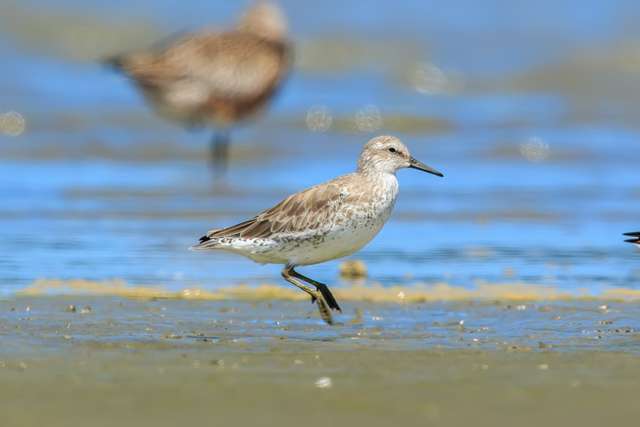
Beyond this renowned event, the WMA's managed impoundments provide year-round opportunities for viewing significant numbers of waterfowl, including American Black Ducks, Pintails, and Buffleheads in the colder months. Waders like Snowy Egrets, Great Blue Herons, and Glossy Ibis are also common, while raptors such as Osprey, Northern Harriers, and nesting Bald Eagles can be observed soaring over the expansive marshes, making Heislerville an essential stop for any serious New Jersey birder.

Target Birds
Clapper Rail
Willet
Blue Grosbeak
Sanderling
American Avocet
Scarlet Tanager
American Bittern
The Audubon website has precise information about the best places to see birds across the area.
Barnegat Lighthouse SP
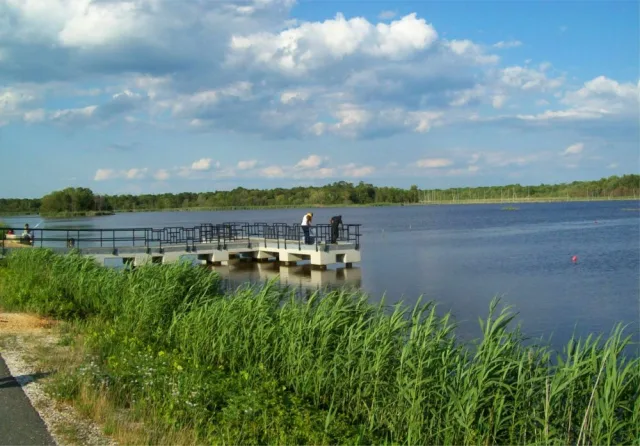
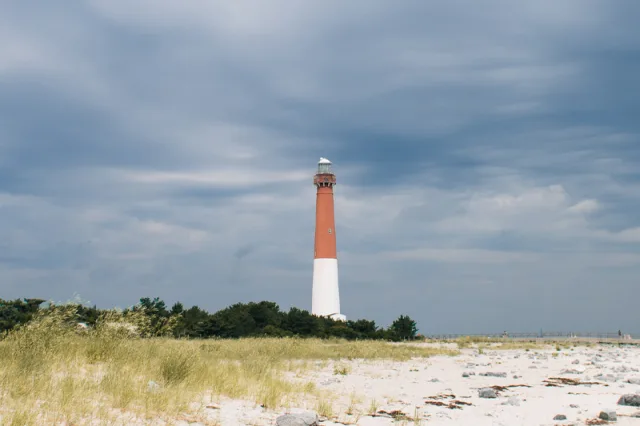
Barnegat Lighthouse State Park is an essential stop for any birder visiting the New Jersey shore, strategically situated at the northern tip of Long Beach Island (LBI) in Ocean County. This geography—the meeting point of the Atlantic Ocean and the swift currents of Barnegat Inlet—creates a perfect concentration point for seabirds and waterfowl.
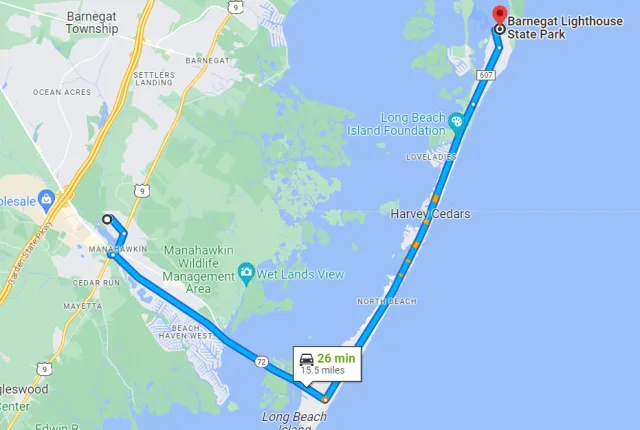
The park is dominated by the historic 172-foot Barnegat Lighthouse, fondly known as "Old Barney," which offers a visible landmark from both the ocean and the expansive Barnegat Bay. The park’s habitat includes a small, rare maritime forest, sandy beaches, and, most importantly for birders, the long rock jetty that extends into the water, providing a crucial and accessible vantage point for observing pelagic and wintering species.
The bird watching opportunities at Barnegat Lighthouse State Park peak dramatically during the winter months (late fall through early spring), when the area becomes a critical haven for cold-weather visitors. The jetty is particularly renowned for attracting impressive concentrations of sea ducks, most famously the stunningly patterned Harlequin Duck, which can be reliably found feeding among the rocks, as well as Long-tailed Ducks (formerly Oldsquaw), Common Eiders, and various scoters (Surf, Black, and White-winged).
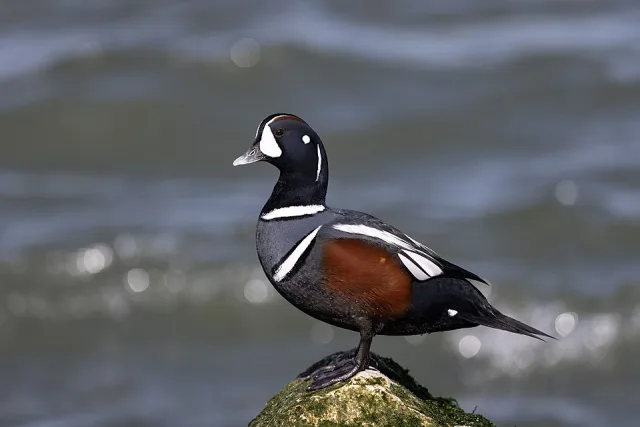
The jetties and rocky shoreline are also the best place in the state to find Purple Sandpipers, which camouflage themselves perfectly on the algae-covered stones. Beyond the ducks, scanning the inlet and ocean often yields sightings of loons (Common and Red-throated), grebes, and Northern Gannets, while the beaches and dunes host wintering shorebirds and passerines like Horned Larks, American Pipits, and Snow Buntings.

Target Birds
Piping Plover
Fish Crow
Wilson's Storm Petrel
American Redstart
Brown Pelican
Purple and Least Sandpiper
The DEP has historical information about the lighthouse, access information and the birding potential.
Palmyra Cove Nature Park
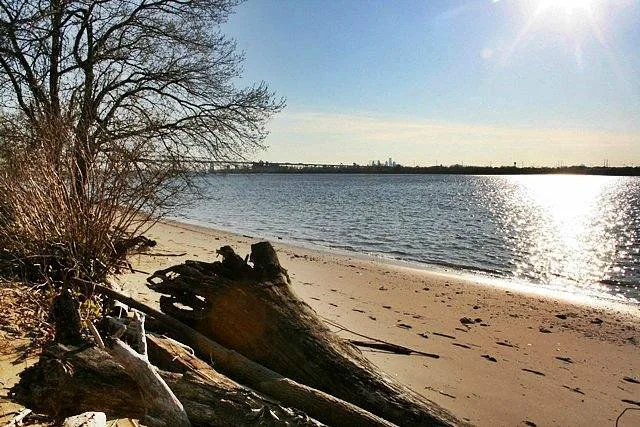
Located in Burlington County, New Jersey, the 250-acre Palmyra Cove Nature Park is a unique urban oasis situated directly on the tidal Delaware River, beneath the impressive Tacony-Palmyra Bridge. Geographically, the park's key feature is its diverse mix of habitats, which has developed on what was once largely a dredged material placement facility.
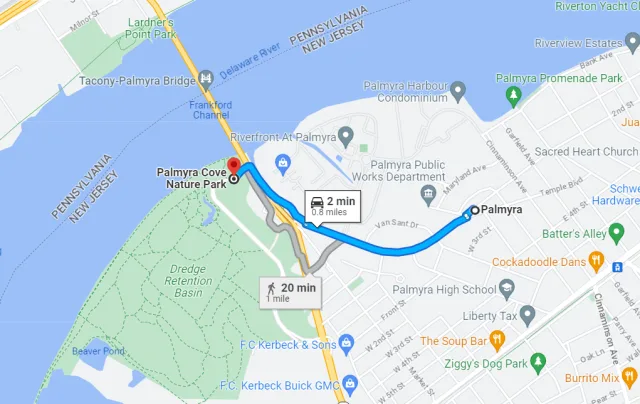
This reclamation process has resulted in a mosaic of ecosystems, including tidal wetlands, wooded riparian forests, open meadows, and a large freshwater tidal cove. This strategic location, right on a major waterway and surrounded by a highly developed region, creates a vital "green island" effect, concentrating wildlife and making it an exceptionally accessible natural haven for residents of South Jersey and the Philadelphia area.
For birders, Palmyra Cove Nature Park is a recognized hotspot, particularly during the spring and fall migrations. Its position along the Delaware River and its varied habitats attract over 250 species annually. The park is especially renowned for its fall warbler migration, with up to 27 species recorded in a single day, and is known as one of New Jersey's best locations for sighting the elusive Connecticut Warbler.

Throughout the year, visitors utilizing the over five miles of trails and boardwalks can spot nesting forest birds like Hairy Woodpeckers and Carolina Chickadees, waterfowl like Bufflehead and Northern Pintail in the winter, and shorebirds like Greater Yellowlegs on the cove's edges. Furthermore, the Tacony-Palmyra Bridge supports a nesting pair of state-endangered Peregrine Falcons, offering a dramatic birding highlight right at the park's entrance.
Target Birds
Cooper's Hawk
Yellow-billed Cuckoo
Red-bellied Woodpecker
Arcadian and Willow Flycatcher
Northern Waterthrush
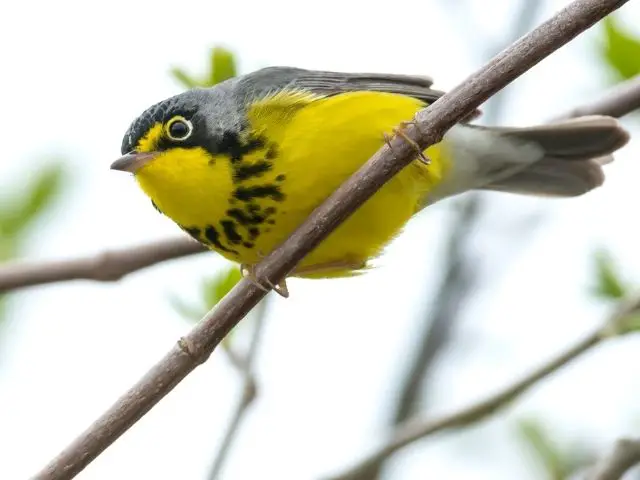
Canada and Blackpoll Warbler
Grey-cheeked Thrush
The Delaware Valley Ornithological Club has some background on the area and the possible birds that can be found there.
Wrapping Up
New Jersey stands as a beacon for bird watchers, solidifying its reputation as a vital nexus point along the Atlantic Flyway. From the globally renowned raptor and songbird spectacle at Cape May to the expansive coastal marshes of Heislerville WMA and the surprisingly vibrant urban oasis of Palmyra Cove Nature Park, the state offers year-round opportunities for spectacular birding.
These locations, each with its unique ecological tapestry, underscore the critical importance of New Jersey's preserved lands and coastal environments in sustaining migratory bird populations. Ultimately, the joy of birding in the Garden State is intrinsically linked to the ongoing success of conservation efforts, inviting every visitor to become a steward of these irreplaceable natural treasures for the benefit of generations of birds and birders to come.
Birds of New Jersey: Common, Migratory and Rare Finds in the Garden State
