
While monochromatic birds offer elegance, it is the multi-colored species that truly capture the eye, appearing as living fragments of a rainbow. These feathered kaleidoscopes boast intricate patterns and a dazzling array of hues, often combining the brilliant structural blues and greens with the pigment-derived reds, yellows, and oranges. A bird's ability to display a multitude of distinct, vivid colors—sometimes five, six, or more—is a testament to the complex interplay of evolution, physics, chemistry, and diet.
The Anatomy of Iridescence: How Multi-Coloration Works
The spectacular multi-coloration seen in the world's most vibrant birds is rarely achieved by a simple mix of paint-box primary colors. Instead, it is the result of layering and combining the two primary color mechanisms: pigmentation and structural coloration.
1. Pigment-Based Colors (Chemical Colors)
These are the foundational reds, yellows, and browns.
- Carotenoids (Yellow, Orange, Red): As discussed, these pigments must be acquired through the diet (fruits, seeds, insects). Many multi-colored birds use carotenoids for their yellow and red patches, often converting duller yellow pigments into intensely vibrant reds through specialized liver enzymes.
- Melanins (Black, Brown, Gray): These are produced internally and are crucial for providing the structural base for most colors. Black melanin acts as a light-absorbing layer beneath structural blues and greens, intensifying their brilliance. It also forms the crisp borders, stripes, and masks that delineate different colored patches.
2. Structural Colors (Physical Colors)
These are the vibrant, often metallic blues, purples, and greens.
- Physics in Feathers: Structural colors are not pigments but are created by the physical structure of the feather barbs and barbules. When white light hits these microscopic, organized nanostructures (like air cavities or melanin granules), certain wavelengths are scattered back while others are absorbed.
- Blue: Typically created by non-iridescent structural scattering (Tyndall or Rayleigh scattering).
- Iridescent Colors (Green, Purple, Metallic Blue): These shift hues depending on the viewing angle. They are created by highly structured layers of melanin and keratin that act like a diffraction grating or prism, splitting the light. This iridescence is key to a bird appearing to have multiple colors that change as it moves.
The Multi-Colored Advantage: Sexual Selection
The reason birds invest so much energy in growing multi-colored plumage is sexual selection. A male that can simultaneously display multiple colors is signaling superior genetic quality and health in several ways:
- Versatile Metabolism: It proves the male can synthesize black melanin and absorb/convert yellow, orange, and red carotenoids from its diet.
- Efficient Feather Growth: Structural colors require perfectly formed, intact feather structures. A multi-colored male demonstrates a life free of the stresses, nutritional deficits, or parasite infestations that would lead to poorly formed or broken feathers.
- Visual Complexity: The sheer number of distinct colors increases the visual impact, making the male a more dominant and attractive breeding partner.
The Top 10 Avian Rainbows: Birds with the Most Colors
These species represent the most dramatic examples of multi-coloration in the avian world, each typically exhibiting five or more distinct, contrasting hues across its body.
1. Painted Bunting (Passerina ciris)
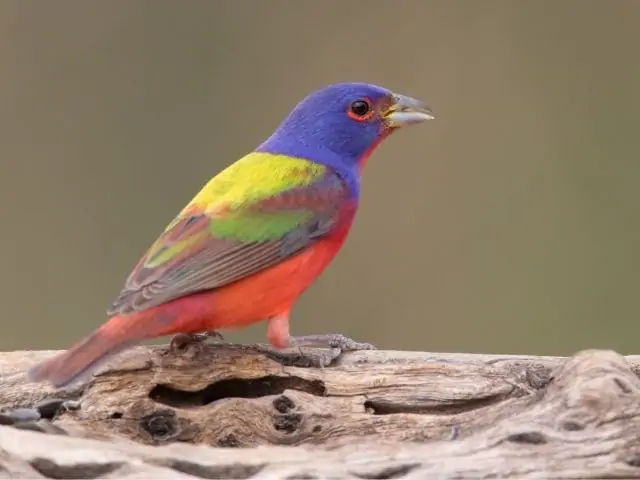
Often called the "nonpareil," meaning "without equal," this bird is a famous jewel of North America.
- Color Count (Approx. 6+): Blue (head, neck), Red (underparts, rump), Green (back), Yellow (patches near back), Black/Brown (wing and tail flight feathers), and sometimes Purple (on the face/throat).
- Plumage Breakdown: The male's head is a stunning violet-blue, the back is brilliant green, and the underparts are a deep scarlet-red. This mosaic of three primary colors is virtually unmatched in its intensity and distinctness in North America.
- Habitat and Behavior: Found in dense scrub, thickets, and woodland edges in the southern U.S. and Central America. Its cryptic female (a dull, uniform yellow-green) contrasts sharply with the male.
2. Rainbow Lorikeet (Trichoglossus moluccanus)
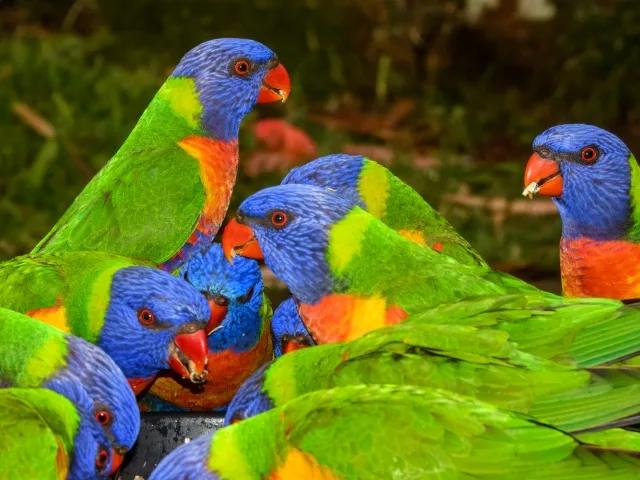
An extremely common and hyper-vibrant parrot of Australia.
- Color Count (Approx. 7): Blue (head, belly, tail tip), Green (wings, back, tail), Red (breast band), Yellow (breast, nape of neck), Orange (breast), Black (wings/tail feathers), White (under-tail coverts).
- Plumage Breakdown: Named for its spectacular plumage, the lorikeet has a deep blue head, a green mantle and wings, a striking red and yellow/orange chest, and a blue/green tail. The colors are pure pigment and are constantly in motion as the bird feeds.
- Habitat and Behavior: Highly communal, noisy, and energetic, feeding primarily on nectar and pollen using a specialized brush-tipped tongue, often seen in large, acrobatic flocks.
3. Gouldian Finch (Chloebia gouldiae)
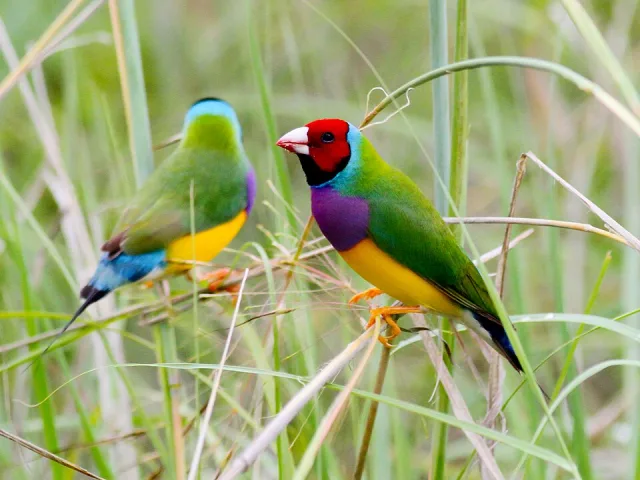
A small, spectacularly colored finch endemic to northern Australia.
- Color Count (Approx. 7): Red/Black/Yellow (face morphs), Blue (nape, rump), Green (back, wings), Violet (breast), Yellow (belly), White (vent), Black (throat, tail).
- Plumage Breakdown: Often considered one of the world's most colorful birds, the Gouldian Finch is a tiny, perfectly tailored masterpiece of contrasting blocks of color. The male has a distinct violet-blue breast, a green body, and a vivid yellow belly, all set against a sharp black tail and a bright facial mask.
- Habitat and Behavior: Found in tropical savanna woodlands. Its elaborate coloration plays a critical role in mate choice, with red-headed morphs being dominant.
4. Mandarin Duck (Aix galericulata)
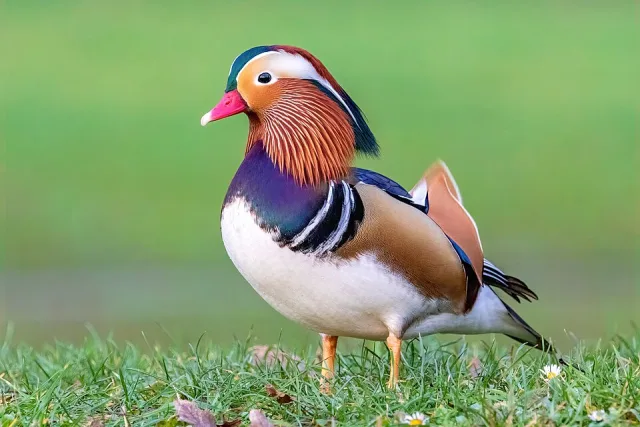
One of the most elaborate and decorative waterfowl species in the world, native to East Asia.
- Color Count (Approx. 8+): Green (crown, ear), Purple/Bronze (chest), Orange (cheeks, "sails"), White (eyebrow, throat, speculum), Black (line on head, tail), Red (bill, lower flank), Blue (wing panel), Yellow/Gold (wing tips).
- Plumage Breakdown: The male's breeding plumage features complex structural and pigment colors, including a metallic green/purple crest, large orange-red "sails" on the wings, and a checkerboard of red, white, and blue body feathers.
- Habitat and Behavior: Found in thickly wooded areas near shallow lakes and ponds. They are often kept in captivity worldwide due to their exquisite appearance.
5. Wilson's Bird-of-Paradise (Cicinnurus respublica)
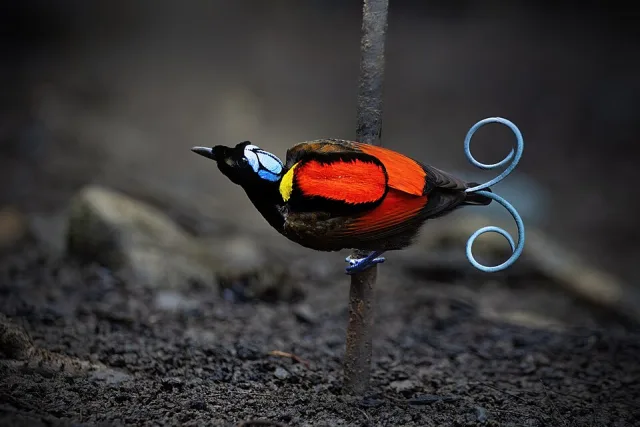
A famously colorful and bizarre bird from the rainforests of Indonesia.
- Color Count (Approx. 6): Velvety Scarlet-Red (back), Yellow (nape of neck), Bright Blue (bare skin on head), Black (wing, breast), Emerald Green (throat/chest shield), Pale Blue (feet).
- Plumage Breakdown: This bird combines bright pigment colors (red, yellow) with glossy structural colors (green, black, blue skin) in a unique pattern, including two curled tail feathers that form a double ring.
- Habitat and Behavior: Endemic to the forests of Waigeo and Batanta Islands. The male clears a small patch on the forest floor, using its brilliant colors to perform elaborate courtship dances.
6. Lilac-breasted Roller (Coracias caudatus)
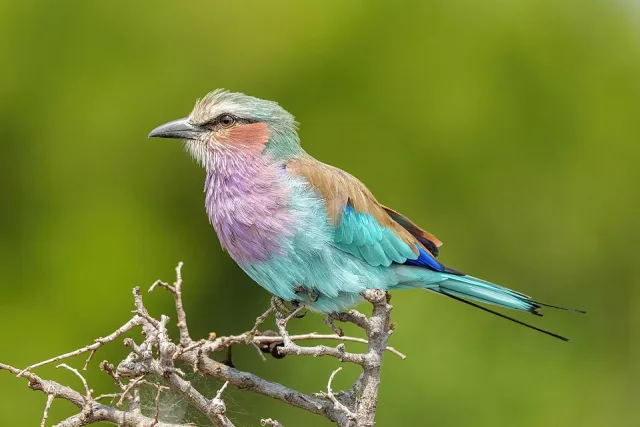
A stunningly vibrant bird from eastern and southern Africa, named for one of its central hues.
- Color Count (Approx. 8+): Lilac/Pink (breast), Turquoise Blue (belly, throat), Dark Blue/Violet (tail and flight feathers), Black (wing margins, bill), White (streaks on throat), Red/Brown (back), Yellow (feet), Green (patch on wing).
- Plumage Breakdown: This bird is a festival of structural colors. Its bright blue/green flight feathers flash brilliantly against its dark blue wings, and its distinct lilac breast provides a unique hue not often seen in avian plumage.
- Habitat and Behavior: Common in open woodland and savanna. It gets its name from its spectacular aerial courtship flight, which involves fast, rolling dives and twists.
7. Resplendent Quetzal (Pharomachrus mocinno)
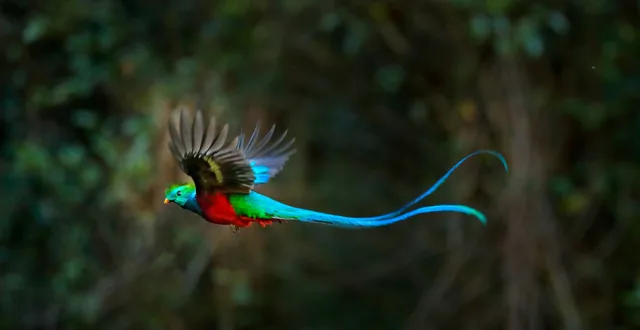
The iconic, sacred bird of Central American cloud forests.
- Color Count (Approx. 5+): Iridescent Emerald Green (head, chest, back, long tail coverts), Red (breast and belly), White (under-tail coverts, underside of flight feathers), Yellow (bill), Black/Brown (feet, hidden wing feathers).
- Plumage Breakdown: The male features spectacular gold-green iridescence on its upper parts, contrasting perfectly with a vibrant, non-iridescent red lower body. The iridescent green shifts to gold and even blue in certain lights.
- Habitat and Behavior: Found in high-altitude moist cloud forests. It feeds largely on wild avocados, which it swallows whole.
8. Eastern Rosella (Platycercus eximius)
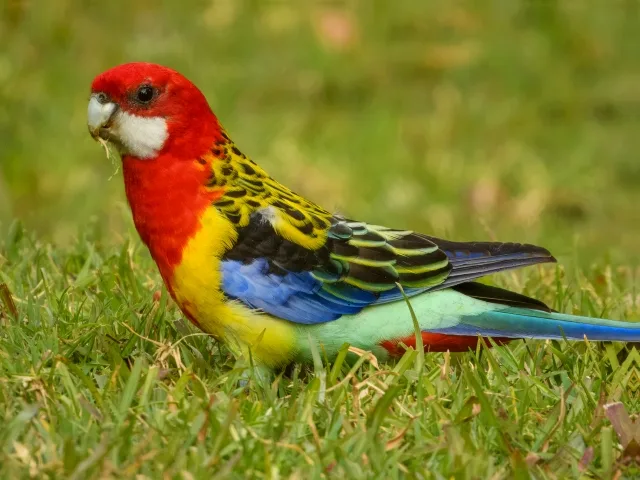
A medium-sized Australian parrot famous for its intense patchwork of primary colors.
- Color Count (Approx. 6): Scarlet Red (head, breast), White (cheek patches), Yellow (chest, shoulders), Blue (flight feathers, tail), Black (scallops on back and wings), Green (tail).
- Plumage Breakdown: The Eastern Rosella is an explosion of pure color. Its head and breast are a solid, deep red, separated from the bright yellow lower breast by a thin red line, with the back feathers being a striking pattern of black-on-yellow.
- Habitat and Behavior: Found in open woodlands, grasslands, and suburban parks across southeastern Australia. They feed mostly on seeds, fruits, and flowers.
9. Nicobar Pigeon (Caloenas nicobarica)
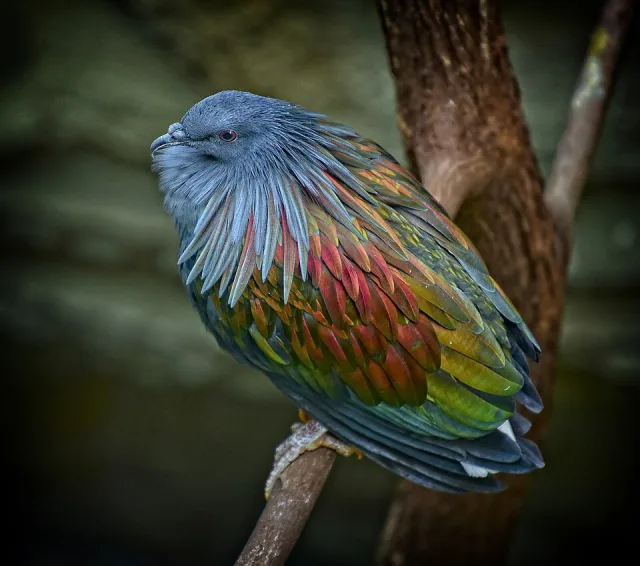
The closest living relative of the extinct Dodo, known for its incredible metallic plumage.
- Color Count (Approx. 6): Metallic Iridescent Green (back, mantle), Coppery-Gold/Bronze (neck hackles), Gray/Black (head, flight feathers), White (tail), Red (feet), Yellow/Black (bill knob).
- Plumage Breakdown: This pigeon is a structural color powerhouse. Its neck and mantle are covered in long, pointed feathers (hackles) that shimmer with an intense mix of structural green, blue, and copper-bronze, making it look like a pigeon covered in metallic jewelry. Its bright white tail provides a sharp contrast.
- Habitat and Behavior: Found on small islands and coastal regions from the Nicobar Islands east to the Solomon Islands. It is a ground-foraging bird that travels between islands.
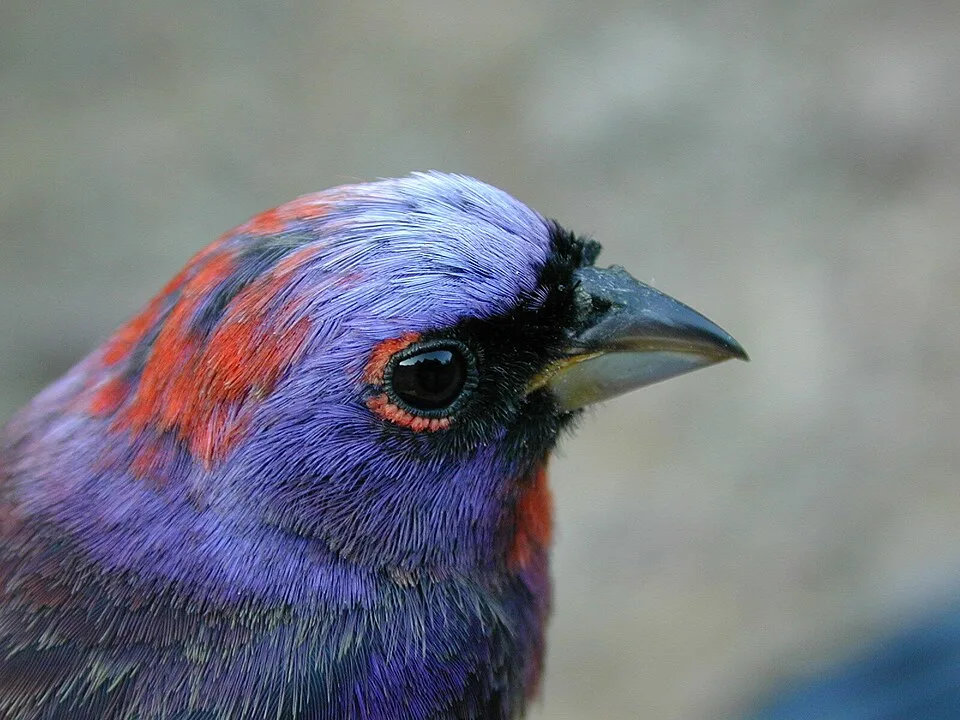
10. Varied Bunting (Passerina versicolor)
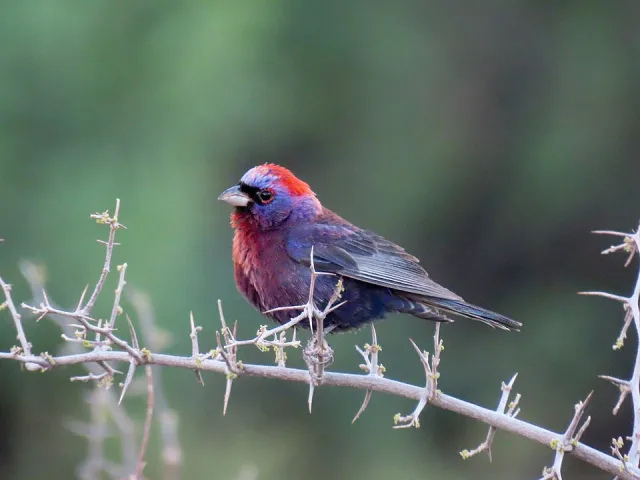
A small but intensely saturated relative of the Painted Bunting.
- Color Count (Approx. 4-5): Purplish-Blue (head, rump), Deep Red (nape, upper back), Black (mask, tail, wings), Violet-Blue (patches on chest/throat), Brown (flight feathers).
- Plumage Breakdown: The male combines the blue-based structural colors on the head and rump with pigment-based red on the nape. The combination creates a glowing, iridescent mix of purple, blue, and red tones.
- Habitat and Behavior: Found in arid and semi-arid scrub and brushlands of the southwestern U.S. and Mexico. Like other buntings, its colors are dependent on diet and health.
The Evolution of Complexity
The sheer amount of biological complexity required to produce a multi-colored bird highlights a fundamental truth of evolution: sexual selection is a powerful engine for beauty. When the most visually extravagant males are rewarded with the highest reproductive success, the evolutionary pressure to increase the number and intensity of colors becomes immense.
A bird displaying five or more pristine colors is essentially telling the world, "I have the foraging skills, the genetic resilience, and the metabolic health to produce this extravagant display, and I still have energy to spare." This multi-coloration provides visual proof of fitness that is hard to fake, making these birds the crowning jewels of the avian world. Their plumage is not just a coat of feathers, but a dynamic biological resume written in light and pigment.
How Birds Achieve Red Feathers and the World's 10 Most Brilliant Red Birds
