

The most common birds in the world can vary depending on the specific region and habitat. However, there are a few bird species that are generally considered to be among the most common worldwide. These generally have spread because of human intervention. Early
European explorers took birds like the House Sparrow with them and across Europe and Asia, the Rock Dove was domesticated and used to carry messages. And there are some birds that are just successful because of their numbers in an area and the lack of human intervention. Here are some of my picks for the most common birds in the world.
Rock Dove (Columba livia)
The Rock Dove has become known as the feral pigeon and is found in cities and urban areas all over the world. They come from domestic populations that have returned to the wild. Domestic pigeons were bred for various purposes, such as racing, show, or as pets. When they are released or escape from captivity, they have been able to adapt to living in urban and rural environments and are often found in cities and towns around the world.
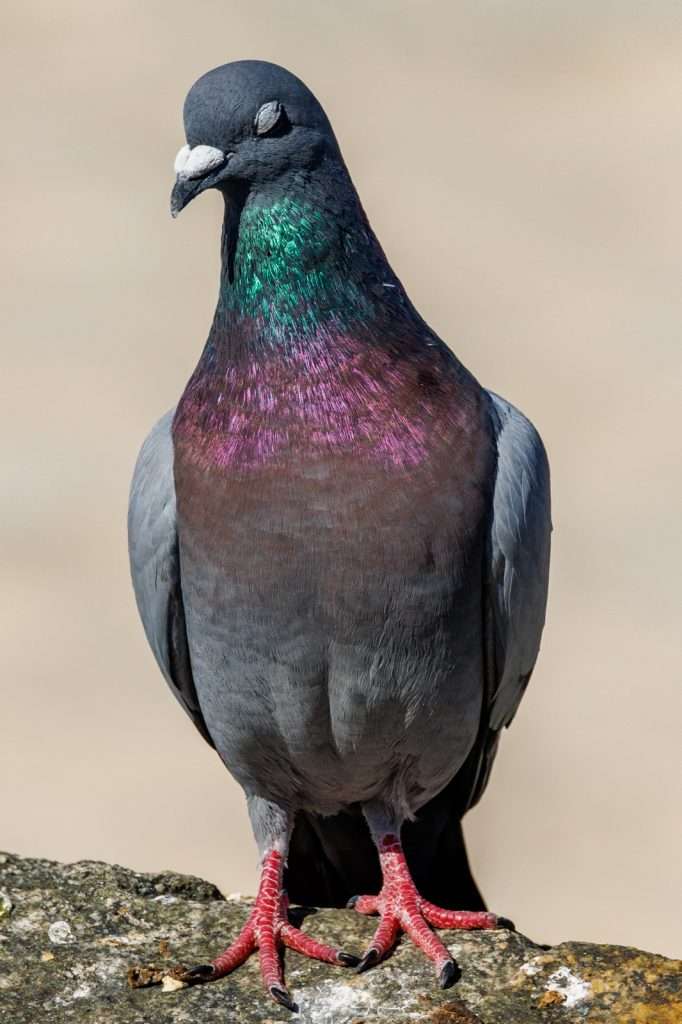
Feral pigeons generally have a bluish-gray body with iridescent feathers on the neck. They have a characteristic two dark bars on each wing and a dark band on the end of the tail. Some feral pigeons may have color variations due to domestic breeding.
Pigeons are social birds and often gather in flocks. They have a well-defined pecking order within the flock and communicate with various vocalizations and body postures. They are considered both a nuisance and a pest by some people due to their abundance, droppings, and potential damage to buildings. In some areas, efforts are made to control their populations, though their abundance and adaptability often make complete eradication challenging.
House Sparrow (Passer domesticus)
These little birds are highly adaptable birds and can thrive in a variety of environments, including urban areas, farmlands, and grasslands. They are commonly found in close association with human settlements, feeding primarily feed on seeds and grains, but they also consume insects, fruits, and scraps of human food.

While the House Sparrow remains a common species in many areas, there have been concerns about declining populations in some regions. Changes in agricultural practices and urbanization have impacted their habitat and food sources. In some places, efforts are being made to provide suitable nesting sites and conserve their populations.
Overall, the house sparrow is a familiar and charismatic bird that has adapted well to human-altered landscapes, making it a common sight in many parts of the world.
Common Starling (Sturnus vulgaris)
The Common Starling is a medium-sized, songbird belonging to the starling family (Sturnidae). It is native to Europe, Western Asia, and North Africa but has been introduced to various other regions, including North America, South Africa, Australia, and New Zealand.
Adult Common Starlings have a glossy black plumage with iridescent purple and green tones. During breeding season, they develop bright yellow bills and eye rings. In winter, their plumage may have white spots, and young birds have a duller, brownish appearance.

Starlings are highly social birds, often forming large flocks that can include thousands of individuals. They are agile flyers and skilled at mimicking other bird species' calls and human-made sounds, which contributes to their reputation as vocal mimics.
Common Starlings are adaptable and can thrive in a variety of habitats, including urban areas, farmlands, woodlands, grasslands, and coastal regions. They were introduced to North America in the late 1800s when approximately 100 birds were released in New York City's Central Park. They have since spread rapidly across the continent, reaching every state in the United States and becoming one of the most numerous and widespread bird species in North America. Their introduction has had significant ecological impacts, including competition for nesting sites with native bird species and agricultural damage due to their large foraging flocks.
Barn Swallow (Hirundo rustica)
The Barn Swallow is a widespread and well-known bird species belonging to the family Hirundinidae. These medium-sized birds are famous for their distinctive appearance and impressive aerial acrobatics.
Barn Swallows have a sleek and slender body with long, pointed wings and a deeply forked tail. They have blue-black plumage on their backs, wings, and head, and their underparts are a creamy white with rust-colored markings on the throat and forehead.

These adaptable birds have a vast range, occurring on all continents except Antarctica. They are migratory birds, spending their breeding season in the Northern Hemisphere and then flying south to warmer regions for the winter. These swallows prefer open country areas, including farmlands, meadows, and marshes, where they can find insects for feeding. They are also commonly found around human-made structures such as barns, bridges, and houses, hence their name "barn" swallow.
Barn Swallows undertake long-distance migrations. In North America, they migrate to Central and South America for the winter, covering thousands of miles during their journey. While they are not considered globally threatened, some populations may face challenges due to habitat loss and disturbance. They are protected by various conservation efforts, as their presence is beneficial for controlling insect populations.
Mallard (Anas platyrhynchos)
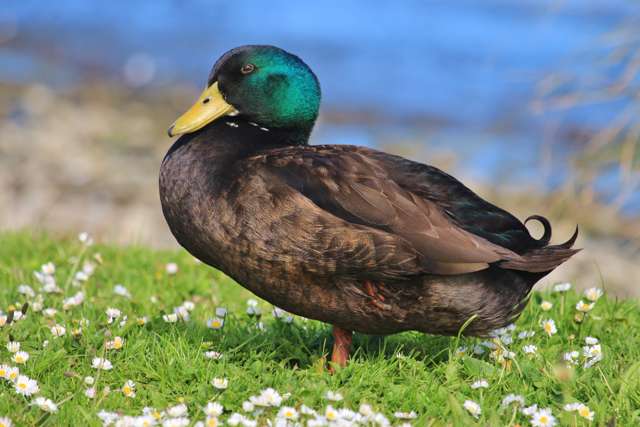
The Mallard is a species of dabbling duck that is widely distributed across North America, Europe, Asia, and parts of North Africa. It belongs to the Anatidae family and is one of the most recognizable and abundant duck species in the world.
Mallards are medium-sized ducks with a body length of about 20-26 inches and a wingspan of approximately 32-39 inches. Males (drakes) have a distinctive glossy green head, a white neck ring, a chestnut-brown chest, grayish body, and a curled black tail. They also have bright yellow-orange legs and feet.

Females (hens) have a more mottled appearance, featuring a brownish-gray body with streaks and patches of darker brown, and a dab of blue on their wings. They have an orange-brown bill and legs. Both sexes have a bright blue patch on their wings, which is visible during flight.
Mallards are highly adaptable and can be found in a wide range of habitats, including freshwater and brackish wetlands, lakes, ponds, rivers, and even urban parks and golf courses. They are primarily dabbling ducks, meaning they feed mainly on the water's surface or by tipping their bodies into the water to reach aquatic plants and invertebrates.
Mallards are considered a species of least concern by the International Union for Conservation of Nature (IUCN) due to their wide distribution and large population.
Common Myna - Acridotheres tristis
The Common Myna, also known as the Indian Myna or the Asian Myna, is a species of starling native to South Asia, including India, Pakistan, Nepal, Bhutan, Bangladesh, and Sri Lanka. It has also been introduced to other parts of the world, such as Australia, the Middle East, and several Pacific islands, where it is considered an invasive species.
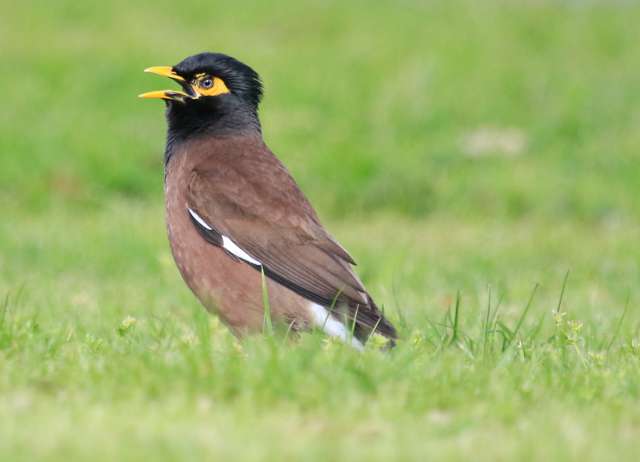
The Common Myna is a medium-sized bird, approximately 9-10 inches long. It has a brown body with a black head, bright yellow eye patches, and bright yellow legs and feet. The wings have white wing patches that are visible in flight. These birds are well-known for their impressive vocal mimicry skills. They can imitate various sounds, including human speech, other bird calls, and even mechanical noises.
Common Mynas are highly adaptable and are often found in urban and suburban areas, including parks, gardens, and city streets. They are social birds and are commonly seen in small to large flocks. Their diet is omnivorous, and they feed on a variety of foods, including fruits, insects, small vertebrates, and human food scraps.
The Common Myna has been introduced to many regions outside its native range, primarily for insect control purposes. However, in some areas, it has become a problematic invasive species, displacing native bird species, damaging crops, and competing for food and nesting sites.
American Robin (Turdus migratorius)
The American Robin is a migratory songbird that belongs to the thrush family (Turdidae). It is a common and well-known bird in North America, found throughout the United States, Canada, and parts of Mexico. The American Robin is the state bird of Connecticut, Michigan, and Wisconsin.
Adult American Robins have a distinctive appearance with a rich reddish-orange breast and belly, a dark gray to blackish head, back, and wings, and a white throat with thin white eye arcs. They have a yellow bill and legs, and their underparts are usually lighter in colour.
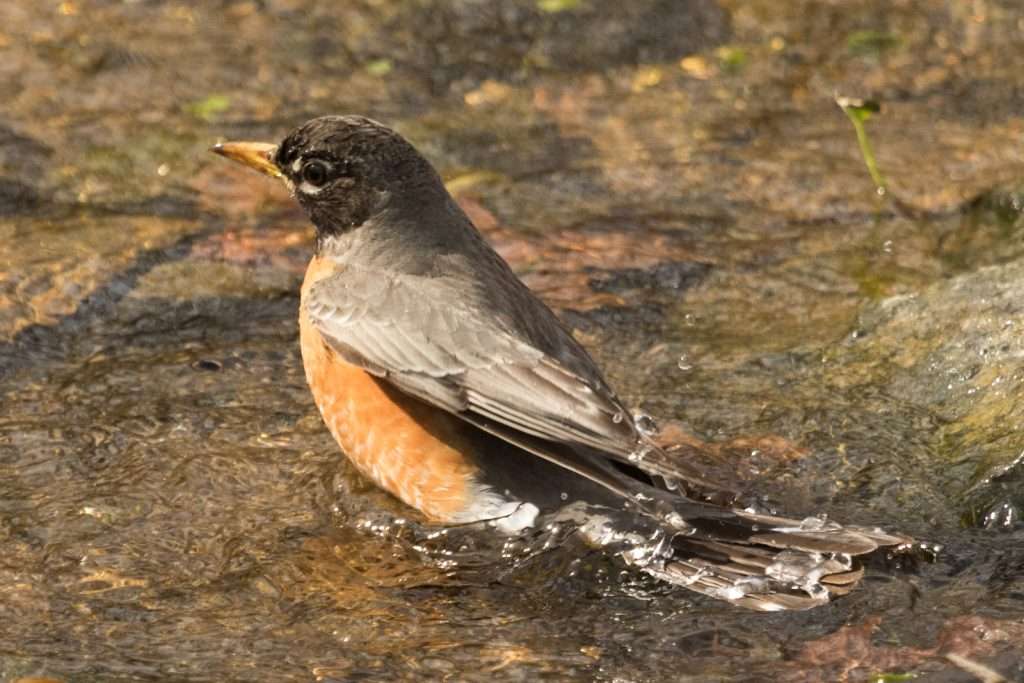
They are medium-sized birds, typically measuring about 9 to 11 inches in length with a wingspan of around 12 to 16 inches. These thrushes can be found in a variety of habitats, including woodlands, suburban areas, parks, gardens, and open fields. They prefer areas with trees and shrubs where they can build nests.
Despite their widespread presence in North America, American Robins are considered migratory birds. In the northern parts of their range, they tend to migrate southward during the winter, while in southern regions, some robins remain year-round.
Red-billed Quelea (Quelea quelea)
The Red-billed Quelea is a small passerine bird species belonging to the weaver family, Ploceidae. It is native to Sub-Saharan Africa and is one of the most abundant and widespread bird species on the continent. The species has a highly social and gregarious nature, often forming massive flocks that can number in the millions.
The Red-billed Quelea is a small bird, measuring around 4-5 inches in length. The males and females have different plumage. The breeding male has a bright red bill, red facial skin, and a chestnut or brownish crown and nape. The rest of the body is mostly a sandy brown color with some black streaks. Non-breeding males and females have a more subdued appearance, with a pale bill and less distinct facial markings.
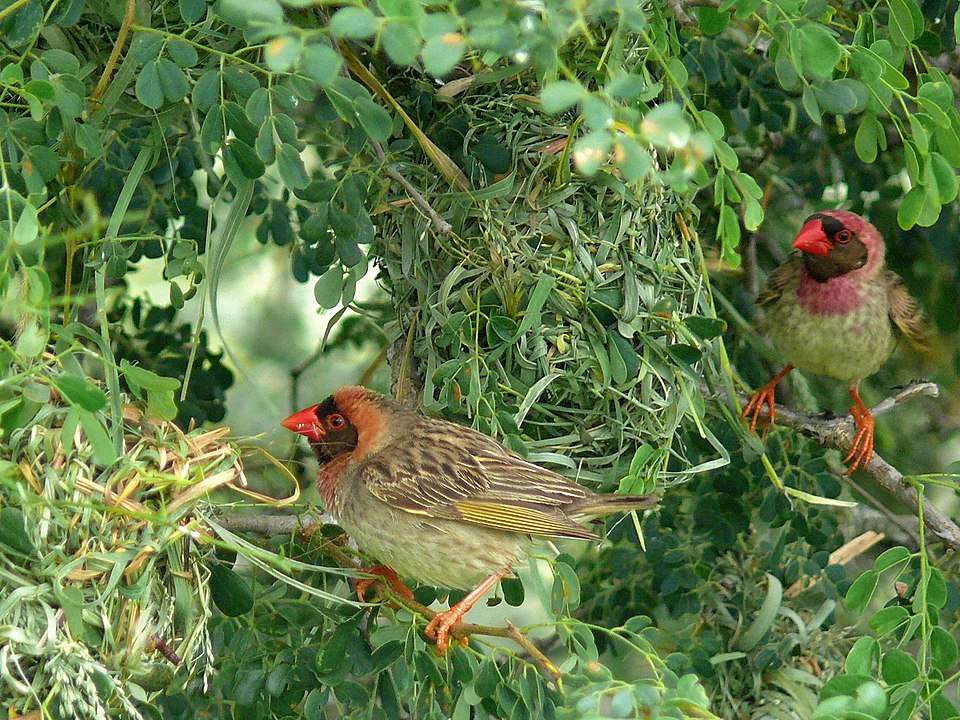
This species is highly adaptable and can be found in a wide range of habitats, including grasslands, savannas, wetlands, and agricultural areas. It is known to exploit areas with abundant food and water resources. Red-billed Queleas primarily feed on grass seeds, which form a significant part of their diet. Their diet also includes various grains and crops, making them considered agricultural pests in some regions.
These birds are highly social and form large flocks, especially outside the breeding season. Flocks can consist of different age groups and may be composed of millions of individuals, making them one of the most abundant bird species in Africa.
The Red-billed Quelea is not considered globally threatened, as its population is vast and it has a widespread distribution. However, its status varies regionally, and in some areas, it is considered a pest due to its impact on agriculture.
White Wagtail (Motacilla alba)
The White Wagtail is a small passerine bird from the family Motacillidae, which includes wagtails and pipits. It is a widespread and well-known bird species found across Europe, Asia, and parts of Africa. The White Wagtail is highly adaptable and is often seen in a variety of habitats, including urban areas, farmlands, marshes, and riverbanks.
The White Wagtail has a distinct and eye-catching appearance. The plumage is mostly black and white. The upperparts are black, while the underparts, including the belly and undertail coverts, are white. The face is also white, and it has a black stripe running from the crown to the nape of the neck. The wings have white wing bars, and the outer tail feathers are white, which are prominent during flight.
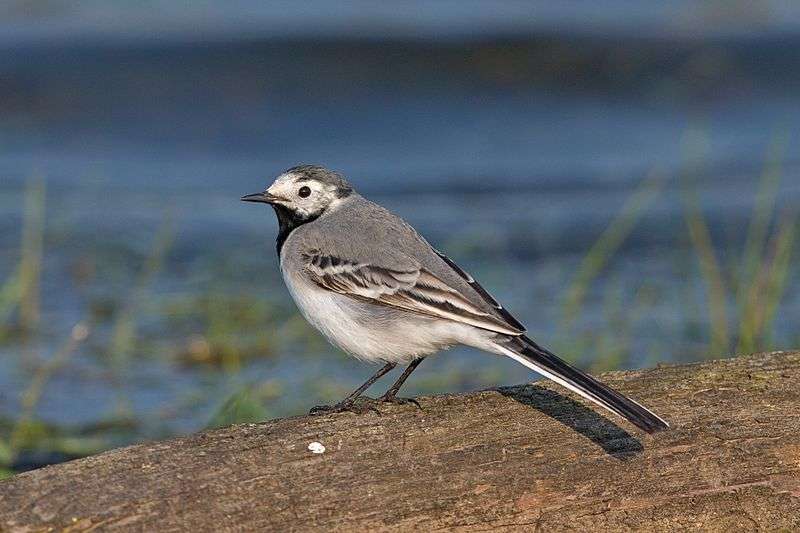
There are several subspecies of the White Wagtail, and they may have slight variations in plumage patterns depending on their geographic distribution. These birds are known for their constant wagging or bobbing motion of their tails, which is characteristic of wagtails. They use this movement to help flush out insects, their primary food source, from the ground. They are active and agile birds and can be seen running on the ground or along the water's edge.
The White Wagtail is a migratory species in many parts of its range. In some regions, they are summer breeding visitors, while in others, they migrate south during the colder months.
Eurasian Blackbird (Turdus merula)
The Eurasian Blackbird is native to Europe and is one of the most widespread and well-known birds on the continent.
The male European Blackbird is easily recognizable with its glossy black plumage and bright yellow eye ring. The beak is orange-yellow. The female blackbird has similar markings, but her plumage is more subdued, being brownish with streaks of lighter color. Juvenile birds are brown with spots and streaks on their underparts.

Eurasian Blackbirds are highly adaptable and can be found in a wide range of habitats, including gardens, woodlands, parks, and farmlands. They are omnivorous birds, feeding on a varied diet that includes insects, earthworms, fruits, berries, and seeds.
During the breeding season, male blackbirds are known for their melodious and rich song, which they use to establish and defend their territories. These birds are often seen foraging on the ground, using their strong beaks to turn over leaves and soil in search of food.
The European Blackbird is widespread and abundant in its range, and the population appears to be stable. As such, it is classified as a species of "Least Concern" by the International Union for Conservation of Nature (IUCN).
Ring-billed Gull (Larus delawarensis)
The Ring-billed Gull is a medium-sized gull species that is commonly found throughout North America. Adult birds have a white head, body, and underparts, with light gray wings and back. They have a yellow bill with a black ring near the tip, which gives them their name and their legs are greenish-yellow.
The Ring-billed Gull measures about 17 to 21 inches in length. They have a wingspan of approximately 41 to 46 inches. These gulls are highly adaptable and can be found in a variety of habitats, including coastal areas, lakes, rivers, and even large inland bodies of water. They can also be seen in urban and suburban areas, especially around parking lots, landfills, and agricultural fields.
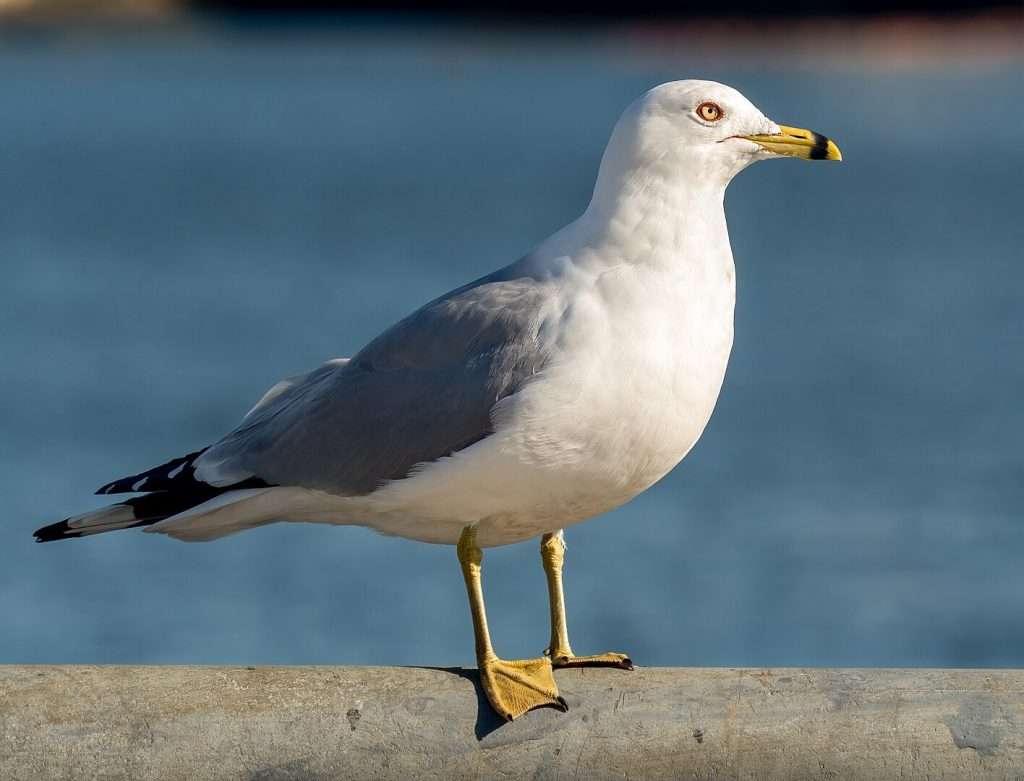
These gulls are opportunistic feeders and have a varied diet. They eat fish, insects, small rodents, eggs of other birds, and scavenged human food. During the breeding season, they gather in colonies near bodies of water. Ring-billed Gulls are migratory birds, and many of them move south during the winter months.
The Ring-billed Gull is generally considered a species of least concern, meaning it is not currently facing significant threats to its population. Overall, the Ring-billed Gull is a familiar sight in many parts of North America, and its adaptability to various environments has contributed to its widespread distribution and success as a species.
Frequently Asked Questions
What is the most common bird in the USA?
This is a contentious question with different answers given by different people. I can't give a definitive answer here but the contenders are:
American Robin
Dark-eyed Junco
Mourning Dove
Mallard
How many birds are there in the world?
It is estimated that there are over 50 billion wild birds in the world.
What is the most common bird in the world?
Probably the House Sparrow with Common Starlings, Barn Swallows and Ring-billed Gulls as runners up.
Wrapping Up
These are just a few examples of common bird species found worldwide. The actual prevalence of different bird species can vary depending on factors such as habitat destruction, climate change, and human activity. It is interesting that most of them have abundant populations as a result of human activity and they are rewarded by humans trying to exterminate them. In the 1800's, a bounty was put on the House Sparrow because of their destruction of crops. Ironic that humans brought them over to control pests like locusts!
And to the other extreme. Find out which birds are the rarest in the world.
