
Montana. The name itself conjures images of majestic mountains, sweeping plains, and the endless canvas of the Big Sky. For the dedicated birder, however, it’s not just a beautiful landscape; it’s a mosaic of critical habitats that host an astounding diversity of avian life. Where the mountains yield to the plains, a fascinating intersection of wetlands and grasslands creates a powerhouse for breeding and migrating birds, offering a rewarding journey for any nature enthusiast.
This article outlines a conceptual "Big Sky Birding Loop," traversing some of the most ecologically significant birding hotspots in the state, specifically focusing on the species that define the open prairie and the ephemeral marshes of Eastern and Central Montana.
The Prairie’s Heart: Grassland Specialists
The vast, unbroken mixed-grass and shortgrass prairie of Montana represents one of the most endangered ecosystems in North America. These grasslands are a stronghold for species that have suffered devastating declines elsewhere, making Montana's prairie a vital conservation area. Our loop begins by diving deep into the expansive plains, where the true stars are often small, ground-nesting specialists whose songs define the dawn chorus.
The Singing Trio
No Montana grassland birding trip is complete without seeking out the "singing trio"—three imperiled species whose populations remain relatively strong in the Big Sky Country:
Sprague’s Pipit: Known for its breathtaking "skylarking" display flight, the male pipit ascends hundreds of feet into the air, pouring out a thin, jingling song for minutes on end before spiraling back down. Finding one is often a test of patience, relying on tracking the high-pitched song over the vast, undulating landscape.
Baird’s Sparrow: This sparrow prefers slightly taller, denser mixed-grass prairie. It’s a notoriously secretive bird, identified more easily by its crisp, musical song—a series of notes followed by a distinctive, slightly buzzy trill—than by sight.
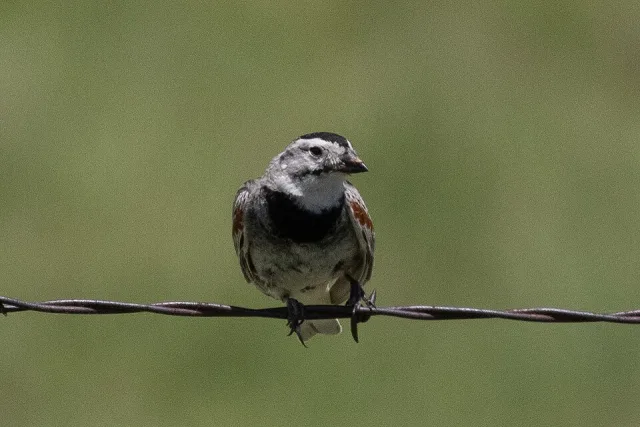
Thick-billed Longspur (formerly McCown's Longspur): Formerly known as McCown's, this striking bird is found in the shortest, sparsest grass, often associated with prairie dog colonies. The males perform a brilliant descending flight display, fanning their white-edged tails for a final flourish.
Raptors and Ground Owls
While the sparrows dominate the low strata, the prairie air is ruled by raptors. Ferruginous Hawks, the largest North American buteos, are iconic prairie predators, often nesting in isolated trees or on the ground. A true grassland treat is the Burrowing Owl, a small, long-legged owl that nests in abandoned ground squirrel or prairie dog burrows. Spotting one of these charismatic birds standing sentinel outside its underground home is a major highlight.

Marshland Oases: The Wetland Jewels
Moving along the loop, the landscape abruptly shifts as the grassland gives way to prairie potholes, managed wetlands, and National Wildlife Refuges (NWRs). These water bodies, often seasonal, act as magnets for waterfowl, shorebirds, and marsh residents, especially during the spring and fall migrations. Two of the most critical wetland areas in the region are Freezeout Lake
Waterfowl Spectacle at Freezeout
In the spring, Freezeout Lake is the scene of one of the continent's most spectacular avian events: the staging of Snow Geese and Ross's Geese. Tens of thousands, sometimes hundreds of thousands, of these white-plumed migrants descend on the lake, creating a living blizzard that fills the air with sound and movement. Beyond the geese, the wetlands host a range of breeding ducks, including Northern Pintail, Gadwall, and the elegant Cinnamon Teal.

Waders and Marsh Dwellers
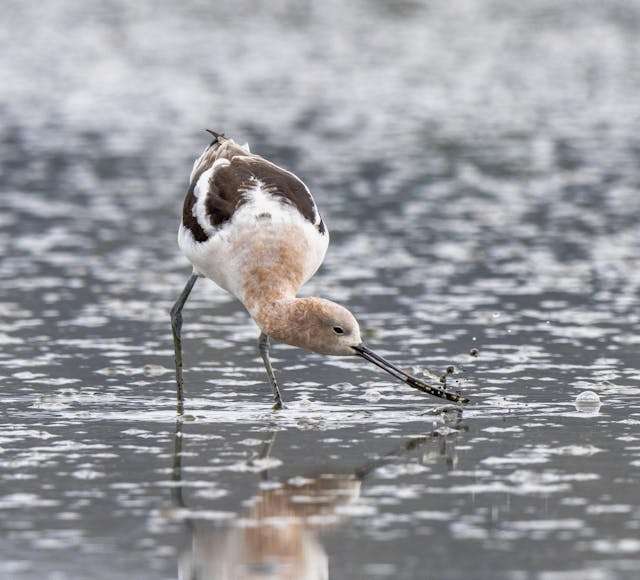
The muddy edges and shallow waters of these wetlands are prime habitat for shorebirds. Look for the striking black-and-white patterns of the American Avocet and the bold Black-necked Stilt, often seen probing the mudflats. The mournful, whistling call of the Long-billed Curlew—the largest North American shorebird, with a comically long, curved bill—is the quintessential sound of the prairie wetlands.
Closer to the reeds and cattails, a different set of birds takes residence. The flash of the Yellow-headed Blackbird is unmistakable, the males’ booming calls echoing across the marsh. The secretive Sora and Virginia Rail—members of the rail family that prefer dense vegetation—can often be detected only by their distinctive vocalizations.

The Riparian Bridge: Where East Meets West
The rivers and creeks that cut through the Montana plains—the riparian corridors—act as crucial "bridges" between the dry grasslands and the water bodies. These lines of cottonwood and willow trees, especially along the Missouri River breaks, provide shelter and food for songbirds and migratory species that would otherwise not survive on the open prairie.
Here, a birder can find species more commonly associated with eastern forests, such as Warbling Vireos, Yellow Warblers, and the colorful Lazuli Bunting. These corridors are also the best place to listen for the distinctive call of the Black-billed Cuckoo, a slender, secretive bird that often appears during caterpillar outbreaks.

The Ultimate Loop: Conservation and Legacy
A practical birding loop might begin in the Great Falls area, visiting Benton Lake NWR and Freezeout Lake WMA, before heading east and north toward the vast grasslands near the Charles M. Russell National Wildlife Refuge or the North Valley Grasslands IBA (Important Bird Area). This trajectory takes the traveler from the rich marsh systems to the core prairie habitat, showcasing the full spectrum of Montana’s Big Sky birding.
However, any birding journey through Montana is also an encounter with the challenges of conservation. Grassland birds face the steepest population declines of any avian group, primarily due to habitat loss from agricultural conversion. The continued health of this loop—and the incredible bird life it supports—is entirely dependent on the efforts of local ranchers, land trusts, and state programs like the Migratory Bird Wetland Program, which strives to protect and restore these critical habitats.
To bird Montana is to experience both the exhilarating abundance of the wild West and the profound responsibility of preserving its natural heritage. The rewards are immeasurable: the sight of a thousand geese lifting off at once, the fluting call of a Curlew across a misty prairie, and the memory of the Big Sky stretching over a thriving, vital landscape. It’s a loop every serious birder must take.
