
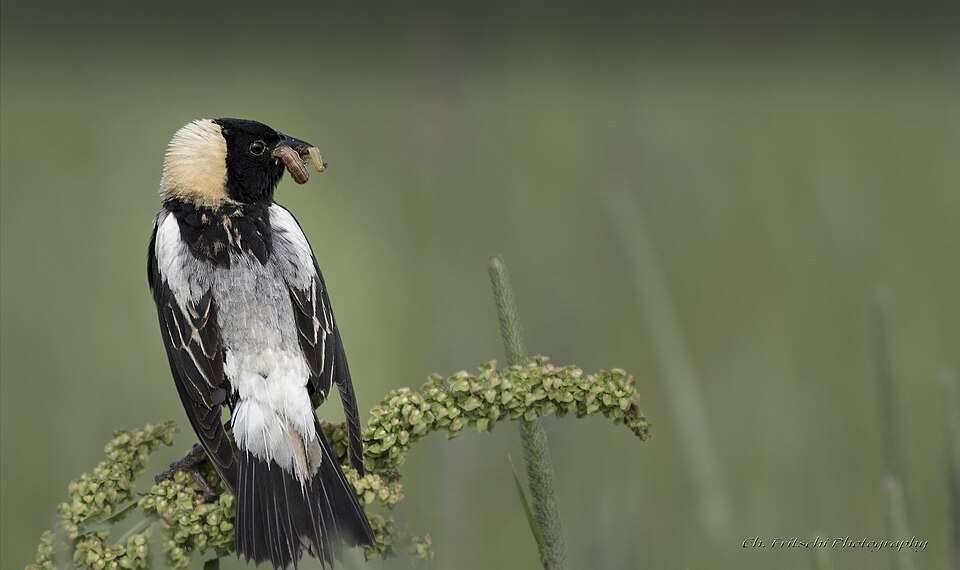
For decades, conventional wisdom separated production agriculture from wildlife conservation. Pastures were meant for livestock; nature reserves were meant for birds. Today, field data from agronomists and range ecologists tells a much more integrated story: well-managed cattle grazing is one of the most effective tools available for maintaining high-quality grassland habitats.
According to the North American State of the Birds report, grassland birds have experienced a steeper, faster population decline than any other avian group—a loss exceeding 2.5 billion birds since 1970. Because more than 85% of the Midwest’s historic grassland area is under private ownership, the future of these species relies directly on the management choices of working farms.
Implementing a bird-friendly grazing framework does not require you to sacrifice forage quality or average daily gains. By pairing specific visual identification with targeted rotational strategies, you can turn your herd into an engineering tool that builds structural plant diversity.
1. Species Deep-Dive: Identification & Structural Preferences
Grassland birds are not a monolith; different species require vastly different grass heights, densities, and litter depths (the layer of dead vegetation on the soil surface) to successfully nest and forage. Understanding which birds are on your property tells you exactly what kind of pasture structure you are currently producing.
Bobolink (Dolichonyx oryzivorus)
Often described by birders as wearing a "backward tuxedo," the male Bobolink is the only North American songbird with a white back and a completely black belly. They sport a distinct, creamy-yellow patch on the back of the head and possess a loud, bubbling, metallic song that sounds like an old-fashioned sci-fi synthesizer.
Structural Preference: Tall, dense, undisturbed grass (12–24+ inches) with a deep litter layer and low clover or alfalfa density. They completely avoid short, overgrazed sod or fields with high concentrations of woody brush.
Nesting Habit: Ground nests constructed in depression bowls hidden deep beneath overarching thatch.
Eastern Meadowlark (Sturnella magna)
A chunky, heavy-bodied bird with a brilliant lemon-yellow breast marked by a bold, black "V" collar. When flushed, they exhibit short, stiff wingbeats alternating with glides, exposing bright white outer tail feathers. Their song is a clean, lazy, downward-slurring whistle: see-you, see-year!
Structural Preference: Mid-to-tall grass structure (8–15 inches) with a moderate litter layer. They favor older, well-established perennial pastures with a mix of native cool-season grasses and scattered forbs (broadleaf wild plants).
Nesting Habit: Ground-nesters that build incredibly elaborate grass woven domes, complete with a side entrance and an covered "runway" up to several feet long to conceal their approach from aerial predators.
Grasshopper Sparrow (Ammodramus savannarum)
An exceptionally small, flat-headed, short-tailed sparrow that is easily overlooked. It has an unstreaked, buff-colored breast, a white central crown stripe, and bright yellow accents directly in front of the eyes (the lores) and on the bend of the wing. Its song is an incredibly high-pitched, insect-like buzz (pit-tuck, zzzzzzzz) that sounds identical to a meadow grasshopper.
Structural Preference: Low-to-mid grass heights (4–10 inches) with an absolute requirement for patches of bare ground between bunchgrasses. They avoid thick, solid mats of dense thatch because they forage by running along the bare dirt between grass stems.
Nesting Habit: A small cup of grass built on the ground, usually placed right against the base of a clump of bunchgrass or a broadleaf weed for overhead cover.
2. The Operational Conflict: Understanding the 40-Day Nesting Window
The fundamental bottleneck for grassland bird survival on a working livestock farm is the timing and duration of pasture disturbance. These birds are obligate ground-nesters, meaning their eggs and flightless young are completely exposed to hooves, tractor tires, and mower blades.
To successfully build a nest, lay eggs, and raise a clutch to flight readiness, most grassland songbirds require an absolute minimum of 40 to 50 days of continuous rest between major disturbances.
Nest Site Selection
If your cattle return to a paddock or if a hay field is clipped before this 40-day window concludes, the entire brood is typically lost. Because birds will repeatedly try to renest after a failure, an poorly timed grazing rotation can act as an "ecological trap"—drawing birds in with good early-season cover, only to destroy multiple nesting attempts across the summer.
3. Bird-Friendly Grazing Systems: Management Protocols
You can support the entire structural spectrum of these species simultaneously by transitioning away from continuous grazing toward Adaptive Multi-Paddock (AMP) Rotational Grazing. By manipulating stock density and rest periods, your cattle can purposefully shape the landscape.
                  ┌──────────────────────────────────────────────┐
                  │          UNMANAGED CONTINUOUS SYSTEM         │
                  │   • Short uniform sod     • Zero bird nests  │
                  └──────────────────────────────────────────────┘
                                         │
                                         ▼
   ┌────────────────────────────────────────────────────────────────────────────┐
   │               ADAPTIVE MULTI-PADDOCK (AMP) BIRD-FRIENDLY ROTATION          │
   └────────────────────────────────────────────────────────────────────────────┘
        │                               │                               │
        ▼                               ▼                               ▼
  [ PADDOCKS 1-4 ]               [ PADDOCKS 5-8 ]               [ REFUGES / CENTER ]
  • High Intensity Stocking      • Moderate Stocking Density    • Deferred from Grazing
  • Taken down to 4" residue     • Maintained at 8-12" height   • Left uncut May 15-July 15
  • Creates bare ground spots    • Retains protective cover     • Safe harbor for fledglings
  • Target: Grasshopper Sparrow  • Target: Eastern Meadowlark   • Target: Bobolinks
Protocol A: High-Density, Short-Duration Rotation
The Execution: Subdivide large pastures into smaller paddocks using temporary electric polywire. Stock paddocks at a high density, moving the herd frequently—ideally every 24 to 48 hours.
The Benefit: High stock density forces cattle to graze non-selectively, preventing them from only eating the high-sugar grasses and leaving the weeds. Because the herd moves rapidly, the absolute risk of nest trampling within a specific paddock is compressed into a 1- or 2-day window rather than spread out across weeks.
The Target Residue: Rotate cattle out of the paddock when the average forage height is no lower than 4 inches (ideally 6 to 8 inches). This leaves adequate residual leaf area for rapid plant recovery while preserving lower-level concealment cover.
Protocol B: The "Skip-Paddock" Deferment Strategy
The Execution: Instead of moving your herd sequentially down a straight line of adjacent paddocks, skip paddocks dynamically during the peak nesting season (May 15 to July 1).
The Benefit: This intentional skip leaves wide blocks of tall, undisturbed grass directly adjacent to actively grazed areas. It prevents creating massive, uninterrupted zones of low-stature forage, giving birds a safe perimeter to retreat to when cattle enter an adjacent section.
Protocol C: The 33% Nesting Refuge Model
The Execution: Fence off a centralized block or a series of underproductive paddocks representing roughly one-third of your total available acreage. Completely exclude livestock and machinery from this area from May 15 to July 15.
The Benefit: This single practice guarantees a safe harbor for slow-developing species like the Bobolink. After July 15, this stockpiled forage can be cut for clean late-season hay or flash-grazed at high density. By late summer, the chicks are fully flight-capable and can easily escape hooves and machinery.
Regional Programs & Financial Incentives for Landowners
Implementing these management changes does not have to be an unassisted financial burden. A variety of regional and federal programs offer direct financial payments and technical range assistance to landowners who adopt bird-friendly practices.
Audubon Conservation Ranching (ACR)
The ACR program partners directly with livestock producers to stabilize grassland bird populations through market-driven incentives. Landowners work with an Audubon range ecologist to draft a site-specific Habitat Management Plan tailored to their soil types and operational goals.
The Incentive: Once certified, producers earn the right to use the "Audubon Certified Bird-Friendly Land" seal on their beef or bison products, unlocking access to premium, conservation-conscious consumer markets and dedicated wholesale supply chains.
USDA Farm Bill Programs (NRCS)
Environmental Quality Incentives Program (EQIP): EQIP provides direct cost-share financial assistance to install structural conservation practices. Landowners can receive funding for perimeter and interior cross-fencing, solar-powered livestock watering pipelines, and heavy-use protection areas required to successfully execute an intensive rotational grazing system.
Conservation Stewardship Program (CSP): For producers already practicing rotation, CSP offers annual incentive payments to enhance their management further—specifically offering enhancements for wildlife-friendly grazing management, delaying hay cutting, and monitoring wildlife responses.
Metric Reference: Forage vs. Avian Structural Requirements
| Grassland Management Metric | Target Value | Operational & Ecological Significance |
| Minimum Nesting Rest Window | 40 to 50 Days | Time required for an uninterrupted avian reproductive cycle |
| Target Pre-Grazing Height | 12 to 18 Inches | Maximizes livestock dry matter intake while drawing in nesting Meadowlarks |
| Minimum Post-Grazing Residue | 4 to 6 Inches | Preserves root system energy reserves and retains fundamental ground cover |
| Peak Breeding Exclusion Window | May 15 – July 15 | Critical period to defer grazing/haying on dedicated refuge acreage |
| Minimum Breeding Patch Size | 20+ Acres | Large, square-shaped paddocks reduce predator edge-effects |
By utilizing the natural relationship between grazing animals and grassland ecosystems, Midwestern landowners can run highly productive, profitable livestock operations while serving as the primary shield against the loss of our native grassland songbirds.
