
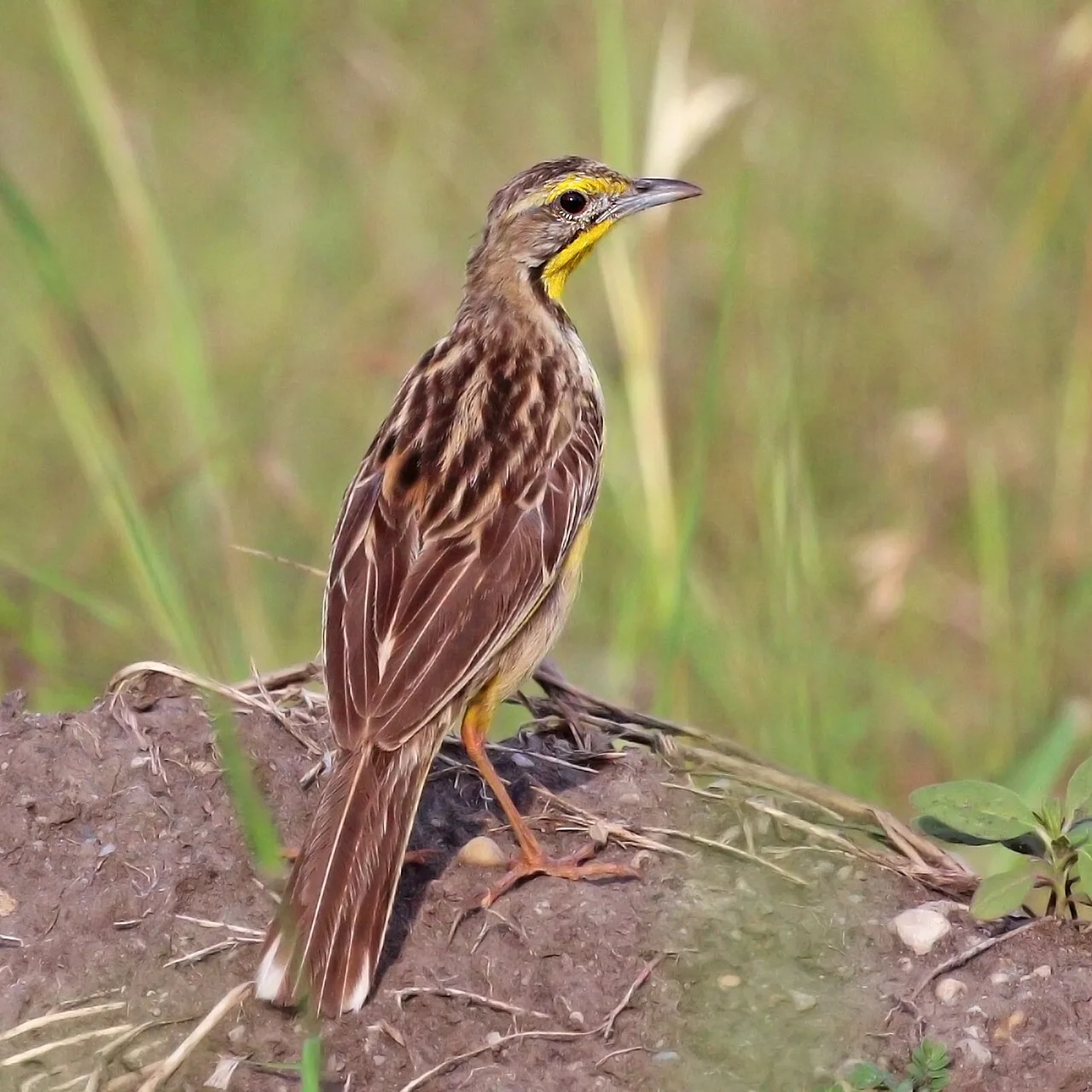
Imagine walking through a sweeping, sun-drenched grassland. In the distance, a bird perches on a fence post. It sports a brilliantly streaked, camouflaged brown back, a chest glowing with a radiant, sun-yellow hue, and a sharp, dramatic black "V" stitched right across its throat.
If you are in North America, you are looking at an Eastern Meadowlark.
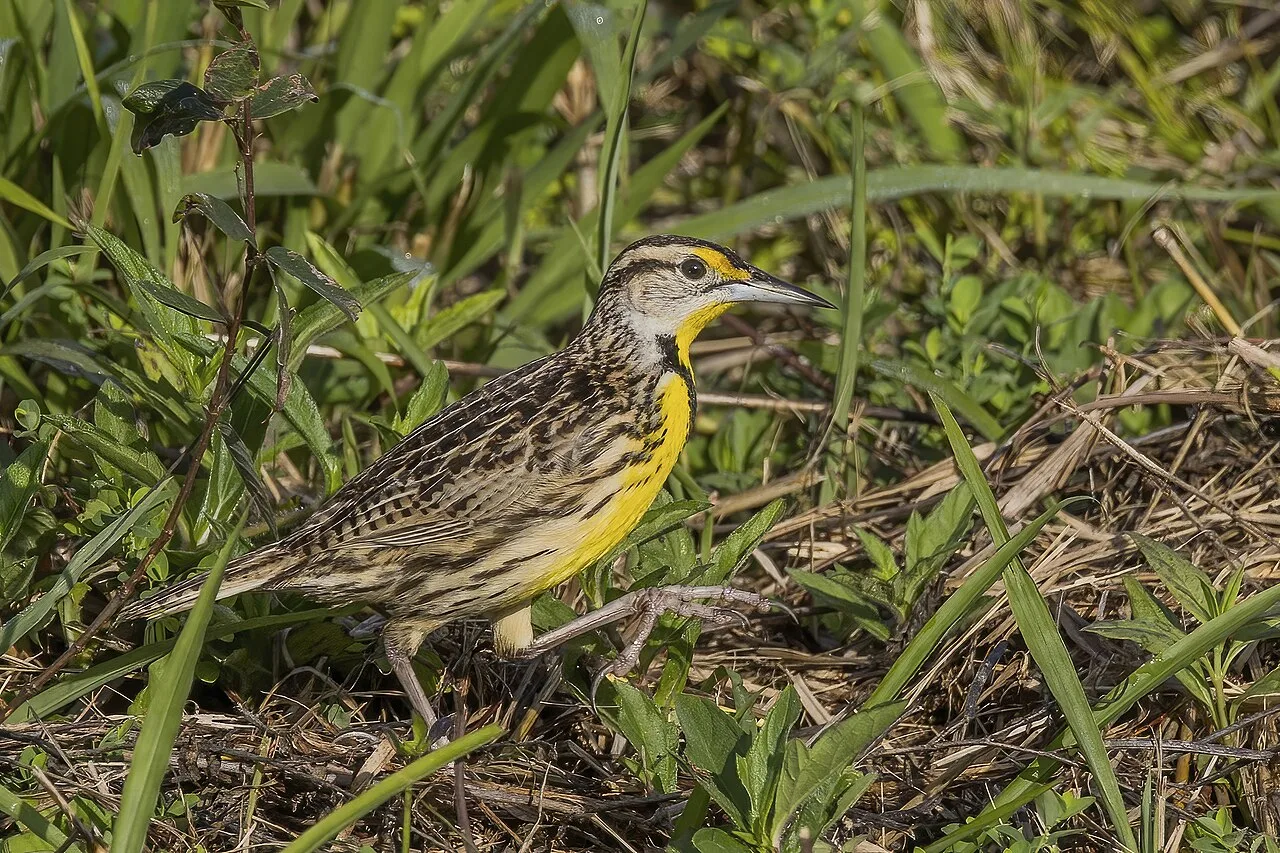
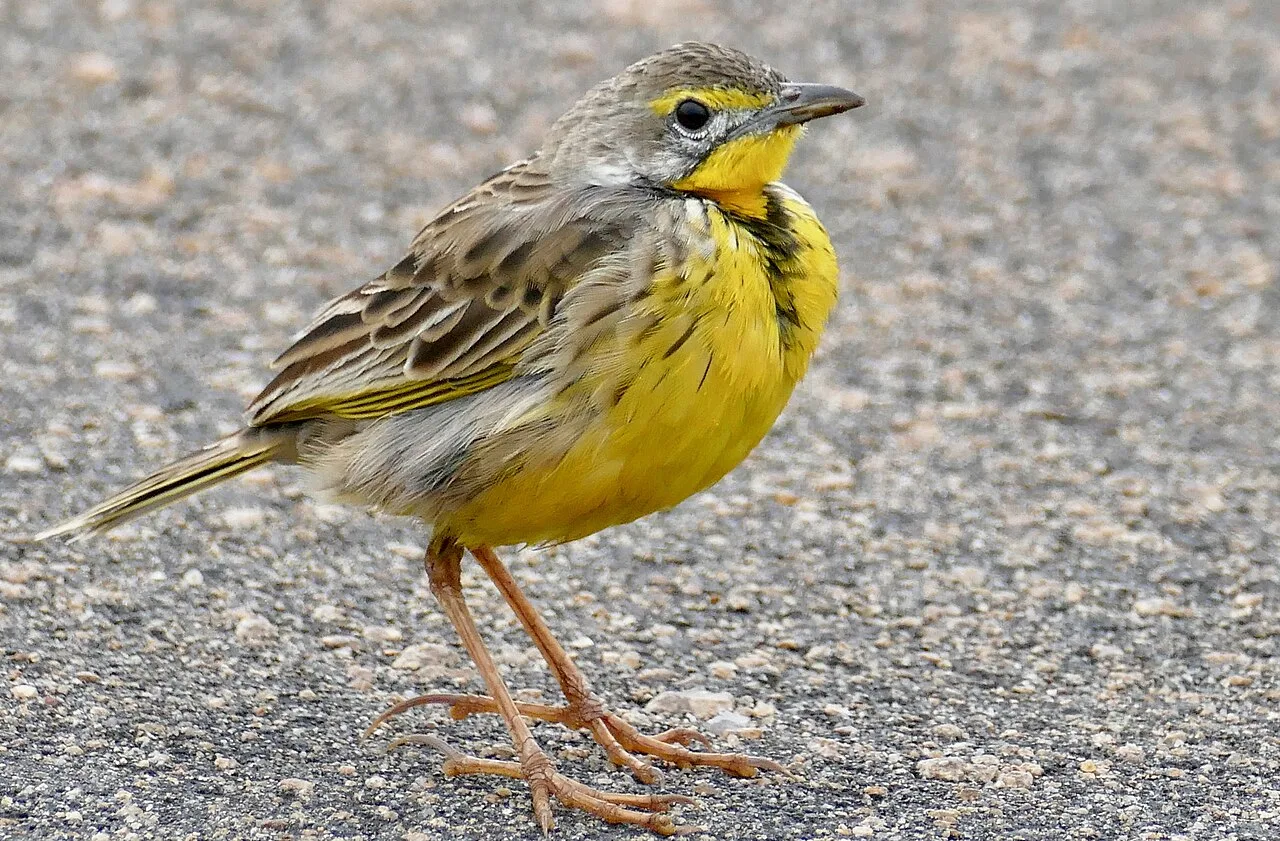
But if you were standing in the open savannas of sub-Saharan Africa, looking at a bird that is visually an absolute carbon copy, you would be looking at a Yellow-throated Longclaw.
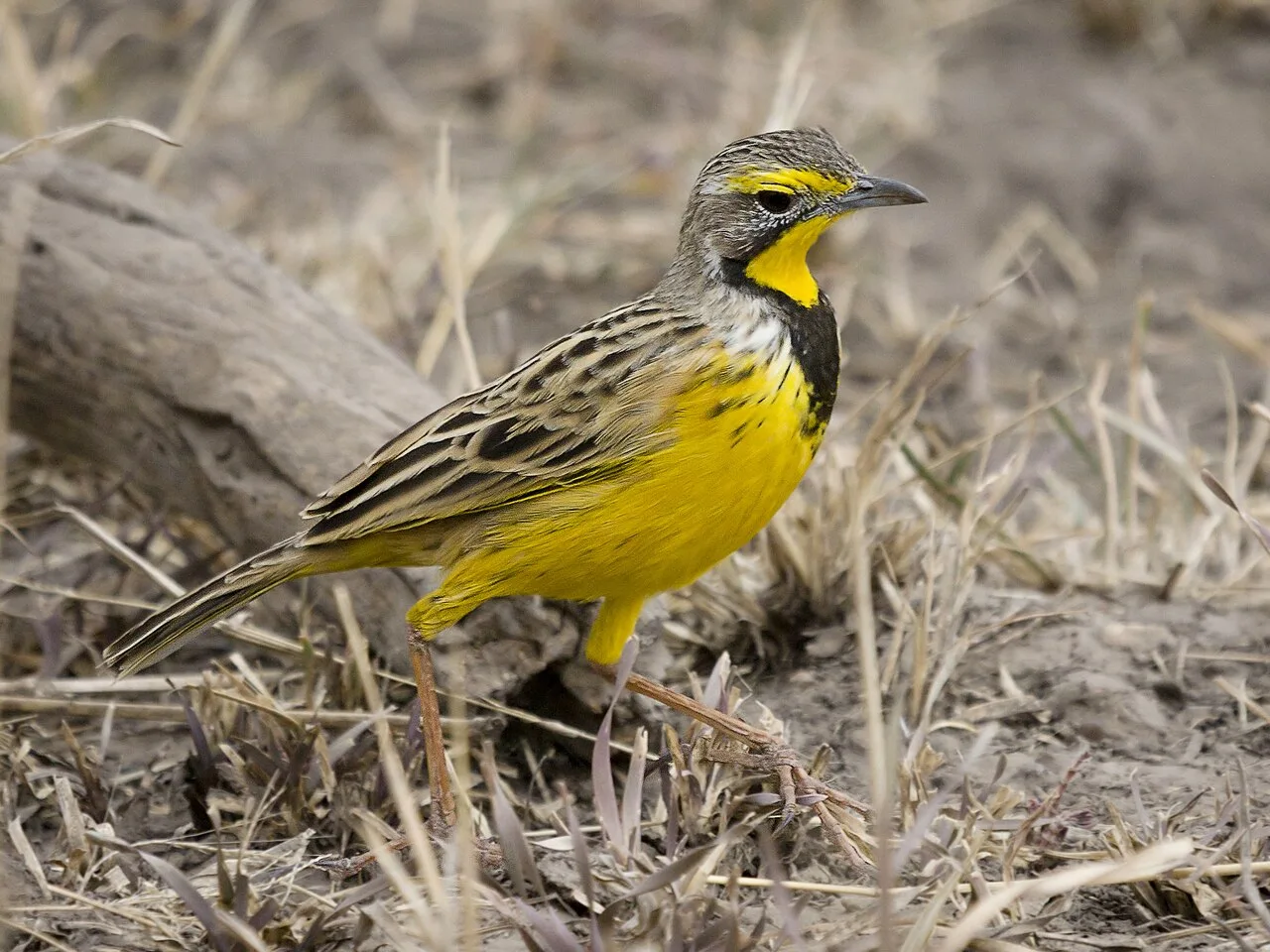
Despite looking like identical twins, these two species are completely unrelated. They haven't shared a common ancestor for tens of millions of years. Their striking similarity is one of the planet's most jaw-dropping examples of convergent evolution—the biological phenomenon where nature uses the exact same blueprint to solve the exact same ecological puzzle.
The Tale of the Tape: Family Trees Split Apart
To understand how wild this resemblance is, we have to look at their completely separate branches on the avian family tree.
| Attribute | Eastern Meadowlark (Sturnella magna) | Yellow-throated Longclaw (Macronyx croceus) |
| Home Turf | North American prairies, pastures, and fields | Sub-Saharan African grasslands and savannas |
| Family | Icteridae (New World Blackbirds) | Motacillidae (Pipits and Wagtails) |
| Close Cousins | Orioles, Grackles, and Red-winged Blackbirds | Water Pipits, Cape Wagtails |
An Eastern Meadowlark is essentially a highly specialized blackbird, while the Yellow-throated Longclaw is an oversized, colorful wagtail. They evolved on entirely separate continents, thousands of miles apart, yet arrived at the exact same visual destination.
The Shared Niche: Why Nature Wrote the Same Blueprint
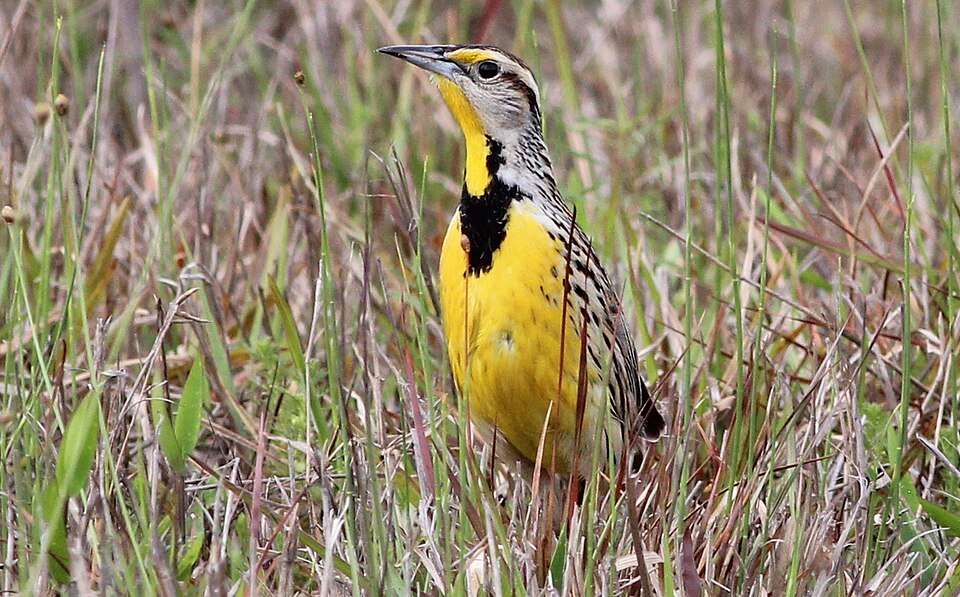
Evolution doesn't happen in a vacuum; it is shaped by environment. Both of these birds occupy the precise same ecological niche: they are medium-sized, ground-dwelling, insect-eating foragers in wide-open, tall grasslands.
Living life down in the turf presents two major survival challenges. To survive, both species independently evolved the exact same toolkit:
1. The Aerial Camouflage (The Back)
From above, a grassland bird is highly vulnerable to soaring raptors like hawks and falcons. Both the meadowlark and the longclaw evolved a highly complex, mottled brown-and-tan feather pattern across their backs and wings. When they crouch down into dry grass, they completely vanish into the background.
2. The Frontal Billboard (The Chest)
While hiding from predators is crucial, these birds still need to communicate with each other. Because tall grass blocks horizontal sightlines, a bird perched on a tussock needs a high-visibility signal to mark its territory or attract a mate.
Both species solved this by evolving a brilliant, glowing yellow chest. To make that yellow pop even harder against the vegetation, evolution added a stark, high-contrast black "V" or collar right below the throat. It functions like a neon sign for passing birds of their own species, completely hidden from predators above but instantly recognizable from the front.
Look Closer: How to Tell Them Apart
While they look like clones at a glance, millions of years of separate ancestry leave behind subtle structural clues. If you were to hold them side by side, their true lineages give them away:
The Feet: True to its name, the Yellow-throated Longclaw features an incredibly elongated hind toe and claw. This is a classic trait inherited from its pipit ancestry, helping it walk and balance across tangled mats of tropical savanna grass. The Meadowlark’s feet are stouter, built by its blackbird lineage for powerful walking and scratching at the soil.
The Bill: The Meadowlark boasts a heavy, wedge-shaped, sharply pointed bill—perfect for a technique called "gaping," where it forces its bill into the ground or a clump of dirt and opens it wide to pry open hiding spots for insects. The Longclaw has a much slenderer, finer insect-eater's bill typical of a wagtail.
The Tail Flash: In flight, the Eastern Meadowlark flashes bright white outer tail feathers. The Longclaw also flashes white in its tail, but the pattern restriction and feather shapes differ subtly, revealing its pipit mechanics.
The Takeaway for Birders
The Meadowlark and the Longclaw teach us that nature is incredibly efficient. When faced with the endless, windy spaces of a sun-lit grassland, there are only so many optimal ways to build a successful bird.
The next time you catch the bright yellow flash of a Meadowlark on a local fence post, you aren't just looking at a beautiful local species—you're looking at a universal design for grassland survival that is mirrored perfectly on the other side of the world.
