
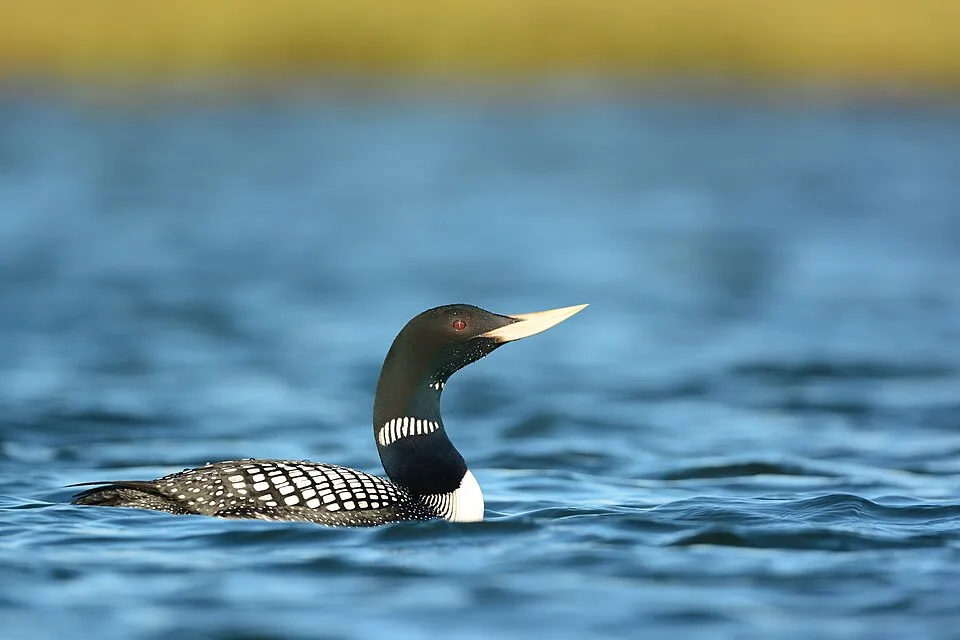
While many birds fly south to escape the cold, Massachusetts’ rugged coastline and open waters become a haven for a distinct group of avian specialists. These winter residents are not fleeing the frost but following reliable food sources, migrating south just far enough from the brutal conditions of the Arctic and Subarctic coasts to find ice-free waters.
The presence of the Snowy Owl on the land (as discussed previously) is matched by the arrival of specialized sea ducks and shorebirds, turning the beaches and rocky shores of the Commonwealth into a dynamic theater for winter birdwatching.
The Coastal Specialists: Harlequin Duck and Purple Sandpiper
These two species exemplify the hardiness required to thrive on the exposed, wind-battered shores of the North Atlantic.
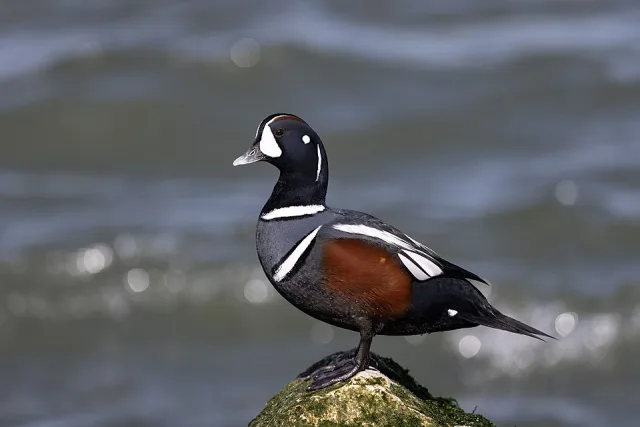
1. Harlequin Duck (Histrionicus histrionicus)
The Look: The male Harlequin is one of North America's most striking ducks, often called the "painted duck." Its complex, multicolored plumage features slate-blue, chestnut, and white markings, resembling a piece of abstract art. The female is a uniform grayish-brown, but just as sturdy.

Harlequin Duck The Habitat: Harlequins breed inland near fast-flowing mountain streams in the Far North. They migrate directly to the ocean for winter, specifically targeting areas with heavy surf, rocky shores, and strong tidal currents. They are rarely seen in calm bays or protected areas.
Massachusetts Spotting: They are reliably found year after year at well-known coastal spots where wave action churns up invertebrates. Look for them feeding close to the rocks, often disappearing completely beneath the crashing waves only to bob back up a moment later. Critical locations include the rocky jetties of Cape Ann (e.g., Rockport and Gloucester) and the boulder fields of Nantucket and Martha's Vineyard.
2. Purple Sandpiper (Calidris maritima)
The Look: This is not a purple bird, but rather a dark, stocky shorebird with a purplish sheen in good light, contrasting with bright yellowish-orange legs and a yellow-tipped bill.

The Habitat: Purple Sandpipers are the only shorebirds that regularly winter on the Atlantic coast of North America. They breed far north on Arctic tundra and thrive where other shorebirds dare not tread. They feed almost exclusively on wave-splashed rocks, jetties, and breakwaters covered in mussels, barnacles, and periwinkles.
Massachusetts Spotting: Look for them in tight flocks on wave-swept ledges where the waves are crashing hardest. They are incredibly tenacious, often ignoring the highest spray. They are reliably found alongside Harlequin Ducks at rocky locations like the Bass Rocks in Gloucester or the jetties along the South Shore.
The Snowy Sentinel and the Icy Waterfowl
In addition to the coastal foragers, two other species define the winter birding scene: the previously mentioned Snowy Owl and the specialized diving ducks.
3. Snowy Owl (Bubo scandiacus)
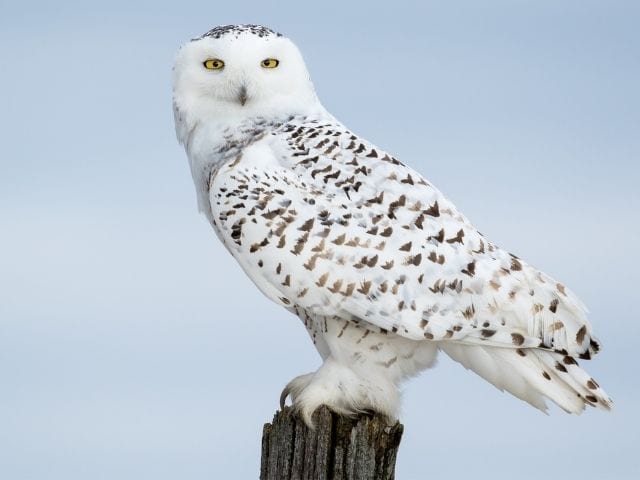
As detailed in the previous article, the Snowy Owl's appearance in Massachusetts is usually an irruption event, driven by a shortage of food in the Arctic. Their preference for open, treeless habitats makes the state's beaches, dunes, and airports ideal substitutes for the tundra. Their pure white plumage and massive size make them unforgettable winter icons.
4. Specialized Sea Ducks (Eiders, Scoters, and Loons)
Massachusetts' Stone Mountain Project: Protecting Critical Forest
The offshore waters of Massachusetts are filled with thousands of tough-as-nails diving birds:
Common Eider: These large, handsome ducks form massive rafts just offshore. The males are starkly white-and-black with a greenish nape. They are often the most numerous winter waterfowl, particularly around Cape Cod and the islands.
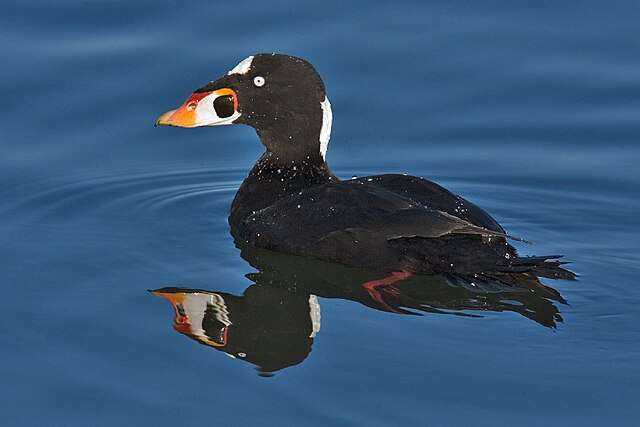
Scoters: Surf Scoters (with striking white patches on their heads), Black Scoters, and White-winged Scoters are deep-diving ducks that feed on shellfish. They are frequently spotted in dark, dense flocks bobbing far out on the choppy ocean waves.
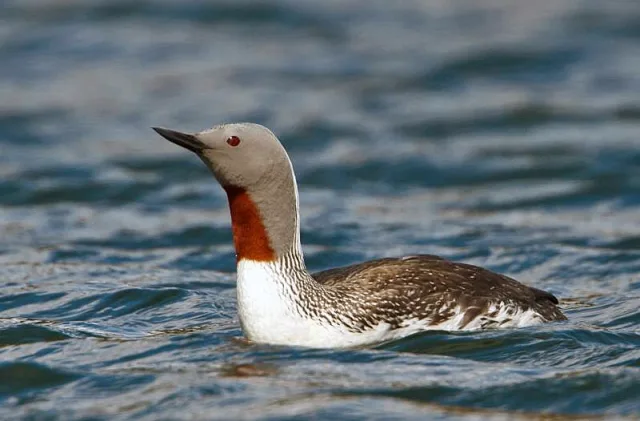
Loons and Grebes: Common Loons (still in their drab winter plumage) and the elegant Red-throated Loon spend the winter fishing in coastal waters. The Red-necked Grebe and Horned Grebe also utilize these rich fishing grounds.
The Winter Birding Challenge
Winter birding in Massachusetts demands specialized gear and commitment: a good spotting scope is essential for identifying sea ducks far offshore, and layers of warm clothing are required to withstand the Atlantic wind chill.
However, the reward is seeing birds at the peak of their fitness, perfectly adapted to a brutal season, turning a seemingly desolate winter landscape into a vibrant and crucial hub of global avian life.
How Arctic Birds Conquer the Cold
The Snowy Owl, Harlequin Duck, and Purple Sandpiper share a common challenge: maintaining a core body temperature of around 104F while living in environments where air and water temperatures are frequently below freezing. They achieve this using a combination of insulation, specialized circulatory systems, and behavioral strategies.
1. Superior Insulation: The Down Jacket of Evolution
The first line of defense is their plumage, which is far denser and more specialized than that of temperate birds.
Dense Down: All of these species rely on an incredibly thick layer of soft, fluffy down feathers beneath their contour feathers. This down traps a layer of air close to the body, creating an insulating barrier that minimizes convective heat loss. Ducks, especially the Common Eider, are famous for the quality of their down, which is so insulating that it is harvested for luxury bedding.
Feather Coverage: The Snowy Owl, in particular, has feathers covering its entire body, including its legs and feet (a feature called ptilopody). This ensures that virtually no skin is exposed to the freezing air, a vital adaptation for sitting immobile on snow and ice.
Waterproofing: Sea ducks, like the Harlequin, constantly apply oil from their preen gland (or uropygial gland) to their contour feathers. This oil ensures the outer layer of feathers remains completely waterproof, preventing the frigid water from penetrating the insulating down layer underneath. If water penetrates the down, the bird risks rapid hypothermia.
2. The Marvel of Circulation: Countercurrent Heat Exchange
One of the most energy-saving adaptations found in these species, particularly the aquatic ones, deals with the limbs (legs and feet). If their extremities were kept at core body temperature, they would lose massive amounts of heat to the cold water or ice.
The Principle: They employ a biological mechanism called countercurrent heat exchange (CCHE). This system acts like a highly efficient heat recycling unit in the limbs.
How it Works: Arteries carrying warm blood down the leg run immediately adjacent to veins carrying cold blood up from the feet. Heat automatically transfers from the warm arterial blood to the cold venous blood before it reaches the foot.
The Result: The feet and legs are kept just above freezing (around $35^\circ\text{F}$), drastically reducing the temperature difference between the limb and the environment. This minimizes heat loss, while the pre-warmed venous blood returning to the core requires less energy to reheat. This allows a Purple Sandpiper to stand on ice or a Harlequin Duck to swim in near-freezing water with minimal energy cost.
3. Metabolic and Behavioral Strategies
Survival also involves smart energy management and specific behaviors:
Shivering and Thermogenesis: When CCHE and insulation aren't enough, these birds use shivering (involuntary muscle contractions) to generate metabolic heat. They also use non-shivering thermogenesis (burning fats to produce heat) in specific tissues.
Dietary Adjustments: Sea ducks and shorebirds consume high-protein, high-fat diets (shellfish, fish, and marine invertebrates). This dense, energy-rich food provides the necessary fuel to constantly run their metabolic furnaces throughout the long, cold nights.
Roosting and Sunning:
Tucking: Birds frequently stand on one leg and tuck the other up into their body feathers. They also tuck their bills under their scapular feathers (back feathers) to warm the air they breathe before it enters their lungs.
Communal Roosting: While Snowy Owls tend to be solitary, sea ducks often gather in large, dense rafts on the water to reduce the collective surface area exposed to the cold wind.
Sunning: On clear, cold days, they will deliberately orient themselves to face the sun, absorbing solar energy to help offset their metabolic costs.
These adaptations—from the microscopic structure of their feathers to the macro-level design of their circulatory system—allow these "Arctic visitors" to not just survive, but actively thrive in the brutal winter conditions of the Massachusetts coast. They are living examples of nature’s perfect engineering.
The Ghost of the Tundra Returns: Snowy Owls Back in Massachusetts
