

In the rolling hills of Fayette County, Indiana, lies a 700-acre living memorial that serves as a cornerstone of Midwestern avian conservation. The Mary Gray Bird Sanctuary, owned and operated by the Indiana Audubon Society, is more than just a nature preserve; it is a testament to the enduring impact of a family’s grief transformed into a gift for the natural world.
Located just south of Connersville, the sanctuary offers a diverse mosaic of habitats—from mature hardwood forests and restored prairies to serene wetlands and ponds—that provide a critical refuge for over 200 species of birds.
A Legacy Rooted in Love

The sanctuary’s history begins with a personal tragedy. In 1943, Alice Green Gray donated the initial 264-acre tract of land to the Indiana Audubon Society. The donation was made in memory of her daughter, Mary Gray, who had passed away in 1930 at the age of 27. Alice, a pioneering female farmer and lecturer, wanted to ensure that the family’s land would remain a "living memorial" where nature could flourish undisturbed.
Following the death of Alice’s husband, Congressman Finley H. Gray, in 1947, additional acreage was willed to the society. Over the decades, through further acquisitions and generous donations from members, the sanctuary has expanded to its current size of 700+ acres. Today, it stands as the flagship property of the Indiana Audubon Society, which is notably one of the oldest independent conservation organizations in the United States.
Diverse Habitats and Wildlife
The sanctuary’s location on the edge of the glacial till flatlands gives it a unique topographical character. The terrain transitions from flat, open meadows to deeply Ravined woodlands, creating a variety of ecological niches.
1. Mature Forests and Ravines
The heart of the sanctuary is its old-growth timber. Massive American beech, sugar maple, and tulip trees dominate the canopy. These woods are a haven for deep-forest dwellers. Visitors often hear the rhythmic "wuk-wuk-wuk" of the Pileated Woodpecker or catch glimpses of the Scarlet Tanager’s brilliant red plumage against the green leaves.
2. Restored Prairies and Wildflowers
The managed prairie sections are a riot of color in late summer, filled with goldenrod, ironweed, and native grasses. These areas are vital for pollinators and grassland birds like the Eastern Bluebird. The sanctuary maintains a series of bluebird nesting boxes along the trail edges, contributing to a healthy local population of these iconic songbirds.
3. Wetlands and Waterways
Several ponds and small streams, such as those found near the Markle Barn, provide habitat for waterfowl and amphibians. The wetlands are particularly active during migration seasons, serving as a rest stop for species traveling along the Mississippi Flyway.

4. The Hummingbird Phenomenon
One of the sanctuary’s most famous seasonal attractions is its Ruby-throated Hummingbird population. During the peak of summer, dozens of these "flying jewels" can be seen buzzing around the feeders near Brooks Hall. The sanctuary hosts annual hummingbird banding events, where researchers and the public can observe these tiny miracles up close.
Exploring the Trails
For hikers and birders, the Mary Gray Bird Sanctuary offers a network of over 3.5 miles of well-marked trails. Each trail provides a different perspective on the sanctuary’s biodiversity:
| Trail Name | Features | Highlights |
| Birding Trail | 1.5 miles, Easy | Interpretive signs explaining bird habitats and behaviors. |
| Owl Trail | Wooded terrain | Known for sightings of Great Horned, Barred, and Screech-Owls. |
| Woods Loop | Dense forest | Excellent for seeing interior forest species and spring wildflowers. |
| Wetland Trail | Near ponds | Best for spotting herons, wood ducks, and frogs. |
The trails are designed for foot traffic only, ensuring a quiet environment that doesn't startle the wildlife. A handicap-accessible birding blind is also available, allowing visitors of all physical abilities to enjoy close-up views of birds at the feeding stations.

Education and Research
The Mary Gray Bird Sanctuary is not just a place for passive recreation; it is a hub for scientific study. It serves as a laboratory for regional colleges and universities.
Long-term Monitoring: Researchers use permanent plots within the sanctuary to study the relationship between changing vegetation and bird populations.
Workshops: Throughout the year, the Indiana Audubon Society hosts educational programs ranging from "The Art of Slow Birding" to "Marvelous Moths" workshops.
Youth Programs: The sanctuary is a favorite spot for school field trips and summer outdoor education camps, fostering a love for conservation in the next generation of Hoosiers.
Visiting the Sanctuary
The sanctuary is located at 3499 S. Bird Sanctuary Road, Connersville, IN. It is open to the public from dawn to dusk, 365 days a year.
Note for Visitors: While admission to the sanctuary is free, donations are encouraged to help with the upkeep of the trails and facilities.

Facilities
Brooks Hall: A central meeting building with a large fireplace, often used for society meetings and public events.
Shelter Houses: Large picnic shelters are available for groups and can be rented for private events like weddings or reunions.
Camping: For those who want a truly immersive experience, a primitive campground is available. Indiana Audubon members can camp for free, while non-members pay a small nightly fee. There is no electricity or running water at the campsites, offering a "back-to-basics" connection with nature.
Birds at the Sanctuary
Spring (March – May)
The great awakening. This is the best time for warblers and the return of colorful songbirds.
Warblers: Look for the Cerulean Warbler and Kentucky Warbler (both sanctuary specialties), alongside Yellow-throated, Blue-winged, and Black-and-white warblers.
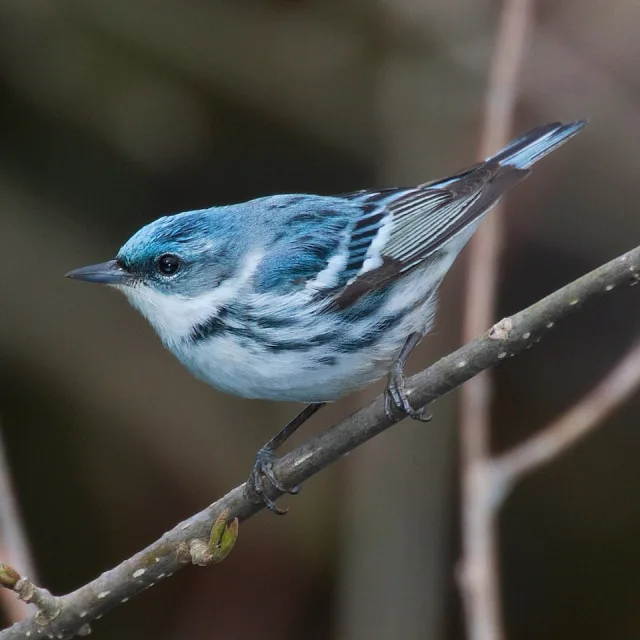
Thrushes: The ethereal song of the Wood Thrush begins to echo through the ravines.
Flycatchers: Watch for Eastern Phoebes near the buildings and Acadian Flycatchers in the deep woods.
Early Arrivals: Tree Swallows, Eastern Bluebirds, and Red-winged Blackbirds.
Summer (June – August)
Nesting season is in full swing. The sanctuary becomes a busy nursery for resident birds.
Ruby-throated Hummingbird: The absolute stars of the summer. Dozens can be seen at the feeders near Brooks Hall.
Tanagers & Orioles: Look for the brilliant Scarlet Tanager and Summer Tanager in the canopy, and Orchard Orioles near the forest edges.
Indigo Bunting: Common in the prairie and brushy edges—look for a flash of electric blue on the fence lines.
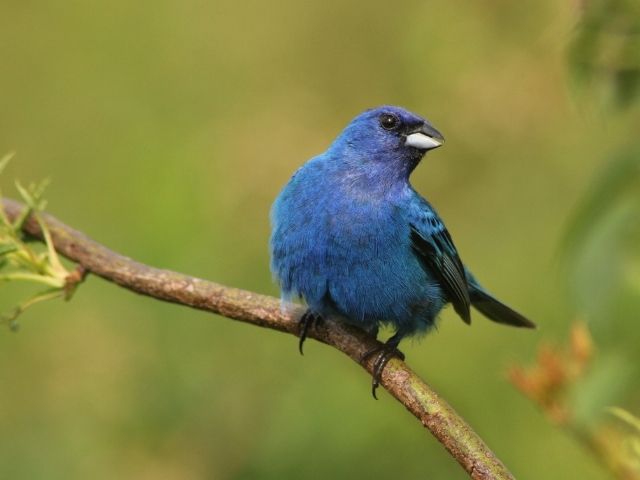
Cuckoos: Both Yellow-billed and Black-billed cuckoos nest here, though they are often easier to hear than see.
Fall (September – November)
Migration and the arrival of winter residents. The sanctuary is a critical "stopover" point.
Northern Saw-whet Owl: A highlight of the fall. The sanctuary runs a famous banding station for these tiny, elusive owls from late October through November.
Raptors: Keep an eye on the sky for Broad-winged Hawks and Sharp-shinned Hawks moving south.
Sparrows: The prairie comes alive with White-throated, White-crowned, and Fox sparrows.
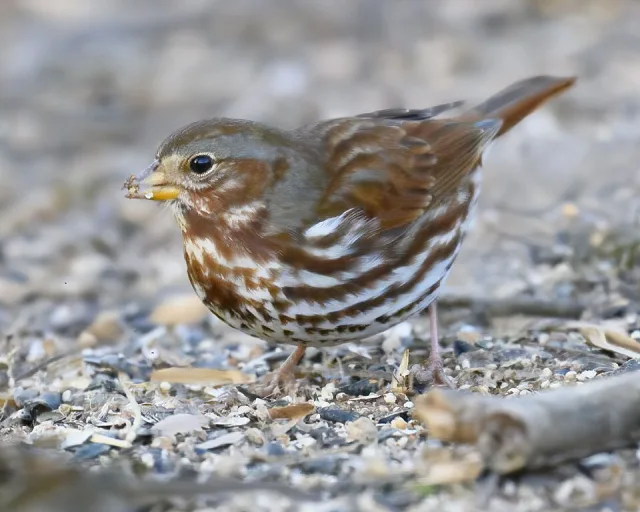
Winter Arrivals: Dark-eyed Juncos (often called "snowbirds") begin to arrive from the north.
Winter (December – February)
The woods are quiet and stark, making it the best time to spot residents and owls.
Woodpeckers: Without leaves, it is easy to spot the massive Pileated Woodpecker, as well as Red-bellied, Hairy, and Downy woodpeckers.
Owls: Barred Owls and Great Horned Owls are very active and vocal as they begin their own nesting cycles in mid-winter.
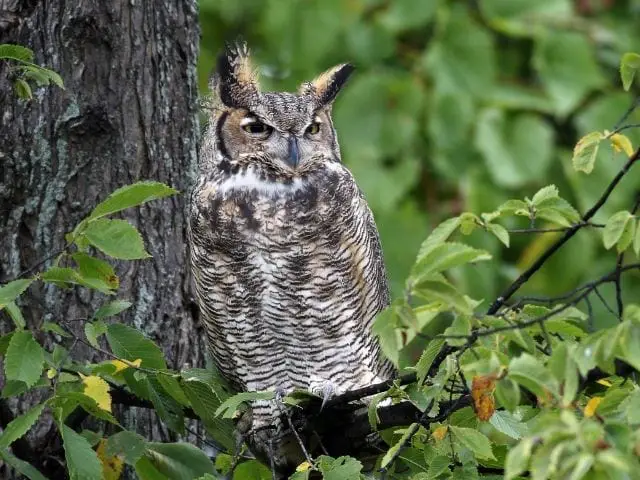
Hardy Residents: Northern Cardinals (stunning against the snow), Tufted Titmice, Carolina Chickadees, and White-breasted Nuthatches are constant visitors to the feeders.
Brown Creeper: Look for these tiny birds spiraling up the trunks of the large beech trees.
A Sanctuary for the Soul
In an era of rapid urban development, the Mary Gray Bird Sanctuary remains an island of stability. It honors the memory of a young woman by protecting the lives of thousands of birds and providing a peaceful escape for the human spirit. Whether you are a "lister" looking for a rare migrant, a photographer chasing the perfect light on a dragonfly's wing, or a hiker seeking the silence of the woods, Mary Gray offers a sanctuary in every sense of the word.
