
The coast of Maine, a magnificent stretch of granite headlands, spruce-clad islands, and frigid, nutrient-rich waters, is one of the premier destinations for seabird watching in North America. Unlike the sandy shores of the mid-Atlantic, the Gulf of Maine’s rugged, boreal environment is a perfect staging ground for species that spend their lives riding the open ocean swells, returning to land only once a year to raise their young on isolated, rocky outposts.
For the dedicated birder, the spectacle is unmatched. From the comical grace of the Atlantic Puffin to the mysterious flitting of the Storm-Petrel, Maine offers a chance to connect with an avian world that is otherwise unreachable. However, seabirding here is a world away from watching backyard feeders. It requires planning, a sturdy stomach, and a boat trip into the bracing waters of the North Atlantic.
The Peak Season: The Nesting Phenomenon
The best time to target Maine’s most charismatic seabirds is during the breeding season, primarily from mid-May through late August. This is when the cold waters, enriched by the Labrador Current and tidal mixing, are teeming with the fish and plankton needed to feed rapidly growing chicks. These conditions compel the seabirds to leave the vast, international waters of the Gulf of Maine and gather in dense, noisy colonies on a select few islands.
This period is not just for viewing; it is a pilgrimage to witness a remarkable conservation success story. Many of Maine's seabird colonies, including those of the terns and the beloved puffins, were nearly wiped out in the 19th century by plume hunters. Restoration efforts, most famously the National Audubon Society’s Project Puffin which began in the 1970s, have brought these populations back from the brink, turning certain islands into protected national treasures.
The Maine Seabird Cast of Characters
Maine's seabird community is dominated by the Alcids (the auks, murres, and puffins) and the Terns.
The Charismatic Alcids
The Alcids are the ecological equivalent of penguins in the Northern Hemisphere, using their wings to "fly" underwater in pursuit of fish.
- Atlantic Puffin (Fratercula arctica): The undisputed star. Known for its colorful, enormous bill during the breeding season and its awkward, whirring flight, the puffin is the top target for most visitors. They nest in burrows on grassy slopes.

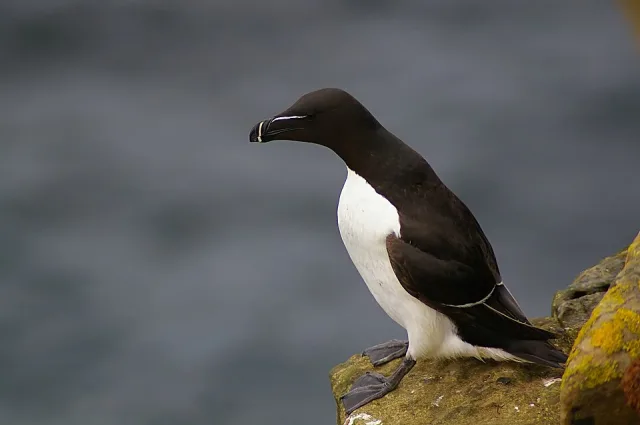
Atlantic Puffin - Razorbill (Alca torda): The puffin’s closest living relative, known for its deep, heavy bill and sharp black-and-white plumage. Razorbills nest in rock crevices and on cliff ledges, giving them a more stoic, severe appearance than the puffin. Maine is at the southern limit of its breeding range.

Razorbill - Black Guillemot (Cepphus grylle): A chunky, all-black seabird with a distinctive white wing patch and brilliant red legs and mouth lining. They are often seen close to shore, dipping into the water from a nearby rock or flying low over the waves.

Black Guillemot


The Elegant Terns
Smaller and more aerial than the Alcids, the terns are masters of the plunge-dive, using their streamlined bodies to spear small fish.
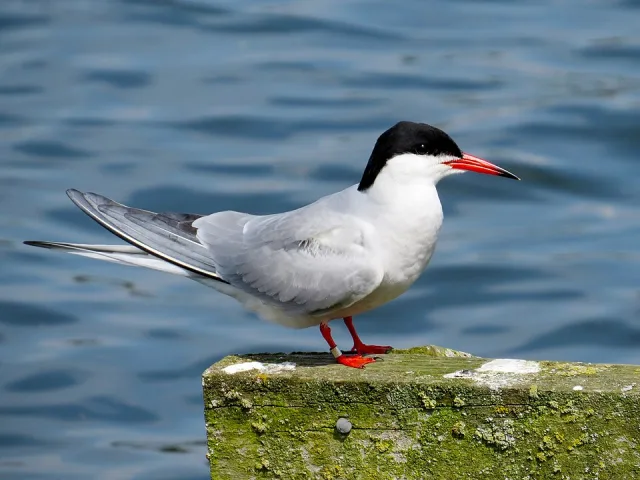
- Common Tern (Sterna hirundo): The most widespread tern, identifiable by its black cap, deeply forked tail, and bright orange-red bill tipped with black.

Common Tern - Arctic Tern (Sterna paradisaea): Famous for having the longest migration of any animal, flying from the Arctic to the Antarctic and back. Visually similar to the Common Tern but with an all-red bill (no black tip) and shorter legs.
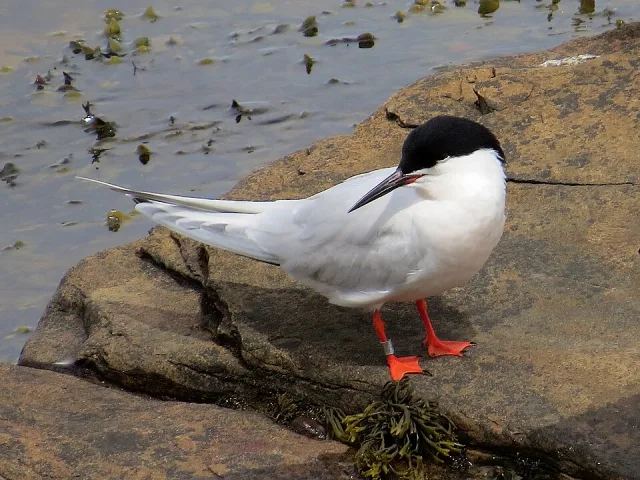
Arctic Tern - Roseate Tern (Sterna dougallii): A federally endangered species and a top priority for Maine conservationists. This slender, pale tern has a longer tail than its cousins and, when breeding, can show a faint rose-colored blush on its breast.
Roseate Tern

The Pelagic Enigmas and Other Residents
Venture farther offshore, and the birder can encounter true pelagic species that rarely touch land.
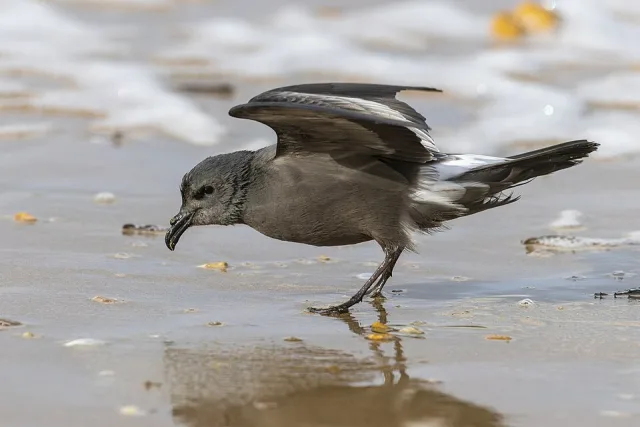
- Leach’s Storm-Petrel (Oceanodroma leucorhoa): A small, dark seabird with a distinctive, hooked bill and a fluttery, bat-like flight. They nest in burrows on a few select islands, but are most often seen dancing over the waves far from shore, attracted to fish oil.
Leach’s Storm-Petrel - Northern Gannet (Morus bassanus): A large, striking white bird with black wingtips and a pale yellow head. Though they do not nest in Maine, they are seen plunging from great heights into the water to feed, especially during their spring and fall migrations.
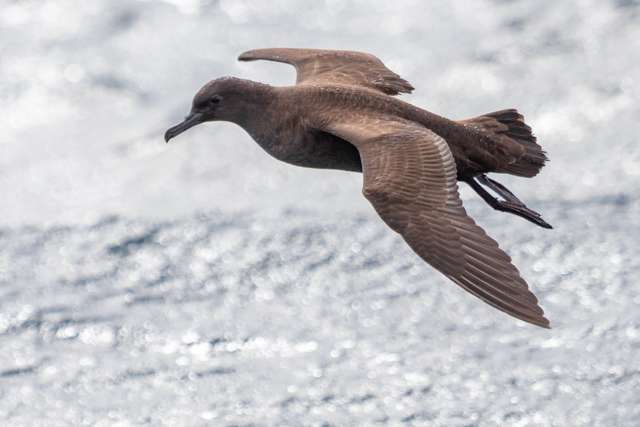
Northern Gannet - Shearwaters (Great and Sooty): Long-winged, graceful gliders that shear over the tops of the waves, moving with effortless speed. These trans-equatorial migrants are common on offshore trips, particularly in late summer.
- Common Eider (Somateria mollissima): Although technically a sea duck, the Eider is an integral part of the Maine seabird community, with thousands nesting on the same islands as the Alcids. The striking black-and-white male and the cryptic brown female are a common sight in the coastal waters.
Sooty Shearwater

The Maine Seabird Hotspots and Viewing Access
The unique challenge of seabird watching in Maine is that nearly all the nesting islands are closed to the public to protect the fragile colonies. Viewing is therefore done exclusively from specialized tour boats, which maintain safe distances under the guidance of conservation rules.
- Eastern Egg Rock (Midcoast): The flagship of Project Puffin, located near Boothbay Harbor. Boat tours from nearby harbors (like New Harbor and Boothbay) circle the small, rocky island, offering excellent, close-up views of Atlantic Puffins, Razorbills, and Common Terns loafing on the rocks and buzzing in the air.
- Petit Manan Island (Downeast): Part of the Maine Coastal Islands National Wildlife Refuge, this island is a vital nesting site for Arctic Terns and Atlantic Puffins. Tours depart from Bar Harbor and other Downeast ports, often combining puffin viewing with whale watching.
- Machias Seal Island (Downeast): This remote island, whose sovereignty is disputed with Canada, holds the largest puffin colony in Maine and the only one where visitors are permitted to land (in limited numbers via an authorized charter) to sit in viewing blinds. It is a bucket-list trip, offering the closest photographic access to Puffins, Razorbills, and Common Murres.
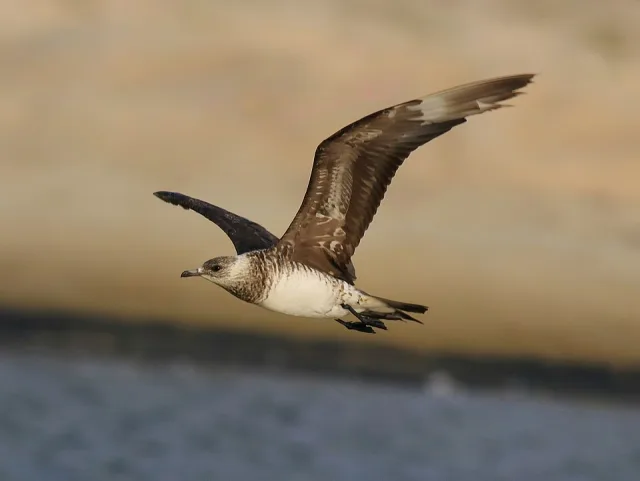
Common Murre - Pelagic Trips (Open Ocean): For the serious birder seeking the deeper ocean species—the Storm-Petrels, Shearwaters, and Jaegers—a dedicated pelagic trip is essential. These full-day or half-day charters venture far offshore where the Continental Shelf drops off. Late summer and early fall are the best times to see the greatest variety of these true ocean wanderers. Popular departure points include Boothbay Harbor and Bar Harbor.

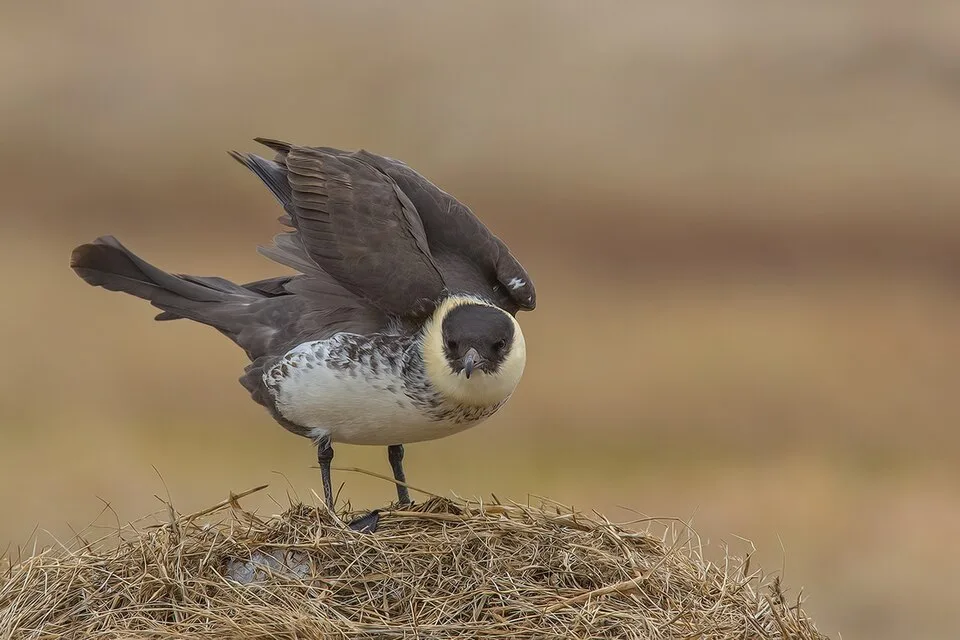
Parasitic Jaeger

Essential Gear and Etiquette
Seabirding in Maine is an exhilarating but rugged pursuit. Preparation is key to a successful trip:
- Optics: High-quality binoculars are non-negotiable. A spotting scope can be helpful for identifying distant birds from a stable boat, but it's not essential.
- Layers: The air temperature on the water is often 10–20 degrees Fahrenheit colder than on shore. Bring warm, waterproof layers, including a hat and gloves, even in July.
- Seasickness: The Gulf of Maine can be rough. Take medication before getting on the boat.
- Etiquette: Always follow the instructions of the boat captain and any onboard naturalists. Never attempt to land on or approach a nesting island outside of an authorized tour. Respect the buffer zones designed to protect the birds from disturbance.
Maine offers a world-class seabirding experience, weaving together the natural beauty of its dramatic coast with a compelling history of conservation. To sit on the deck of a boat, the wind whipping past, and watch a Razorbill plunge into the dark Atlantic is to witness the wild heart of New England in its purest form.
